Search News
Industry Portal
Popular Tags
Advanced Engineering Materials for Aerospace: How to Compare Performance Trade-Offs
Author
Time
Click Count
Selecting Advanced Engineering Materials for aerospace requires more than comparing strength-to-weight ratios. Technical evaluators must balance thermal stability, fatigue resistance, manufacturability, compliance, and lifecycle cost under demanding operational conditions. This article outlines a practical framework for assessing performance trade-offs, helping procurement and engineering teams make evidence-based material decisions that reduce risk and improve long-term aerospace system reliability.
For technical assessment teams, the challenge is rarely finding a material with one outstanding property. The real difficulty is comparing several materials that each perform well in one area while introducing compromises in another. In aerospace procurement, a 5% mass reduction may be valuable, but not if it leads to a 30% increase in machining time, a shorter inspection interval, or export-control complications that delay a program by 8 to 12 weeks.
That is why Advanced Engineering Materials for aerospace should be evaluated through a structured, cross-functional lens. At G-CST, material benchmarking is most useful when mechanical data, thermal behavior, standards alignment, manufacturability, and supply resilience are reviewed together rather than in isolation. This approach supports procurement directors, design authorities, and supplier qualification teams that need defensible decisions under strict reliability frameworks.
Why aerospace material selection is a trade-off problem, not a single-property decision
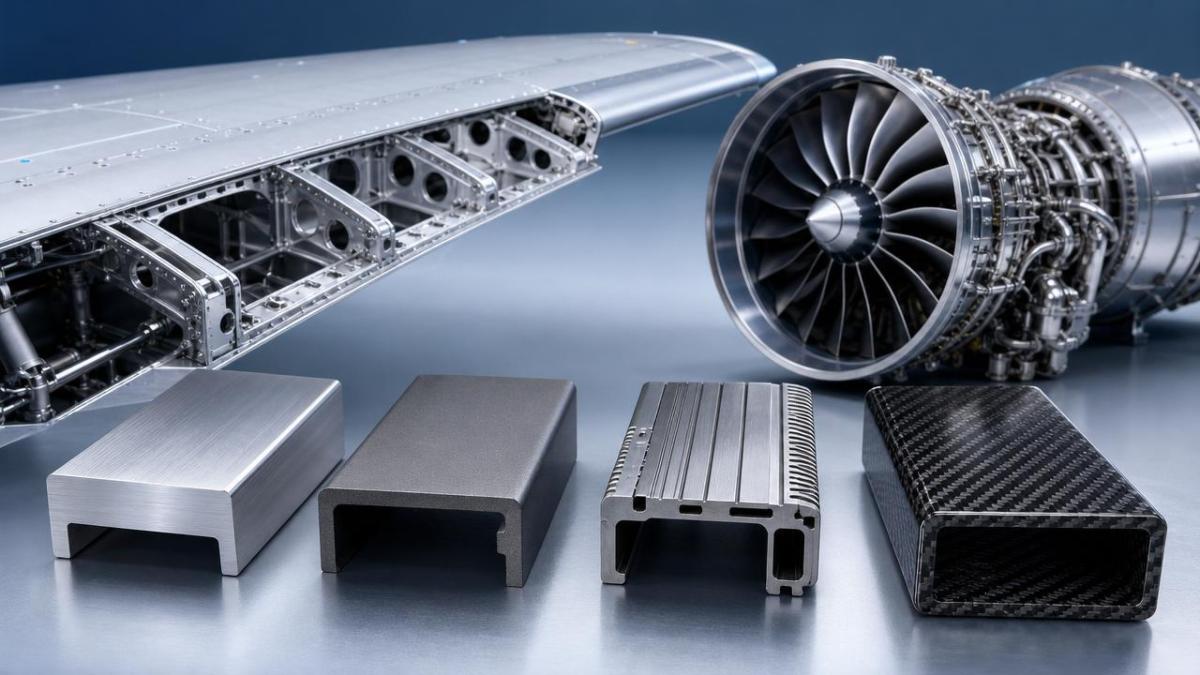
Advanced Engineering Materials for aerospace operate in highly variable conditions: cryogenic fuel environments, turbine-adjacent heat zones, cyclic pressurization, vibration, salt exposure, and long maintenance intervals. A material that looks ideal in a laboratory coupon test may underperform when joined, coated, repaired, or exposed to multi-axial loads over 20,000 to 60,000 flight cycles.
Technical evaluators therefore need to compare at least 4 core dimensions at the same time: performance, processability, compliance, and total ownership cost. In many B2B aerospace programs, the best decision is not the material with the highest ultimate strength, but the one that delivers the most stable performance envelope across production, certification, operation, and service life.
Typical performance categories that must be balanced
Most aerospace assessments start with mechanical performance, but that is only one part of the picture. Common comparison categories include tensile strength, modulus, fatigue behavior, creep resistance, oxidation resistance, impact tolerance, dimensional stability, corrosion performance, and compatibility with coatings or adhesives.
- Mechanical load response across static, cyclic, and impact conditions
- Thermal capability from sub-zero environments to 300°C, 600°C, or higher depending on subsystem
- Manufacturing fit, including forging, additive processing, machining, layup, curing, or joining
- Inspection and maintenance burden over 10-year to 25-year service windows
Common aerospace material families and where trade-offs appear
The table below provides a practical comparison framework for Advanced Engineering Materials for aerospace. It does not rank one family as universally superior. Instead, it highlights where technical evaluators should expect trade-offs during material down-selection.
A useful takeaway is that performance gains are often linked to process penalties. Titanium may reduce weight and improve corrosion resistance, but procurement teams must account for longer machining cycles and lower material buy-to-fly efficiency. Composites can cut mass significantly, yet inspection methods, repair procedures, and operator skill requirements often become more demanding.
The cost of overlooking interactions
Aerospace programs commonly face downstream costs when material decisions are made too narrowly. For example, selecting a high-temperature alloy without checking tool wear rates, heat-treatment distortion, or NDT compatibility can increase recurring manufacturing cost by 10% to 25%. In qualification-heavy programs, even a modest design change can trigger additional coupon tests, process validation, and documentation updates over 6 to 16 weeks.
A practical framework for comparing Advanced Engineering Materials for aerospace
A reliable comparison model should move from mission conditions to verification criteria, then to sourcing and lifecycle implications. This keeps material selection aligned with system requirements rather than supplier preference or legacy assumptions. For technical evaluators, a 5-step review sequence is often more effective than a simple datasheet comparison.
Step 1: Define the real operating envelope
Start by specifying the actual duty profile: maximum and continuous temperature, pressure differentials, vibration range, exposure media, fatigue spectrum, and maintenance interval. A material suitable at 200°C steady-state may not remain suitable if the component also sees thermal cycling from -55°C to 180°C twice per flight segment for 15 years.
Step 2: Rank failure modes before ranking materials
Failure-mode prioritization reduces bias. In one subsystem, low-cycle fatigue may dominate. In another, galvanic corrosion, delamination, creep, hydrogen embrittlement, or fretting may control service life. The right material is the one that best addresses the most critical 2 or 3 failure risks, not necessarily the one with the highest headline properties.
Step 3: Include process capability in the material score
Material performance should be scored together with manufacturing maturity. This includes achievable tolerances, scrap risk, joining repeatability, heat-treatment controls, nondestructive inspection method compatibility, and lead-time volatility. If two candidate materials differ by only 8% in specific performance, but one requires 2 extra processing steps and has a 14-week longer supply cycle, the commercial impact may outweigh the technical gain.
Decision matrix for technical evaluators
The following matrix can be adapted by procurement and engineering teams when comparing Advanced Engineering Materials for aerospace. Weightings should vary by subsystem, but the categories remain broadly applicable across structural, thermal, and precision component programs.
This matrix helps teams convert abstract material debates into measurable decision criteria. It is especially useful when engineering, sourcing, quality, and program management assign different priorities. A shared scoring model often reduces late-stage disagreement and shortens technical-commercial alignment cycles by 1 to 3 review rounds.
Step 4: Quantify lifecycle cost, not just acquisition price
Lifecycle cost should include raw material input, process yield, inspection burden, coating or sealing requirements, repairability, inventory risk, and downtime exposure. A material that costs 18% more per kilogram may still be the better choice if it extends service intervals from 2,000 to 3,500 operating hours or lowers replacement frequency over the platform life.
Step 5: Stress-test the supply chain and regulatory path
Advanced Engineering Materials for aerospace are increasingly affected by export controls, critical mineral dependence, single-source melt capacity, and regional certification constraints. Technical evaluators should verify not only the material specification, but also source diversity, processing geography, long-term availability, and document readiness. In some categories, a second-source strategy can reduce program interruption risk more effectively than negotiating a lower unit price.
What technical evaluators should check before final material approval
A final approval package should connect engineering evidence with procurement practicality. This is where many programs lose time. Data may exist, but it is scattered across supplier declarations, internal test reports, standards references, and manufacturing notes. Consolidating the review into a fixed checklist can reduce omission risk and simplify downstream audits.
Minimum review checklist
- Verify operating temperature range, load spectrum, and environment profile against material limits.
- Confirm fatigue, corrosion, creep, or impact-critical properties based on actual failure mode ranking.
- Review manufacturability data, including joining, machining, forming, inspection, and repair process compatibility.
- Check standards alignment with relevant ISO, ASME, IEEE, SEMI, or customer-specific documentation where applicable.
- Assess supply continuity, lead-time variability, and the availability of qualified alternate sources.
- Estimate lifecycle cost over at least 3 phases: production, service, and replacement or overhaul.
Frequent mistakes in aerospace material comparisons
One common mistake is using room-temperature values as the main comparison basis for components that operate under thermal cycling. Another is comparing nominal material properties without considering process state, laminate direction, surface treatment, or joining method. Technical evaluators also sometimes overlook documentation risk, especially when material pedigree or batch traceability can affect release approval.
A second mistake is underestimating the time cost of qualification. If a new material saves 7% mass but requires fresh coupons, process validation, and additional supplier audits, the program impact may be disproportionate. In schedule-constrained aerospace environments, the “better” material is often the one that balances improvement with qualification efficiency.
How G-CST supports evidence-based benchmarking
For organizations comparing Advanced Engineering Materials for aerospace within broader industrial portfolios, the value of a benchmarking repository lies in standardizing technical review language. G-CST’s multidisciplinary structure is particularly relevant when material selection intersects with precision motion systems, semiconductor-adjacent manufacturing quality, software-led digital validation, or fluid-system reliability frameworks.
By organizing verifiable engineering data, standards context, supply-chain visibility, and regulatory foresight into one decision environment, evaluation teams can identify trade-offs earlier and with fewer assumptions. That improves not only engineering confidence, but also procurement defensibility when decisions must be justified to internal stakeholders, prime contractors, or international sourcing committees.
Turning trade-off analysis into stronger procurement decisions
The most effective aerospace material decisions are rarely based on a single winning property. They come from disciplined comparison of performance limits, manufacturing fit, compliance readiness, service behavior, and sourcing resilience. When these factors are scored together, technical evaluators can separate attractive datasheet values from truly deployable material solutions.
For procurement teams, this means fewer late-stage specification changes, clearer supplier discussions, and better alignment between engineering ambition and commercial reality. For design and reliability teams, it means choosing materials that perform not only in test conditions, but across the full lifecycle of the aerospace system.
If your team is reviewing Advanced Engineering Materials for aerospace and needs structured benchmarking, regulatory visibility, or cross-sector technical intelligence, G-CST can help translate material data into practical sourcing decisions. Contact us to discuss your evaluation criteria, request a tailored comparison framework, or explore broader solutions for high-reliability industrial procurement.
Recommended News
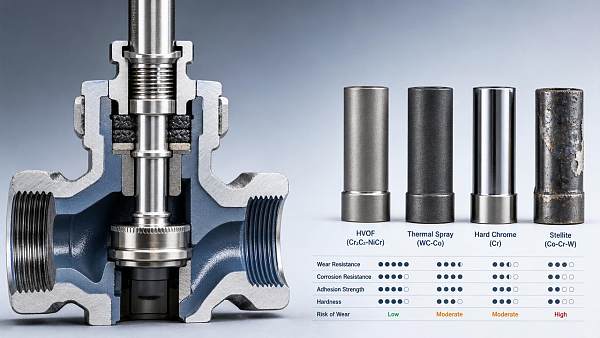
 May 17, 2026Advanced Coating for Valve Stems: Performance vs Wear RiskAdvanced coating for valve stems: compare performance gains, wear risk, corrosion resistance, and lifecycle value to choose safer, longer-lasting valve solutions.
 May 16, 2026Corrosion Allowance for Valves: When Extra Margin Pays OffCorrosion allowance for valves helps buyers reduce failure risk, control lifecycle cost, and improve reliability. Learn when extra wall thickness truly pays off.
 May 03, 2026Advanced Engineering Materials for Aerospace: How to Compare Performance Trade-OffsAdvanced Engineering Materials for aerospace: compare weight, thermal stability, fatigue, manufacturability, compliance, and lifecycle cost with a practical framework for smarter, lower-risk decisions.
 May 03, 2026Strategic Procurement for Advanced Materials: What Actually Drives Total CostStrategic Procurement for advanced materials drives total cost beyond unit price. Learn how reliability, compliance, and supplier risk shape ROI, uptime, and smarter approvals.
 May 02, 2026Precision Manufacturing for Aerospace: Tolerances That Drive Rework CostsPrecision Manufacturing for aerospace directly impacts rework, scrap, and approval delays. Discover how smarter tolerance strategies reduce cost, improve supplier decisions, and protect program margins.
 Apr 28, 2026Fresh Carbon Fiber Supply Chain News Raises Questions on Lead TimesCarbon fiber supply chain news raises urgent lead-time questions as buyers track nanotechnology in manufacturing trends and the future of sustainable polymers—see the real sourcing risks now.
 Apr 28, 2026Composite Layer Bonding Strength Drops for Reasons Easy to MissComposite layer bonding strength drops can hide behind clean specs. Learn the overlooked causes, diagnostic steps, and reliability controls shaping nanotechnology in manufacturing trends.
 Apr 28, 2026Carbon Fiber Supply Chain News Points to a Tougher Pricing CycleCarbon fiber supply chain news reveals a tougher pricing cycle, linking nanotechnology in manufacturing trends with the future of sustainable polymers to help buyers manage risk, qualify alternatives, and act faster.
 Apr 27, 2026ASME Certified Components Bulk Orders Can Stall on DocumentationASME Certified Components bulk order delays often start with documentation gaps. Learn how SEMI Standards compliance, ISO alignment, and High-tech Procurement Intelligence reduce approval risk.
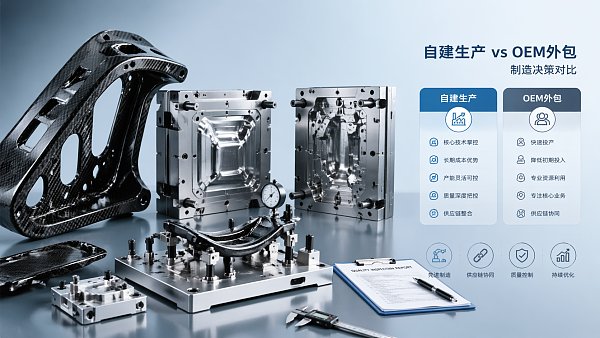
 Apr 25, 2026Carbon Fiber Composite OEM: Build or Outsource?Carbon fiber composite OEM: build or outsource? Compare cost, control, speed, and risk with sourcing insights across composite sandwich panel factory and high performance polymer supply.
 Apr 25, 2026When Is Aluminum Matrix Composite OEM Best?Aluminum matrix composite OEM is best for lightweight, wear-resistant, thermally stable parts. Compare with carbon fiber composite OEM, zirconia ceramic supplier, and more.
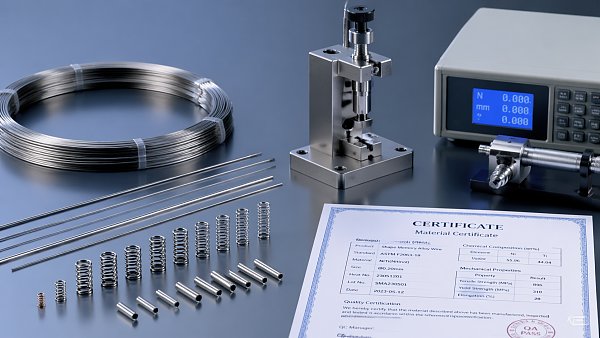
 Apr 26, 2026Shape Memory Alloy OEM: What to Check First?Shape memory alloy OEM selection starts with traceability, process control, and application fit. Compare suppliers with insights relevant to boron nitride factory and technical ceramics supplier sourcing.
 Apr 26, 2026How to Choose a Composite Sandwich Panel FactoryLearn how to choose a composite sandwich panel factory with confidence. Compare quality control, testing, materials, and supply reliability to find the right partner for durable, high-performance panels.
 Apr 21, 2026Advanced Engineering Materials Underperform for Simple ReasonsAdvanced Engineering Materials underperform when Strategic Procurement, Reliability Engineering, and Precision Manufacturing fall out of sync. Learn how Digital Twin Technology, SEMI Standards, and verified data improve results.