Search News
Industry Portal
Popular Tags
High Pressure Valve Burst Data: Safe Margin Checkpoints
Author
Time
Click Count
For quality control and safety managers, high pressure valve burst data is more than a test result—it is a critical benchmark for verifying design limits, confirming compliance margins, and preventing catastrophic failure. This article explains how safe margin checkpoints should be judged across real operating scenarios, so inspection, acceptance, and replacement decisions rely on evidence rather than assumption.
Why high pressure valve burst data changes by operating scenario
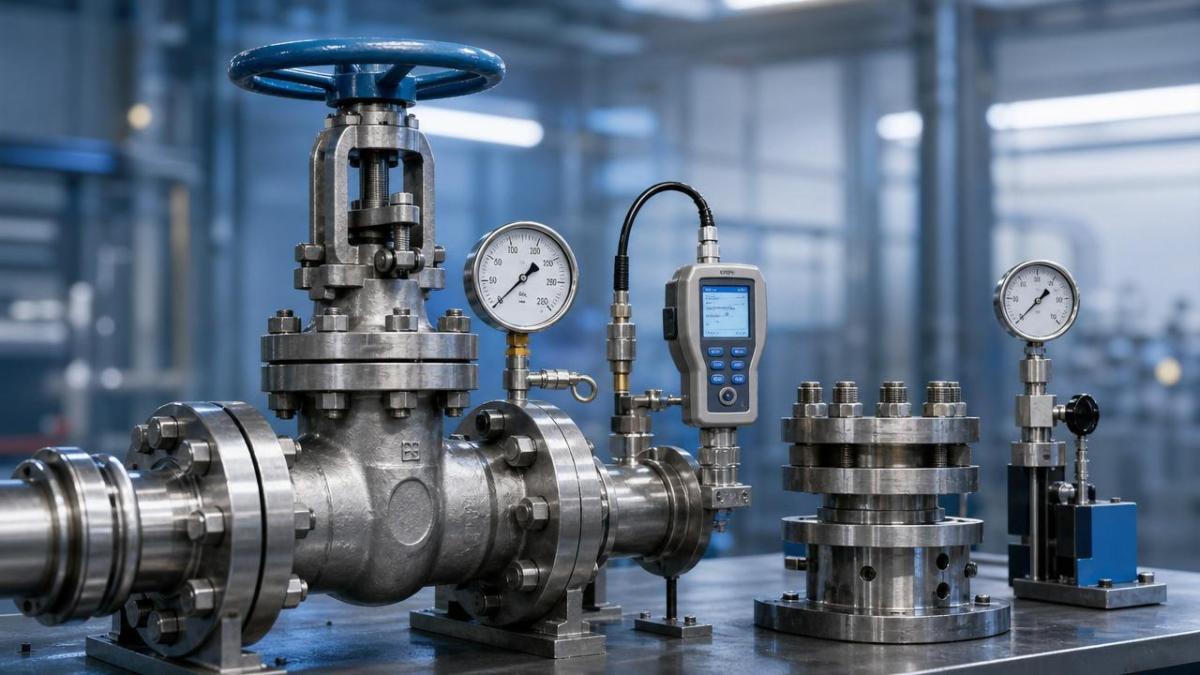
High pressure valve burst data is never meaningful in isolation. A burst figure only becomes useful when linked to pressure cycling, media type, temperature range, and consequence of failure.
In integrated industries, one valve may handle clean gas, while another sees corrosive slurry, thermal shock, or pulsating flow. The same nominal rating can carry very different risk.
That is why safe margin checkpoints must connect laboratory burst data, design pressure, proof pressure, and field degradation. A strong benchmark supports maintenance planning, compliance review, and lifecycle cost control.
G-CST tracks these checkpoints through standards-led benchmarking, helping technical teams compare valve integrity data against ISO, ASME, SEMI, and application-specific reliability expectations.
Scenario 1: Stable process lines where burst margin supports routine acceptance
In stable process lines, the first question is simple: does the high pressure valve burst data show enough distance from maximum allowable working pressure?
A routine acceptance checkpoint often compares rated pressure, hydrostatic shell test pressure, and burst pressure. The target is not the highest burst value, but a reliable and repeatable safety ratio.
Core judgment points
- Confirm burst pressure exceeds the internal minimum design multiple.
- Check whether the test sample reflects final production geometry.
- Review leakage onset before structural rupture.
- Verify that seat, body, and end connections fail predictably.
For this scenario, high pressure valve burst data should also be read alongside dimensional tolerance records. Minor wall variation can shift the real safe margin more than expected.
Scenario 2: Pulsating and cyclic systems where burst data alone is insufficient
Compressors, hydraulic skids, and rapid switching lines create pressure spikes that static tests may not capture. Here, high pressure valve burst data is necessary, but not sufficient.
The safe margin checkpoint must ask whether fatigue damage can reduce the effective burst threshold before planned service life ends. A high initial burst number may hide a weak cyclic profile.
What to verify in cyclic duty
- Pressure amplitude versus nominal working pressure.
- Cycle count to inspection interval.
- Stress concentration at threads, welds, and corners.
- Temperature interaction during repeated loading.
When reviewing high pressure valve burst data for pulsating systems, ask for fatigue test evidence, not only burst certification. This reduces false confidence during equipment qualification.
Scenario 3: Corrosive and high-purity media where material loss changes the margin
Chemical dosing, semiconductor chemical delivery, and aggressive cleaning circuits face a different problem. Burst strength can decline gradually through corrosion, erosion, or stress corrosion cracking.
In these environments, high pressure valve burst data should be interpreted as a starting point. The real checkpoint is residual margin after expected material attack and process contamination control.
Critical material checks
- Base alloy compatibility with media and cleaning agents.
- Surface finish effect on crack initiation.
- Seal and seat material behavior under chemical exposure.
- Wall thinning allowance before replacement trigger.
For high-purity service, pressure integrity and contamination risk must be reviewed together. A valve may keep pressure but still fail the application if corrosion products enter the process stream.
Scenario 4: High-temperature service where burst data must be derated
Steam, thermal processing, and heated gas systems often operate far from room-temperature test conditions. High pressure valve burst data measured cold can overstate field strength at elevated temperature.
The safe margin checkpoint here is derating discipline. Teams should align burst data with temperature-dependent yield strength, creep behavior, and gasket retention under long exposure.
Key thermal judgment questions
- Was burst testing performed at representative temperature?
- What derating factor applies under code rules?
- Can thermal expansion load fittings or body joints?
- Does insulation hide overheating or external corrosion?
How different scenarios change high pressure valve burst data requirements
Practical adaptation advice for safe margin checkpoints
A useful review process converts raw high pressure valve burst data into a decision sequence. This avoids overreliance on catalog ratings and improves traceability during audits or incident reviews.
- Define the worst credible pressure event, not only normal pressure.
- Set a minimum burst margin by service severity and failure consequence.
- Cross-check burst records with proof, leak, and cycle tests.
- Review heat treatment, batch traceability, and machining tolerance data.
- Use inspection intervals based on degradation rate, not calendar habit.
Where system criticality is high, independent benchmarking is valuable. G-CST supports this by comparing component performance records with international standards and cross-sector engineering evidence.
Common mistakes when interpreting high pressure valve burst data
One common mistake is treating burst pressure as the allowed operating limit. Burst testing measures failure threshold, not the pressure level suitable for continuous service.
Another mistake is ignoring failure mode. A valve that ruptures at a high number may still show unstable leakage, thread deformation, or seat damage much earlier.
A third mistake is forgetting installation effects. Misalignment, over-torque, unsupported piping, and vibration can reduce the field margin below the tested high pressure valve burst data value.
Finally, many reviews overlook data age. Old burst qualification results may not represent current materials, outsourced machining changes, or revised process conditions.
Next-step actions for stronger valve integrity decisions
Start by grouping valves into realistic scenarios: stable, cyclic, corrosive, or high-temperature. Then map existing high pressure valve burst data to each group’s actual duty profile.
Build a checkpoint sheet that records working pressure, upset pressure, burst ratio, test temperature, material condition, and inspection trigger. This creates a repeatable integrity review method.
If data gaps appear, request supplemental proof testing, fatigue evidence, or material compatibility verification before expanding service conditions. That step often prevents expensive emergency replacement later.
Reliable high pressure valve burst data should support confident maintenance, compliance, and capital planning. When checked against real scenarios, it becomes a practical safeguard rather than a static certificate.
Recommended News
 Sep 28, 2026What to verify before choosing a zero-leakage valves supplierZero-leakage Valves supplier selection guide: verify sealing design, materials, testing, compliance, traceability, and lifecycle support to reduce emissions and downtime.
 Sep 21, 2026How to verify an API 6D gate valve supplier before placing an orderAPI 6D gate valve supplier verification made practical: assess licenses, traceability, testing, manufacturing controls, and commercial terms before ordering.
 Jul 10, 2026Hydrogen Valve API Standards: Key Compliance Checks Before Spec ApprovalHydrogen valve API standards: learn the key compliance checks for materials, sealing, fire-safe design, and traceability before spec approval to reduce risk and improve reliability.
 Jul 02, 2026API 607 Certified Valve: When Fire-Safe Compliance Changes Valve ChoiceAPI 607 certified valve selection changes when fire risk is real. Learn how fire-safe compliance improves shutdown reliability, audit defensibility, and safer procurement decisions.
 Jun 15, 2026Green Hydrogen Storage Solutions: Cost, Safety, and Scale in 2026Green hydrogen storage in 2026: compare cost, safety, and scale across compressed gas, liquid hydrogen, salt caverns, and carriers to choose the right solution.
 May 17, 2026Hydrogen Valve Safety Regulations: What Changed and What FailsHydrogen valve safety regulations are changing fast. Learn what changed, what fails most often, and how stronger validation can reduce compliance, safety, and uptime risks.
 May 16, 2026Impact of LNG Expansion on Valves and Spec SelectionImpact of LNG expansion on valves is reshaping spec selection, emissions control, and lifecycle reliability. Learn how to choose compliant, high-performance valves for modern LNG projects.
 May 15, 2026High Pressure Valve Burst Data: Safe Margin CheckpointsHigh pressure valve burst data explained through safe margin checkpoints for cyclic, corrosive, high-temperature, and stable systems—helping teams verify risk, compliance, and smarter valve decisions.
 May 15, 2026API 607 Fire Safe Testing: What Valve Results MatterValve fire safe testing (API 607): learn which valve results matter most for hydrocarbon, chemical, and utility service to reduce selection risk and make smarter, safer buying decisions.
 May 14, 2026Cryogenic Valve Seal Integrity: Testing Clues That Prevent Shutdown RiskCryogenic valve seal integrity starts with the right testing clues. Learn how scenario-based checks reveal early leak risk, prevent shutdowns, and improve safety compliance.
 May 12, 2026Cryogenic Valve Manufacturer Checklist for LNG System ReliabilityCryogenic valve manufacturer selection directly impacts LNG safety and uptime. Use this practical checklist to verify testing, materials, compliance, and long-term reliability before sourcing.
 Apr 27, 2026Industrial Valve Systems Supplier Shortlists Often Miss This Failure RiskIndustrial Valve Systems supplier shortlists often miss hidden failure risks. Learn how SEMI Standards compliance and High-tech Procurement Intelligence sourcing improve reliability and smarter supplier selection.
 Apr 21, 2026Zero-leakage Valves Are Not Always Safer in Cryogenic ServiceZero-leakage Valves in cryogenic service are not always the safest choice. Explore Technical Benchmarking, compliance, and smarter decisions for High-tech Infrastructure and Semiconductor Fabrication Equipment.