Search News
Industry Portal
Popular Tags
Zero-Leakage Emission Standards and Compliance Gaps
Author
Time
Click Count
For enterprise decision-makers navigating industrial compliance, zero-leakage emission standards are no longer a niche engineering concern but a strategic risk indicator. As regulators tighten expectations across high-precision manufacturing, the real challenge lies in identifying where compliance claims diverge from operational reality. This article examines the standards, the hidden compliance gaps, and what they mean for procurement, reliability, and long-term investment security.
Why zero-leakage emission standards now require structured review
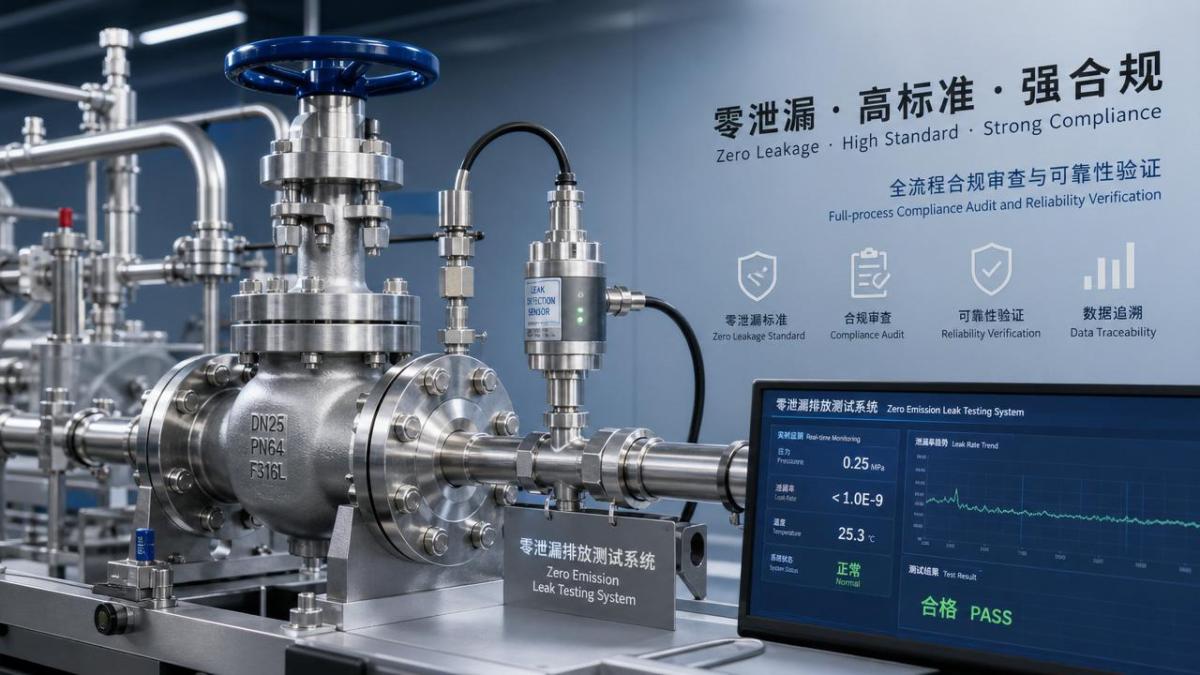
Zero-leakage emission standards affect equipment selection, maintenance planning, warranty exposure, and environmental liability across multiple industrial systems.
The term sounds absolute, yet field performance often depends on operating pressure, media chemistry, thermal cycling, seal design, and testing methods.
That creates a compliance gap between brochure language and verified operating behavior. A structured review reduces that gap before capital is committed.
In sectors covered by G-CST, such as semiconductor fabrication equipment, pump and valve systems, motion hardware, software control, and advanced materials, cross-standard interpretation is essential.
Core checks for zero-leakage emission standards and compliance gaps
Use the following points to test whether zero-leakage emission standards are supported by measurable, transferable, and auditable evidence.
- Confirm which standard is cited, such as ISO, ASME, API, SEMI, or local environmental rules, and verify the exact revision year.
- Check whether zero-leakage emission standards refer to external emissions, process containment, fugitive emissions, or a narrower internal test definition.
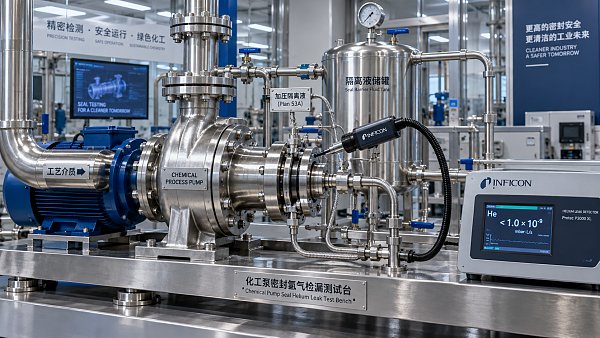
- Review the test medium used during validation, because helium, water, air, solvents, and hazardous chemicals produce very different leakage behaviors.
- Verify pressure range, temperature range, duty cycle, and vibration conditions under which the zero-leakage claim was demonstrated and recorded.
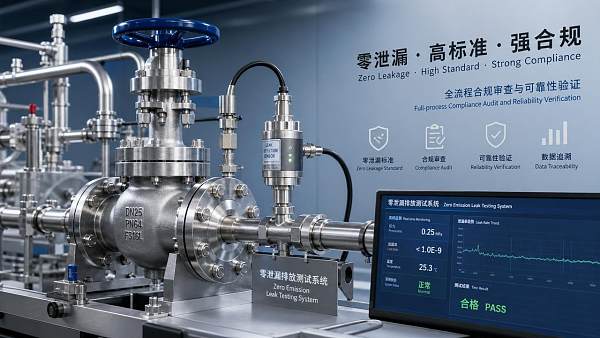
- Request leakage threshold data in quantitative units, not marketing language, including detection limits, instrument accuracy, and pass-fail criteria.
- Examine whether the equipment was tested as a standalone component or as part of a complete assembly with realistic interfaces.
- Assess seal materials, surface finish, coatings, and corrosion compatibility, since material mismatch is a common source of delayed compliance failure.
- Check maintenance intervals and consumable replacement logic, because some zero-leakage emission standards depend on ideal service timing.
- Confirm whether third-party certification exists and whether the certifier audited production consistency, not only a single qualification sample.
- Review digital monitoring capability, including SCADA logs, alarm thresholds, and traceable event history for leak detection and compliance reporting.
- Identify export control, regional labeling, and documentation obligations that may affect cross-border use of components marketed as zero leakage.
- Map warranty exclusions carefully, especially clauses related to fluid purity, installation practices, pressure spikes, or mixed-media operation.
How compliance gaps appear in real industrial settings
Semiconductor and high-purity process environments
In semiconductor facilities, zero-leakage emission standards often intersect with contamination control, chemical compatibility, and uptime requirements.
A valve passing a generic pressure test may still fail in ultra-high-purity service if elastomers outgas or micro-permeation exceeds process tolerance.
Chemical transfer and hazardous media handling
For pumps and valves handling corrosive or toxic fluids, compliance gaps usually emerge when test media differ from actual plant chemicals.
Zero-leakage emission standards must be checked against thermal expansion, seal swelling, pulsation loads, and emergency shutdown conditions.
Motion systems, bearings, and sealed assemblies
Precision motion platforms and bearing assemblies rarely lead discussions on emissions, yet lubricant escape and enclosure leakage can affect compliance.
When cleanroom or vacuum-adjacent equipment is involved, the zero-leakage claim should include dynamic motion testing, not only static bench conditions.
Digital systems and reporting infrastructure
Industrial software does not create physical sealing, but it can expose or conceal compliance gaps through data quality and alarm logic.
If leak events are filtered, delayed, or poorly timestamped, reported adherence to zero-leakage emission standards may not reflect operational truth.
Commonly overlooked issues behind zero-leakage claims
One frequent issue is confusing design intent with certified performance. Many datasheets describe a sealing concept without proving production-level repeatability.
Another issue is test duration. Short qualification windows may miss fatigue-driven leakage that appears after repeated thermal or pressure cycling.
Interface quality is also underestimated. Flanges, welds, fittings, and threaded transitions often become the weakest points in otherwise compliant assemblies.
Documentation language can introduce risk. “Near-zero,” “bubble-tight,” and “hermetic” are not interchangeable with zero-leakage emission standards.
Regional legal differences matter as well. A compliant claim in one jurisdiction may not satisfy monitoring, reporting, or verification rules elsewhere.
Finally, production drift can undermine compliance. Material substitutions, machining tolerance shifts, or supplier changes may invalidate earlier test results.
Practical execution steps for stronger verification
- Create a standard comparison matrix covering cited zero-leakage emission standards, test methods, media, leak thresholds, and operating boundaries.
- Require evidence packages that include certificates, raw test summaries, calibration records, materials declarations, and change-control statements.
- Run scenario-based validation for startup, steady state, upset events, maintenance windows, and end-of-life wear conditions.
- Link compliance reviews with digital monitoring architecture so leak alarms, historian tags, and audit trails are defined before installation.
- Establish acceptance language in contracts that ties zero-leakage emission standards to measurable criteria and post-installation verification steps.
Where possible, use independent benchmarking sources that compare performance across brands, regions, and standard systems.
This is especially useful when complex projects involve high-purity chemicals, semiconductor tools, critical utilities, or export-sensitive infrastructure components.
Reference table for fast assessment
FAQ on zero-leakage emission standards
Does zero leakage always mean absolute physical containment?
Not always. Zero-leakage emission standards may mean below a defined detection threshold under specific conditions, not infinite containment in every scenario.
Why do certified components still fail after installation?
Field conditions differ from qualification setups. Installation stress, misalignment, media impurities, and maintenance deviations often create compliance gaps.
What is the most important document to request?
Request complete test documentation tied to the cited zero-leakage emission standards, including conditions, thresholds, instruments, and revision-controlled materials data.
Conclusion and next actions
Zero-leakage emission standards are becoming a decisive filter for technical credibility, regulatory resilience, and long-term asset reliability.
The main risk is not the absence of standards. It is the hidden space between standard language, test evidence, and real operating behavior.
A disciplined review process should compare standards, validate conditions, examine materials, test digital traceability, and control lifecycle changes.
For organizations evaluating critical systems across global supply chains, that approach improves investment security while reducing compliance surprises.
The next step is simple: turn every zero-leakage claim into a documented verification path before specification approval or contract release.
Recommended News
 Oct 15, 2026What Should I Do When a Zero-Leakage Pump System Loses Pressure?What should I do when a pump system loses pressure? Discover safe troubleshooting steps for zero-leakage pumps, uncover hidden causes, and restore reliable performance.
 Oct 15, 2026How to verify zero-leakage sealing in chemical transfer pumpsVerify zero leakage sealing in chemical transfer pumps with practical guidance on leak testing, seal selection, and acceptance criteria. Learn how to prove containment and reduce risk.
 Sep 30, 2026How ANSI standard chemical pumps reduce replacement riskChemical Pumps ANSI standard designs reduce replacement risk with predictable fit, maintainability, and supplier options. Learn key evaluation steps for safer chemical pump upgrades.
 Sep 15, 2026How to select slurry pump systems that resist abrasive wearSpecialized Pump Systems for slurry handling: learn how to match materials, hydraulics, seals, and operating ranges to reduce abrasive wear, extend service life, and lower downtime.
 Aug 30, 2026How to use a vacuum pump ultimate pressure chart for pump selectionUse a vacuum pump ultimate pressure chart to compare technologies, assess real process demands, and select a reliable pump for cleaner, efficient production.
 Jul 29, 2026How to Select Chemical Pumps for Chemical Processing by Fluid Corrosivity and TemperatureChemical Pumps for chemical processing: learn how fluid corrosivity and temperature shape material, seal, and pump design choices to reduce leaks, failures, and lifecycle cost.
 Jul 08, 2026Slurry Pump ISO Standards: What Actually MattersSlurry pump ISO explained beyond compliance: learn what truly impacts reliability, testing, materials traceability, and lifecycle cost before you compare suppliers.
 Jun 24, 2026Vacuum Pump Ultimate Pressure Data: What Numbers Matter MostVacuum pump ultimate pressure data explained: learn which pressure numbers truly matter, how to compare specs correctly, and how to choose pumps for stable, reliable process performance.
 Jun 23, 2026Specialized Pump Systems: Key Failure Risks and How to Prevent ThemSpecialized Pump Systems face different failure risks across clean, corrosive, and high-load duties. Learn key warning signs and practical prevention steps to reduce downtime.
 Jun 17, 2026Chemical Manufacturing Safety Risks in Fluid Transfer SystemsChemical manufacturing safety starts with fluid transfer control. Learn how to spot leak risks, seal failures, contamination issues, and smarter ways to improve compliance and uptime.
 May 31, 2026Industrial Pump Investment Insights for 2026Industrial pump investment insights for 2026: discover how to reduce downtime, improve TCO, meet compliance, and choose resilient, efficient pump technologies.
 May 29, 2026How to Vet a Slurry Pump OEM Manufacturerslurry pump oem manufacturer selection made easier: learn how to verify engineering, materials, testing, quality systems, and support before you buy.
 May 18, 2026Wastewater Pump Market Outlook 2026: Pricing, Demand, and Upgrade CyclesWastewater pump market outlook 2026: explore pricing trends, replacement demand, and upgrade cycles to cut risk, control costs, and make smarter pump buying decisions.
 May 17, 2026The Future of Magnetic Drive Pumps in High-Risk Fluid DutyFuture of magnetic drive pumps: discover how smarter monitoring, safer zero-leak design, and advanced materials improve reliability in high-risk fluid handling.
 May 17, 2026Industrial Pump Investment Insights for Capacity ExpansionIndustrial pump investment insights for capacity expansion: learn how to compare lifecycle cost, reliability, compliance, and supplier risk to make smarter, lower-risk approval decisions.
 May 17, 2026Chemical Pump Energy Saving Report: Which Upgrades Pay OffChemical pump energy saving report that reveals which upgrades truly pay off—compare VFDs, motor efficiency, hydraulic correction, and reliability impacts to cut costs with confidence.
 May 17, 2026How Raw Material Volatility Is Reshaping Pump CostsImpact of raw material on pump costs is changing budgets, lead times, and lifecycle value. Learn how to reduce risk, compare materials, and make smarter pump approvals.
 May 16, 2026Zero-Leakage Tech Innovations That Reduce Shutdown RiskInnovations in zero-leakage tech help reduce shutdown risk, improve containment reliability, and protect uptime. Discover smarter solutions for critical industrial systems.
 May 15, 2026Zero-Leakage Emission Standards and Compliance GapsZero-leakage emission standards shape compliance, reliability, and investment risk. Learn where claims fail, how to spot hidden gaps, and what to verify before buying critical industrial systems.
 May 15, 2026Bellows Seal Fatigue Life Data for High-Cycle ServiceBellows seal fatigue life data for high-cycle service: compare verified cycle tests, thermal and corrosion limits, and leak-tight performance to choose safer, longer-lasting valves.
 May 14, 2026Dosing System Pumps Wholesale: What Affects Unit Cost and Supply StabilityDosing system pumps wholesale explained: learn what drives unit cost, supply stability, compliance, and long-term value to source smarter and reduce procurement risk.
 May 14, 2026Rotary Lobe Pump Factory Options for Hygienic Duty and Low Shear TransferRotary lobe pump factory selection starts with hygienic design, low shear transfer, and traceable quality. Compare sanitary standards, lifecycle support, and proven application fit.
 May 13, 2026Bellows Seal Valve Factory: What Prevents Fugitive EmissionsBellows seal valve factory selection directly impacts fugitive emissions control. Learn the key checks, standards, and proof points that reduce leakage risk and improve safety.
 May 13, 2026Submersible Motor Pump OEM: Key Seal Risks to ReviewSubmersible motor pump OEM buyers should review seal risks first. Learn how abrasion, corrosion, ingress, and duty conditions affect reliability, safety, and lifecycle cost.