Search News
Industry Portal
Popular Tags
Where EUV Lithography Systems Lose Uptime First

Author
Time
Click Count
EUV lithography systems almost never suffer their first uptime losses from a single dramatic breakdown. In practice, the earliest degradation usually appears at interfaces: precision motion stages drifting out of tolerance, high-performance bearings adding vibration or thermal instability, vacuum and fluid subsystems introducing variability, and industrial software failing to detect or correct those changes early enough. For researchers and operators evaluating semiconductor fabrication equipment, the key question is not only “what fails,” but “what loses stability first, how can it be detected early, and what does that mean for yield, maintenance, and long-term tool availability?”
For most real-world fabs and technical evaluators, the answer is clear: uptime erosion begins first in tightly coupled subsystems where nanometer-scale motion control, contamination control, thermal management, and software diagnostics intersect. That is where technical benchmarking becomes useful. It helps distinguish normal wear from reliability risk, and it gives procurement, engineering, and operations teams a better basis for judging maintainability, compliance exposure, and lifecycle cost.
Where EUV lithography systems typically lose uptime first
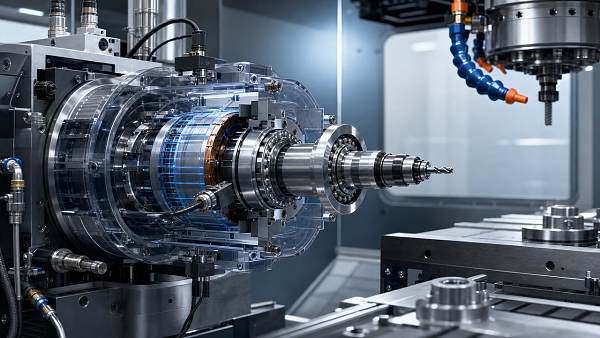
[[IMG:img_01]]If the goal is to identify the first weak points in EUV lithography uptime, focus less on catastrophic failures and more on performance drift inside critical sub-assemblies. The earliest uptime losses often start in five areas:
- Precision motion control systems: wafer stage and reticle stage instability, servo tuning drift, cable carrier fatigue, encoder deviation, and thermal-induced positioning error.
- High-performance bearings and guide mechanisms: sub-micron wear, stiffness loss, increased vibration, lubrication-related issues in supporting mechanisms, and contamination sensitivity.
- Vacuum and supporting pump/valve infrastructure: pressure instability, seal degradation, particle risk, outgassing, and inconsistent response under high-duty cycles.
- Thermal control loops: temperature non-uniformity, delayed compensation, cooling loop imbalance, and heat-induced metrology drift.
- Industrial software and diagnostics: alarm overload, insufficient predictive analytics, poor root-cause isolation, and delayed detection of multi-variable degradation.
These do not always cause immediate tool-down events. More often, they first reduce process window stability, increase recovery time, trigger unplanned calibrations, or create repeatability issues that eventually consume planned production time. In other words, uptime is frequently lost before the machine is officially “down.”
Why motion control and bearing-related degradation shows up so early
Among all EUV lithography subsystems, precision motion control is one of the earliest and most sensitive indicators of uptime risk. EUV tools depend on extremely accurate stage positioning at high speed, under strict vibration and thermal constraints. Even tiny deviations can force compensation routines, repeat alignment steps, or performance derating.
For operators, the practical concern is not abstract mechanical theory. It is whether the stage can maintain repeatable behavior over time without increasing intervention frequency. Early warning signs often include:
- longer settle times after high-speed motion,
- increased correction effort in control loops,
- higher vibration signatures at specific frequencies,
- drift between expected and measured positioning performance,
- more frequent recalibration or alignment verification.
High-performance bearings and guide assemblies matter here because they support motion quality under extremely demanding operating conditions. A small loss in stiffness, microscopic surface damage, contamination ingress, or thermal expansion mismatch can propagate into positioning instability. In an EUV environment, that instability may not remain local; it can affect exposure consistency, overlay performance, and maintenance scheduling.
This is why reliability benchmarking for bearings, guides, and motion modules is not a procurement formality. It is a direct predictor of operational resilience.
What operators should monitor before uptime drops become visible
Operators and equipment users usually care less about broad architecture and more about what to watch on the tool floor. The most useful approach is to monitor leading indicators rather than waiting for official downtime events.
Key operational signals include:
- Repeatability drift: if positioning or process consistency gradually worsens, hidden subsystem degradation may already be underway.
- Rising intervention frequency: more resets, compensations, manual checks, or engineering overrides usually indicate instability.
- Thermal recovery delays: longer stabilization after recipe transitions or maintenance suggests cooling or control-loop stress.
- Vacuum response inconsistency: slower pumpdown, unstable pressure behavior, or abnormal valve cycling can erode throughput and contamination margin.
- Alarm pattern changes: repeated non-critical alarms are often more valuable than a single hard stop when identifying first-loss mechanisms.
- Maintenance interval compression: if service windows are needed earlier than expected, design margin may be shrinking.
For information researchers, these indicators are also valuable evaluation criteria when comparing semiconductor fabrication equipment. A system that maintains stable intervals between intervention events is often more valuable than one that only performs well under ideal baseline conditions.
How technical benchmarking reveals hidden reliability differences
Many EUV lithography systems appear similar at the specification level, but uptime performance separates them over time. Technical benchmarking helps reveal these differences by assessing not just peak capability, but durability, control stability, serviceability, and standards alignment.
Useful benchmarking dimensions include:
- Motion accuracy under sustained load, not only at initial acceptance.
- Bearing life and vibration stability under real contamination and thermal conditions.
- Pump and valve reliability in high-purity and vacuum-critical duty cycles.
- Software diagnostic maturity, including fault isolation, trend analytics, and predictive maintenance integration.
- Recovery time after disturbance, because uptime loss is often driven by slow restoration rather than the event itself.
- Compliance and documentation quality relative to ISO, SEMI, ASME, and IEEE-relevant frameworks.
This matters because two systems can meet nominal process requirements while producing very different maintenance burdens. For buyers, a tool with stronger subsystem benchmarking data can reduce lifecycle uncertainty. For operators, it means fewer ambiguous failure modes and faster troubleshooting.
Why industrial software becomes a decisive uptime factor
In advanced semiconductor fabrication equipment, software is not just a control layer. It is a reliability layer. The first uptime losses often become expensive because the software environment does not detect weak signals soon enough, or because it fails to connect symptoms across subsystems.
For example, a motion anomaly may be treated as an isolated calibration issue when the real cause is bearing stiffness change, thermal imbalance, or vacuum-induced mechanical variation. Without strong software correlation, maintenance teams may replace the wrong component, extend mean time to repair, or miss a repeatable failure chain.
Well-designed industrial software solutions improve uptime in several ways:
- trend analysis across motion, thermal, and vacuum variables,
- predictive maintenance models tied to component behavior,
- digital twin support for fault reproduction and scenario testing,
- cleaner alarm prioritization for operators,
- faster root-cause narrowing for engineering teams.
For G-CST-style evaluation frameworks, this is an important distinction: hardware quality alone does not define resilience. The combination of precision components and actionable software intelligence determines whether early-stage degradation becomes a short service event or a prolonged uptime loss.
How procurement teams and technical researchers should judge maintainability
For technical researchers and procurement stakeholders, the most useful question is not simply whether a subsystem is high performance, but whether it is maintainable at scale within a real fab environment. Maintainability directly affects uptime, spare strategy, service logistics, and risk exposure under export controls or supply-chain disruption.
Priority evaluation questions include:
- How accessible are failure-critical motion and support components for service?
- Are high-wear parts benchmarked for long-cycle stability, or only for initial precision?
- Does the supplier provide verifiable degradation data, not just nominal specifications?
- Can the software environment support early diagnostics without vendor dependence for every event?
- How quickly can pumps, valves, bearings, sensors, and control modules be sourced or replaced?
- Are maintenance procedures aligned with recognized industrial and documentation standards?
This is especially relevant in a market shaped by semiconductor sovereignty, tighter compliance expectations, and more complex global sourcing. A theoretically superior subsystem may still be a weak operational choice if supportability is narrow, data transparency is limited, or maintenance recovery is too dependent on single-channel vendor intervention.
What a practical reliability-first assessment looks like
If the objective is to understand where EUV lithography systems lose uptime first, a reliability-first assessment should emphasize coupled subsystem behavior rather than isolated specifications. In practice, the best evaluation model combines:
- Subsystem criticality mapping to identify where nanometer-scale instability can disrupt throughput or yield first.
- Technical benchmarking across motion, bearings, vacuum, thermal control, and software diagnostics.
- Leading-indicator monitoring to catch drift before hard downtime events occur.
- Maintainability analysis covering service intervals, spare availability, documentation, and recovery time.
- Compliance review to ensure the equipment environment aligns with relevant international reliability and engineering frameworks.
This approach gives both operators and information researchers a more realistic understanding of uptime risk. It also supports better communication between fab users, equipment suppliers, and procurement decision-makers.
In short, EUV lithography systems usually lose uptime first at the interfaces where precision motion control, bearing performance, vacuum stability, thermal regulation, and industrial software must work together without drift. The earliest losses are rarely obvious at first, but they are measurable. Teams that benchmark these subsystems carefully, monitor leading indicators, and prioritize maintainability will make better technical and commercial decisions—and will be far more likely to protect uptime before visible failure occurs.
Recommended News
 Jul 17, 2026How to Evaluate a Mask Inspection System for Photomask Defect RiskMask inspection system for photomask evaluation starts with defect risk. Learn how to compare sensitivity, false calls, throughput, and supplier reliability for smarter selection.
 Jul 14, 2026SEMI Standards for Cleanrooms: Key Compliance Points for New Fab ProjectsSEMI standards for cleanrooms: learn the key compliance points new fab teams must address early to cut redesign, control startup risk, and speed qualification with confidence.
 Jul 13, 2026How to Evaluate a Photoresist Coater Exporter for Stable YieldPhotoresist coater exporter selection affects yield, uptime, and risk. Learn how to assess process capability, export reliability, and service support before you buy.
 Jul 11, 2026How to Compare UV Exposure Accuracy in Mask Aligner SystemsMask aligner UV exposure system comparison starts with real accuracy. Learn how to evaluate dose uniformity, spectral stability, and alignment repeatability for better process yield.
 Jun 28, 2026High NA EUV Overlay Accuracy: Key Limits for Process ControlHigh NA EUV overlay accuracy defines yield, tool matching, and process stability at advanced nodes. Discover the key limits, metrology risks, and control priorities shaping fab performance.
 Jun 26, 2026SEMI Standards for Automation Compliance BasicsSEMI Standards for industrial automation guide compliance, interoperability, and stable production. Discover the basics that reduce risk, improve integration, and support smarter manufacturing.
 Jun 13, 2026OLED Displays vs LCD: What Matters for Brightness, Burn-In, and PowerOLED displays vs LCD: compare sustained brightness, burn-in risk, and power behavior to choose the right display for industrial, commercial, and high-uptime systems.
 May 22, 2026Future of High-Speed Spindles: 2026 Performance Trade-OffsFuture of high-speed spindles in 2026: discover the real trade-offs between RPM, thermal stability, bearing life, energy use, and supplier support to make smarter buying decisions.
 May 22, 2026Precision Stage Repeatability Data: What Drift Is Acceptable?Precision stage repeatability data explained: learn what drift is acceptable, how to judge risk, and how to validate motion performance before it impacts yield, compliance, or long-term reliability.
 May 21, 2026Spindle Run-Out Benchmarks That Matter in 2026Spindle run-out benchmarks that matter in 2026: learn the reference ranges, test criteria, and qualification checks that reduce risk, improve precision, and support smarter sourcing decisions.
 May 19, 2026Vibration Isolator Supplier Guide for Sensitive EquipmentVibration isolator supplier guide for sensitive equipment: learn how to compare performance data, materials, compliance, and lifecycle value to choose a reliable partner with confidence.
 May 18, 2026Cross Roller Bearing Factory Selection for Compact High-Precision StagesCross roller bearing factory selection guide for compact high-precision stages. Learn how to verify quality, preload control, compliance, and sourcing risk for reliable performance.
 May 09, 2026Global Metrology Tools Growth Data and Its Impact on Yield PlanningGlobal metrology tools growth data reveals how rising inspection demand shapes yield planning, process control, and equipment strategy—helping technical teams reduce risk and improve ROI.
 May 08, 2026The Future of High-NA EUV Technology and the Subsystems Most Likely to BottleneckFuture of High-NA EUV technology: discover which subsystems may become the biggest bottlenecks—from motion stages and metrology to vacuum control—and why they matter for yield, uptime, and smarter benchmarking.
![]() May 07, 2026Lithography Light Source Wavelength Data: How to Judge Tool Fit and Process WindowLithography light source wavelength data reveals how to judge tool fit, process window, yield risk, and upgrade paths—helping enterprise buyers compare platforms with confidence.
May 07, 2026Lithography Light Source Wavelength Data: How to Judge Tool Fit and Process WindowLithography light source wavelength data reveals how to judge tool fit, process window, yield risk, and upgrade paths—helping enterprise buyers compare platforms with confidence. May 06, 2026Die Bonder Factory Shortlist: What to Compare Beyond Unit PriceDie bonder factory selection should go beyond unit price. Compare yield stability, maintenance, compliance risk, and service support to reduce downtime and improve long-term ROI.
 May 06, 2026How to Compare a Wire Bonder Supplier Without Missing Hidden Service RisksWire bonder supplier comparison goes beyond price. Discover how to spot hidden service risks, protect uptime, and choose a partner with reliable long-term support.
 May 05, 2026Spin Coater Manufacturer Selection Mistakes That Hurt Coating UniformitySpin coater manufacturer selection mistakes can ruin coating uniformity. Learn what to check for better stability, fewer defects, and more reliable thin-film results.
 May 05, 2026Wafer Carrier Box Factory Checklist: Material, Cleanliness, and Lead TimeWafer carrier box factory checklist for buyers: compare material performance, cleanliness control, and lead time stability to reduce contamination risk and secure reliable supply.
 May 04, 2026Photoresist Coater Factory Audit Checklist for Consistent Coating QualityPhotoresist coater factory audit checklist for quality and safety teams: uncover contamination, calibration, EHS, and QC risks to improve coating consistency and supplier confidence.
 May 04, 2026What Sets a Reliable Lithography Light Source Supplier Apart in 2026Lithography light source supplier selection in 2026 demands more than price. Discover how reliability, compliance, service depth, and supply resilience protect yield, uptime, and ROI.
 May 02, 2026SEMI Standards for Semiconductor Equipment: Key Checks Before QualificationSEMI Standards for semiconductor equipment: learn the key pre-qualification checks for safety, automation, contamination control, reliability, and documentation before fab approval.
![]() Apr 21, 2026Where EUV Lithography Systems Lose Uptime FirstEUV Lithography Systems lose uptime first in precision motion control, high-performance bearings, and Industrial Software Solutions—learn benchmarking, maintainability, and compliance insights.
Apr 21, 2026Where EUV Lithography Systems Lose Uptime FirstEUV Lithography Systems lose uptime first in precision motion control, high-performance bearings, and Industrial Software Solutions—learn benchmarking, maintainability, and compliance insights.![]() Apr 21, 2026SEMI Standards Compliance Issues That Delay Equipment AcceptanceSEMI Standards issues can delay equipment acceptance across Precision Manufacturing. Learn how Digital Twin Technology, Strategic Procurement, Reliability Engineering, and Chemical Pumps affect faster approvals.
Apr 21, 2026SEMI Standards Compliance Issues That Delay Equipment AcceptanceSEMI Standards issues can delay equipment acceptance across Precision Manufacturing. Learn how Digital Twin Technology, Strategic Procurement, Reliability Engineering, and Chemical Pumps affect faster approvals.