Search News
Industry Portal
Popular Tags
When Is Aluminum Matrix Composite OEM Best?
Author
Time
Click Count
When is aluminum matrix composite OEM the smartest choice for demanding industrial projects? The short answer: it is best when your application needs a rare balance of low weight, high specific stiffness, better thermal management than many polymer composites, and repeatable production for mission-critical parts. For buyers comparing a composite sandwich panel factory, graphene materials OEM supplier, zirconia ceramic supplier, or carbon fiber composite OEM, the decision should not be based on novelty alone. It should be based on operating temperature, wear conditions, dimensional stability, lifecycle cost, machinability, and the supplier’s ability to scale quality. This guide helps researchers, operators, procurement teams, and business decision-makers judge when aluminum matrix composite OEM creates real technical and commercial value.
When is aluminum matrix composite OEM the right choice?
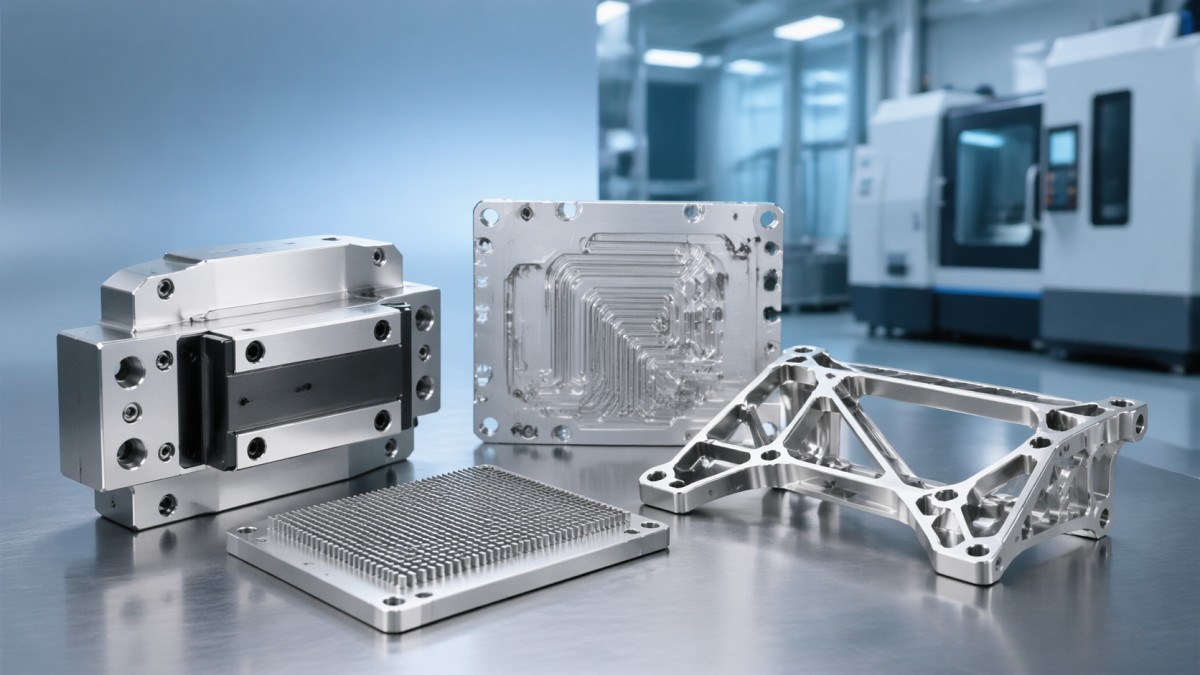
Aluminum matrix composite OEM is usually the best option when a project cannot be fully served by standard aluminum alloys, pure ceramics, or polymer-based composites alone. It becomes especially attractive in applications where parts must stay light but also resist wear, maintain shape under thermal load, and perform reliably in repetitive industrial service.
In practical terms, aluminum matrix composite OEM makes the most sense when you need:
- Higher specific stiffness than conventional aluminum without a major weight penalty
- Better wear resistance for sliding, rotating, or abrasive environments
- Improved thermal conductivity compared with many non-metallic composites
- Controlled thermal expansion for assemblies that must stay dimensionally stable
- Near-net-shape or custom-engineered parts that justify OEM development
- Scalable production for industrial programs rather than one-off laboratory concepts
If your part only needs low cost and basic strength, standard aluminum may be sufficient. If it needs extreme hardness and very high temperature resistance but can tolerate brittleness and more difficult joining, zirconia ceramic or other advanced ceramics may be better. If the top priority is ultra-low weight and anisotropic structural performance, a carbon fiber composite OEM may win. Aluminum matrix composite sits in the valuable middle ground where metallic process familiarity meets enhanced composite performance.
What problems does aluminum matrix composite OEM solve better than other material options?
Most searchers looking for this topic are not asking for a textbook definition. They are trying to solve a material selection problem. The key question is: what failure mode or business constraint is driving the choice?
Aluminum matrix composites are often selected to address these issues:
- Premature wear in lightweight metal parts: Reinforcements such as silicon carbide or alumina can significantly improve surface durability.
- Thermal distortion in precision assemblies: A tailored composite can lower the coefficient of thermal expansion and improve dimensional control.
- Weight reduction without abandoning metal-based manufacturing logic: This matters in aerospace, transport equipment, robotics, thermal systems, and high-performance industrial machinery.
- Need for a balance of machinability, stiffness, and heat transfer: This is where aluminum matrix composite can outperform many polymer composites.
- Lifecycle cost pressure: A higher part price may be justified by longer service life, less maintenance, and lower system weight.
For operators and engineers, this matters because the wrong material choice often shows up not in the first month, but later as tolerance drift, abrasive wear, overheating, fatigue, or assembly complexity. For procurement teams, the real issue is whether a higher-spec OEM material reduces total ownership cost instead of simply raising unit price.
Which applications are the strongest fit for aluminum matrix composite OEM?
The best-fit applications are usually performance-critical and commercially meaningful enough to justify engineering customization. Common examples include:
- Automotive and mobility: brake components, pistons, connecting structures, lightweight wear-resistant housings
- Aerospace and defense: structural inserts, thermal management components, lightweight precision parts
- Electronics and semiconductor-adjacent systems: heat spreaders, precision platforms, packaging elements requiring thermal stability
- Industrial machinery: moving assemblies, sliding components, high-speed precision equipment, robotic arms
- Energy and infrastructure: specialty components exposed to friction, cyclic load, or demanding thermal conditions
These applications benefit most when system designers are not buying a material in isolation. They are buying an engineered performance outcome: less weight, less wear, more precision, longer service intervals, or better thermal control.
How does aluminum matrix composite OEM compare with carbon fiber composite, ceramics, graphene materials, and sandwich panels?
This is one of the most important evaluation areas for buyers comparing different advanced material supply routes.
Compared with carbon fiber composite OEM:
Carbon fiber composites often deliver more aggressive weight savings and excellent directional strength. However, aluminum matrix composites may offer better thermal conductivity, more metal-like damage tolerance in certain applications, and easier integration into assemblies where metallic interfaces, conductivity, or wear resistance matter.
Compared with a zirconia ceramic supplier:
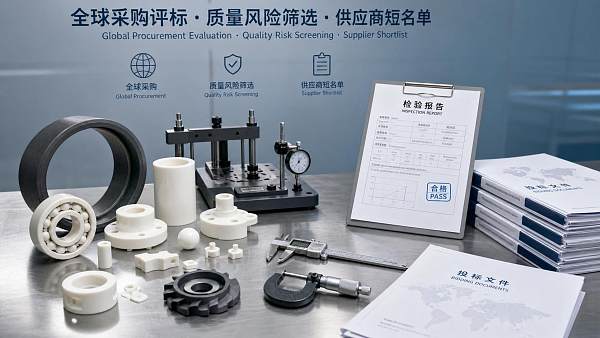
Zirconia and other ceramics excel in hardness, corrosion resistance, and high-temperature stability. But they can be brittle and harder to machine or join in some use cases. Aluminum matrix composite OEM may be preferable when impact tolerance, lower density, or more versatile part integration is required.
Compared with graphene materials OEM solutions:
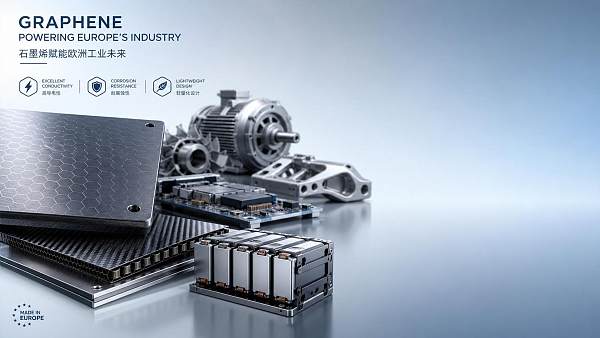
Graphene-related materials can be highly promising for conductivity, barrier performance, or multifunctional enhancements, but many offerings still vary in commercial maturity depending on the exact format and application. Aluminum matrix composites are often the more proven industrial choice when the requirement is structural performance plus manufacturable consistency.
Compared with a composite sandwich panel factory:
Sandwich panels are excellent for large-area lightweight structures, especially where bending stiffness matters. But they are not direct substitutes for dense, wear-capable, precision-engineered metallic composite parts. If your part is a load-bearing insert, thermal plate, or moving mechanical component, aluminum matrix composite OEM is a more relevant path.
In short, aluminum matrix composite OEM is strongest when the application needs a functional metal component with upgraded composite behavior, not just a lightweight panel or an ultra-hard brittle part.
What should procurement teams and decision-makers evaluate before choosing an OEM supplier?
For commercial buyers, the biggest mistake is focusing only on sample performance. A reliable sourcing decision requires checking whether the supplier can maintain material consistency, process control, and compliance across production volumes.
Key evaluation points include:
- Reinforcement system: What particles or fibers are used, at what volume fraction, and with what distribution control?
- Manufacturing method: Stir casting, powder metallurgy, squeeze casting, infiltration, or another route? Each affects cost, porosity, tolerances, and repeatability.
- Property data quality: Are strength, hardness, wear, thermal conductivity, and expansion values verified under recognized standards?
- Secondary processing capability: Can the OEM machine, finish, coat, braze, or assemble the part as required?
- Application engineering support: Will the supplier help optimize geometry, tolerances, and failure-risk reduction?
- Quality assurance: What controls exist for batch consistency, inclusions, interfacial bonding, and defect inspection?
- Scale-up readiness: Can pilot success transition into stable serial production?
- Commercial resilience: What is the supplier’s lead-time stability, export compliance readiness, and raw material sourcing strategy?
For enterprise decision-makers, supplier maturity matters as much as material performance. The right OEM partner should reduce risk across qualification, delivery, compliance, and long-term support.
What are the main risks or limitations of aluminum matrix composite OEM?
Aluminum matrix composite is not automatically the best answer. It has trade-offs that should be considered early.
- Higher cost than standard aluminum: Material and processing complexity can raise part price.
- Machining challenges: Reinforcements may increase tool wear and processing difficulty.
- Joining constraints: Some part designs need careful planning for welding, brazing, fastening, or hybrid assembly.
- Supplier variability: Not every OEM has the same control over dispersion, porosity, and interfacial quality.
- Overengineering risk: If the application does not truly need the performance uplift, ROI can be weak.
This is why the most useful question is not “Is aluminum matrix composite advanced?” but “Does it solve a costly real-world problem better than the alternatives?” If the answer is yes, the premium is often justified. If not, simpler materials may deliver a better business outcome.
How can technical teams decide if aluminum matrix composite OEM will deliver ROI?
A practical decision framework should combine engineering criteria with commercial logic. Use these questions:
- What failure or limitation exists in the current part? Wear, excess mass, thermal drift, fatigue, or maintenance frequency?
- Which performance metric matters most? Weight reduction, dimensional stability, surface life, thermal transfer, or precision retention?
- What alternatives are being compared? Conventional aluminum, carbon fiber composite OEM, zirconia ceramic supplier options, graphene materials OEM solutions, or sandwich structures?
- What is the lifecycle value? Lower maintenance, better efficiency, longer service life, fewer replacements, or reduced downtime?
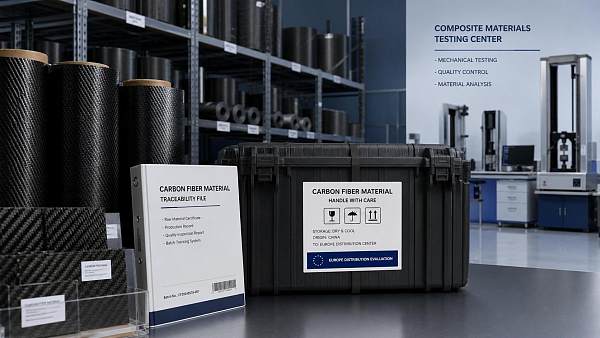
- Can the OEM supplier prove repeatability? Test reports, qualification data, traceability, and production references matter.
If the project has measurable performance pain points and enough production value to justify material engineering, aluminum matrix composite OEM can be a high-confidence choice.
Final judgment: when is aluminum matrix composite OEM best?
Aluminum matrix composite OEM is best when your project requires a custom-engineered part that must remain lightweight while delivering stronger wear resistance, better thermal behavior, and more stable performance than standard aluminum can provide. It is especially valuable where carbon fiber composite OEM lacks the needed thermal or metallic characteristics, where ceramics are too brittle or integration-heavy, and where sandwich panels are not structurally or functionally appropriate.
For researchers, it offers a proven route to performance enhancement. For operators, it can improve durability and stability in real equipment. For procurement teams, it can lower total lifecycle risk when sourced from a qualified OEM partner. For business leaders, it is most attractive when material performance directly supports uptime, product differentiation, or long-term cost efficiency.
The smartest choice is not simply the most advanced material. It is the one that best fits the application, scales with quality, and delivers measurable value across the full operating life of the part. In that context, aluminum matrix composite OEM is at its best when performance requirements are too demanding for standard metals, but the project still needs the practicality and industrial logic of a metal-based solution.
Recommended News
 Oct 16, 2026Is Hastelloy C22 suitable for handling hot hydrochloric acid?Is Hastelloy C22 chemical industry material suitable for hot hydrochloric acid? Explore corrosion limits, operating conditions, and testing guidance to make informed material choices.
 Oct 05, 2026How bend radius affects cracking in sheet metal bendingSheet metal bending crack prevention starts with the right bend radius. Learn how material ductility, grain direction, and tooling affect reliability.
![]() Oct 21, 2026What Compliance Evidence Should Advanced Material Suppliers Provide?What compliance evidence should advanced material suppliers provide? Explore the essential traceability, regulatory, testing, and change-control documents for confident material qualification.
Oct 21, 2026What Compliance Evidence Should Advanced Material Suppliers Provide?What compliance evidence should advanced material suppliers provide? Explore the essential traceability, regulatory, testing, and change-control documents for confident material qualification. Sep 14, 2026When does high purity matter in advanced engineering materials?Advanced Engineering Materials high purity: learn when impurity control protects reliability, yield, and qualification—and how to specify the right grade for critical applications.
 Aug 23, 2026How to check if safetyharnesses meet OSHA and ANSI requirementssafetyharnesses compliance starts with labels, traceability, ANSI Z359 proof, and OSHA fit-for-use checks. Learn the key red flags and verification steps before you buy.
 Aug 21, 2026Where graphene conductivity applications deliver a real performance gainGraphene conductivity applications deliver real gains in coatings, EMI shielding, flexible electronics, and energy storage—learn where performance justifies cost and complexity.
 Aug 20, 2026What makes hotelroomfurniture durable enough for high-turnover hotelshotelroomfurniture built for high-turnover hotels must resist impact, cleaning chemicals, and daily wear. Learn what materials, joints, and finishes truly last.
 Aug 24, 2026Evaluating Hastelloy C22 Sheet for Welded Chemical Processing EquipmentHastelloy C22 Sheet for welded chemical processing equipment: assess weldability, thickness tolerance, corrosion resistance, and procurement risks to choose safer, longer-lasting assets.
 Jul 15, 2026Industrial Graphene Application Trends in Europe for 2026Industrial graphene application trends Europe in 2026 highlight where batteries, coatings, composites, and electronics are moving toward scalable adoption, offering actionable insight for smarter sourcing and investment.
 Jul 11, 2026When Optical Grade Specialty Glass Fails Spec: Common CausesSpecialty glass optical grade failures often stem from stress, contamination, or machining drift. Learn the common causes, warning signs, and how to prevent costly out-of-spec batches.
 Jul 08, 2026How to Evaluate Carbon Fiber Distributors in EuropeCarbon fiber distributors Europe: learn how to compare traceability, technical support, compliance, and delivery reliability to choose the right partner with confidence.
 Jul 01, 2026Radiation Shielding Supplier Selection: Cost, Compliance, and Lead TimeRadiation shielding supplier selection affects cost, compliance, and lead time. Learn how to compare quotes, verify standards, and reduce project risk before you buy.
 Jun 30, 2026Global Technical Ceramics Tenders: Sourcing Risks and ShortlistsGlobal technical ceramics tenders sourcing demands more than price checks. Discover key risks, smarter shortlists, and practical ways to reduce compliance, quality, and supply disruption.
 Jun 29, 2026Office Decor Trends for 2026: What Improves Focus Without Raising Fit-Out CostsOffice decor trends for 2026 that boost focus, support hybrid work, and improve space performance without expensive fit-outs. Discover practical, budget-smart upgrades.
 Jun 28, 2026Auto Body Parts Guide: OEM vs Aftermarket Cost and FitAuto body parts guide comparing OEM vs aftermarket options on cost, fit, durability, and repair value. Learn which choice delivers better results before you buy.
 Jun 23, 2026Sheet Metal Distributor Selection: 7 Checks Before You Place an OrderSheet metal distributor selection starts with 7 critical checks. Learn how to compare quality, lead time, traceability, and total cost before placing an order.
 Jun 22, 2026How to Choose a Hydraulic Press for Composite MaterialsHydraulic press for composite materials: learn how to compare tonnage, thermal uniformity, controls, and tooling fit to choose a press that boosts quality, uptime, and ROI.
 Jun 21, 2026How to Evaluate a Thermoset Resin Manufacturer Beyond PriceThermoset resin manufacturer selection should go beyond price. Learn how to assess quality, compliance, batch consistency, and supply reliability for lower-risk sourcing.
 Jun 20, 2026How to Evaluate an Advanced Engineering Materials SupplierAdvanced Engineering Materials supplier evaluation starts with proof, not price. Learn how to assess quality, compliance, traceability, and supply resilience for smarter sourcing.
 Jun 17, 2026How to Evaluate a Bedding Sets Exporter Before OrderingBedding sets exporter evaluation guide: learn how to verify quality control, compliance, pricing, and shipment reliability before ordering to reduce risk and choose the right supplier.
 Jun 16, 2026SBS Modified Bitumen Membrane: Common Failures and FixesSBS modified bitumen membrane guide: discover common failures, key warning signs, and proven fixes to stop leaks, extend roof life, and reduce costly repairs.
 Jun 16, 2026How to Compare Eco-Friendly Building Materials for Lightweight PanelsEco-friendly building materials lightweight panels: learn how to compare carbon, fire safety, moisture resistance, and supply reliability to choose smarter, longer-lasting panel solutions.
 Jun 13, 2026How to Evaluate Manufacturing Components for Cost, Tolerance, and Lead TimeManufacturing components evaluation starts with total cost, tolerance, and lead time. Learn a practical framework to compare suppliers, reduce sourcing risk, and make smarter buying decisions.
 Jun 12, 2026How Wooden Educational Toys Support Early Skill Developmentwoodeneducationaltoys help build fine motor skills, focus, problem-solving, and creativity. Discover how to choose safer, durable toys that support confident early learning.