Search News
Industry Portal
Popular Tags
Fresh Carbon Fiber Supply Chain News Raises Questions on Lead Times

Author
Time
Click Count
Fresh carbon fiber supply chain news is forcing buyers and engineers to reassess lead times, qualification risks, and sourcing strategy. For procurement teams and decision-makers tracking nanotechnology in manufacturing trends and the future of sustainable polymers, this update signals more than a logistics issue—it reflects a broader shift in advanced materials planning, cost control, and long-term supply resilience.
The core question behind recent carbon fiber supply chain developments is not simply whether deliveries will be late. It is whether current sourcing assumptions still hold for programs that depend on stable fiber grades, predictable qualification cycles, and controllable total landed cost. For many industrial buyers, the answer is increasingly no.
Searchers looking for fresh carbon fiber supply chain news are typically trying to make a practical judgment: should they expect longer lead times, rising risk in specification continuity, or a need to redesign purchasing strategy? The most useful response is a market-based, operations-focused view that connects supply conditions to procurement, engineering, and executive decision-making.
What the latest carbon fiber supply chain news really means for lead times

Recent supply chain news around carbon fiber has raised concern because lead times in advanced engineering materials are rarely driven by a single bottleneck. Even when a producer reports stable output, buyers can still face delays due to precursor constraints, energy costs, export controls, logistics congestion, resin system dependencies, or limited capacity for downstream conversion such as prepregging, weaving, or composite part manufacturing.
That is why “lead time” should not be interpreted as one date from one supplier. In practice, buyers need to break it into several stages: raw fiber availability, conversion into intermediate forms, qualification for the intended application, shipment reliability, and the supplier’s ability to maintain the same product characteristics over multiple order cycles. A nominally short quoted lead time can still hide major execution risk.
For procurement teams, the most important takeaway is that fresh supply chain news often changes the reliability of delivery more than the headline duration. A supplier that still quotes 10 to 14 weeks may now have wider schedule variance, stricter allocation rules, or more aggressive minimum order quantities. That is often more disruptive than a transparent extension to 18 weeks with firm capacity reservation.
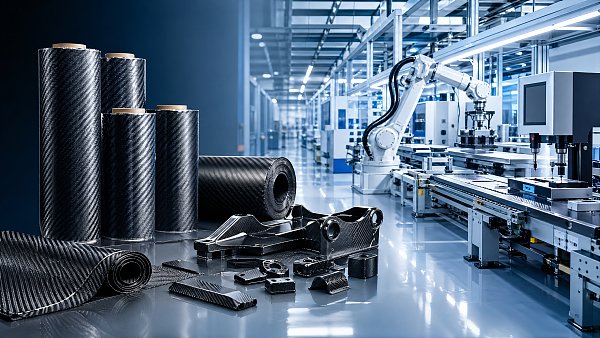
For engineers and operators, the issue is equally serious. Carbon fiber is not a generic commodity that can always be swapped without consequences. Fiber modulus, tensile strength, tow size, surface treatment, compatibility with resin systems, and process behavior during layup or molding all affect performance. Any disruption in supply can quickly turn into a qualification challenge, not just a scheduling issue.
Why buyers are asking harder questions now
The market context has changed. Carbon fiber demand is now influenced by multiple sectors at once, including aerospace, pressure vessels, wind energy, transportation, sporting goods, and emerging industrial applications. Some demand cycles are driven by long-term infrastructure and decarbonization policies, while others are linked to defense, electrification, and high-performance manufacturing. That means local events can have global consequences.
At the same time, supply expansion is not always fast or evenly distributed. Carbon fiber production requires specialized assets, process know-how, controlled quality systems, and significant capital investment. Expanding output is not as simple as adding commodity polymer capacity. Even when new projects are announced, buyers should not assume that commercial volumes, grade consistency, and regional availability will arrive on the timetable implied by market headlines.
This is why decision-makers increasingly search for carbon fiber supply chain updates in relation to lead times rather than price alone. In strategic sourcing, delivery predictability now has direct financial value. It affects inventory policy, project launch timing, customer commitments, and the cost of qualification backups. In many cases, the hidden cost of uncertainty exceeds the visible cost increase on the material quote.
For companies following nanotechnology in manufacturing trends and the future of sustainable polymers, the concern is broader still. Carbon fiber sits within a larger advanced materials landscape where performance, weight reduction, durability, and environmental expectations are converging. Supply instability in one material family can shift R&D priorities, substitution models, and lifecycle planning across multiple product lines.
What target readers care about most: the real decision checklist
Information researchers want to know whether the latest news reflects a temporary disturbance or a structural shift. They need signals that separate noise from actionable change. Useful indicators include allocation announcements, lead time extensions across multiple regions, changes in precursor supply, shipment interruptions, customer-specific qualification delays, and evidence that downstream converters are reprioritizing customers.
Operators and technical users care about continuity. Their questions are practical: will the same fiber grade remain available, will process settings need adjustment, and can production schedules stay intact without increasing scrap or rework? They need clear visibility into whether a substitute material will behave the same in winding, layup, pultrusion, molding, or curing operations.
Procurement professionals focus on risk transfer. They need to know whether suppliers are absorbing volatility or pushing it downstream through indexed pricing, non-cancellable orders, elongated forecasts, or reduced flexibility on call-off schedules. They also need a framework for deciding when to dual-source, when to buffer inventory, and when to negotiate capacity commitments rather than transactional buys.
Enterprise decision-makers care about exposure at the portfolio level. They need to understand which programs are vulnerable, which customer contracts carry delay penalties, and whether the organization’s material strategy remains aligned with cost, sustainability, and resilience goals. For them, carbon fiber supply chain news becomes a board-level issue when it threatens launch timing, margin, or strategic market position.
How to interpret lead times beyond the supplier quote
A useful way to assess current lead times is to ask five layered questions. First, what is the quoted production lead time for the exact grade and format needed? Second, is that quote backed by actual reserved capacity or only by standard planning assumptions? Third, what is the expected variance around that lead time? Fourth, what downstream conversion steps are required before the material becomes usable? Fifth, what qualification or compliance steps could delay use after delivery?
These questions matter because the carbon fiber buying process often includes hidden time. A fiber may be available, but the prepreg line may be constrained. A woven fabric may be obtainable, but not in the desired width or finish. Material may arrive on site, but release to production may still depend on incoming inspection, customer approval, destructive testing, or process revalidation after a lot change.
Procurement and engineering teams should therefore measure “usable lead time” instead of “shipment lead time.” Usable lead time is the only metric that reflects real operational readiness. It captures the time from purchase commitment to approved use in production. That is the number that matters for customer delivery, factory planning, and executive forecasting.
In periods of volatility, companies that rely only on supplier quotations often underestimate total risk. Better-performing organizations build lead time dashboards that separate raw material availability, converter status, logistics performance, qualification readiness, and safety stock coverage. This creates a far more realistic picture of exposure.
Qualification risk is now as important as supply risk
One of the most underestimated consequences of fresh carbon fiber supply chain news is qualification drag. When a preferred source becomes constrained, many organizations assume they can activate an alternate vendor quickly. In reality, switching or adding a carbon fiber source can trigger a chain of technical checks: mechanical testing, laminate behavior validation, resin compatibility review, process parameter adjustment, and customer or regulatory signoff.
For high-reliability industries, these steps can take far longer than the material delay itself. Even where material specifications appear equivalent on paper, differences in sizing chemistry, filament behavior, batch consistency, and handling characteristics may affect final product performance. The result is that a backup source is only as valuable as the speed and completeness of its qualification pathway.
This has direct implications for sourcing strategy. Buyers should classify carbon fiber inputs by qualification sensitivity. Some applications may allow a controlled alternate with modest testing. Others may require full requalification or even product redesign. Without this classification, businesses can misjudge the true resilience of their supplier base.
Teams that manage this well usually maintain a living qualification matrix. It maps each material to approved alternates, test requirements, customer notification rules, and estimated activation timelines. In a tightening supply environment, that matrix becomes a strategic asset, not just a quality document.
What procurement teams should do now
First, segment spend by mission criticality, not just annual value. A lower-spend carbon fiber input that supports a high-penalty customer program may deserve more attention than a larger-volume item used in flexible production. This helps procurement align its effort with business consequence rather than simple purchasing volume.
Second, move from passive ordering to active supplier dialogue. Buyers should ask suppliers about capacity utilization, precursor exposure, regional allocation practices, expected maintenance shutdowns, and the share of supply tied to long-term contracts. These questions often reveal more than current price sheets. They also help distinguish suppliers with robust planning discipline from those reacting tactically to market pressure.
Third, review contract structure. In unstable material markets, spot buying can create false savings while increasing execution risk. Framework agreements, forecast-sharing mechanisms, and capacity reservations may provide better total value when project continuity matters. The right structure depends on demand certainty, qualification complexity, and the financial impact of delay.
Fourth, strengthen supply intelligence. Procurement should not rely solely on supplier updates. Monitor trade policy, shipping routes, energy costs, capacity announcements, converter lead times, and relevant industrial demand shifts. A stronger market view supports better negotiation, earlier escalation, and more credible internal planning.
How engineering and operations can reduce disruption
Engineering teams should review where material flexibility can be increased without compromising performance. That may include validating more than one approved tow size, evaluating alternate fabric constructions, or documenting process windows that tolerate small variability in incoming material. The goal is not uncontrolled substitution but designed resilience.
Operations teams should examine where delays create the highest downstream cost. If a carbon fiber shortage halts a line with expensive labor and equipment idle time, the business case for strategic buffer stock may be strong. If the same material feeds a less time-sensitive process, flexibility may come from scheduling adjustments rather than extra inventory.
Cross-functional simulation is especially useful. Procurement, manufacturing, quality, and program management should model what happens if lead times extend by 25%, 50%, or more. This allows the business to identify the trigger point for dual sourcing, redesign, stock build, or customer communication. It also reveals which assumptions are overly optimistic.
For organizations watching the future of sustainable polymers, this is also a moment to assess material roadmaps. If carbon fiber availability or cost remains unstable, some applications may justify deeper exploration of hybrid structures, recycled content options, or alternative reinforcement strategies. Not every product can shift, but some can reduce dependence on the tightest supply nodes.
Is this a short-term disruption or a long-term strategic signal?
In many cases, fresh carbon fiber supply chain news should be treated as a strategic signal rather than a passing inconvenience. Advanced materials markets are becoming more interconnected with geopolitics, industrial policy, energy economics, and sustainability regulation. That means volatility can recur even after a temporary stabilization in pricing or shipping performance.
Long-term resilience therefore depends less on guessing the next news cycle and more on building organizational readiness. Companies that outperform in this environment usually share several traits: qualified alternates, better visibility into true lead times, stronger supplier relationships, integrated technical and commercial decision-making, and a disciplined approach to inventory and contracting.
This does not mean every buyer needs to overreact. It means they should replace assumption-based planning with evidence-based planning. If a program depends on carbon fiber, leaders should know exactly where the material sits in the risk hierarchy, how quickly alternates can be activated, and what the cost of delay really is.
That level of clarity is especially important for enterprise decision-makers balancing growth, margin, and reliability. The right question is no longer “Are lead times rising?” It is “How exposed are we if material availability becomes less predictable for the next 12 to 24 months?”
Conclusion: what buyers should conclude from the latest carbon fiber supply chain update
The latest carbon fiber supply chain news raises legitimate questions on lead times, but the deeper issue is resilience. Buyers, engineers, and executives should assume that delivery risk now includes schedule variance, qualification delay, conversion bottlenecks, and contract rigidity—not just shipping time.
The most practical response is to measure usable lead time, classify qualification sensitivity, strengthen supplier intelligence, and align procurement decisions with operational consequences. Organizations that act early can protect launch schedules, avoid expensive disruption, and make better material strategy decisions in a market shaped by advanced manufacturing and sustainability pressures.
For companies tracking nanotechnology in manufacturing trends and the future of sustainable polymers, carbon fiber is now a test case in strategic materials management. Those who treat current news as an opportunity to refine sourcing discipline will be in a stronger position than those who wait for supply conditions to normalize on their own.
Recommended News
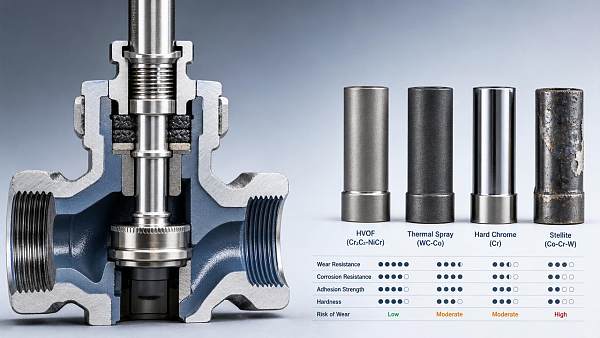
 May 17, 2026Advanced Coating for Valve Stems: Performance vs Wear RiskAdvanced coating for valve stems: compare performance gains, wear risk, corrosion resistance, and lifecycle value to choose safer, longer-lasting valve solutions.
 May 16, 2026Corrosion Allowance for Valves: When Extra Margin Pays OffCorrosion allowance for valves helps buyers reduce failure risk, control lifecycle cost, and improve reliability. Learn when extra wall thickness truly pays off.
 May 03, 2026Advanced Engineering Materials for Aerospace: How to Compare Performance Trade-OffsAdvanced Engineering Materials for aerospace: compare weight, thermal stability, fatigue, manufacturability, compliance, and lifecycle cost with a practical framework for smarter, lower-risk decisions.
 May 03, 2026Strategic Procurement for Advanced Materials: What Actually Drives Total CostStrategic Procurement for advanced materials drives total cost beyond unit price. Learn how reliability, compliance, and supplier risk shape ROI, uptime, and smarter approvals.
 May 02, 2026Precision Manufacturing for Aerospace: Tolerances That Drive Rework CostsPrecision Manufacturing for aerospace directly impacts rework, scrap, and approval delays. Discover how smarter tolerance strategies reduce cost, improve supplier decisions, and protect program margins.
 Apr 28, 2026Fresh Carbon Fiber Supply Chain News Raises Questions on Lead TimesCarbon fiber supply chain news raises urgent lead-time questions as buyers track nanotechnology in manufacturing trends and the future of sustainable polymers—see the real sourcing risks now.
 Apr 28, 2026Composite Layer Bonding Strength Drops for Reasons Easy to MissComposite layer bonding strength drops can hide behind clean specs. Learn the overlooked causes, diagnostic steps, and reliability controls shaping nanotechnology in manufacturing trends.
 Apr 28, 2026Carbon Fiber Supply Chain News Points to a Tougher Pricing CycleCarbon fiber supply chain news reveals a tougher pricing cycle, linking nanotechnology in manufacturing trends with the future of sustainable polymers to help buyers manage risk, qualify alternatives, and act faster.
 Apr 27, 2026ASME Certified Components Bulk Orders Can Stall on DocumentationASME Certified Components bulk order delays often start with documentation gaps. Learn how SEMI Standards compliance, ISO alignment, and High-tech Procurement Intelligence reduce approval risk.
 Apr 25, 2026Carbon Fiber Composite OEM: Build or Outsource?Carbon fiber composite OEM: build or outsource? Compare cost, control, speed, and risk with sourcing insights across composite sandwich panel factory and high performance polymer supply.
 Apr 25, 2026When Is Aluminum Matrix Composite OEM Best?Aluminum matrix composite OEM is best for lightweight, wear-resistant, thermally stable parts. Compare with carbon fiber composite OEM, zirconia ceramic supplier, and more.
 Apr 26, 2026Shape Memory Alloy OEM: What to Check First?Shape memory alloy OEM selection starts with traceability, process control, and application fit. Compare suppliers with insights relevant to boron nitride factory and technical ceramics supplier sourcing.
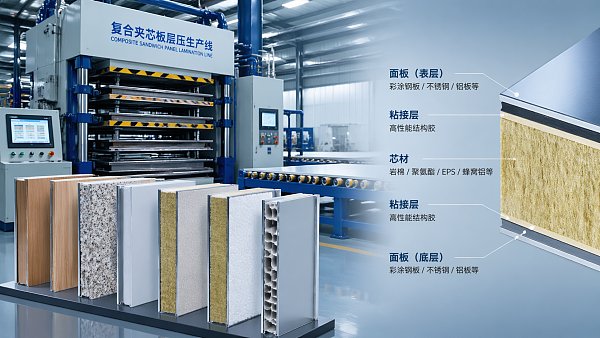
 Apr 26, 2026How to Choose a Composite Sandwich Panel FactoryLearn how to choose a composite sandwich panel factory with confidence. Compare quality control, testing, materials, and supply reliability to find the right partner for durable, high-performance panels.
 Apr 21, 2026Advanced Engineering Materials Underperform for Simple ReasonsAdvanced Engineering Materials underperform when Strategic Procurement, Reliability Engineering, and Precision Manufacturing fall out of sync. Learn how Digital Twin Technology, SEMI Standards, and verified data improve results.