Search News
Industry Portal
Popular Tags
Precision Motion Control Problems That Look Like Vibration
Author
Time
Click Count
What seems like vibration in Precision Motion Control systems often signals deeper faults in High-performance Bearings, Industrial Software Solutions, or alignment logic within Semiconductor Fabrication Equipment. From EUV Lithography Systems to High-tech Infrastructure, misdiagnosis can drive downtime, quality loss, and compliance risk. This article helps researchers and operators distinguish true vibration from motion-control errors through Technical Benchmarking and practical diagnostic insight.
Why “Vibration” Is Often a Motion Control Diagnosis Problem
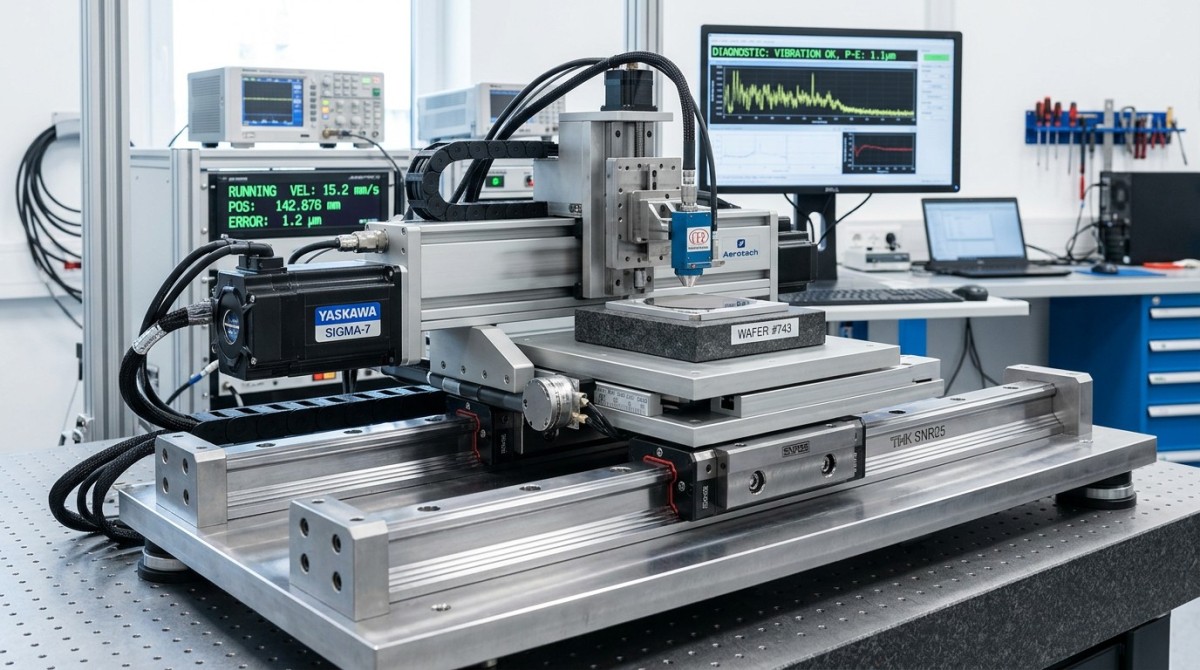
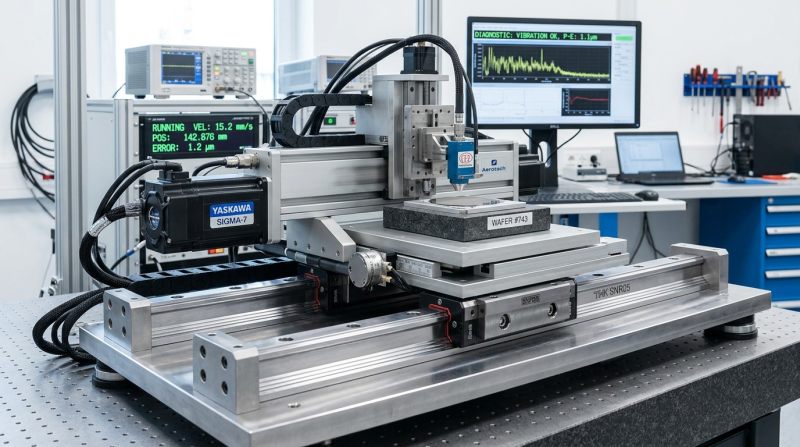
In many industrial environments, operators use the word vibration as a catch-all label for surface defects, axis instability, bearing noise, servo hunting, or unexpected settling time. Yet in precision motion control, these symptoms do not always originate from mechanical imbalance. They may come from tuning mismatch, encoder feedback errors, structural resonance, interpolation artifacts, or software timing conflicts. For information researchers and equipment users, the first practical step is to separate true physical vibration from commanded-motion instability.
This distinction matters across sectors, not only in machine tools or semiconductor fabrication equipment. The same false-vibration signature can affect pump test benches, digital twin validation rigs, metrology stages, ceramic bearing inspection systems, and high-accuracy automation cells. In applications where repeatability targets fall into the micron or sub-micron range, a wrong diagnosis can trigger 2–4 weeks of avoidable troubleshooting, unnecessary component replacement, and repeated process qualification delays.
G-CST approaches the issue through multidisciplinary benchmarking. Instead of treating motion control, bearings, software, and materials as isolated topics, we examine how they interact under real operating conditions. This is especially relevant in high-tech procurement, where an apparent vibration issue may actually be created by control loop latency, thermal drift over 30–90 minutes, or stiffness mismatch between stage components and mounting structures.
A useful working rule is simple: if the symptom changes significantly with firmware settings, command profile, or sampling rate, the root cause is likely not pure vibration. If the symptom persists across speed bands, payload changes, and control profiles, then mechanical vibration becomes more likely. That decision logic helps operators narrow the fault domain before escalating to a deeper engineering review.
Common symptoms that are mislabeled as vibration
- Position overshoot after short moves, especially in 5 ms–50 ms settling windows, often indicates tuning or feedforward imbalance rather than rotating vibration.
- Periodic surface marks at fixed pitch can result from encoder interpolation or ballscrew transmission effects, even when no obvious structural resonance is present.
- Audible noise at standstill may come from servo dither, current loop instability, or brake interaction, not necessarily from bearing damage.
- Drift after thermal soak of 20–60 minutes may be interpreted as vibration by operators, while the actual issue is expansion, preload shift, or software compensation failure.
For procurement teams, this early classification is more than a maintenance detail. It affects whether the next action should be spare-part sourcing, software audit, alignment verification, or supplier escalation. That is why technical benchmarking and symptom mapping should be included before replacement budgets are approved.
How to tell true mechanical vibration from control-loop or software faults
The most reliable way to distinguish true vibration from motion-control problems is to compare symptom behavior across four domains: frequency, operating state, command dependence, and environmental sensitivity. A mechanical source often follows speed-related or structural resonance patterns. A control or software source tends to follow command profile, gain settings, communication jitter, or task scheduling effects. This framework is practical for both operators in the field and researchers evaluating system architecture.
In high-precision systems, the first screen can be completed in 3 stages. Stage one reviews whether the symptom appears during motion, at standstill, or during acceleration only. Stage two compares behavior under at least 2 command profiles, such as trapezoidal versus S-curve. Stage three checks whether the issue changes when loop gains, filters, or sample timing are modified within approved engineering limits. If symptom amplitude shifts sharply after control changes, the case likely involves motion logic rather than purely mechanical vibration.
Another strong indicator is repeatability. Mechanical vibration caused by imbalance, looseness, or structural resonance usually appears with a stable pattern under the same speed and load. By contrast, software-driven instability may present as intermittent faults, especially when network traffic, controller load, or synchronization tasks vary. This is common in integrated environments where SCADA, digital twin simulation, machine vision, and axis control compete for timing resources.
Below is a practical comparison table that supports fast root-cause screening in cross-industry precision systems. It is especially useful when procurement, maintenance, and engineering teams need one shared language before deciding on corrective action.
The table does not replace measurement, but it prevents costly assumptions. In practice, many teams save time by first classifying the symptom into one of these patterns, then deciding whether to mobilize vibration analysis tools, controls engineers, bearing specialists, or software integrators. G-CST uses this kind of benchmark logic to support faster cross-functional decisions and cleaner supplier communication.
A four-check diagnostic path for operators
Check 1: State dependence
Record whether the symptom occurs during standstill, constant velocity, acceleration, deceleration, or only after positioning. If the issue appears mainly during transition states shorter than 1 second, control-loop or trajectory design is often involved.
Check 2: Parameter sensitivity
Within approved ranges, compare at least 2–3 settings such as gain, filter, jerk limit, or interpolation cycle. Strong sensitivity to these changes is a high-value clue that the symptom is not purely mechanical.
Check 3: Thermal effect
Repeat the same move set at cold start and after 30 minutes of operation. If position stability shifts with warm-up, inspect preload, material expansion, and compensation logic before replacing hardware.
Check 4: Frequency signature
Compare observed frequencies against shaft speed, bearing pass frequencies where relevant, controller update rates, and commanded move frequency. Frequency alignment often narrows the problem faster than visual inspection alone.
Which components usually create false vibration signals?
False vibration signatures often emerge at the interfaces between subsystems rather than inside a single failed part. In precision motion control and bearings, the most common contributors are encoder feedback chains, drive tuning, couplings, guideway preload, spindle or stage bearings, and mounting stiffness. In industrial software environments, scheduler conflicts, interpolation timing, and synchronization loss between edge controllers and supervisory layers can generate symptoms that operators hear or see as vibration.
Semiconductor fabrication equipment illustrates this clearly. In wafer handling, stage positioning, or metrology alignment, even tiny synchronization errors can appear as oscillation or chatter. The operator may suspect bearings first because that is the visible wear component. However, the real source can be servo lag, structural amplification at a narrow frequency band, or data-path timing irregularity between axis control and inspection software. In these environments, 5–10 microns of repeatable path error can be process-critical even when classic vibration metrics seem modest.
Material behavior also plays a role. Advanced engineering materials such as ceramics, composite structures, or high-stiffness alloys improve dynamic response, but they can change damping characteristics and shift resonance frequencies. A redesign intended to improve speed may unintentionally make the system more sensitive to tuning errors. This is why cross-pillar analysis matters: material upgrades, bearing changes, and software modifications should never be reviewed in isolation.
For information researchers, one of the biggest procurement mistakes is assuming that a premium bearing or higher-resolution encoder will solve a system-level instability. In reality, a superior component can expose weaknesses elsewhere, especially if controller bandwidth, mounting flatness, or thermal management are not matched to the new performance level.
Component-level screening priorities
- Feedback chain: verify encoder resolution, cabling integrity, grounding, interpolation behavior, and update timing before judging mechanical wear.
- Bearing system: review preload setting, lubrication condition, contamination risk, and fit tolerance rather than checking noise alone.
- Mechanical structure: inspect base stiffness, fastener torque consistency, coupling alignment, and fixture resonance within the typical operating frequency band.
- Software stack: confirm task prioritization, communication determinism, timestamp integrity, and synchronization with real-time motion loops.
A disciplined review of these four areas often shortens troubleshooting from several maintenance cycles to a structured 1–3 day diagnostic window. That speed matters for facilities where downtime affects qualification schedules, cleanroom utilization, or critical infrastructure commissioning.
What should buyers and technical evaluators ask before replacement or retrofit?
When a system appears to suffer from vibration, buyers are often pushed toward a quick replacement decision: new bearing set, upgraded drive, stiffer frame, or different controller. That can be reasonable, but only after a procurement-oriented diagnostic review. For B2B users, the key question is not simply “Which part failed?” but “Which subsystem change will reduce risk without creating new integration issues?” A replacement that improves one metric while degrading compatibility, lead time, or compliance may not be the best investment.
In most industries, the decision should be built around 5 core checkpoints: symptom reproducibility, interface compatibility, acceptable tolerance band, operating duty cycle, and validation requirements. For example, a retrofit that changes bearing preload or control bandwidth may need renewed calibration, software parameter revision, and possibly process requalification. In regulated or highly controlled sectors, that downstream effort can be more significant than the hardware purchase itself.
Delivery timing also matters. A common sourcing window for specialized components may be 2–8 weeks depending on configuration, export controls, and testing scope. If the issue is later found to be software-related, that procurement lead time becomes pure delay. This is one area where G-CST supports de-risking: by aligning technical benchmarking with supply-chain and regulatory visibility, buyers can avoid ordering the wrong corrective path.
The table below summarizes a practical procurement checklist for situations where suspected vibration may actually be a precision motion control problem. It can be used before RFQ release, supplier meeting, or internal capex approval.
This checklist helps buyers compare immediate replacement against diagnostic audit, software correction, alignment service, or hybrid retrofit. In many cases, the best commercial decision is phased action: stabilize the process first, confirm the root cause, then upgrade hardware only where the benchmark data supports a measurable gain.
A practical 4-step evaluation flow
- Capture symptom data over at least 2 operating states and one thermal cycle.
- Screen for control and software sensitivity before ordering mechanical spares.
- Assess standards, documentation, and requalification impact if a retrofit is planned.
- Compare total downtime cost against staged mitigation, not part price alone.
For cross-border or strategic supply chains, this process should also include export-control awareness and alternate-source mapping. That broader visibility is increasingly important in semiconductor sovereignty and infrastructure modernization programs.
Standards, risk control, and implementation guidance across industries
Because precision motion control problems can span mechanical, digital, and materials domains, implementation should be aligned with recognized standards and disciplined documentation. The exact framework depends on the equipment and sector, but ISO, SEMI, ASME, and IEEE references commonly shape expectations around measurement practice, safety, interoperability, and reliability. For researchers, standards provide a neutral baseline. For operators, they create a repeatable troubleshooting and acceptance process.
A sound implementation plan usually includes 6 validation items: symptom definition, instrumentation setup, control parameter record, environmental condition log, mechanical inspection record, and post-correction acceptance criteria. This prevents teams from making undocumented tuning changes that temporarily mask the issue while leaving the root cause unresolved. In critical systems, undocumented adjustments can create compliance and handover problems later.
Risk control should also account for measurement limitations. A low-cost sensor setup may identify gross vibration but miss timing-induced control artifacts. Conversely, software logs without mechanical context may overlook looseness or resonance. That is why cross-domain benchmarking is valuable. G-CST connects engineering data, standards language, and procurement reality, helping decision-makers avoid one-dimensional conclusions.
In practice, a robust intervention often unfolds over 7–15 days: initial symptom capture, subsystem screening, supplier or internal review, corrective action, and acceptance verification. Complex retrofits can take longer, especially when digital twin updates, documentation revisions, or multi-vendor coordination are involved. The goal is not speed alone, but traceable risk reduction.
Common misconceptions that slow recovery
“If it sounds like vibration, it must be mechanical”
Audible cues are useful, but they are not enough. Servo dither, PWM-related effects, or control-loop interaction can produce sound without a classic mechanical vibration root cause.
“A premium bearing upgrade will fix the instability”
Not unless preload, fit, alignment, stiffness chain, and control settings are reviewed together. Better hardware can expose system mismatch rather than eliminate it.
“Software cannot create a vibration-like defect”
In synchronized, high-speed systems, timing jitter, interpolation behavior, and task scheduling can create repeatable motion defects that look mechanical on the surface.
“If the machine still runs, the risk is low”
In semiconductor, metrology, and infrastructure-grade applications, small errors can cause yield loss, accelerated wear, or documentation nonconformance long before catastrophic failure appears.
FAQ and next-step support for researchers, operators, and buyers
Teams investigating vibration-like issues usually need more than a single technical answer. They need a structured path that supports troubleshooting, procurement judgment, and implementation timing. The following questions reflect common search intent and practical decision points across high-precision industries.
How do I know whether I need a vibration test or a motion control audit first?
Start with symptom dependence. If the issue changes with gain, command profile, software load, or interpolation cycle, a motion control audit should come first. If it remains stable across those changes and tracks speed or structural frequency, vibration testing becomes the priority. In many cases, a short combined screening performed over 1–2 shifts is the most efficient approach.
Which industries are most affected by false vibration diagnoses?
The problem is broad. It appears in semiconductor fabrication equipment, precision automation, pump and valve test systems, digital twin validation platforms, advanced materials processing, and infrastructure monitoring rigs. Any system that combines tight tolerance, feedback control, and multi-layer software can produce vibration-like symptoms from non-mechanical causes.
What should be prepared before contacting a supplier or technical benchmark partner?
Prepare 5 items if possible: symptom description, operating condition range, control parameter history, recent hardware or software changes, and any frequency or trend data already captured. Even basic information such as whether the issue appears after 20 minutes of operation or only above a certain speed band can significantly improve diagnostic efficiency.
What is the typical implementation scope after the root cause is confirmed?
A focused correction may involve only parameter adjustment and acceptance testing. A broader intervention may include bearing replacement, structural correction, software retuning, documentation updates, and operator retraining. For high-specification systems, plan for 3 layers of verification: engineering fix, process validation, and handover documentation.
Why work with G-CST when the problem spans mechanics, software, and procurement?
Because false vibration diagnosis is rarely a single-discipline issue. G-CST connects Precision Motion Control & Bearings, Industrial Software & Digital Twins, Semiconductor Fabrication Equipment, Specialized Pump & Valve Systems, and Advanced Engineering Materials under one benchmarking framework. That gives researchers and operators a more complete basis for root-cause screening, supplier comparison, standards alignment, and strategic sourcing.
If you are evaluating a suspected vibration problem, contact us for support on parameter confirmation, subsystem comparison, product selection, delivery-cycle review, standards-related documentation, sample or test planning, and quotation discussions. We can also help structure a benchmark request when the issue may involve bearings, control logic, industrial software timing, or cross-vendor integration risk. For buyers and technical teams under schedule pressure, that clarity reduces unnecessary replacement and supports faster, better-grounded decisions.
Recommended News
 Oct 19, 2026How Do I Validate Replacement Linear Guides for an Existing Machine?How do I validate replacement parts for an existing machine? Discover essential linear guide checks for fit, load capacity, accuracy, and safe commissioning before approving a replacement.
 Oct 21, 2026How to select linear guides for quiet medical imaging equipmentChoose linear guides for medical applications with confidence. Explore noise, vibration, load, MRI compatibility, and mounting factors for quieter medical imaging equipment.
 Oct 20, 2026How grinding accuracy affects precision linear guide manufacturingIn precision guides manufacturing, grinding accuracy drives raceway quality and preload consistency. Discover key inspection checks for smoother motion and reliable performance.
 Sep 19, 2026When does a longer travel range raise linear motion stage wholesale costs?Linear motion stage travel range wholesale costs rise when longer strokes demand stronger structures, upgraded drives, precision feedback, and shipping support. Compare smarter before you buy.
 Jul 12, 2026How to Compare Miniature Motion Systems Suppliers for Precision and Lead TimeMiniature motion systems suppliers should be compared on precision, lead time, compliance, and lifecycle support. Learn how to shortlist reliable partners and reduce sourcing risk.
 Jul 04, 2026Linear Guide Rail for CNC: How to Choose Load, Accuracy, and Service LifeLinear guide rail for CNC selection made simple: learn how to balance load, accuracy, preload, sealing, and service life to cut downtime and choose the right rail with confidence.
 Jun 30, 2026Cross Roller Bearing Supplier Checklist for Stable PrecisionCross roller bearing supplier checklist for buyers who need stable precision. Learn how to verify quality, traceability, engineering support, and delivery reliability before you commit.
 Jun 19, 2026Linear Guide Rail Supplier Checklist for Load Accuracy and Service LifeLinear guide rail supplier checklist for better load accuracy and longer service life. Compare quality control, preload, lubrication, and support before you buy.
 Jun 16, 2026Telescopic Rail OEM Checklist: Load, Tolerance, and Lead TimeTelescopic rail OEM checklist covering load, tolerance, finish, and lead time. Learn how to compare suppliers, reduce sourcing risk, and choose rails that perform reliably at scale.
 Jun 06, 2026How to Choose a Measuring Tape for Accurate Site WorkMeasuringtape selection affects accuracy, speed, and rework on site. Learn the key features, common mistakes, and how to choose the right tape for reliable results.
![]() Jun 04, 2026Linear Guide Frictional Resistance: When Maintenance Solves DriftLinear guide frictional resistance causes drift, positioning errors, and unstable motion. Learn how targeted maintenance restores accuracy, cuts downtime, and prevents repeat service issues.
Jun 04, 2026Linear Guide Frictional Resistance: When Maintenance Solves DriftLinear guide frictional resistance causes drift, positioning errors, and unstable motion. Learn how targeted maintenance restores accuracy, cuts downtime, and prevents repeat service issues.![]() Jun 04, 2026How Linear Guide Frictional Resistance Affects Positioning StabilityLinear guide frictional resistance directly impacts positioning stability, repeatability, and servo response. Learn how preload, lubrication, and mounting affect precision performance.
Jun 04, 2026How Linear Guide Frictional Resistance Affects Positioning StabilityLinear guide frictional resistance directly impacts positioning stability, repeatability, and servo response. Learn how preload, lubrication, and mounting affect precision performance. May 23, 2026Next-Gen Linear Motor Technology for Faster PositioningNext-gen linear motor technology drives faster positioning, smoother motion, and higher repeatability. Discover where it delivers the biggest gains in automation performance.
 May 22, 2026Linear Motion Market Growth Report: Where Demand Is ShiftingLinear motion market growth report: discover where demand is shifting across automation, semiconductors, precision manufacturing, and infrastructure to identify high-fit growth opportunities.
 May 22, 2026Linear Rail Parallelism Standards That Prevent BindingLinear rail parallelism standards explained with a practical checklist to prevent binding, cut wear, improve accuracy, and keep motion systems running smoothly.
 May 21, 2026Stiffness and Damping in Guides: Selection MistakesStiffness and damping in guides directly affect accuracy, vibration control, and lifecycle cost. Learn the most common selection mistakes and make smarter, lower-risk purchasing decisions.
 May 20, 2026Linear Guide Frictional Resistance and Its Impact on MotionLinear guide frictional resistance directly affects motion accuracy, wear, and uptime. Learn key causes, maintenance checks, and practical ways to reduce friction issues fast.
 May 20, 2026Ball Screw Lead Precision Data: Tolerance vs PositioningBall screw lead precision data explained: learn how tolerance differs from real positioning accuracy, avoid costly spec mistakes, and choose motion systems with more confidence.
 May 20, 2026Linear Module Factory Selection for Fast Project DeliveryLinear module factory selection affects project speed, quality, and risk. Discover how to compare lead time, engineering support, and precision capability for faster delivery.
 May 19, 2026Telescopic Rail OEM Options for Cleanroom Tool AccessTelescopic rail OEM solutions for cleanroom tool access: compare materials, load stability, customization, and compliance factors to reduce downtime and choose the right supplier.
 May 19, 2026Linear Motion Stage Wholesale: Accuracy Costs ExplainedLinear motion stage wholesale costs explained: see how accuracy grades, materials, load stability, and supplier validation shape pricing, risk, and long-term ROI.
 May 18, 2026How to Evaluate a Linear Guide Rail Supplier for Cleanroom Motion SystemsLinear guide rail supplier selection for cleanroom motion systems starts with contamination control, lubrication, traceability, and quality data. Learn how to compare suppliers and avoid costly risks.
 May 03, 2026How to Evaluate a Precision Manufacturing Supplier for Stable QualityPrecision Manufacturing supplier evaluation starts with scenario fit. Learn how to assess quality stability, traceability, compliance, and supply resilience for smarter sourcing.
 Apr 21, 2026Precision Motion Control Problems That Look Like VibrationPrecision Motion Control issues often mimic vibration in Semiconductor Fabrication Equipment. Learn how Industrial Software Solutions, High-performance Bearings, and Technical Benchmarking reduce downtime and risk.