Search News
Industry Portal
Popular Tags
Why Precision Manufacturing Still Misses Tight Tolerances
Author
Time
Click Count
Precision manufacturing misses tight tolerances more often than many buyers and operators expect—not because machines are inherently inaccurate, but because tolerance performance is a system outcome. When material behavior, process control, machine condition, inspection strategy, supplier capability, and reliability requirements are not aligned, even advanced production lines can drift outside spec. For information researchers and shop-floor users, the practical takeaway is clear: tight tolerances are rarely lost at one step alone. They are usually lost across the chain, from material selection and tooling stability to thermal variation, metrology discipline, software integration, and procurement decisions.
This matters across industries. A ceramic bearing that passes dimensional inspection may still fail in real motion control conditions. A chemical pump component may meet drawing dimensions but deform under process media or temperature cycling. A digitally automated line may produce excellent first articles yet struggle with repeatability over longer runs. In other words, precision manufacturing is not just about achieving a number once; it is about achieving that number consistently, economically, and under real operating conditions.
Why do precision manufacturing processes still miss tight tolerances in real production?
The core reason is that many organizations treat tight tolerances as a machining problem, when in reality they are a cross-functional control problem. A drawing may specify micron-level limits, but the production system must translate that requirement into stable, repeatable output. If any layer is weak, tolerance loss appears.
The most common causes include:
- Material inconsistency: Variations in hardness, grain structure, thermal expansion, or residual stress can change how a part responds during machining, grinding, lapping, coating, or assembly.
- Thermal instability: Machine heat, ambient temperature changes, coolant variation, and spindle growth can all shift actual dimensions.
- Tool wear and process drift: Even well-programmed operations lose accuracy over time if wear compensation and in-process monitoring are weak.
- Fixturing and clamping distortion: Parts may be measured within tolerance after one stage, then move or relax after unclamping.
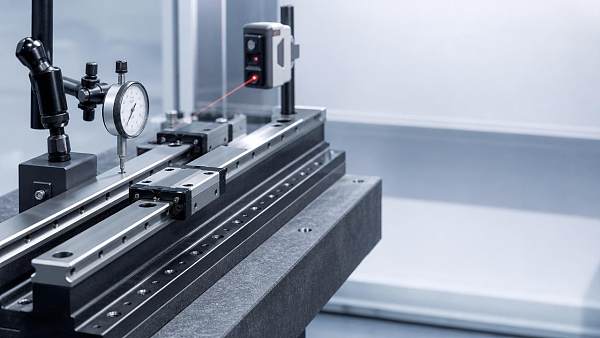
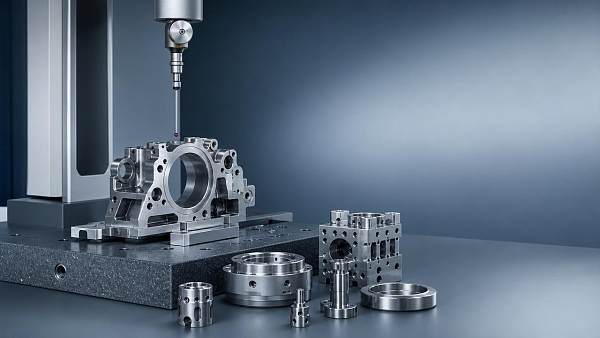
- Metrology mismatch: If measurement capability is not significantly better than the tolerance band, data may look acceptable while process capability is actually poor.
- Assembly stack-up: Individual components may pass inspection, yet the assembled system exceeds total positional or functional tolerance.
- Software and data disconnects: Industrial automation software, SCADA frameworks, and digital twin models often exist, but they are not always connected tightly enough to actual process correction loops.
For B2B buyers and operators, this means that missed tolerances are usually not evidence of a single bad machine. They often indicate weak integration between engineering, manufacturing, quality, and procurement.
What do operators and technical researchers care about most when tolerances keep slipping?
Target readers usually care less about abstract definitions and more about practical questions:
- Why does a process that worked during validation fail during routine production?
- How can we tell whether the issue is material, machine, tooling, environment, or inspection?
- What should we ask a supplier before trusting sub-micron or other tight-tolerance claims?
- How do SEMI, ISO, ASME, or application-specific standards affect what “precision” really means?
- How can procurement reduce quality risk before a component enters production?
- Which corrective actions improve repeatability rather than just fixing isolated defects?
These concerns are especially relevant in sectors such as semiconductor fabrication equipment, specialized pump and valve systems, precision motion control, advanced engineering materials, and industrial software environments. In these fields, tolerances are directly tied to performance, leakage control, vibration, alignment, wear life, and regulatory compliance.
Material innovation helps precision—but it also introduces new tolerance risks
Advanced engineering materials are often selected to improve wear resistance, corrosion resistance, thermal performance, electrical behavior, or weight reduction. However, they can also make tight tolerances harder to maintain if process knowledge lags behind material innovation.
For example:
- Ceramics and ceramic hybrid components can deliver exceptional hardness and stability, but brittleness, grinding sensitivity, and sintering variation can complicate dimensional control.
- High-performance alloys may resist heat and chemical attack, yet work hardening or residual stress can lead to unpredictable machining response.
- Polymers and composites can improve chemical compatibility or weight, but moisture absorption, creep, and thermal movement may affect final dimensions.
- Coated or surface-engineered parts may meet core geometry requirements before finishing, then drift when coating thickness variation is added.
This is why precision manufacturing cannot be separated from material characterization. If procurement teams source a material primarily by datasheet values without validating actual process behavior, tolerance problems often appear later—during scaling, assembly, or field use.
A better approach is to evaluate not only nominal material properties, but also lot-to-lot variation, machinability, finishing effects, thermal response, and long-term reliability under operating conditions.
Why repeatability matters more than one-time accuracy
Many tolerance failures occur because organizations focus too heavily on first-piece acceptance. A process may produce excellent early samples, but production quality depends on repeatability across shifts, batches, tools, and environmental conditions.
Repeatable precision requires control of:
- Machine capability over time
- Tool life and compensation windows
- Coolant condition and process media stability
- Operator consistency and setup discipline
- Measurement system repeatability and reproducibility
- Incoming material variation
- Changeover and maintenance practices
In high-spec sectors, the real benchmark is not whether a supplier can hit a tolerance once, but whether they can sustain capability at volume while meeting reliability expectations. This is where Cp, Cpk, gauge R&R, drift analysis, preventive maintenance, and statistical process control become more valuable than isolated inspection records.
How reliability engineering explains tolerance failures that dimensional inspection misses
A part can be dimensionally compliant and still be functionally weak. Reliability engineering adds the missing layer by asking whether the part holds its geometry and performance under actual service conditions.
This is critical in applications such as:
- Chemical pumps, where pressure, corrosion, seal loads, and thermal cycling can alter geometry or clearances
- Precision bearings, where vibration, lubrication, preload, and contamination affect real running accuracy
- Semiconductor equipment sub-systems, where ultra-clean environments, thermal management, and alignment stability are all linked to tolerance retention
- Motion control systems, where dynamic loads and assembly interfaces can amplify small geometric deviations
In other words, tight tolerances should be judged in both static and functional terms. A supplier who only reports final dimensional inspection may not provide enough evidence for critical applications. Buyers should also review life testing, environmental testing, failure mode analysis, and process capability data tied to the actual use case.
How industrial automation software and digital twin technology reduce tolerance drift
Digital tools are increasingly important because manual reaction to process variation is often too slow. Industrial automation software, machine data integration, and digital twin technology help manufacturers move from reactive inspection to predictive control.
They add value in several ways:
- Real-time monitoring: Detects process drift earlier through spindle load, vibration, temperature, pressure, or dimensional trend signals.
- Closed-loop compensation: Adjusts offsets or process parameters before parts move fully out of tolerance.
- Traceability: Links each part to machine state, operator, lot, and material history for faster root-cause analysis.
- Virtual validation: Digital twin models help simulate tolerance stack-up, deformation, thermal behavior, and line interactions before production changes are made.
- Cross-system visibility: SCADA, MES, quality systems, and metrology platforms can be aligned to identify where precision is being lost.
That said, digital systems only help when data quality is strong and engineering teams act on the data. A digital twin built on incomplete assumptions will not solve a poor process. The best results come when software is tied to disciplined metrology, material understanding, and controlled production practices.
What should procurement teams verify before accepting tight-tolerance supplier claims?
Strategic procurement plays a much larger role in tolerance success than many organizations realize. If sourcing decisions focus only on price and nominal specification, quality risk is often pushed downstream to production and field service.
Before approving a supplier for precision manufacturing, buyers should verify:
- Actual process capability, not just drawing compliance
- Measurement system adequacy for the stated tolerance band
- Material traceability and lot control
- Maintenance and calibration discipline
- Control plans for thermal variation, tool wear, and operator setup
- History with relevant standards such as ISO, ASME, IEEE, or SEMI standards where applicable
- Evidence of reliability validation under realistic operating conditions
- Change management procedures for machines, software, materials, and subcontracted processes
For high-risk components, supplier assessment should include site audits, sample lot capability review, metrology method review, and verification of how digital quality data is used. This is especially important when sourcing components for semiconductor, fluid handling, automation, and critical infrastructure systems.
How can operators and engineers troubleshoot missed tolerances more effectively?
When tolerances are missed repeatedly, the fastest way forward is a structured diagnosis rather than broad parameter changes. A practical troubleshooting sequence includes:
- Confirm the measurement system first. Ensure the inspection method is stable, calibrated, and appropriate for the tolerance range.
- Check time-based drift. Compare first-part, mid-run, and end-run dimensions to reveal thermal growth or tool wear patterns.
- Review material batches. Look for shifts in hardness, density, microstructure, moisture, or residual stress.
- Evaluate fixturing and clamping. Inspect whether part distortion is introduced during setup or release.
- Analyze machine condition. Spindle behavior, axis backlash, vibration, and lubrication quality can all affect dimensional stability.
- Inspect environmental variation. Room temperature, coolant temperature, humidity, and contamination can matter more than expected.
- Separate part tolerance from assembly tolerance. The issue may be stack-up, not individual feature failure.
- Use production data, not assumptions. Pull trends from automation systems, quality logs, and maintenance records.
This type of disciplined troubleshooting usually identifies whether the true issue is process design, execution, or supplier input.
What is the practical conclusion for companies that need reliable precision?
Precision manufacturing still misses tight tolerances because precision is not created by equipment alone. It depends on synchronized control of materials, process capability, metrology, software, reliability validation, and procurement discipline. When one of these layers is weak, tolerance failure becomes likely—even in advanced factories.
For information researchers, the key insight is that supplier claims should be evaluated as system capability, not isolated dimensional performance. For operators and technical users, the key lesson is that repeatable precision comes from controlling drift, variation, and functional risk across the full production chain.
Companies that consistently achieve tight tolerances tend to do three things well: they match advanced engineering materials to validated processes, they use data-driven control rather than end-stage inspection alone, and they treat strategic procurement as part of engineering risk management. That is the difference between parts that merely look precise on paper and components that perform precisely in the real world.
Recommended News
 Oct 19, 2026How Do I Validate Replacement Linear Guides for an Existing Machine?How do I validate replacement parts for an existing machine? Discover essential linear guide checks for fit, load capacity, accuracy, and safe commissioning before approving a replacement.
 Oct 21, 2026How to select linear guides for quiet medical imaging equipmentChoose linear guides for medical applications with confidence. Explore noise, vibration, load, MRI compatibility, and mounting factors for quieter medical imaging equipment.
 Oct 20, 2026How grinding accuracy affects precision linear guide manufacturingIn precision guides manufacturing, grinding accuracy drives raceway quality and preload consistency. Discover key inspection checks for smoother motion and reliable performance.
 Sep 19, 2026When does a longer travel range raise linear motion stage wholesale costs?Linear motion stage travel range wholesale costs rise when longer strokes demand stronger structures, upgraded drives, precision feedback, and shipping support. Compare smarter before you buy.
 Jul 12, 2026How to Compare Miniature Motion Systems Suppliers for Precision and Lead TimeMiniature motion systems suppliers should be compared on precision, lead time, compliance, and lifecycle support. Learn how to shortlist reliable partners and reduce sourcing risk.
 Jul 04, 2026Linear Guide Rail for CNC: How to Choose Load, Accuracy, and Service LifeLinear guide rail for CNC selection made simple: learn how to balance load, accuracy, preload, sealing, and service life to cut downtime and choose the right rail with confidence.
 Jun 30, 2026Cross Roller Bearing Supplier Checklist for Stable PrecisionCross roller bearing supplier checklist for buyers who need stable precision. Learn how to verify quality, traceability, engineering support, and delivery reliability before you commit.
 Jun 19, 2026Linear Guide Rail Supplier Checklist for Load Accuracy and Service LifeLinear guide rail supplier checklist for better load accuracy and longer service life. Compare quality control, preload, lubrication, and support before you buy.
 Jun 16, 2026Telescopic Rail OEM Checklist: Load, Tolerance, and Lead TimeTelescopic rail OEM checklist covering load, tolerance, finish, and lead time. Learn how to compare suppliers, reduce sourcing risk, and choose rails that perform reliably at scale.
 Jun 06, 2026How to Choose a Measuring Tape for Accurate Site WorkMeasuringtape selection affects accuracy, speed, and rework on site. Learn the key features, common mistakes, and how to choose the right tape for reliable results.
![]() Jun 04, 2026Linear Guide Frictional Resistance: When Maintenance Solves DriftLinear guide frictional resistance causes drift, positioning errors, and unstable motion. Learn how targeted maintenance restores accuracy, cuts downtime, and prevents repeat service issues.
Jun 04, 2026Linear Guide Frictional Resistance: When Maintenance Solves DriftLinear guide frictional resistance causes drift, positioning errors, and unstable motion. Learn how targeted maintenance restores accuracy, cuts downtime, and prevents repeat service issues.![]() Jun 04, 2026How Linear Guide Frictional Resistance Affects Positioning StabilityLinear guide frictional resistance directly impacts positioning stability, repeatability, and servo response. Learn how preload, lubrication, and mounting affect precision performance.
Jun 04, 2026How Linear Guide Frictional Resistance Affects Positioning StabilityLinear guide frictional resistance directly impacts positioning stability, repeatability, and servo response. Learn how preload, lubrication, and mounting affect precision performance. May 23, 2026Next-Gen Linear Motor Technology for Faster PositioningNext-gen linear motor technology drives faster positioning, smoother motion, and higher repeatability. Discover where it delivers the biggest gains in automation performance.
 May 22, 2026Linear Motion Market Growth Report: Where Demand Is ShiftingLinear motion market growth report: discover where demand is shifting across automation, semiconductors, precision manufacturing, and infrastructure to identify high-fit growth opportunities.
 May 22, 2026Linear Rail Parallelism Standards That Prevent BindingLinear rail parallelism standards explained with a practical checklist to prevent binding, cut wear, improve accuracy, and keep motion systems running smoothly.
 May 21, 2026Stiffness and Damping in Guides: Selection MistakesStiffness and damping in guides directly affect accuracy, vibration control, and lifecycle cost. Learn the most common selection mistakes and make smarter, lower-risk purchasing decisions.
 May 20, 2026Linear Guide Frictional Resistance and Its Impact on MotionLinear guide frictional resistance directly affects motion accuracy, wear, and uptime. Learn key causes, maintenance checks, and practical ways to reduce friction issues fast.
 May 20, 2026Ball Screw Lead Precision Data: Tolerance vs PositioningBall screw lead precision data explained: learn how tolerance differs from real positioning accuracy, avoid costly spec mistakes, and choose motion systems with more confidence.
 May 20, 2026Linear Module Factory Selection for Fast Project DeliveryLinear module factory selection affects project speed, quality, and risk. Discover how to compare lead time, engineering support, and precision capability for faster delivery.
 May 19, 2026Telescopic Rail OEM Options for Cleanroom Tool AccessTelescopic rail OEM solutions for cleanroom tool access: compare materials, load stability, customization, and compliance factors to reduce downtime and choose the right supplier.
 May 19, 2026Linear Motion Stage Wholesale: Accuracy Costs ExplainedLinear motion stage wholesale costs explained: see how accuracy grades, materials, load stability, and supplier validation shape pricing, risk, and long-term ROI.
 May 18, 2026How to Evaluate a Linear Guide Rail Supplier for Cleanroom Motion SystemsLinear guide rail supplier selection for cleanroom motion systems starts with contamination control, lubrication, traceability, and quality data. Learn how to compare suppliers and avoid costly risks.
 May 03, 2026How to Evaluate a Precision Manufacturing Supplier for Stable QualityPrecision Manufacturing supplier evaluation starts with scenario fit. Learn how to assess quality stability, traceability, compliance, and supply resilience for smarter sourcing.
 Apr 21, 2026Precision Motion Control Problems That Look Like VibrationPrecision Motion Control issues often mimic vibration in Semiconductor Fabrication Equipment. Learn how Industrial Software Solutions, High-performance Bearings, and Technical Benchmarking reduce downtime and risk.