Search News
Industry Portal
Popular Tags
Flexible Coupling Wholesale: Misalignment Risks and Savings
Author
Time
Click Count
For distributors, agents, and wholesale buyers, flexible coupling wholesale is not only about unit price—it is about controlling misalignment risk, reducing downtime, and protecting long-term margins. This guide explains how to evaluate coupling performance, supplier reliability, and total cost savings so you can make smarter sourcing decisions in demanding industrial markets.
When Flexible Coupling Wholesale Decisions Change by Operating Scenario
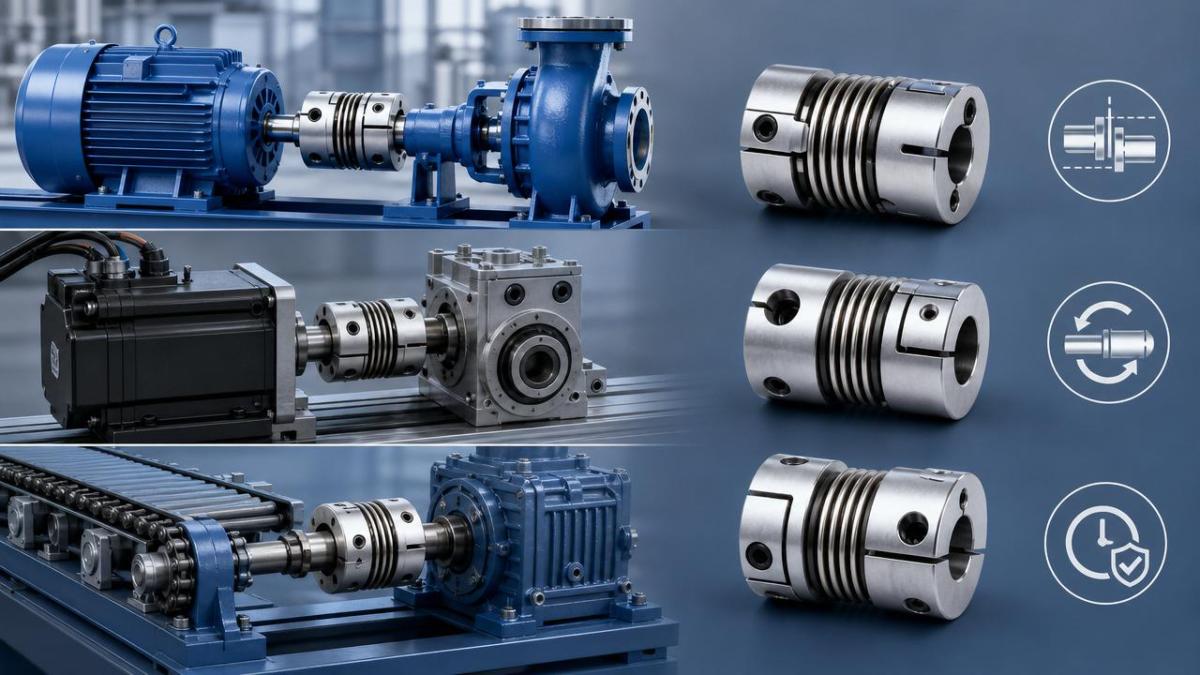
Flexible coupling wholesale choices vary because operating loads, shaft offsets, speeds, and maintenance culture vary across industries.
A coupling that works in light packaging lines may fail early in pumps, compressors, mixers, or precision motion systems.
That is why flexible coupling wholesale should begin with scenario mapping, not catalog filtering.
At G-CST, technical benchmarking shows that misalignment risk is often underestimated during early sourcing stages.
The visible cost is the coupling price. The hidden cost includes bearing wear, seal damage, vibration, heat, and emergency stoppage.
In comprehensive industry applications, flexible coupling wholesale must support reliability, compliance, and replacement continuity across mixed asset fleets.
Scenario Background: Why Misalignment Risk Has Different Business Impact
Misalignment appears in three common forms: angular, parallel, and axial movement.
Each form affects torque transmission differently, and each creates a different maintenance pattern.
In flexible coupling wholesale, the savings model changes when one hour of downtime costs more than one year of coupling inventory.
Some sites need damping for shock loads. Others need zero backlash for positioning accuracy. Others value corrosion resistance over compact size.
This is why flexible coupling wholesale cannot rely on generic “universal fit” claims.
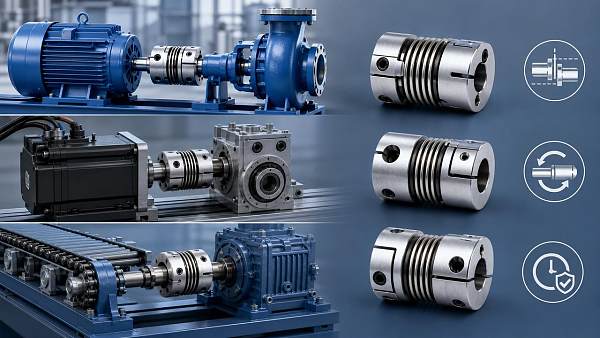
Scenario 1: Pump and Motor Systems Where Downtime Is the Main Cost Driver
In water treatment, chemical transfer, and utility systems, couplings often face continuous duty and moderate misalignment.
The core judgment point is service stability under vibration, temperature change, and repetitive startup cycles.
For this scenario, flexible coupling wholesale should prioritize elastomer durability, torsional flexibility, and fast replacement availability.
A lower-priced coupling may create larger costs if it accelerates pump seal leakage or bearing fatigue.
What to verify first
- Maximum allowable angular and parallel misalignment
- Elastomer compatibility with oils, chemicals, and ambient heat
- Field replacement time and spare insert availability
- Balance quality for target RPM range
Scenario 2: Servo, Motion, and Precision Lines Where Accuracy Matters More
In robotics, CNC modules, and automated assembly, even small coupling errors can reduce repeatability.
The key judgment point is not only flexibility. It is backlash control, torsional stiffness, and stable response under dynamic loading.
For such systems, flexible coupling wholesale should focus on beam, disc, or bellows designs with verified dimensional consistency.
Here, savings come from protecting product quality, reducing calibration drift, and avoiding reject-related losses.
Core judgment points
- Zero or near-zero backlash requirements
- Stiffness versus allowable shaft movement
- Bore tolerance and clamping precision
- Fatigue life under frequent acceleration cycles
Scenario 3: Heavy Torque and Shock Loads Where Safety Margins Dominate
Conveyors, crushers, mixers, and bulk handling assets often operate under torque spikes and uneven loading.
The main judgment point is whether the coupling absorbs shock without transferring damaging force downstream.
In this case, flexible coupling wholesale should assess peak torque capacity, damping behavior, and fail-safe characteristics.
Savings emerge when couplings prevent gearbox damage, reduce unplanned shutdowns, and extend maintenance intervals.
How Scenario Differences Affect Flexible Coupling Wholesale Requirements
Practical Sourcing Advice for Flexible Coupling Wholesale Programs
A high-quality flexible coupling wholesale program combines technical fit, supplier consistency, and commercial resilience.
The objective is not to buy the cheapest coupling. The objective is to lower total operating cost across the installed base.
Use this screening checklist
- Match coupling type to real misalignment pattern, not only nominal torque.
- Request test data covering fatigue, RPM limits, and material traceability.
- Verify standards alignment where relevant, including ISO and application-specific requirements.
- Check interchangeability and replacement lead times across regional warehouses.
- Compare lifecycle cost, not piece price alone.
Supplier signals that reduce risk
- Stable machining quality and bore accuracy
- Transparent material specifications and hardness data
- Documented quality control and lot traceability
- Application engineering support before order confirmation
- Clear warranty terms and failure-response process
Common Misjudgments in Flexible Coupling Wholesale
One frequent mistake is choosing by torque rating only.
Torque matters, but misalignment, speed, temperature, and shaft movement often determine real service life.
Another mistake is ignoring installation quality.
Even the best flexible coupling wholesale source cannot offset poor alignment, soft foot, or incorrect tightening practices.
A third mistake is mixing incompatible performance grades within one maintenance plan.
That creates unpredictable replacement cycles and weakens inventory planning.
Some buyers also underestimate environmental exposure.
Humidity, dust, solvents, washdown, and outdoor UV exposure can change coupling behavior significantly.
How to Turn Flexible Coupling Wholesale into Measurable Savings
The best savings model combines fewer failures, lower labor hours, and more predictable stock management.
Start by segmenting assets into continuous-duty, precision-duty, and shock-duty groups.
Then standardize approved coupling families for each group.
This approach simplifies flexible coupling wholesale decisions and supports stronger price negotiations without sacrificing reliability.
Use failure records to compare annual coupling spend against downtime, seal replacement, and bearing repair trends.
In many cases, the highest-value savings come from preventing secondary damage rather than reducing order price.
Next-Step Actions for Better Flexible Coupling Wholesale Outcomes
Build a short evaluation matrix before the next sourcing cycle.
Include operating speed, torque profile, misalignment type, environment, expected service interval, and replacement urgency.
Ask suppliers to map each proposed part to these real conditions.
Request supporting test evidence instead of marketing claims.
For complex industrial fleets, use a benchmark-driven review process similar to G-CST methods.
That means comparing technical data, compliance alignment, supply continuity, and lifecycle economics together.
With this approach, flexible coupling wholesale becomes a strategic reliability decision, not a simple price transaction.
Recommended News
 Jul 05, 2026Treadmill Motor Replacement: Repair or Replace for Lower Long-Term Costtreadmillmotorreplacement made simple: compare repair vs. replacement costs, spot true motor failure, and choose the safest, lowest long-term cost solution.
 Jul 02, 2026Torque Direct Drive Motor OEM Selection: Key Checks for Precision and Lead TimeTorque direct drive motor OEM selection starts with the right checks. Learn how to verify precision, quality systems, and lead time to reduce sourcing risk and choose with confidence.
 Jun 11, 2026Tie Rod Wing Nuts Bulk: Cost vs Coating Trade-OffsTie rod wing nuts bulk sourcing is more than unit price. Compare coating options, corrosion resistance, lifecycle cost, and supplier consistency to choose the best value for demanding formwork use.
![]() Jun 04, 2026Impact of EV on Motor Precision: What Will Change by 2026?Impact of EV on motor precision is reshaping design, materials, and control by 2026. Discover key risks, tighter standards, and smart sourcing strategies for enterprise buyers.
Jun 04, 2026Impact of EV on Motor Precision: What Will Change by 2026?Impact of EV on motor precision is reshaping design, materials, and control by 2026. Discover key risks, tighter standards, and smart sourcing strategies for enterprise buyers. May 23, 2026Precision Gearbox Market Share Report: 2026 OutlookPrecision gearbox market share report for 2026 reveals where competitive shifts, regional demand, and application-specific performance create the best benchmarking and supplier evaluation opportunities.
 May 22, 2026Shaft Coupling Misalignment Data: Safe Tolerance LimitsShaft coupling misalignment data explained with safe tolerance limits, inspection targets, and risk controls to reduce vibration, seal failure, and costly downtime.
 May 21, 2026Slewing Drive Tilting Moment in Real Load CasesSlewing drive tilting moment explained through real load cases. Learn how to assess risk, compare designs, and improve selection accuracy for safer, longer-lasting industrial performance.
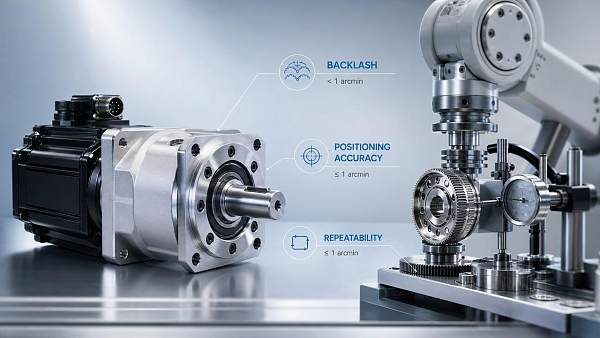
 May 21, 2026Planetary Gearbox Backlash Metrics Before You ComparePlanetary gearbox backlash metrics matter before any brand comparison. Learn how backlash affects accuracy, noise, risk, and sourcing decisions for precision motion systems.
 May 21, 2026Gearbox Thermal Power Limits and Hidden Downtime RiskGearbox thermal power limits directly affect uptime, lubricant life, and hidden downtime risk. Learn how to verify thermal margins early and make smarter buying decisions.
 May 20, 2026Planetary Reducer Wholesale: Cost Risks to Check FirstPlanetary reducer wholesale buyers: uncover hidden cost risks before you source. Learn how to compare suppliers, verify quality, reduce warranty exposure, and protect long-term ROI.
 May 20, 2026How to Read Servo Motor Torque-Speed Curves CorrectlyServo motor torque-speed curves explained clearly: learn how to compare continuous and peak torque, avoid sizing mistakes, and choose reliable motion systems with confidence.
 May 19, 2026Flexible Coupling Wholesale: Misalignment Risks and SavingsFlexible coupling wholesale guide: learn how to reduce misalignment risk, cut downtime, compare suppliers, and unlock long-term savings for smarter industrial sourcing.
 May 19, 2026Slewing Drive Manufacturer Comparison for Load ReliabilitySlewing drive manufacturer comparison starts with load reliability. Learn how to evaluate testing, sealing, fatigue life, and support across solar, mobile, marine, and automation applications.
 May 19, 2026Shaft Collar Factory Selection Mistakes That Cause DowntimeShaft collar factory selection mistakes can trigger slippage, vibration, and costly downtime. Learn how to evaluate suppliers by application to improve reliability and uptime.
 May 18, 2026Planetary Gearbox Wholesale: Cost Drivers That Impact MarginPlanetary gearbox wholesale cost drivers explained: learn how materials, precision, lead time, and supplier reliability impact margin, reduce risk, and improve sourcing decisions.
 May 14, 2026Magnetic Drive Coupling Torque Limits in High-Load Chemical Pump SystemsMagnetic drive coupling torque is critical in high-load chemical pump systems. Learn key limits, failure risks, and smarter sizing strategies to improve reliability.