Search News
Industry Portal
Popular Tags
How to Evaluate an ISO Compliance Equipment Manufacturer
Author
Time
Click Count
Choosing an ISO compliance equipment manufacturer goes far beyond collecting a certificate file for vendor records. It shapes product consistency, audit readiness, maintenance risk, and supply continuity across complex industrial programs. In sectors where tolerance, traceability, and regulatory alignment matter, a weak evaluation process can create expensive downstream failures that are hard to correct later.
That is why the question of how to evaluate an ISO compliance equipment manufacturer has become more urgent across high-tech production, infrastructure delivery, process industries, and digitalized operations. A credible supplier should show not only formal compliance, but also disciplined manufacturing controls, transparent documentation, and the ability to perform under real operating conditions.
Why ISO Compliance Matters in Equipment Sourcing
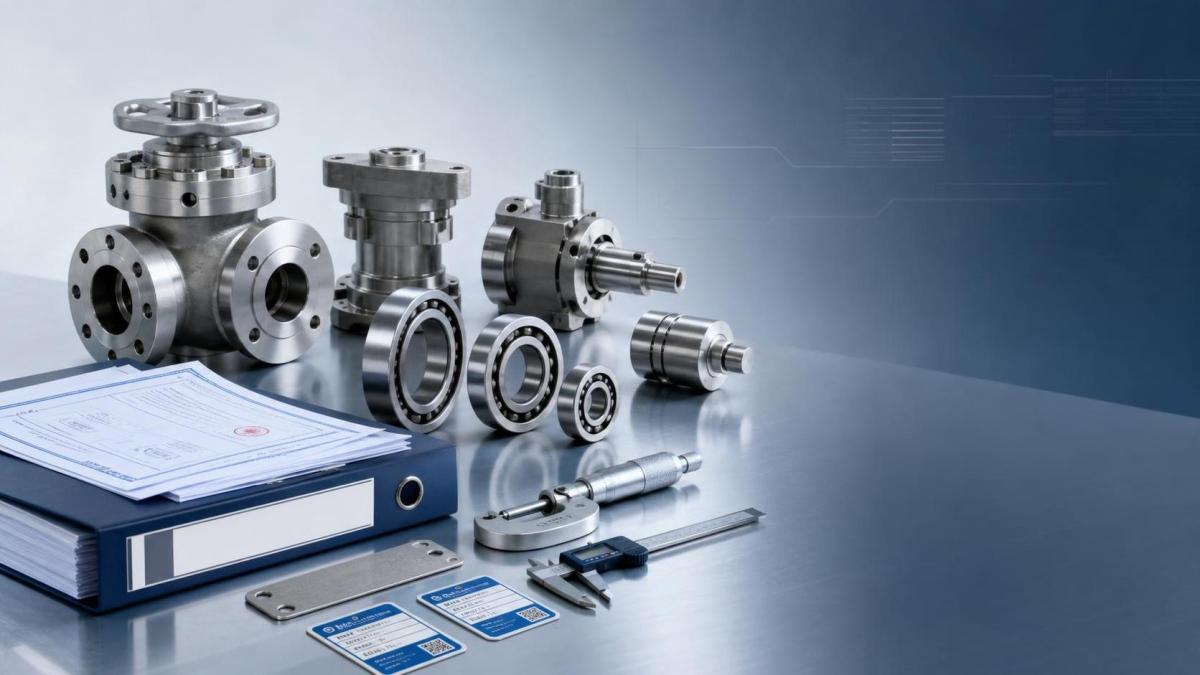
ISO compliance is often treated as a gateway requirement, yet its business value is broader. It provides a common framework for process control, corrective action, document management, inspection discipline, and repeatability.
For equipment purchases, that framework matters because the asset usually sits inside a larger system. A pump affects fluid integrity. A bearing affects motion accuracy. Software affects operational visibility. Materials affect lifetime performance.
In this context, the right ISO compliance equipment manufacturer supports more than compliance status. It supports predictable installation, stable uptime, easier audits, and fewer disputes about root cause when something goes wrong.
This is especially visible in cross-border supply chains. Different plants, integrators, and end users may follow different technical standards, but ISO-based systems create a shared baseline for evaluation.
A Certificate Is Only the Starting Point
Many buyers begin with ISO 9001, and that makes sense. It is widely recognized and directly connected to quality management. Still, an ISO compliance equipment manufacturer should not be approved on that basis alone.
The first practical question is scope. The certificate should cover the relevant manufacturing site, product family, and process activities. A broad corporate certificate is less useful if the audited scope excludes the equipment being sourced.
The second question is recency and issuing body. Expired certificates, unclear surveillance schedules, or weak certification bodies can signal control gaps. Documentation should be verifiable, current, and consistent with the supplier's actual operating footprint.
The third question is whether the ISO framework is visible in daily operations. A manufacturer with a mature system can usually explain change control, nonconformance handling, calibration routines, supplier qualification, and record retention without hesitation.
What to Verify Beyond the Certificate
- Audit scope matches the equipment category and production location.
- Quality records are available for incoming inspection, in-process checks, and final acceptance.
- Traceability exists for critical materials, components, software revisions, or subassemblies.
- Corrective and preventive action processes show measurable closure discipline.
- Engineering changes are documented and communicated before shipment.
Manufacturing Capability Has to Match Compliance Claims
A strong ISO compliance equipment manufacturer combines management-system discipline with real production capability. This is where many sourcing reviews become too shallow.
If the equipment supports critical environments, it is worth checking machining tolerances, clean assembly controls, leak testing, software validation methods, or environmental simulation capacity. Compliance without process capability offers little protection.
This issue is even sharper in advanced industrial categories. Semiconductor fabrication equipment, precision motion systems, specialized pumps and valves, and engineered materials all rely on extremely controlled manufacturing conditions.
An effective review should ask whether the supplier can consistently build to specification at the required volume. Prototype success and serial production control are not the same thing.
Organizations such as G-CST have made this distinction more visible by benchmarking performance against standards like ISO, SEMI, ASME, and IEEE. That type of comparison helps separate nominal compliance from industrial-grade execution.
Operational Signals Worth Checking
Documentation Quality Often Predicts Future Risk
A reliable ISO compliance equipment manufacturer is usually recognizable through its documentation habits. Good records reduce ambiguity during qualification, installation, maintenance, and dispute resolution.
The review should extend to drawings, inspection reports, material certificates, software version notes, validation records, and deviation logs. Missing or inconsistent files often point to larger control issues.
This is not just an administrative concern. In regulated or high-reliability settings, poor documentation can delay commissioning, trigger repeat testing, or weaken claims related to warranty and liability.
It also affects internal governance. When project teams cannot retrieve a clear equipment history, future upgrades and root-cause reviews become slower and more expensive.
Documents That Deserve Close Attention
- Factory acceptance test records and pass criteria.
- Certificates of conformity tied to actual serial numbers.
- Material declarations for safety, environmental, or export review.
- Revision-controlled manuals, drawings, and spare parts lists.
- Nonconformance reports with root-cause evidence and closure status.
Industry Conditions Are Raising the Evaluation Standard
The evaluation of an ISO compliance equipment manufacturer now sits inside a wider industrial context. Supply-chain shocks, export-control shifts, dual sourcing pressure, and faster audit cycles have all changed what counts as a dependable supplier.
High-value sectors no longer look only at product quality. They also examine resilience, geographic exposure, component dependency, and responsiveness to regulatory updates.
This broader view is where technical benchmarking platforms add value. G-CST, for example, connects engineering data with commercial intelligence across semiconductor equipment, pump and valve systems, motion control, industrial software, and advanced materials.
That combination matters because a supplier may be compliant on paper while remaining vulnerable to capacity bottlenecks, single-source subcomponents, or regional trade restrictions. A complete evaluation should capture both technical integrity and business continuity.
How the Right Criteria Change by Equipment Type
Not every ISO compliance equipment manufacturer should be judged in the same way. The evaluation logic changes with application risk, integration complexity, and failure consequences.
Precision and contamination-sensitive systems
For semiconductor and advanced materials environments, clean assembly practices, particle control, component pedigree, and micro-tolerance repeatability deserve close review.
Fluid handling and process systems
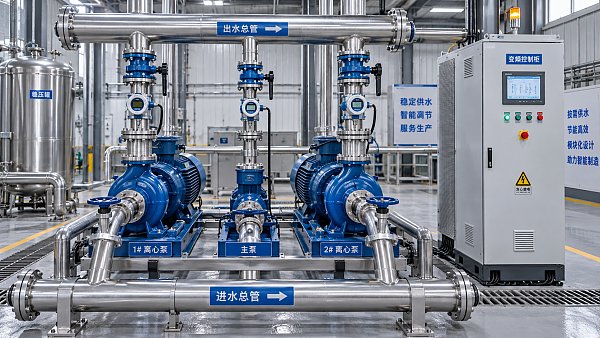
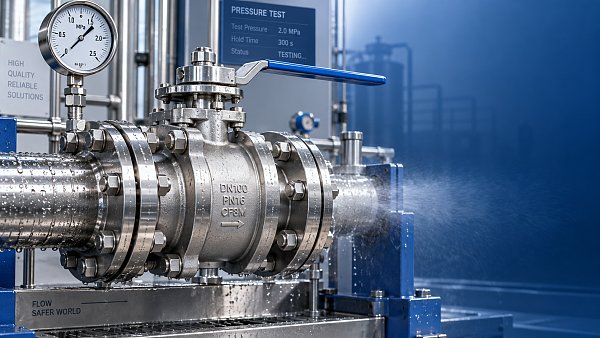
For pumps, valves, and chemical service equipment, sealing performance, corrosion resistance, pressure testing, and maintenance traceability are often more decisive than general brochure claims.
Motion control and rotating elements
For bearings and precision drive systems, buyers should focus on dimensional consistency, lifecycle testing, lubrication control, and vibration data under real load conditions.
Industrial software and digital control layers
When equipment includes SCADA, digital twins, or embedded control software, configuration management, cybersecurity discipline, validation records, and update governance become essential.
A Practical Evaluation Sequence
A useful sourcing process usually starts by defining the criticality of the equipment inside the wider operation. That step clarifies how much weight should be placed on compliance depth, redundancy, service support, and traceability.
After that, compare suppliers against the same evidence set rather than sales language. The goal is to make competing vendors transparent on identical criteria.
- Confirm ISO scope, validity, and issuing body.
- Review manufacturing controls for the exact equipment family.
- Request sample records that prove traceability and change control.
- Check sector-specific standards beyond ISO where relevant.
- Assess supply continuity, service capability, and sub-tier dependencies.
- Use site audits or remote technical reviews when exposure is high.
This approach makes the phrase ISO compliance equipment manufacturer more meaningful. It turns a broad label into a measurable sourcing standard tied to performance, documentation, and operational confidence.
Where to Look Next
A sound decision usually comes from layering evidence rather than relying on one approval signal. Certificate review, technical benchmarking, document quality, and supply resilience should all reinforce each other.
For any shortlist, it is worth building a simple scorecard around application risk, required standards, inspection evidence, lifecycle support, and regulatory exposure. That makes supplier comparisons clearer and easier to defend internally.
When the equipment sits in a high-consequence environment, the next step is deeper verification. Review recent audit findings, request production examples, examine critical component sources, and test how the manufacturer responds to technical exceptions.
That is usually the point where a capable ISO compliance equipment manufacturer stands apart. The difference is visible not in claims, but in controlled execution, usable evidence, and a supply model that remains dependable under pressure.
Recommended News
 Oct 16, 2026How Do I Size a Pump System for Variable Production Demand?How do I size a pump system for variable production demand? Discover how to match flow, head, VFDs, and staged pumps to reduce energy waste and keep production reliable.
 Sep 27, 2026How valve pressure containment data supports safe system designValve pressure containment data helps engineers verify ratings, materials, tests, and temperature limits for safer system design. Explore practical selection insights.
![]() Oct 16, 2026Which Valve Specifications Help Prevent Chemical Media Leakage?Which valve specification prevents chemical media leakage? Explore sealing, materials, pressure ratings, and fugitive-emission features for safer chemical containment.
Oct 16, 2026Which Valve Specifications Help Prevent Chemical Media Leakage?Which valve specification prevents chemical media leakage? Explore sealing, materials, pressure ratings, and fugitive-emission features for safer chemical containment. Sep 20, 2026When strategic procurement reduces total cost without disrupting supplyStrategic Procurement lowers total cost without risking supply continuity. Learn how to compare delivered value, qualify suppliers, and prevent hidden rework.
 Sep 04, 2026When do oil and gas industrial valves require API 6D certification?Industrial Valves for oil and gas may require API 6D certification for pipeline isolation and transportation systems. Learn key compliance triggers, procurement checks, and safety standards before sourcing.
 Aug 27, 2026Industrial supply chain analysis for finding single-source riskIndustrial Supply Chain Analysis resilience helps uncover hidden single-source risks, map critical dependencies, and build practical mitigation plans for stronger operational continuity.
 Jul 21, 2026How to Evaluate an ISO Compliance Equipment ManufacturerISO compliance equipment manufacturer evaluation starts with more than certificates. Learn how to verify capability, traceability, documentation, and supply reliability.
 Jul 12, 2026Rotary Lobe Pump Exporter Checklist: Certifications, Materials, and Service RiskRotary lobe pump exporter checklist: verify certifications, wetted materials, traceability, and after-sales support to reduce compliance risk, hidden costs, and downtime before you buy.
 Jul 10, 2026ASME Certified Components Quotation: Cost Drivers and Hidden Review PointsASME Certified Components quotation explained: uncover real cost drivers, hidden review points, and supplier risks to compare quotes fairly and avoid costly approval delays.
 Jul 09, 2026How to Compare Global Water and Oil Valve Tenders Databases by Coverage and Update SpeedGlobal water and oil valve tenders database comparison starts with coverage and update speed. Learn how to spot faster, deeper tender intelligence before opportunities are missed.
![]() Jul 07, 2026Air Filters for Clean Processes: When Pressure Drop Becomes a Cost ProblemAir filters can quietly raise clean-process costs through pressure drop, energy loss, and downtime. Learn how to balance filtration efficiency, uptime, and lifecycle savings.
Jul 07, 2026Air Filters for Clean Processes: When Pressure Drop Becomes a Cost ProblemAir filters can quietly raise clean-process costs through pressure drop, energy loss, and downtime. Learn how to balance filtration efficiency, uptime, and lifecycle savings.![]() Jul 07, 2026Metering Pump Manufacturer Checklist for Accuracy and Lifecycle CostMetering pump manufacturer selection goes beyond flow accuracy. Learn how to compare lifecycle cost, reliability, materials, service support, and compliance before you buy.
Jul 07, 2026Metering Pump Manufacturer Checklist for Accuracy and Lifecycle CostMetering pump manufacturer selection goes beyond flow accuracy. Learn how to compare lifecycle cost, reliability, materials, service support, and compliance before you buy.![]() Jul 07, 2026CIP Rotary Lobe Pump Selection: Cleanability, Shear, and Downtime RiskCIP rotary lobe pump selection starts with cleanability, shear control, and downtime risk. Learn how to choose a hygienic, low-maintenance pump that protects product quality.
Jul 07, 2026CIP Rotary Lobe Pump Selection: Cleanability, Shear, and Downtime RiskCIP rotary lobe pump selection starts with cleanability, shear control, and downtime risk. Learn how to choose a hygienic, low-maintenance pump that protects product quality. Jul 06, 2026Food Grade Lobe Pump Shear: How It Affects Product TextureFood grade lobe pump shear directly affects texture, particle retention, and filling stability. Learn how to evaluate shear, protect product quality, and choose the right hygienic pump.
 Jun 30, 2026API Valve Tenders: Cost and Delivery Risks in Global ProjectsGlobal water and oil valve tenders for API valves often hide cost and delivery risks. Learn how to compare bids, spot exclusions, and avoid expensive project delays.
 Jun 27, 2026Slurry Pump for Mining: Common Wear Problems and FixesSlurry pump for mining wear issues explained: spot abrasive wear, cavitation, corrosion, seal leaks, and bearing damage early, with practical fixes to cut downtime and repair costs.
 Jun 25, 2026How to Use an Industrial Buyers Directory for Construction VendorsIndustrial buyers directory for construction: learn how to find, compare, and qualify vendors faster, reduce sourcing risk, and make smarter purchasing decisions for complex projects.
 Jun 23, 2026Radiators vs Heat Exchangers: Which Fits Industrial Cooling Better?Radiators or heat exchangers? Discover which industrial cooling solution delivers better efficiency, uptime, and cost control—and when radiators are the smarter choice.
 Jun 18, 2026Rotary Lobe Pump Factory Checklist: What to Verify Before OrderingRotary lobe pump factory checklist: verify application fit, quality control, material traceability, lead times, and support before ordering to reduce risk and buy with confidence.
 Jun 17, 2026How to Choose Dust Collectors for Fine Powder Controldustcollectors for fine powder control: learn how to compare collector types, filter media, safety, and lifecycle cost to choose a safer, more efficient system.
 Jun 15, 2026How to Compare Storage Solutions for Energy Density and RiskStorage solutions compared by energy density and risk: learn how to evaluate safety, compliance, lifecycle cost, and reliability to choose the right system with confidence.
 Jun 14, 2026Car Batteries Wholesale: Cost Factors, MOQ, and Warranty RisksCar batteries wholesale buying is about more than price. Learn key cost drivers, MOQ terms, landed cost, and warranty risks to choose safer suppliers and protect margins.
 Jun 11, 2026How to Evaluate an Air Compressors Supplier for UptimeAir compressors supplier selection directly affects uptime. Learn how to compare service, parts, data visibility, and technical fit to reduce risk and choose with confidence.
![]() Jun 09, 2026How to Read Centrifugal Pump Head and Flow Data CorrectlyLearn how to read centrifugal pump head and flow data correctly, avoid sizing mistakes, check BEP and NPSH, and make smarter pump selection decisions with confidence.
Jun 09, 2026How to Read Centrifugal Pump Head and Flow Data CorrectlyLearn how to read centrifugal pump head and flow data correctly, avoid sizing mistakes, check BEP and NPSH, and make smarter pump selection decisions with confidence.