Search News
Industry Portal
Popular Tags
ALD Equipment Price Breakdown: What Drives Total Cost?
Author
Time
Click Count
ALD Equipment Price Breakdown: What Drives Total Cost?
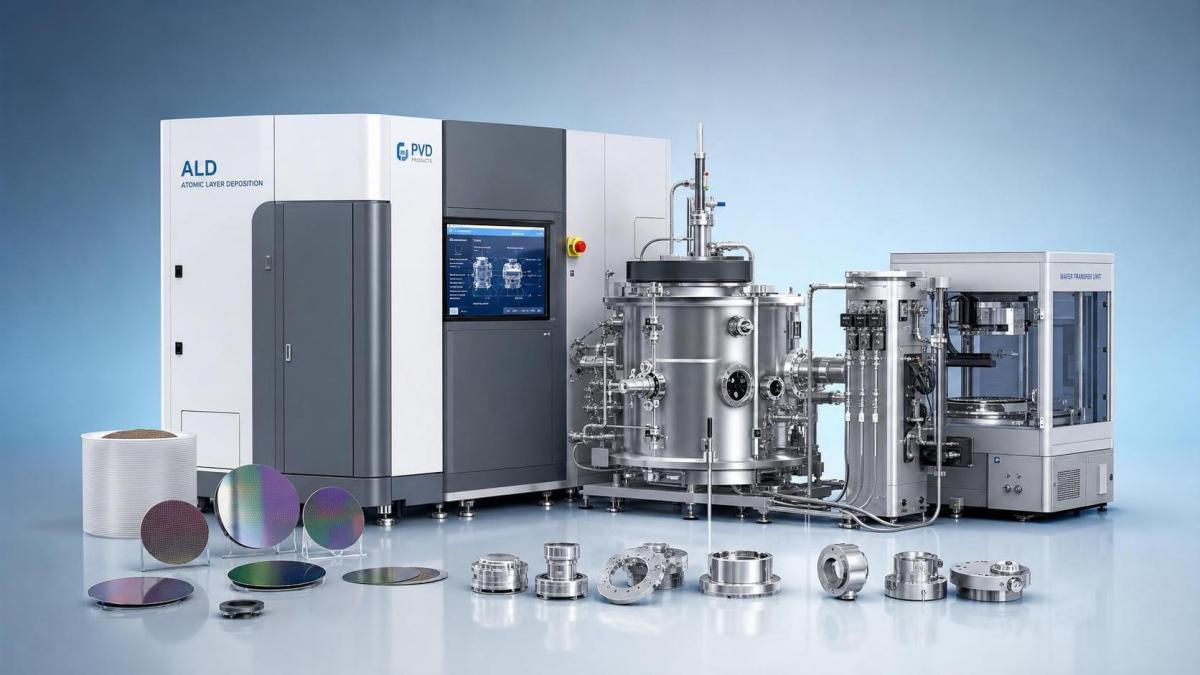
Understanding ALD equipment price starts with one simple fact: the purchase quote is only the visible layer.
For most buyers, the real challenge is not finding a number. It is understanding what that number actually includes.
A low starting quote can still lead to high ownership cost if throughput is weak, support is thin, or qualification takes too long.
That is why ALD equipment price should be reviewed as a total investment, not just a line-item purchase.
In practical sourcing work, cost usually moves with process complexity, chamber design, precursor handling, automation, and after-sales capability.
More importantly, each of these factors affects yield, uptime, and scale-up risk.
This means the cheapest ALD system is not always the most economical option over three to seven years.
Why ALD equipment price varies so much
ALD equipment price can differ sharply between tools that look similar on paper.
The reason is simple: ALD is highly sensitive to process window, film quality, and repeatability.
A system built for university R&D use has a very different cost structure from one qualified for industrial production.
Even inside production environments, batch tools and single-wafer platforms follow different economics.
Recent market signals show buyers asking more detailed questions about lifecycle support, utility demand, and export compliance.
That shift matters because total cost is now judged against resilience, not only process capability.
The main pricing tiers
Most ALD equipment price discussions fall into three broad ranges.
- Entry-level R&D systems: lower capital cost, narrower automation, smaller wafer support, and fewer integrated safety modules.
- Pilot-line tools: mid-range cost, better recipe stability, broader precursor compatibility, and stronger data logging.
- High-volume production systems: highest ALD equipment price, but stronger throughput, uptime, contamination control, and fab integration.
These categories are not rigid, but they help frame supplier proposals more clearly.
The cost drivers behind the quote
The quoted ALD equipment price is usually built from several technical and commercial layers.
When those layers are unpacked, buyers can compare tools on a like-for-like basis.
1. Chamber architecture and wafer format
Chamber design is one of the biggest drivers of ALD equipment price.
Single-wafer systems often cost more per chamber because they require tighter control and faster cycle management.
Batch tools may reduce cost per wafer, but they can add complexity in loading, uniformity control, and maintenance access.
Wafer size also matters. A platform designed for 300 mm production carries a much heavier price burden than a lab tool.
2. Throughput expectations
Higher throughput almost always pushes ALD equipment price upward.
That increase comes from faster valve response, stronger thermal stability, better gas delivery, and more sophisticated control software.
In business terms, throughput should be judged against cost per qualified wafer, not only wafers per hour.
A slower tool with higher repeatability can outperform a faster system with unstable recipes.
3. Precursor and materials compatibility
This is where ALD equipment price can move quickly.
Some precursors need heated lines, corrosion-resistant surfaces, tighter sealing, or advanced abatement integration.
If the process roadmap includes exotic chemistries, the base platform may need substantial customization.
That affects not only purchase cost, but also spare parts, preventive maintenance, and operator training.
4. Automation and factory integration
Manual loading lowers initial ALD equipment price, but often raises labor exposure and contamination risk.
Automated handling, recipe management, MES connectivity, and remote diagnostics add cost up front.
Still, these functions usually shorten ramp time and improve traceability.
For regulated manufacturing, those advantages are hard to ignore.
5. Compliance, safety, and documentation
A compliant tool may cost more, but the alternative can be expensive later.
SEMI alignment, CE marking, electrical certification, gas safety packages, and validation documents all shape ALD equipment price.
In cross-border projects, documentation gaps can delay installation and trigger additional engineering work.
Hidden costs that buyers often miss
A realistic ALD equipment price review should include expenses outside the capital quote.
This is often where budget pressure appears after contract signing.
Utilities and facility preparation
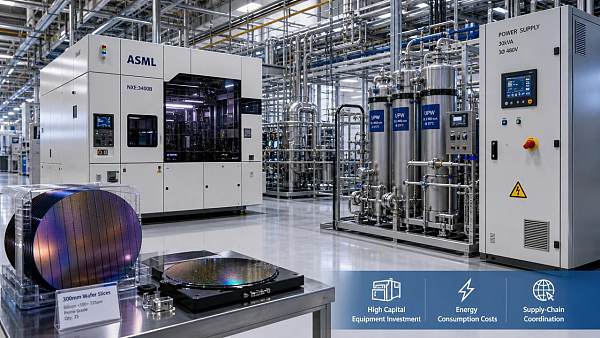
Vacuum infrastructure, gas cabinets, exhaust treatment, chilled water, and cleanroom modifications can be substantial.
In some cases, facility cost reaches a meaningful share of the total ALD equipment price.
Process qualification
Qualification consumes engineering time, metrology support, substrates, and precursor inventory.
If the supplier has weak application support, qualification cycles may take much longer than expected.
That delay affects product launch schedules and effective return on investment.
Service and uptime risk
Support structure matters more than many first-time buyers expect.
A lower ALD equipment price loses appeal quickly if spare parts lead times are long or field engineers are unavailable.
For production environments, uptime commitments should be treated as a cost variable, not a service footnote.
How to compare ALD equipment price more effectively
Price comparison works best when each supplier is forced into the same decision framework.
Without that discipline, one quote may look cheaper simply because key modules are excluded.
Use a structured comparison table
Focus on cost per usable output
The better question is not “What is the ALD equipment price?”
It is “What does each qualified wafer, part, or coated batch really cost over time?”
That view brings maintenance, uptime, cycle time, scrap exposure, and upgrade path into one decision frame.
Test supplier maturity, not only tool specs
Ask for reference installations, repeat-order evidence, and field failure data where possible.
A supplier with a higher ALD equipment price may still be the lower-risk choice.
That is especially true when process stability and long-term support are critical.
Practical sourcing steps before final approval
Before approving any ALD equipment price, a short validation checklist can prevent expensive mistakes.
- Confirm the exact process scope, wafer format, and target films for the next three years.
- Separate base hardware cost from options, facility needs, and service contracts.
- Define acceptance metrics for uniformity, defectivity, throughput, and uptime before purchase order release.
- Review precursor roadmap compatibility, not only current recipes.
- Model total ownership cost across installation, qualification, operation, and end-of-life support.
From a sourcing perspective, this discipline turns ALD equipment price into a measurable business case.
It also makes vendor negotiation sharper because cost assumptions are visible and testable.
Final takeaway
ALD equipment price is driven by much more than the machine itself.
Chamber design, throughput, chemistry support, automation, compliance, and service depth all shape the final number.
More importantly, those same factors determine whether the investment performs under real production pressure.
The strongest buying decisions come from comparing total cost, qualification risk, and supplier reliability together.
When ALD equipment price is evaluated through that wider lens, budget control and technical confidence become much easier to align.
Recommended News
 Oct 17, 2026Are Refurbished Semiconductor Etching Equipment Parts Safe to Use?Are refurbished semiconductor equipment parts safe to use? Discover key checks for etching parts, avoid costly failures, and make confident purchasing decisions.
 Oct 14, 2026How chamber outgassing limits ultimate vacuum pressure in etchingUltimate vacuum pressure in etching depends on chamber outgassing, not just pump specs. Discover how gas loads, temperature, and pumping conductance limit performance—and what can improve it.
 Oct 10, 2026How purity grades affect semiconductor quartz tube selectionSemiconductor grade quartz tube selection starts with purity. Explore how trace metals, OH content, surface finish, and thermal exposure impact process reliability.
 Oct 04, 2026What drives lead times for semiconductor process equipment in the Middle East?Semiconductor process equipment Middle East lead times depend on configuration, export clearance, logistics, site readiness, and service support. Discover how to build a reliable procurement schedule.
 Sep 17, 2026How to assess uptime risk in reliable semiconductor fabrication equipmentReliable semiconductor fabrication equipment: learn how to assess uptime risk, validate field evidence, reduce downtime exposure, and protect fab capacity.
 Sep 10, 2026How to evaluate low contamination semiconductor equipment for particle controlLow contamination semiconductor equipment evaluation guide: control particles with risk-based testing, lifecycle maintenance, and supplier evidence.
 Sep 05, 2026What drives plasma diagnostics cost in semiconductor process monitoring?Plasma diagnostics cost depends on measurement goals, chamber integration, data systems, calibration, and qualification. Explore the factors behind reliable semiconductor process monitoring.
 Jul 12, 2026SEMI Compliant Semiconductor Fabrication Equipment: Key Checks Before QualificationSEMI compliant semiconductor fabrication equipment demands more than paperwork. Learn the key qualification checks for safety, contamination control, integration, and long-term fab readiness.
 Jul 11, 2026Wholesale Etching Machines Factory Audit Checklist for Stable OutputWholesale etching machines factory audit checklist covering capability, traceability, quality control, and service readiness to help buyers reduce sourcing risk and secure stable output.
![]() Jul 07, 2026Low Particle Semiconductor Equipment: Key Specs That Reduce Yield RiskLow particle semiconductor equipment: discover the key specs that cut yield risk, improve contamination control, and help fabs compare suppliers with more confidence.
Jul 07, 2026Low Particle Semiconductor Equipment: Key Specs That Reduce Yield RiskLow particle semiconductor equipment: discover the key specs that cut yield risk, improve contamination control, and help fabs compare suppliers with more confidence. Jul 06, 2026ALD Equipment Price Breakdown: What Drives Total Cost?ALD equipment price explained: discover what drives total cost, from chamber design and throughput to service, compliance, and hidden ownership expenses before you buy.
 Jul 01, 2026Dry Etch Selectivity: How to Compare Process Windows and Yield RiskDry etch selectivity explained for real process decisions: compare process windows, chamber drift, profile control, and yield risk to benchmark tools and choose with confidence.
 May 09, 2026Wafer Fabrication Investment Insights: Cost Signals to Watch in 2026Wafer fabrication investment insights for 2026: uncover the cost signals shaping fab ROI, risk, utilities, yield, and compliance before capital plans are approved.
![]() May 08, 2026How to Compare ALD Precursor Delivery Precision Without Missing Hidden VariabilityALD precursor delivery precision comparison starts with the hidden variables vendors often omit. Learn a practical checklist to assess pulse stability, thermal control, dead volume, and long-run reliability.
May 08, 2026How to Compare ALD Precursor Delivery Precision Without Missing Hidden VariabilityALD precursor delivery precision comparison starts with the hidden variables vendors often omit. Learn a practical checklist to assess pulse stability, thermal control, dead volume, and long-run reliability. May 07, 2026Ion Implantation Dose Precision: What Actually Matters in Process QualificationIon implantation dose precision defines yield, reliability, and qualification risk. Learn what evaluators should verify in dose accuracy, repeatability, beam stability, and supplier control.
 May 06, 2026ALD Film Thickness Uniformity Data: Common Mistakes That Skew Quality ReviewALD film thickness uniformity data mistakes can hide drift, distort quality review, and trigger costly decisions. Discover the key checks, warning signs, and actions every team should know.
 May 06, 2026Etching Selectivity Benchmarks: A Practical Way to Judge Process StabilityEtching selectivity benchmarks give technical evaluators a practical way to judge process stability, repeatability, and qualification risk—discover how to assess reliable scale-up with confidence.
 May 06, 2026CMP Removal Rate Data: What Actually Matters for Process TuningCMP removal rate data matters most when tied to pad condition, slurry behavior, pressure stability, and wafer uniformity. Learn how to tune CMP for better yield, control, and repeatable results.
 Factory Before RFQ") May 05, 2026What to Check in an Atomic Layer Deposition (ALD) Factory Before RFQAtomic layer deposition (ALD) factory selection starts before RFQ. Learn what to audit for process stability, compliance, scale-up, and supply-chain reliability.
May 05, 2026What to Check in an Atomic Layer Deposition (ALD) Factory Before RFQAtomic layer deposition (ALD) factory selection starts before RFQ. Learn what to audit for process stability, compliance, scale-up, and supply-chain reliability. May 05, 2026How to Compare a Plasma Generator Manufacturer for Stable Process OutputPlasma generator manufacturer comparison guide: learn how to assess power stability, control precision, compliance, and lifecycle support for stable process output.
 May 04, 2026Wafer Deposition System OEM: When Lower Upfront Pricing Becomes a Long-Term RiskWafer deposition system OEM choices with the lowest upfront price can create hidden long-term risks. Learn how to assess downtime, yield, compliance, and lifecycle support before approving capital equipment.
 May 04, 2026Wholesale Etching Machines: Common Performance Gaps That Show Up After InstallationWholesale etching machines often show hidden performance gaps after installation. Learn the real causes behind drift, low throughput, and maintenance issues to improve stability and buying decisions.
 Wholesale: What to Check Before Scaling Supply") May 04, 2026Chemical Mechanical Polishing (CMP) Wholesale: What to Check Before Scaling SupplyChemical mechanical polishing (CMP) wholesale success depends on more than price. Learn how to assess quality, traceability, compliance, and supply resilience before scaling.
May 04, 2026Chemical Mechanical Polishing (CMP) Wholesale: What to Check Before Scaling SupplyChemical mechanical polishing (CMP) wholesale success depends on more than price. Learn how to assess quality, traceability, compliance, and supply resilience before scaling. Apr 27, 2026How to Vet a Semiconductor Manufacturing Standards DistributorSemiconductor Manufacturing Standards distributor vetting starts with SEMI Standards compliance. Learn how to verify traceability, customization, and sourcing resilience before you buy.