Search News
Industry Portal
Popular Tags
How to Use a Verified Exporters Directory Without Supplier Verification Risks
Author
Time
Click Count
How reliable is an exporters directory with verified suppliers in real sourcing work?
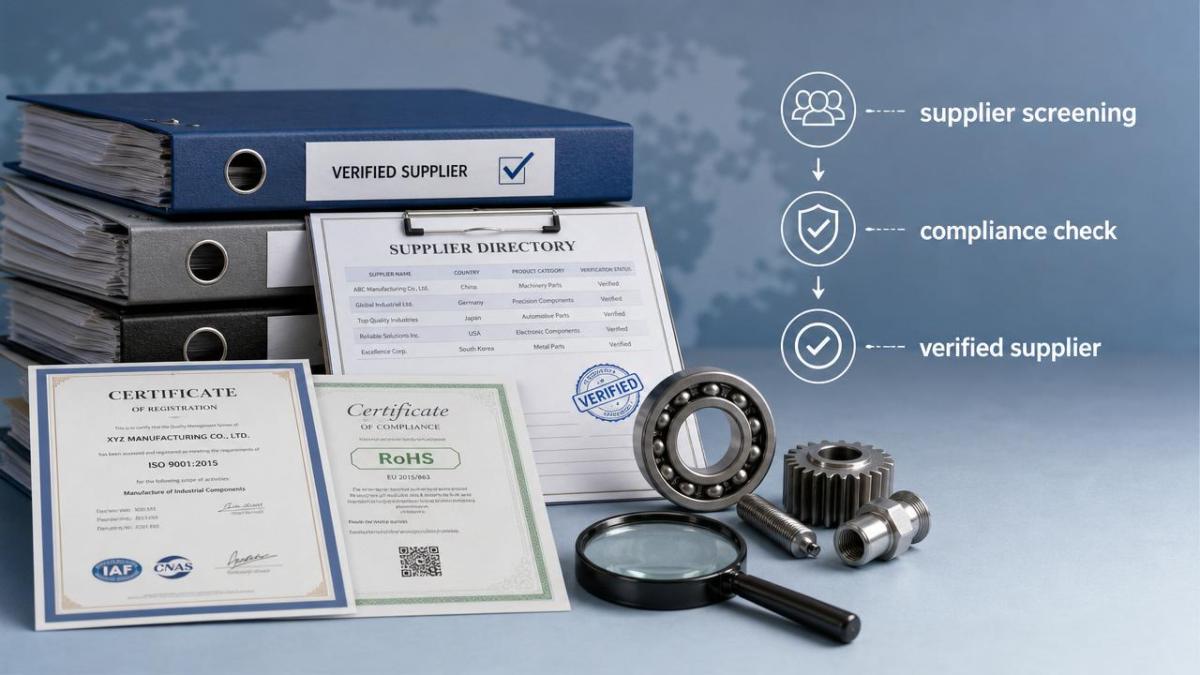
A verified listing is useful, but it is not the same as full supplier approval.
That difference matters most when sourcing industrial components, software, engineered materials, or regulated assemblies across borders.
An exporters directory with verified suppliers usually confirms business identity, export activity, and some document consistency.
It may not confirm process capability, engineering depth, change control, or long-term delivery resilience.
In practice, the directory should be treated as a screening tool, not as the final proof of supplier reliability.
This is especially true in sectors where tolerance, traceability, and compliance shape commercial risk.
G-CST reflects this more disciplined view.
Its value is not just in finding names.
It connects supplier discovery with technical benchmarking, standards alignment, export-control awareness, and project-level market intelligence.
That broader context helps reduce the false confidence that often comes from a verified badge alone.
What does “verified” usually cover, and where do the gaps begin?
The most common misunderstanding is assuming that verification means technical qualification.
More often, an exporters directory with verified suppliers checks a narrower set of facts.
- Legal registration and operating status.
- Basic trade credentials and contact authenticity.
- Selected certificates submitted by the supplier.
- Factory existence or export history, depending on the platform.
Those checks are valuable, but they leave major questions unanswered.
Can the supplier hold micron-level tolerances across volume lots?
Does its software integrate with required SCADA, MES, or digital twin environments?
Are materials tested against the right ASTM, ISO, SEMI, ASME, or IEEE expectations?
Can export licenses or end-use restrictions disrupt shipment later?
A practical way to read a verified listing is this: it reduces search noise, but not validation duty.
The stronger the technical consequence of failure, the deeper the next verification layer must be.
A quick comparison helps clarify the boundary
When does an exporters directory with verified suppliers add the most value?
It works best in the early and middle stages of supplier discovery.
If the market is fragmented, the directory can shorten the long list quickly.
That is helpful for standard components, replacement parts, engineered materials, contract software support, and adjacent category exploration.
It also becomes valuable when a sourcing team needs cross-border visibility beyond incumbent vendors.
In actual application, the directory is strongest when paired with a structured comparison model.
- Use it to map supplier geography and export readiness.
- Use it to compare declared certifications and product families.
- Use it to identify who claims capability in your exact technical segment.
- Use it to detect where documentation is thin or inconsistent.
For high-consequence categories, G-CST’s benchmarking model is especially relevant.
Its five industrial pillars show why supplier evaluation should not stop at profile visibility.
A pump supplier, a ceramic bearing producer, and an industrial software provider cannot be judged by the same checklist depth.
The screening logic must follow the technical failure mode.
How should you verify suppliers after the directory shortlist is built?
This is where many sourcing projects either gain control or inherit hidden risk.
A good shortlist from an exporters directory with verified suppliers should trigger deeper evidence requests.
The goal is not to collect more paperwork.
The goal is to test whether the supplier can repeatedly meet the exact operating requirement.
Focus on five verification layers
- Technical fit: drawings, tolerances, materials, firmware, interfaces, or process envelope.
- Quality proof: inspection plans, traceability methods, SPC records, NCR handling, and lot consistency.
- Compliance exposure: export controls, sanctions screening, dual-use status, and destination restrictions.
- Commercial resilience: lead time realism, tooling ownership, capacity headroom, and second-source dependencies.
- Change discipline: revision history, substitute material policy, and approval rules before process changes.
Where possible, request evidence tied to a recent production batch rather than generic marketing files.
That small shift often exposes the real maturity level.
For complex categories, external benchmarking data also helps separate claims from capability.
This is one reason intelligence platforms like G-CST matter in technical procurement.
They add standards-based context around engineering claims, not just company presence.
What risks are still easy to miss, even with verified listings?
The biggest risks are usually indirect.
A profile may be accurate, while the operational risk sits somewhere deeper in the chain.
More common examples include undocumented subcontracting, unstable raw material inputs, weak calibration discipline, or export-license delays.
There is also a timing issue.
A supplier may pass a directory review yet change ownership, move production, or face new regulatory pressure months later.
That is why supplier verification should be treated as a living process.
The following checklist is often more useful than a single approval decision.
Is using a verified directory actually cheaper, or does it just move the cost?
Usually, it lowers search cost first and verification cost later becomes more focused.
That is a good trade when the shortlist becomes cleaner and faster to assess.
It is a bad trade when teams assume the directory has already solved qualification risk.
The real savings come from sequencing.
Start broad with an exporters directory with verified suppliers.
Then invest deeper verification only where technical value, continuity risk, or compliance exposure justify it.
This staged method avoids two expensive mistakes.
- Over-auditing low-risk categories too early.
- Under-checking critical suppliers because they looked verified online.
Where cycle time matters, benchmark repositories and market intelligence platforms can also reduce duplicate effort.
A source like G-CST supports that by linking technical standards, sector-specific comparisons, and regulatory signals in one research flow.
That makes the screening process more defensible when supplier choice affects uptime, safety, or long-term asset performance.
What is the smartest next step after finding candidates in an exporters directory with verified suppliers?
Build a decision path before requesting final quotations.
A directory can help surface options quickly, but value appears only when comparison criteria are explicit.
A practical next move is to separate suppliers into three groups.
- Commercially visible but technically unproven.
- Technically promising but documentation-incomplete.
- Ready for sample, audit, or controlled pilot order.
From there, align evidence requests with the real risk of the category.
A valve for corrosive media, a bearing for sub-micron motion, and a digital twin module should not be advanced on identical proof.
The stronger approach is to combine directory data, live engineering clarification, standards-based comparison, and current regulatory review.
That is where an exporters directory with verified suppliers becomes truly useful.
Not as a shortcut around diligence, but as the starting point of better diligence.
If the next review cycle is approaching, refine technical requirements, define pass-fail checks, compare evidence by application scenario, and confirm cost, lead time, and compliance before award.
Recommended News
 Jun 19, 2026How to Compare Glass Bottles Wholesale Costs Without Missing Quality RisksGlassbottleswholesale cost comparison is not just about unit price. Learn how to spot hidden quality risks, reduce breakage, and choose suppliers with lower total sourcing cost.
 Jun 18, 2026Export Controls and Lithography: What Changes in 2026?Impact of export controls on lithography in 2026: discover how tighter rules on tools, software, service, and sub-systems could reshape fab planning, supply chains, and competitive resilience.
 Jun 15, 2026Global Chip Fab Construction Projects: Key Risks and Timeline ShiftsGlobal chip fab construction projects face rising schedule risks from technical integration, supply chains, and compliance. Discover the key timeline shifts shaping fab delivery now.
 Jun 13, 2026Translation Services Pricing: What Affects Cost and Turnaround Timetranslationservices pricing explained: learn what drives cost and turnaround time, from language pairs and technical complexity to compliance, formatting, and rush delivery.
 Jun 13, 2026How to Use a Verified Exporters Directory Without Supplier Verification RisksExporters directory with verified suppliers: learn how to screen vendors faster, spot hidden verification gaps, and reduce sourcing risk with smarter due diligence.
 Jun 10, 2026E-Learning vs Classroom Training: Which Delivers Better Compliance Results?E-learning vs classroom training: discover which approach delivers stronger compliance results, better audit records, faster rollouts, and smarter risk control for modern organizations.
 Jun 07, 2026How to Choose First Aid Kits for Workplace Risk LevelsFirst aid kits for every workplace risk level: learn how to match kit contents to real hazards, improve response speed, and choose safer, compliance-ready solutions.
 Jun 06, 2026Hospitality Benchmarking: KPIs That Actually MatterHospitality benchmarking explained: discover the KPIs that truly drive revenue, labor efficiency, guest satisfaction, and asset performance for smarter hotel decisions.
![]() Jun 05, 2026Interactive Pet Toys: Safety Features That Matternteractivepettoys safety starts with secure materials, sealed batteries, and easy-clean design. Discover the key features that protect pets and help you choose smarter toys with confidence.
Jun 05, 2026Interactive Pet Toys: Safety Features That Matternteractivepettoys safety starts with secure materials, sealed batteries, and easy-clean design. Discover the key features that protect pets and help you choose smarter toys with confidence.![]() Jun 04, 2026Double Glazing Glass Panels: Cost vs Energy Savings in 2026Double glazing glass panels: compare 2026 upfront costs with long-term energy savings, ROI, compliance value, and supplier review tips for smarter building upgrade decisions.
Jun 04, 2026Double Glazing Glass Panels: Cost vs Energy Savings in 2026Double glazing glass panels: compare 2026 upfront costs with long-term energy savings, ROI, compliance value, and supplier review tips for smarter building upgrade decisions. Jun 03, 2026Strategic Sourcing Risks to Check in 2026Strategic sourcing in 2026 demands sharper risk checks. Learn how to assess supplier resilience, export controls, ESG, cyber exposure, and cost stability before committing.
 Jun 03, 2026Mask Inspection System Factory Audit ChecklistMask inspection system factory audit checklist for QC and safety teams: verify calibration, traceability, cleanroom control, software validation, and supplier risk before approval.
 Jun 02, 2026Clothdiapers vs Disposables: Real Use CostsClothdiapers vs disposables: uncover real daily costs, laundry factors, hidden expenses, and smart hybrid strategies to choose a budget-friendly diapering option.
 Jun 01, 2026Home Decor Wholesale Sourcing: Quality Risks to Check Before OrderingHome decor wholesale sourcing made safer: learn key quality risks in materials, structure, packaging, labels, and supplier traceability before you order.
 May 31, 2026Scaffolding Safety Checks That Prevent DelaysScaffolding safety checks help prevent costly delays, improve compliance, and keep industrial projects on schedule with practical inspection and supplier control tips.
 May 31, 2026Concrete & Masonry Cost Risks Before Site WorkConcrete & Masonry cost risks can derail budgets before site work starts. Learn key checks for specs, labor, supply, compliance, and sequencing to plan smarter.
 May 30, 2026Legal Tech in 2026: Adoption Risks Before ScalingLegal tech in 2026 must scale with governance. Explore key adoption risks, AI controls, data security, vendor checks, and practical steps before rollout.
 May 22, 2026Global Precision Bearing Trends 2026: Cost and Supply OutlookGlobal precision bearing trends 2026 reveal key cost drivers, supply risks, and sourcing strategies. Explore practical insights to plan smarter procurement and strengthen industrial resilience.
 May 20, 2026Needle Roller Bearing Factory Checklist for Stable QualityNeedle roller bearing factory checklist for buyers: learn how to verify traceability, heat treatment, process control, and quality consistency before approval. Click for audit-ready tips.
 May 09, 2026Lithography Technology Breakthroughs News: Which Advances Are Fab-ReadyLithography technology breakthroughs news decoded: discover which advances are truly fab-ready, from EUV materials to AI process control, and make smarter manufacturing decisions.
 May 09, 2026New SEMI Standards for 2026: What Will Change in Fab ComplianceNew SEMI standards for 2026 will reshape fab compliance, supplier qualification, interoperability, and audit readiness. See the key risks, business impacts, and smart next steps now.
 May 08, 2026ASML and Nikon Market Share Report: What the Shift Means for Equipment SourcingASML and Nikon market share report for procurement teams: see how lithography share shifts affect sourcing risk, supplier leverage, compliance, and fab investment decisions.
 May 08, 2026Impact of Export Controls on Lithography: The Risks Behind Long-Term Equipment PlansImpact of export controls on lithography can reshape ROI, uptime, and asset value. Learn how finance teams can stress-test long-term equipment plans and reduce policy-driven investment risk.
 May 08, 2026Next-Gen 2nm Fab Equipment Trends That Will Shape Capacity PlanningNext-gen 2nm fab equipment trends are reshaping capacity planning. Explore procurement risks, compliance, digital integration, and scalable strategies to improve yield, uptime, and ramp readiness.