Search News
Industry Portal
Popular Tags
SEMI Standards Changes That Affect Tool Compatibility
Author
Time
Click Count
SEMI Standards updates are not just compliance edits. They can directly change whether a tool integrates cleanly with factory systems, passes acceptance tests, supports material and process requirements, or creates hidden retrofit costs later. For information researchers and operators, the key question is practical: which standards changes affect interfaces, safety, communication, materials, reliability, and upgrade paths—and what should be checked before buying, connecting, or modifying equipment? The short answer is that even small revisions in SEMI expectations can influence software interoperability, subsystem selection, spare-part strategy, and long-term fab readiness across semiconductor and precision industrial environments.
For teams evaluating Digital Twin Technology, Industrial Automation Software, Chemical Pumps, Ceramic Bearings, motion systems, or advanced materials used in semiconductor-adjacent tools, the most useful approach is not to read standards updates as isolated documents. Instead, map each change to tool compatibility risk: communication compatibility, mechanical fit, contamination control, environmental performance, cybersecurity exposure, and qualification burden. This article focuses on exactly that practical lens.
Which SEMI standards changes matter most for tool compatibility?
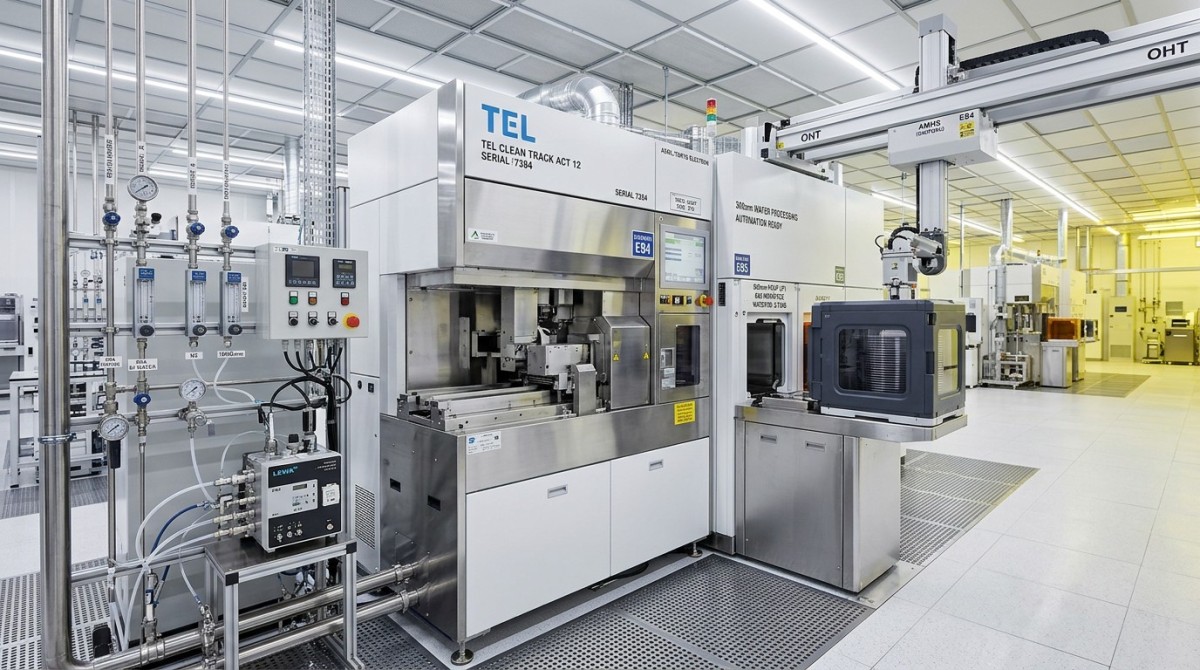
When users search for “SEMI Standards changes that affect tool compatibility,” they are usually not looking for a list of acronyms. They want to know which updates can break integration, delay procurement, or force redesign. In practice, the most important change categories are these:
- Equipment communication and automation standards: Changes affecting host connectivity, equipment data collection, GEM behavior, EDA/Interface A readiness, alarm reporting, event structures, and remote command handling.
- Safety and installation expectations: Updates that influence acceptance in regulated production environments, especially for electrical, chemical, vacuum, thermal, and motion-related subsystems.
- Materials and contamination control requirements: Revisions that affect chemical compatibility, outgassing, particle generation, seal performance, corrosion resistance, and clean-environment suitability.
- Wafer handling and mechanical interface specifications: Changes that impact robotics, load ports, carriers, alignment, kinematics, and dimensional tolerances.
- Traceability, data integrity, and smart manufacturing alignment: Newer expectations around richer data models, interoperable analytics, and tool behavior inside automated factories.
For operators, the compatibility issue often appears late: the tool “works,” but not in the intended production ecosystem. For researchers and sourcing teams, that means the real risk is less about nameplate capability and more about system fit.
How do SEMI updates affect integration with software, automation, and digital twins?
This is one of the highest-value areas for both procurement and operations. A tool may meet core process requirements but still underperform if it does not align with current SEMI communication and automation expectations.
In modern fabs and advanced industrial plants, compatibility increasingly depends on whether equipment can exchange structured, reliable, and actionable data with:
- MES and SCADA platforms
- Factory automation systems
- Predictive maintenance platforms
- Digital twin environments
- Condition monitoring and quality analytics tools
If a SEMI revision changes expected data definitions, event handling, interface behavior, or conformance profiles, several problems can follow:
- Longer integration and commissioning cycles
- Custom middleware development
- Incomplete data visibility for maintenance or process control
- Reduced usefulness of digital twin models due to missing or inconsistent live inputs
- Difficulty standardizing multiple tool vendors in one facility
For Industrial Automation Software and Digital Twin Technology specifically, standards changes can determine whether a tool supports high-quality state models, synchronized alarms, equipment health variables, and traceable performance histories. If these elements are missing or implemented using outdated logic, the digital layer becomes a patchwork instead of a decision-grade system.
Practical takeaway: Before selecting or upgrading a tool, request the vendor’s SEMI conformance statement, interface documentation, supported protocol versions, and a real sample of exported operational data. Do not rely only on “SECS/GEM compatible” as a sufficient answer.
What changes create the biggest risk for pumps, valves, bearings, and material systems?
Tool compatibility is not only a software issue. Many failures originate in physical subsystems that no longer match the process environment or updated standard expectations.
For Chemical Pumps and Valve Systems, SEMI-related changes may affect:
- Fluid purity and contamination control expectations
- Material resistance to aggressive chemistries
- Leakage tolerance and seal design suitability
- Cleanability and maintenance accessibility
- Sensor integration for automated diagnostics
A pump qualified under an older interpretation may still function mechanically, yet become a poor fit if newer requirements raise expectations for particle control, corrosion resistance, smart monitoring, or chemical traceability.
For Precision Motion Control and Ceramic Bearings, compatibility may be influenced by:
- Particle generation thresholds
- Thermal stability requirements
- Lubrication suitability in clean or vacuum environments
- Load, speed, and vibration behavior under updated process conditions
- Mechanical interface tolerances with robotic or wafer-handling assemblies
For Advanced Engineering Materials, SEMI changes can indirectly shift what is considered acceptable for high-purity, plasma, corrosive, or thermally dynamic environments. A material that once looked cost-effective may create qualification delays if it does not support current contamination, durability, or process-consistency expectations.
This matters to users because compatibility is often cumulative. A tool may fail not because of one major design flaw, but because several “minor” subsystem mismatches combine into poor uptime, unstable output, or failed qualification.
How should buyers and operators assess whether an existing or new tool is still compatible?
The best way to evaluate compatibility after SEMI standards changes is to use a structured review instead of relying on vendor assurances alone. A practical assessment should cover six areas:
- Interface compatibility
Confirm supported communication standards, data models, alarm structures, remote control functions, and software integration scope. - Mechanical and installation compatibility
Check dimensions, mounting, carrier/load interface fit, utility requirements, vibration behavior, and retrofit constraints. - Material and process compatibility
Validate wetted materials, seal materials, bearing materials, coatings, and contamination performance against current process chemistry and purity expectations. - Safety and compliance readiness
Review whether the tool can still satisfy present safety and environmental expectations in the target region and production context. - Serviceability and spare-part continuity
Determine whether newer standards changes have made some parts obsolete, harder to source, or incompatible with future upgrades. - Data usefulness for operations
Assess whether tool outputs support predictive maintenance, digital twin calibration, root-cause analysis, and performance benchmarking.
A useful internal question is: Will this tool still fit our factory architecture and process roadmap in three to five years? That perspective helps teams avoid buying equipment that is technically functional but strategically outdated.
What should information researchers look for in supplier claims?
Information researchers often face polished marketing language that hides compatibility gaps. To make better comparisons, focus on evidence, not adjectives.
Ask suppliers for:
- Explicit list of applicable SEMI standards and revision levels
- Third-party test results or validation records
- Factory acceptance test and site acceptance test templates
- Interface implementation guides
- Known exceptions, optional features, or unsupported commands
- Upgrade history and roadmap for standards alignment
- Case examples in similar fabs or precision manufacturing environments
Also watch for common red flags:
- “Compatible” without revision-level detail
- Heavy dependence on custom adapters
- Missing data tags for analytics and digital twin workflows
- No documented strategy for cybersecurity or remote access governance
- Material declarations that are too generic for high-purity process use
For strategic sourcing, the most valuable suppliers are usually not those promising broad compatibility in general terms, but those able to show where compatibility begins, where it ends, and what changes are needed to close the gap.
How can operators reduce disruption when standards updates affect installed tools?
Operators and maintenance teams need actions, not theory. If SEMI standards evolution is starting to affect installed tools, prioritize the following steps:
- Build a tool compatibility register: List each tool, software version, supported interfaces, critical subsystems, and known standards gaps.
- Classify risk by production impact: Separate minor documentation gaps from issues that could affect yield, uptime, safety, or automation.
- Coordinate with controls, process, and maintenance teams: Many compatibility issues sit between departments, so ownership must be shared.
- Test upgrades in a controlled environment: Validate communication changes, alarms, recipe transfer behavior, and subsystem performance before rollout.
- Review spare and retrofit strategy: Ensure replacement pumps, valves, bearings, sensors, and software modules remain aligned with current requirements.
- Document deviations: If a tool cannot fully meet the latest expectation, define the operational workaround and residual risk clearly.
This approach is especially important in mixed fleets where old and new tools must coexist. In these environments, compatibility management is not a one-time engineering task; it becomes an ongoing reliability discipline.
Why SEMI standards changes now have broader impact beyond semiconductor equipment
Although SEMI standards originate in semiconductor manufacturing, their influence now extends into adjacent precision industries because the same design pressures are spreading everywhere: higher automation, stricter cleanliness, more data-driven maintenance, tighter material control, and greater traceability.
That means companies working with industrial software, advanced materials, motion platforms, or chemical fluid systems increasingly feel SEMI-driven compatibility pressure even when they are not building complete semiconductor tools themselves. Suppliers serving this ecosystem must prove that their products can operate inside more demanding digital and physical environments.
For organizations making long-horizon investment decisions, this is the key insight: SEMI updates are often an early signal of where high-precision manufacturing expectations are moving. Tracking them helps buyers and operators prepare for future integration, not just current compliance.
Conclusion
SEMI Standards changes affect tool compatibility in practical, measurable ways: communication readiness, subsystem fit, contamination control, safety alignment, material suitability, and upgrade viability. For information researchers, the priority is to verify claims with revision-level evidence and compare suppliers based on real integration risk. For operators, the priority is to identify where standards evolution could disrupt uptime, data quality, maintenance, or future expansion.
The most effective mindset is simple: do not ask only whether a tool is compliant. Ask whether it is compatible with your full operating environment—software, materials, automation architecture, maintenance model, and future roadmap included. That is where the true impact of SEMI standards changes becomes visible, and where better decisions are made.
Recommended News
 Oct 26, 2026How much drawer load capacity do tool cabinets need in a workshop?Choosing toolcabinets? Learn how to match drawer load capacity to tool weight, verify cabinet limits, and avoid costly overbuying. Make a smarter workshop investment.
 Oct 19, 2026How local buckling affects the capacity of cold-formed steel sectionsSee how local buckling reduces the capacity of cold formed steel sections. Compare design methods, identify critical failure modes, and discover practical ways to improve performance.
 Oct 16, 2026How to vet a spark plug supplier to avoid counterfeit partsVet a spark plugs supplier with confidence. Learn how to verify authorization, trace stock, and inspect samples to avoid counterfeit parts, protect equipment, and buy smarter.
 Oct 14, 2026How thermal drift affects high-stability semiconductor equipmentSee how high stability semiconductor equipment is affected by thermal drift, and learn how targeted testing and validated compensation help protect production precision.
 Oct 23, 2026Why tool hookup delays semiconductor fab construction projectsDiscover why semiconductor fab construction projects face tool hookup delays—and how utility coordination and clear readiness gates help protect your schedule.
 Oct 22, 2026How utility capacity affects semiconductor fab plant construction costsSemiconductor fab plant construction costs depend on utility capacity. Discover how power, water, and gas constraints affect budgets—and how to reduce costly delays.
 Oct 12, 2026How to assess supplier reliability in consumer electronics wholesaleConsumer electronics wholesale guide: assess supplier reliability through quality control, compliance, production capability, resilience, and pilot orders.
 Sep 29, 2026What to assess before selecting wafer fab investment suppliersWafer fab investment suppliers: assess technical fit, lifecycle cost, service resilience, compliance, and execution risk to choose partners built for reliable semiconductor growth.
 Sep 25, 2026How to verify whether equipment is truly IEEE compliantIEEE compliant equipment verification guide: learn how to check standards, revisions, test evidence, configurations, and real-world compliance with confidence.
![]() Oct 23, 2026What Are the Risks of Changing Semiconductor Equipment Suppliers?What are the risks of changing semiconductor equipment suppliers? Explore process, yield, qualification, service, and integration risks before making the switch.
Oct 23, 2026What Are the Risks of Changing Semiconductor Equipment Suppliers?What are the risks of changing semiconductor equipment suppliers? Explore process, yield, qualification, service, and integration risks before making the switch. Sep 22, 2026What drives sheet metal price changes in custom fabrication quotes?Sheet metal price changes explained: compare custom fabrication quotes by material, geometry, finishing, quantity, and total landed cost to source smarter.
 Sep 08, 2026What is driving demand in the Middle East semiconductor equipment market?Semiconductor equipment market Middle East demand is rising through AI infrastructure, digital sovereignty, power electronics, packaging, and specialty manufacturing opportunities.
 Sep 07, 2026How to compare lithography equipment suppliers beyond the quoted priceCompare lithography equipment suppliers beyond quoted price. Evaluate proven performance, uptime, service, lifecycle cost, compliance, and factory fit to make a smarter investment.
 Sep 02, 2026What factors are driving advanced materials price trends?Advanced materials price trends explained: discover how supply, processing capacity, specifications, energy, and trade risks shape costs and sourcing decisions.
 Aug 16, 2026What VR headset latency feels unacceptable in daily use?VR headset latency feels unacceptable when head turns, hand tracking, and UI response stop feeling natural—often around 20–30 ms. Learn the real warning signs before daily VR use hurts comfort and performance.
 Aug 15, 2026What drives semiconductor standards pricing for contract manufacturers?Semiconductor standards pricing depends on qualification scope, material verification, cleanliness, traceability, and change control. Learn what raises costs for contract manufacturers.
 Aug 11, 2026How to Evaluate Automated Semiconductor Fabrication Equipment for Throughput, Yield, and Cleanroom IntegrationAutomated semiconductor fabrication equipment evaluation made practical: learn how to compare throughput, yield impact, cleanroom integration, reliability, and software fit for smarter fab investments.
 Aug 10, 2026How to Evaluate Technical Drawing Quality Before Requesting Supplier QuotesTechnical drawing quality can make or break supplier quotes. Learn how to review tolerances, materials, standards, and revisions to reduce sourcing risk and compare bids with confidence.
 Aug 08, 2026How to Evaluate a Semiconductor Equipment Supplier in Europe for Lead Time and ComplianceSemiconductor equipment supplier Europe selection starts with lead time and compliance clarity. Learn how to verify schedules, CE/RoHS readiness, FAT scope, and documentation before you buy.
 Aug 05, 2026What Slows Wafer Fab Capital Spending During Capacity Downcycles?Wafer fab capital spending slows for more than weak demand. Discover the real approval blockers in downcycles, from utilization and ROI to inventory, financing, and tech timing.
 Aug 03, 2026Air Freight vs Sea Freight: When Speed Justifies the Higher CostAir freight vs sea freight: learn when air freight is worth the higher cost by comparing delay risk, cargo value, and schedule impact to make smarter shipping decisions.
 Aug 02, 2026Technical Benchmarking Comparison Chart: Which Metrics Matter Most?Technical Benchmarking comparison chart guide: discover which metrics truly predict performance, compliance, and lifecycle value so you can compare smarter and choose with confidence.
 Fail to Control Exposure Risks?") Aug 01, 2026When Does Personal Protective Equipment (PPE) Fail to Control Exposure Risks?Personal protective equipment (PPE) fails when it is overused as the main control. Learn the warning signs, limits, and smarter ways to reduce exposure risks effectively.
Aug 01, 2026When Does Personal Protective Equipment (PPE) Fail to Control Exposure Risks?Personal protective equipment (PPE) fails when it is overused as the main control. Learn the warning signs, limits, and smarter ways to reduce exposure risks effectively. Jul 23, 2026Residential Photovoltaic Solar Panels: Cost, Output, and Payback BasicsPhotovoltaic solar panels for residential use explained: compare cost, output, roof fit, and payback basics to choose a smarter home energy system with confidence.