Search News
Industry Portal
Popular Tags
EUV Lithography Systems Face a New Cost Problem in 2026

Author
Time
Click Count
In 2026, EUV Lithography Systems are confronting a new cost problem that reaches far beyond chip fabs, reshaping Semiconductor Fabrication Equipment strategies, Precision Motion Control requirements, and even Export Control Compliance planning. For researchers and operators alike, understanding these shifts through Technical Benchmarking and Industrial Digitization is becoming essential to protect high-tech infrastructure investments and maintain competitive manufacturing performance.
What makes this cost problem different is that it is no longer limited to the headline price of an EUV tool. The pressure now spreads across uptime engineering, contamination control, subsystem replacement cycles, software validation, and supply-chain resilience. For procurement teams, operators, and technical researchers, the practical question is not whether EUV remains critical, but how to manage cost escalation without weakening output quality, yield stability, or compliance readiness.
This shift matters across multiple industrial domains. EUV lithography depends on vacuum integrity, high-precision stages, thermal stability, advanced materials, digital twins, and tightly controlled maintenance windows. A change in one subsystem can trigger cost increases in 3 to 5 adjacent categories. That is why multidisciplinary benchmarking is becoming a strategic requirement rather than a technical convenience.
Why the 2026 EUV Cost Problem Is Structurally Different
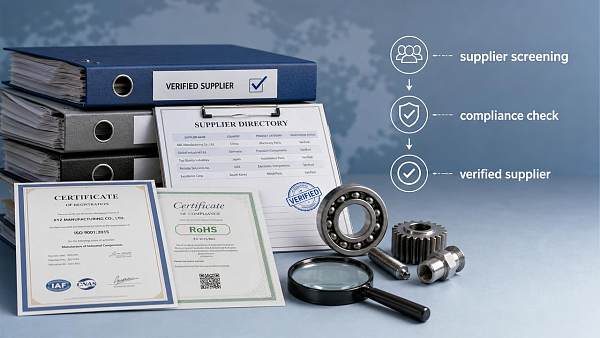
[[IMG:img_01]]Earlier EUV spending discussions focused on acquisition cost and throughput. In 2026, the more serious issue is lifecycle cost concentration. A fab can tolerate a high capital expenditure if output is predictable over 7 to 10 years. The current challenge is that more cost is migrating into service intervals, subsystem qualification, spares scarcity, software updates, and cross-border sourcing constraints.
For operators, this means the real economic risk often appears after installation. A 2% to 4% reduction in availability can have a larger production impact than a single-digit increase in purchase price. If motion stages, optics contamination controls, or vacuum subsystems require more frequent intervention, the cost per wafer layer rises even when the machine nominally meets specification.
For researchers, the deeper issue is system coupling. EUV performance depends on an unusually tight interaction between source power, stage accuracy, vibration damping, overlay control, resist process stability, and data-driven calibration. When one variable drifts outside tolerance, operators may need to increase maintenance frequency from quarterly to monthly, or extend qualification runs from 24 hours to 72 hours.
Three cost layers now moving upward
The new cost burden generally appears in three layers rather than one. First is subsystem scarcity, especially for precision motion, vacuum components, and contamination-sensitive parts. Second is operational overhead, including software patch validation, metrology correlation, and recipe requalification. Third is compliance overhead, where export controls and supplier traceability add time, audit tasks, and inventory buffering.
- Subsystem layer: longer lead times, often moving from 8–12 weeks to 16–28 weeks for selected critical parts.
- Operations layer: more engineering hours spent on re-baselining, contamination monitoring, and drift correction.
- Compliance layer: additional documentation, supplier mapping, and regional sourcing validation before procurement approval.
The table below summarizes where the cost expansion is taking place and why it affects more than the semiconductor fabrication equipment segment alone.
The key conclusion is that EUV lithography systems now carry a broader cost envelope. A purchasing decision that ignores serviceability, component interchangeability, and compliance readiness may appear economical on paper yet become expensive within the first 12 to 18 months of operation.
Subsystems Driving the Hidden Cost Increase
The most important hidden costs in EUV lithography systems are concentrated in subsystems that are easy to underestimate during early-stage evaluation. Precision motion control, ultra-clean pumping, thermal management, optics-adjacent materials, and software orchestration each introduce a different cost signature. In 2026, operators are seeing that reliability at the component level is often the deciding factor behind total cost of ownership.
Precision motion and bearing assemblies
EUV stages operate with nanometer-class positioning expectations, so even small changes in bearing behavior, vibration isolation, or servo response can cause throughput loss. When replacement components require longer tuning windows, stage recovery may expand from 6 hours to 18 hours. That lost production time carries direct cost, especially in high-volume logic and advanced memory environments.
Why operators should watch drift, not just failure
A common mistake is to monitor only hard failures. In practice, gradual drift often creates larger aggregate cost than sudden stoppages. Sub-micron bearing wear, thermal expansion mismatch, or control-loop instability can trigger repeated recalibration, lower overlay confidence, and more engineering intervention. These are not always visible in top-level uptime figures, but they reshape annual support cost.
Vacuum, pumps, and chemical handling integrity
EUV tools depend on exceptionally stable vacuum and contamination control conditions. Specialized pump and valve systems must hold tight leakage performance, maintain predictable response under cycling, and resist aggressive process chemistry. Even a small rise in particle risk or seal degradation can require more inspections, shorter maintenance intervals, and higher consumable use over a 12-month operating period.
The comparison below highlights how different subsystem families affect cost in distinct ways. It is useful for both technical benchmarking and procurement planning.
The practical takeaway is that subsystem selection should not be made on a single price metric. Benchmarking should include at least 4 dimensions: reliability window, requalification effort, maintenance interval, and sourcing resilience. That multidimensional view is where institutional intelligence platforms such as G-CST bring value to industrial buyers and engineering teams.
How Procurement and Operations Teams Should Reframe Total Cost of Ownership
In the EUV environment, total cost of ownership should be treated as a system management model rather than a finance spreadsheet. Buyers need to evaluate not only purchase price, but also service labor intensity, spare part lead times, qualification overhead, compliance exposure, and digital traceability requirements. A low-cost line item can become a high-cost operational dependency if it extends downtime or requires repeated engineering validation.
A five-point procurement screening model
For research-oriented teams and fab operators, a useful screening process includes five checks before approval. First, verify whether the supplier can support repeatable performance for 24 to 36 months, not just initial acceptance. Second, check lead time volatility under export-control changes. Third, validate compatibility with existing maintenance procedures. Fourth, assess digital diagnostics and traceability. Fifth, confirm requalification effort after part replacement.
- Lifecycle stability: target documented maintenance behavior across at least 3 planned service intervals.
- Supply continuity: evaluate dual-source or buffered sourcing strategies for 2 critical part families.
- Integration effort: estimate engineering hours for installation, calibration, and software matching.
- Compliance readiness: review export documentation, material traceability, and regional substitution rules.
- Recovery performance: measure how quickly the subsystem returns to baseline after intervention.
This approach is especially relevant for top-tier infrastructure developers and technology conglomerates. They often manage procurement across multiple plants, making even a 10-day extension in one component family significant. If the same delay affects five lines or two geographic regions, the financial impact multiplies far beyond the initial component price.
Where digital benchmarking improves decision quality
Industrial digitization can reduce uncertainty when it is linked to benchmarkable engineering data. Digital twins, SCADA-linked diagnostics, and maintenance event histories allow teams to compare parts not only by nominal specification but by real operating behavior. That is critical in EUV lithography systems, where nominal compliance may still hide meaningful variation in drift, contamination behavior, or service burden.
A disciplined procurement team should maintain a living benchmark file with 6 categories: performance tolerance, operating environment, service cycle, failure mode, documentation quality, and compliance restriction exposure. This transforms purchasing from reactive sourcing into risk-managed infrastructure planning.
Export Controls, Regionalization, and the New Compliance Cost Stack
A major 2026 cost driver is regulatory friction. EUV lithography systems are deeply affected by export controls, supplier licensing conditions, restricted technical data flows, and region-specific substitution limits. Even when a component remains legally obtainable, the approval sequence may become longer, more documented, and more operationally expensive. For this reason, compliance planning is no longer a legal side task; it is part of production economics.
Why compliance now changes engineering choices
In some cases, engineering teams are selecting parts based not only on performance but on documentation certainty and sourcing geography. A component with slightly lower theoretical performance may still be preferable if it offers stable delivery in 12 weeks instead of uncertain delivery beyond 24 weeks. This is particularly relevant for support components, control modules, and maintenance-critical items.
For operators, regionalization can also increase maintenance complexity. Plants may need different spare strategies for different jurisdictions, separate approved-vendor lists, and multiple software validation paths. That fragmentation can add 2 to 3 administrative stages to a replacement event and reduce the speed of field response.
Risk areas procurement teams should map early
- Country-of-origin dependency for motion, valve, sensor, or software modules.
- Licensing requirements for technical documents, firmware, or engineering support access.
- Differences between emergency replacement approval and planned maintenance approval.
- Inventory exposure if one component family needs 90 days of safety stock instead of 30 days.
The cost implication is straightforward: every added compliance step consumes time, labor, and working capital. Companies that benchmark compliance risk alongside technical performance are often better positioned to avoid line interruptions and rushed secondary sourcing.
Implementation Priorities for Researchers, Operators, and Technical Buyers
To respond effectively to the new EUV cost problem, organizations need a practical implementation model. The most effective programs usually begin with a 90-day diagnostic phase, followed by a 6- to 12-month optimization cycle. The goal is not simply to cut spending, but to improve decision quality across procurement, maintenance, qualification, and compliance.
Recommended action framework
A structured response should combine subsystem benchmarking, digital traceability, and service-priority segmentation. Start by identifying which 10 to 15 components have the highest impact on downtime, qualification duration, or sourcing volatility. Then build standardized comparison criteria so engineering, procurement, and operations use the same decision language.
Next, introduce a benchmark ledger linked to standards and operating evidence. For example, compare vacuum components against leakage and chemical compatibility expectations, motion systems against repeatability and recovery windows, and software modules against validation load and interface stability. This approach aligns well with ISO, SEMI, ASME, and IEEE-oriented review habits used in advanced industrial environments.
Practical roadmap for 2026 planning
The table shows that cost control in EUV lithography systems is not a one-step purchasing exercise. It requires staged execution, evidence-based comparison, and recurring operational review. Organizations that treat the problem in this way are generally better able to protect yield, shorten maintenance surprises, and improve strategic sourcing discipline.
For research users, the opportunity lies in turning fragmented equipment knowledge into benchmarkable intelligence. For operators, the priority is maintaining stable throughput under tighter cost and compliance conditions. For procurement leaders, the advantage comes from selecting suppliers and components that perform reliably under both engineering and regulatory stress.
FAQ: Practical Questions About EUV Cost Exposure in 2026
How should buyers evaluate an EUV-related component when price quotes vary sharply?
Use at least 4 filters beyond price: expected service interval, requalification time, documentation completeness, and sourcing resilience. A lower quote may still be more expensive if installation adds 2 extra days of calibration or if replacement lead time exceeds 20 weeks during supply disruption.
Which subsystem categories usually create the most hidden cost?
The most common categories are precision motion control, vacuum and valve systems, industrial software interfaces, and advanced material components near high-stability zones. These areas affect uptime, contamination risk, and engineering labor, which together often outweigh a modest difference in initial component price.
What is a realistic timeline for improving EUV cost visibility?
A practical first view can be built in 30 to 60 days if maintenance records, supplier data, and qualification histories are accessible. A more complete benchmarking program usually needs 3 to 6 months, especially if multiple sites, jurisdictions, or supplier families are involved.
Why does industrial digitization matter so much in this topic?
Because cost problems in EUV are often indirect. Digital twins, event histories, and structured service data help teams identify drift, rework frequency, and recurring qualification burden before they become major production losses. Without that visibility, organizations tend to react too late and buy on incomplete assumptions.
The 2026 cost problem in EUV lithography systems is best understood as a convergence of engineering complexity, subsystem dependency, and compliance friction. It affects not only fab economics, but also precision motion planning, pump and valve selection, software validation, advanced material choice, and global sourcing strategy.
For decision-makers working across high-tech manufacturing and infrastructure development, the most effective response is disciplined technical benchmarking supported by verifiable data. G-CST is positioned to help researchers, operators, and procurement teams compare critical components, assess regulatory exposure, and build more resilient sourcing and maintenance strategies. To reduce uncertainty in your 2026 planning, contact us to obtain a tailored benchmarking approach, review component-level risks, or explore broader industrial intelligence solutions.
Recommended News
 Jun 20, 2026First Aid Kits: What to Check Before Bulk PurchasingFirst aid kits buying guide for bulk orders: learn what to check on compliance, contents, shelf life, packaging, and supplier quality before you purchase with confidence.
 Jun 20, 2026Architectural Low E Glass Wholesale: Cost vs PerformanceArchitectural low e glass wholesale explained: compare cost, thermal performance, coating durability, compliance, and supplier risk to choose smarter, higher-value sourcing options.
 Jun 19, 2026How to Compare Glass Bottles Wholesale Costs Without Missing Quality RisksGlassbottleswholesale cost comparison is not just about unit price. Learn how to spot hidden quality risks, reduce breakage, and choose suppliers with lower total sourcing cost.
 Jun 18, 2026Export Controls and Lithography: What Changes in 2026?Impact of export controls on lithography in 2026: discover how tighter rules on tools, software, service, and sub-systems could reshape fab planning, supply chains, and competitive resilience.
 Jun 15, 2026Global Chip Fab Construction Projects: Key Risks and Timeline ShiftsGlobal chip fab construction projects face rising schedule risks from technical integration, supply chains, and compliance. Discover the key timeline shifts shaping fab delivery now.
 Jun 13, 2026Translation Services Pricing: What Affects Cost and Turnaround Timetranslationservices pricing explained: learn what drives cost and turnaround time, from language pairs and technical complexity to compliance, formatting, and rush delivery.
 Jun 13, 2026How to Use a Verified Exporters Directory Without Supplier Verification RisksExporters directory with verified suppliers: learn how to screen vendors faster, spot hidden verification gaps, and reduce sourcing risk with smarter due diligence.
 Jun 10, 2026E-Learning vs Classroom Training: Which Delivers Better Compliance Results?E-learning vs classroom training: discover which approach delivers stronger compliance results, better audit records, faster rollouts, and smarter risk control for modern organizations.
 Jun 07, 2026How to Choose First Aid Kits for Workplace Risk LevelsFirst aid kits for every workplace risk level: learn how to match kit contents to real hazards, improve response speed, and choose safer, compliance-ready solutions.
 Jun 06, 2026Hospitality Benchmarking: KPIs That Actually MatterHospitality benchmarking explained: discover the KPIs that truly drive revenue, labor efficiency, guest satisfaction, and asset performance for smarter hotel decisions.
![]() Jun 05, 2026Interactive Pet Toys: Safety Features That Matternteractivepettoys safety starts with secure materials, sealed batteries, and easy-clean design. Discover the key features that protect pets and help you choose smarter toys with confidence.
Jun 05, 2026Interactive Pet Toys: Safety Features That Matternteractivepettoys safety starts with secure materials, sealed batteries, and easy-clean design. Discover the key features that protect pets and help you choose smarter toys with confidence.![]() Jun 04, 2026Double Glazing Glass Panels: Cost vs Energy Savings in 2026Double glazing glass panels: compare 2026 upfront costs with long-term energy savings, ROI, compliance value, and supplier review tips for smarter building upgrade decisions.
Jun 04, 2026Double Glazing Glass Panels: Cost vs Energy Savings in 2026Double glazing glass panels: compare 2026 upfront costs with long-term energy savings, ROI, compliance value, and supplier review tips for smarter building upgrade decisions. Jun 03, 2026Strategic Sourcing Risks to Check in 2026Strategic sourcing in 2026 demands sharper risk checks. Learn how to assess supplier resilience, export controls, ESG, cyber exposure, and cost stability before committing.
 Jun 03, 2026Mask Inspection System Factory Audit ChecklistMask inspection system factory audit checklist for QC and safety teams: verify calibration, traceability, cleanroom control, software validation, and supplier risk before approval.
 Jun 02, 2026Clothdiapers vs Disposables: Real Use CostsClothdiapers vs disposables: uncover real daily costs, laundry factors, hidden expenses, and smart hybrid strategies to choose a budget-friendly diapering option.
 Jun 01, 2026Home Decor Wholesale Sourcing: Quality Risks to Check Before OrderingHome decor wholesale sourcing made safer: learn key quality risks in materials, structure, packaging, labels, and supplier traceability before you order.
 May 31, 2026Scaffolding Safety Checks That Prevent DelaysScaffolding safety checks help prevent costly delays, improve compliance, and keep industrial projects on schedule with practical inspection and supplier control tips.
 May 31, 2026Concrete & Masonry Cost Risks Before Site WorkConcrete & Masonry cost risks can derail budgets before site work starts. Learn key checks for specs, labor, supply, compliance, and sequencing to plan smarter.
 May 30, 2026Legal Tech in 2026: Adoption Risks Before ScalingLegal tech in 2026 must scale with governance. Explore key adoption risks, AI controls, data security, vendor checks, and practical steps before rollout.
 May 22, 2026Global Precision Bearing Trends 2026: Cost and Supply OutlookGlobal precision bearing trends 2026 reveal key cost drivers, supply risks, and sourcing strategies. Explore practical insights to plan smarter procurement and strengthen industrial resilience.
 May 20, 2026Needle Roller Bearing Factory Checklist for Stable QualityNeedle roller bearing factory checklist for buyers: learn how to verify traceability, heat treatment, process control, and quality consistency before approval. Click for audit-ready tips.
 May 09, 2026Lithography Technology Breakthroughs News: Which Advances Are Fab-ReadyLithography technology breakthroughs news decoded: discover which advances are truly fab-ready, from EUV materials to AI process control, and make smarter manufacturing decisions.
 May 09, 2026New SEMI Standards for 2026: What Will Change in Fab ComplianceNew SEMI standards for 2026 will reshape fab compliance, supplier qualification, interoperability, and audit readiness. See the key risks, business impacts, and smart next steps now.
 May 08, 2026ASML and Nikon Market Share Report: What the Shift Means for Equipment SourcingASML and Nikon market share report for procurement teams: see how lithography share shifts affect sourcing risk, supplier leverage, compliance, and fab investment decisions.