Search News
Industry Portal
Popular Tags
Glass Wool Insulation Roll Cost vs Thermal Value
Author
Time
Click Count
Why Glass Wool Insulation Roll Cost Should Never Be Judged by Price Alone
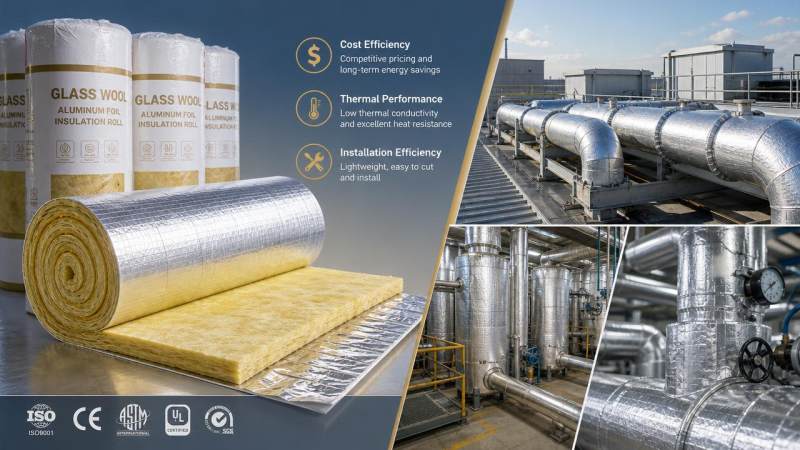
For procurement teams evaluating building and industrial insulation, glass wool insulation roll is often judged by one key equation: cost versus thermal value. This article examines how pricing, R-value performance, installation efficiency, and lifecycle considerations affect sourcing decisions, helping buyers compare options with greater technical confidence and commercial clarity.
In practice, the cheapest roll rarely delivers the lowest installed cost. A lower unit price can be offset by thicker assemblies, slower installation, higher waste, or compliance issues later.
That matters even more in complex industrial environments, where insulation performance touches energy use, fire safety, acoustic control, and long-term asset reliability.

A more useful sourcing view is simple: compare glass wool insulation roll by delivered thermal value, installed efficiency, certification strength, and lifecycle stability.
What Actually Drives the Cost of Glass Wool Insulation Roll
Before comparing quotations, it helps to separate visible price from cost drivers hiding inside the specification.
- Check declared thermal conductivity at the stated test temperature, not just nominal thickness. Two glass wool insulation roll offers can look similar while delivering very different real thermal value.
- Review density, binder quality, and compression recovery together. These factors affect how the roll performs after transport, storage, and installation, especially on large industrial or infrastructure projects.
- Compare facing materials carefully. Foil, kraft, and reinforced facings change installed cost, vapor control, and handling speed, so the cheapest base roll may not be the best package.
- Confirm fire classification, acoustic data, and compliance documentation early. Missing certificates can delay approvals and create indirect cost far beyond the purchase order value.
- Ask for yield per pallet and compression ratio in transit. Better packaging efficiency can reduce freight cost per square meter without changing the quoted roll price.
- Measure waste assumptions by application type. Straight roof bays, duct wraps, and irregular mechanical spaces produce very different offcut rates for glass wool insulation roll.
A quick cost-versus-value view
This simple comparison framework helps normalize offers before commercial negotiation.
How to Compare Thermal Value Without Getting Lost in Marketing
The biggest sourcing mistake is comparing rolls by thickness alone. Thickness matters, but thermal conductivity and installed condition matter just as much.
For example, a thicker glass wool insulation roll with weaker conductivity may occupy more space while delivering nearly the same thermal result as a thinner, better-engineered option.
- Use cost per effective R-value or U-value target, not cost per roll. This makes offers easier to compare across different densities, thicknesses, and product constructions.
- Verify thermal data under the intended service temperature range. Industrial roofs, mechanical rooms, and process-adjacent spaces may perform differently from standard building envelope conditions.
- Ask whether the product maintains thickness after unpacking. A compressed roll that fails to recover fully can reduce the thermal value you believed you purchased.
- Match the thermal target to the assembly, not the insulation alone. Fasteners, metal framing, and penetrations can reduce whole-system performance in real projects.
Where G-CST-style benchmarking adds value
In high-specification environments, material decisions benefit from the same discipline used in semiconductor equipment, precision motion systems, and advanced engineering materials.
That is where a benchmarking mindset becomes useful. G-CST emphasizes verifiable engineering data, standards alignment, and lifecycle risk reduction, which also applies well to insulation sourcing.
Even for a glass wool insulation roll, technical validation should include declared performance, test method consistency, export or supply-chain stability, and fit with project compliance frameworks.
Common Buying Situations That Change the Best Choice
Large commercial roofing packages
In large roof packages, installation speed and roll coverage often matter almost as much as thermal value. A slightly higher-priced glass wool insulation roll may cut labor hours enough to win overall.
Key checks include roll width consistency, ease of cutting, recovery after unpacking, and compatibility with the roof system build-up.
Industrial equipment rooms and process-adjacent areas
Here, insulation is rarely only about heat loss. Fire behavior, acoustic absorption, and dimensional stability become more important.
When the surrounding project involves advanced pumps, control systems, or high-value process equipment, indirect failure costs rise. That makes documentation quality and repeatable performance more valuable than a small unit-price saving.
Public infrastructure and compliance-heavy projects
In these jobs, the risk is often administrative before it is technical. One missing fire document or unclear emissions declaration can stop progress.
For that reason, glass wool insulation roll selection should include a documentation audit alongside price and thermal comparison.
The Details Often Missed in Quotations
A quote can look complete while leaving out the details that decide real cost on site.
- Request the declared coverage area after installation, not just packaged dimensions. Some glass wool insulation roll products lose effective yield when cuts, overlaps, and recovery limits are considered.
- Confirm whether accessories are included. Tape, pins, vapor barriers, or protective facings can shift the final system cost more than expected.
- Review lead time stability, not only current availability. A low-cost offer becomes expensive fast if phased delivery fails and installation crews wait on material.
- Check whether the supplier provides batch traceability. On technical projects, traceability supports claims handling, compliance review, and quality consistency across multiple deliveries.
- Look at storage sensitivity on site. If the roll requires tighter moisture protection, temporary warehousing cost may rise and damage risk becomes part of the buying equation.
A Practical Evaluation Sequence Before Award
A structured comparison prevents overpaying for features you do not need, while also avoiding low-price selections that create downstream problems.
- Start with the target thermal requirement and build the comparison around delivered performance. This keeps the glass wool insulation roll decision tied to project outcome, not brochure language.
- Screen all offers for mandatory compliance first. Remove non-conforming options early so commercial discussions focus only on technically viable products.
- Normalize logistics and installation assumptions across bidders. Freight density, pallet yield, and handling efficiency can otherwise distort a cost comparison.
- Score lifecycle factors alongside price. Include durability, acoustic value, fire classification, supply continuity, and documentation quality in the same review sheet.
- Request a sample or technical submittal for high-value or sensitive projects. Physical review often exposes differences in recovery, facing integrity, and handling quality.
A simple decision rule
If two products meet the same thermal target, the better choice is usually the one with lower installed cost, cleaner documentation, and lower execution risk.
If one option has stronger verified performance, it may justify a higher unit price when space, safety, labor, or lifecycle exposure matters.
Final Take on Glass Wool Insulation Roll Cost vs Thermal Value
The smartest way to buy glass wool insulation roll is to move beyond price per roll and compare delivered thermal value in real project conditions.
That means checking conductivity, installed thickness, waste rate, facing type, compliance strength, and logistics efficiency together.
In broader industrial sourcing, this is the same discipline promoted by G-CST: benchmark specifications carefully, verify claims against standards, and reduce lifecycle risk before commitment.
When the next quote arrives, compare each glass wool insulation roll by effective thermal outcome, installed cost, and documentation quality. That simple shift usually leads to better decisions and fewer surprises on site.
Recommended News
 Oct 16, 2026Is Hastelloy C22 suitable for handling hot hydrochloric acid?Is Hastelloy C22 chemical industry material suitable for hot hydrochloric acid? Explore corrosion limits, operating conditions, and testing guidance to make informed material choices.
 Oct 05, 2026How bend radius affects cracking in sheet metal bendingSheet metal bending crack prevention starts with the right bend radius. Learn how material ductility, grain direction, and tooling affect reliability.
![]() Oct 21, 2026What Compliance Evidence Should Advanced Material Suppliers Provide?What compliance evidence should advanced material suppliers provide? Explore the essential traceability, regulatory, testing, and change-control documents for confident material qualification.
Oct 21, 2026What Compliance Evidence Should Advanced Material Suppliers Provide?What compliance evidence should advanced material suppliers provide? Explore the essential traceability, regulatory, testing, and change-control documents for confident material qualification. Sep 14, 2026When does high purity matter in advanced engineering materials?Advanced Engineering Materials high purity: learn when impurity control protects reliability, yield, and qualification—and how to specify the right grade for critical applications.
 Aug 23, 2026How to check if safetyharnesses meet OSHA and ANSI requirementssafetyharnesses compliance starts with labels, traceability, ANSI Z359 proof, and OSHA fit-for-use checks. Learn the key red flags and verification steps before you buy.
 Aug 21, 2026Where graphene conductivity applications deliver a real performance gainGraphene conductivity applications deliver real gains in coatings, EMI shielding, flexible electronics, and energy storage—learn where performance justifies cost and complexity.
 Aug 20, 2026What makes hotelroomfurniture durable enough for high-turnover hotelshotelroomfurniture built for high-turnover hotels must resist impact, cleaning chemicals, and daily wear. Learn what materials, joints, and finishes truly last.
 Aug 24, 2026Evaluating Hastelloy C22 Sheet for Welded Chemical Processing EquipmentHastelloy C22 Sheet for welded chemical processing equipment: assess weldability, thickness tolerance, corrosion resistance, and procurement risks to choose safer, longer-lasting assets.
 Jul 15, 2026Industrial Graphene Application Trends in Europe for 2026Industrial graphene application trends Europe in 2026 highlight where batteries, coatings, composites, and electronics are moving toward scalable adoption, offering actionable insight for smarter sourcing and investment.
 Jul 11, 2026When Optical Grade Specialty Glass Fails Spec: Common CausesSpecialty glass optical grade failures often stem from stress, contamination, or machining drift. Learn the common causes, warning signs, and how to prevent costly out-of-spec batches.
 Jul 08, 2026How to Evaluate Carbon Fiber Distributors in EuropeCarbon fiber distributors Europe: learn how to compare traceability, technical support, compliance, and delivery reliability to choose the right partner with confidence.
 Jul 01, 2026Radiation Shielding Supplier Selection: Cost, Compliance, and Lead TimeRadiation shielding supplier selection affects cost, compliance, and lead time. Learn how to compare quotes, verify standards, and reduce project risk before you buy.
 Jun 30, 2026Global Technical Ceramics Tenders: Sourcing Risks and ShortlistsGlobal technical ceramics tenders sourcing demands more than price checks. Discover key risks, smarter shortlists, and practical ways to reduce compliance, quality, and supply disruption.
 Jun 29, 2026Office Decor Trends for 2026: What Improves Focus Without Raising Fit-Out CostsOffice decor trends for 2026 that boost focus, support hybrid work, and improve space performance without expensive fit-outs. Discover practical, budget-smart upgrades.
 Jun 28, 2026Auto Body Parts Guide: OEM vs Aftermarket Cost and FitAuto body parts guide comparing OEM vs aftermarket options on cost, fit, durability, and repair value. Learn which choice delivers better results before you buy.
 Jun 23, 2026Sheet Metal Distributor Selection: 7 Checks Before You Place an OrderSheet metal distributor selection starts with 7 critical checks. Learn how to compare quality, lead time, traceability, and total cost before placing an order.
 Jun 22, 2026How to Choose a Hydraulic Press for Composite MaterialsHydraulic press for composite materials: learn how to compare tonnage, thermal uniformity, controls, and tooling fit to choose a press that boosts quality, uptime, and ROI.
 Jun 21, 2026How to Evaluate a Thermoset Resin Manufacturer Beyond PriceThermoset resin manufacturer selection should go beyond price. Learn how to assess quality, compliance, batch consistency, and supply reliability for lower-risk sourcing.
 Jun 20, 2026How to Evaluate an Advanced Engineering Materials SupplierAdvanced Engineering Materials supplier evaluation starts with proof, not price. Learn how to assess quality, compliance, traceability, and supply resilience for smarter sourcing.
 Jun 17, 2026How to Evaluate a Bedding Sets Exporter Before OrderingBedding sets exporter evaluation guide: learn how to verify quality control, compliance, pricing, and shipment reliability before ordering to reduce risk and choose the right supplier.
 Jun 16, 2026SBS Modified Bitumen Membrane: Common Failures and FixesSBS modified bitumen membrane guide: discover common failures, key warning signs, and proven fixes to stop leaks, extend roof life, and reduce costly repairs.
 Jun 16, 2026How to Compare Eco-Friendly Building Materials for Lightweight PanelsEco-friendly building materials lightweight panels: learn how to compare carbon, fire safety, moisture resistance, and supply reliability to choose smarter, longer-lasting panel solutions.
 Jun 13, 2026How to Evaluate Manufacturing Components for Cost, Tolerance, and Lead TimeManufacturing components evaluation starts with total cost, tolerance, and lead time. Learn a practical framework to compare suppliers, reduce sourcing risk, and make smarter buying decisions.
 Jun 12, 2026How Wooden Educational Toys Support Early Skill Developmentwoodeneducationaltoys help build fine motor skills, focus, problem-solving, and creativity. Discover how to choose safer, durable toys that support confident early learning.