Search News
Industry Portal
Popular Tags
Sheet Metal Chassis Design: EMI and Cooling Tradeoffs
Author
Time
Click Count
Why Sheet Metal Chassis Design Is a System Decision
A sheet metal chassis is rarely a neutral box around electronics. It shapes electromagnetic behavior, airflow, heat transfer, service access, and compliance risk.
The tradeoff becomes sharper when compact systems must support higher power density, faster signals, and stricter reliability expectations.
In semiconductor tools, industrial controls, motion platforms, and digital infrastructure, chassis decisions influence uptime as much as component selection.
For that reason, sheet metal chassis design now sits closer to procurement risk, qualification planning, and lifecycle cost control.
The Basic Role of a Sheet Metal Chassis
At its simplest, a sheet metal chassis provides structure, mounting, protection, and environmental separation for electronic or electromechanical assemblies.
In practice, the enclosure also becomes part of the electrical and thermal architecture.
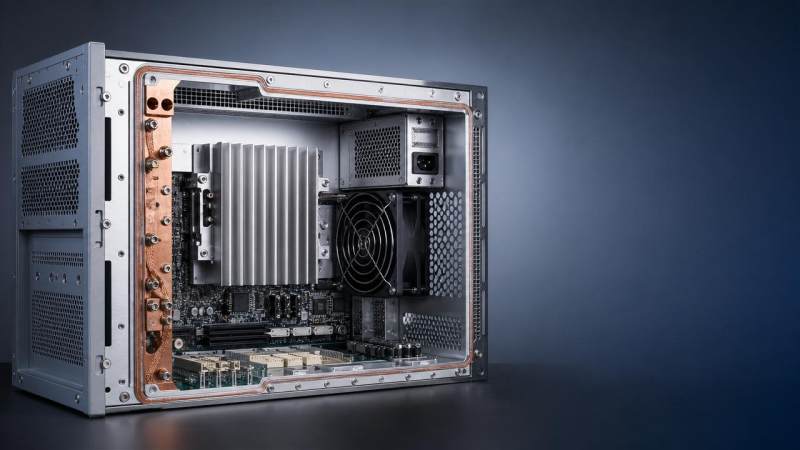
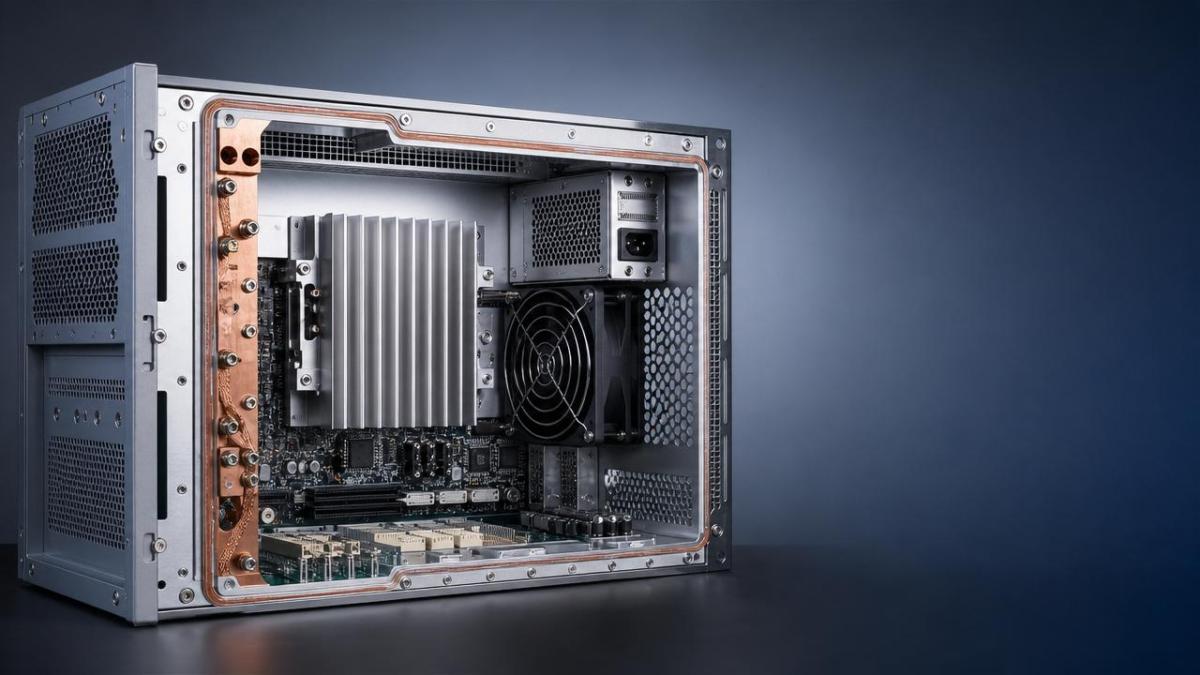
The chassis can form a conductive reference plane, a shielding barrier, a heat-spreading surface, or an airflow guide.
This is why the sheet metal chassis cannot be evaluated only by thickness, material price, or visible workmanship.
Material grade, bend geometry, seams, fasteners, coatings, vents, and grounding paths all change system behavior.
A small gap near a cable entry may weaken shielding. A poorly placed vent may bypass a critical heat source.
The most reliable designs treat the sheet metal chassis as a functional subsystem, not a late-stage mechanical cover.
EMI Shielding: What the Chassis Must Control
Electromagnetic interference affects both emission and immunity. A system may disturb nearby equipment or fail when exposed to external noise.
The sheet metal chassis helps contain radiated energy and reduce coupling between sensitive and noisy circuits.
However, shielding performance depends on continuity. Conductive surfaces must connect through low-impedance paths across panels, doors, and removable covers.
Openings matter. Slot length, seam gaps, display windows, ventilation patterns, and connector cutouts can behave like antennas.
High-frequency designs are especially unforgiving because shorter wavelengths expose weaknesses that were harmless in slower equipment.
Surface finishes also require attention. Paint, anodizing, and powder coating may improve corrosion resistance but interrupt electrical bonding.
Common solutions include masked bonding areas, conductive gaskets, EMI fingers, plated hardware, and controlled compression around seams.
A sheet metal chassis designed for EMI should make grounding intentional, visible, testable, and maintainable.
Cooling Needs Often Pull the Design in the Opposite Direction
Cooling usually wants openings, airflow volume, and reduced obstruction. EMI shielding often wants closure, continuity, and limited apertures.
That tension defines many sheet metal chassis decisions in power electronics, embedded control cabinets, and instrumentation enclosures.
Thermal design starts with heat sources. Power modules, processors, drives, relays, pumps, and communication boards rarely heat evenly.
Air must pass where temperature rise matters, not simply enter and leave the enclosure.
Vent location, fan pressure, filter loading, internal brackets, and cable routing can all change cooling performance.
A sheet metal chassis may also use conduction. Heat can move through rails, shelves, baseplates, and bonded panels.
This becomes valuable when fanless operation, cleanroom compatibility, acoustic limits, or contamination control restrict open airflow.
Cooling decisions should therefore be tied to real duty cycles, ambient temperature, altitude, and maintenance assumptions.
Where the EMI and Cooling Tradeoff Appears
The tradeoff is not abstract. It appears in ordinary design choices that are easy to underestimate during early planning.
These tradeoffs make early simulation and prototype testing more valuable than isolated rule checks.
A sheet metal chassis that passes mechanical inspection may still fail EMC testing or thermal cycling.
Industry Context: Why the Question Is Becoming More Important
High-precision industrial systems are converging. Motion control, power conversion, sensing, networking, and software now share compact hardware platforms.
That convergence increases the burden on the sheet metal chassis.
Semiconductor fabrication equipment needs low contamination, stable electronics, and predictable service windows.
Pump and valve control systems often face vibration, chemical exposure, and distributed cabling.
Precision motion systems add encoder sensitivity, drive noise, and strict grounding requirements.
Industrial software and digital twin platforms also depend on reliable edge hardware and clean data acquisition.
Across these areas, G-CST emphasizes benchmarked engineering data, international standards, and supplier evidence.
That perspective is useful because sheet metal chassis performance is difficult to judge from drawings alone.
ISO, IEEE, SEMI, and related frameworks help convert assumptions into verifiable qualification requirements.
Material and Manufacturing Choices Shape the Outcome
Steel, stainless steel, aluminum, and coated alloys each bring different shielding, thermal, weight, and corrosion characteristics.
Aluminum supports weight reduction and heat spreading, but joint conductivity and galvanic compatibility require control.
Steel provides robust shielding and strength, though thermal conductivity and mass may affect product architecture.
Stainless steel suits harsh environments, yet fabrication cost and contact resistance can complicate bonding strategy.
Manufacturing capability is equally important. Laser cutting, stamping, forming, welding, clinching, and fastening all influence repeatability.
A sheet metal chassis with tight EMI margins needs stable seam quality and predictable hardware compression.
A thermally demanding chassis needs accurate flatness, contact pressure, and surface finish at heat-transfer interfaces.
Supplier selection should therefore include process controls, inspection records, finish validation, and change-management discipline.
Typical Application Scenarios and Design Priorities
Different systems use the same sheet metal chassis concept but require different priorities.
The practical task is to rank requirements before design decisions become locked by tooling or procurement schedules.
- Power electronics cabinets need airflow control, safe clearances, and robust grounding under high switching noise.
- Industrial control units need serviceable access without compromising EMI continuity after repeated opening.
- Semiconductor subsystems may prioritize clean surfaces, particle control, and cable shielding discipline.
- Edge computing enclosures must balance processor heat, network emissions, and compact installation constraints.
- Motion-control platforms require separation between drives, feedback signals, and communication interfaces.
These scenarios show why a generic enclosure often becomes expensive after modification.
A purpose-planned sheet metal chassis reduces rework by aligning geometry with electrical, thermal, and maintenance realities.
Practical Evaluation Points Before Freezing the Design
A useful review does not ask only whether the enclosure fits. It asks how the chassis behaves under operating conditions.
The following checks help reveal risks before certification or field installation.
- Map noisy sources, sensitive circuits, cable exits, and grounding points on the same layout.
- Compare vent geometry with expected emission frequencies and fan pressure capability.
- Confirm that coatings do not isolate intended bonding surfaces.
- Check service access after gaskets, filters, and cable restraints are installed.
- Run thermal testing with realistic dust loading, ambient conditions, and duty cycles.
- Validate fastener torque, gasket compression, and seam continuity after vibration exposure.
For a sheet metal chassis, these checks often reveal interactions that CAD models cannot fully capture.
They also create a clearer basis for supplier discussion and acceptance criteria.
How Benchmarking Reduces Project Risk
Design judgment improves when teams can compare test data, supplier capability, and standards-based expectations across similar industrial systems.
This is where multidisciplinary technical intelligence becomes valuable.
A benchmarking approach can compare EMI test history, thermal derating practices, finish specifications, and fabrication tolerance records.
It can also identify regulatory pressure, export-control implications, and supply-chain fragility around materials or specialty processes.
For advanced engineering materials, the same logic applies to coatings, conductive seals, and corrosion-resistant sheet stock.
For industrial digital twins, validated chassis data can improve model accuracy for thermal and reliability predictions.
The sheet metal chassis becomes easier to specify when performance evidence is connected to the full operating environment.
A Balanced Path Forward
The best sheet metal chassis design rarely maximizes EMI shielding or cooling alone.
It balances shielding continuity, airflow strategy, thermal conduction, service needs, manufacturability, and compliance evidence.
Early alignment matters because late changes often affect tooling, certifications, cables, board placement, and supplier lead times.
A practical next step is to build a decision matrix before enclosure geometry is frozen.
That matrix should include EMI risks, heat sources, environmental limits, maintenance access, material options, and qualification standards.
From there, competing chassis concepts can be reviewed against evidence rather than preference.
For complex industrial programs, the sheet metal chassis deserves the same discipline applied to electronics, software, and critical components.
That discipline supports more predictable compliance, stronger reliability, and better control over total project risk.
Recommended News
 Oct 16, 2026Is Hastelloy C22 suitable for handling hot hydrochloric acid?Is Hastelloy C22 chemical industry material suitable for hot hydrochloric acid? Explore corrosion limits, operating conditions, and testing guidance to make informed material choices.
 Oct 05, 2026How bend radius affects cracking in sheet metal bendingSheet metal bending crack prevention starts with the right bend radius. Learn how material ductility, grain direction, and tooling affect reliability.
 Sep 14, 2026When does high purity matter in advanced engineering materials?Advanced Engineering Materials high purity: learn when impurity control protects reliability, yield, and qualification—and how to specify the right grade for critical applications.
 Aug 23, 2026How to check if safetyharnesses meet OSHA and ANSI requirementssafetyharnesses compliance starts with labels, traceability, ANSI Z359 proof, and OSHA fit-for-use checks. Learn the key red flags and verification steps before you buy.
 Aug 21, 2026Where graphene conductivity applications deliver a real performance gainGraphene conductivity applications deliver real gains in coatings, EMI shielding, flexible electronics, and energy storage—learn where performance justifies cost and complexity.
 Aug 20, 2026What makes hotelroomfurniture durable enough for high-turnover hotelshotelroomfurniture built for high-turnover hotels must resist impact, cleaning chemicals, and daily wear. Learn what materials, joints, and finishes truly last.
 Aug 24, 2026Evaluating Hastelloy C22 Sheet for Welded Chemical Processing EquipmentHastelloy C22 Sheet for welded chemical processing equipment: assess weldability, thickness tolerance, corrosion resistance, and procurement risks to choose safer, longer-lasting assets.
 Jul 15, 2026Industrial Graphene Application Trends in Europe for 2026Industrial graphene application trends Europe in 2026 highlight where batteries, coatings, composites, and electronics are moving toward scalable adoption, offering actionable insight for smarter sourcing and investment.
 Jul 11, 2026When Optical Grade Specialty Glass Fails Spec: Common CausesSpecialty glass optical grade failures often stem from stress, contamination, or machining drift. Learn the common causes, warning signs, and how to prevent costly out-of-spec batches.
 Jul 08, 2026How to Evaluate Carbon Fiber Distributors in EuropeCarbon fiber distributors Europe: learn how to compare traceability, technical support, compliance, and delivery reliability to choose the right partner with confidence.
 Jul 01, 2026Radiation Shielding Supplier Selection: Cost, Compliance, and Lead TimeRadiation shielding supplier selection affects cost, compliance, and lead time. Learn how to compare quotes, verify standards, and reduce project risk before you buy.
 Jun 30, 2026Global Technical Ceramics Tenders: Sourcing Risks and ShortlistsGlobal technical ceramics tenders sourcing demands more than price checks. Discover key risks, smarter shortlists, and practical ways to reduce compliance, quality, and supply disruption.
 Jun 29, 2026Office Decor Trends for 2026: What Improves Focus Without Raising Fit-Out CostsOffice decor trends for 2026 that boost focus, support hybrid work, and improve space performance without expensive fit-outs. Discover practical, budget-smart upgrades.
 Jun 28, 2026Auto Body Parts Guide: OEM vs Aftermarket Cost and FitAuto body parts guide comparing OEM vs aftermarket options on cost, fit, durability, and repair value. Learn which choice delivers better results before you buy.
 Jun 23, 2026Sheet Metal Distributor Selection: 7 Checks Before You Place an OrderSheet metal distributor selection starts with 7 critical checks. Learn how to compare quality, lead time, traceability, and total cost before placing an order.
 Jun 22, 2026How to Choose a Hydraulic Press for Composite MaterialsHydraulic press for composite materials: learn how to compare tonnage, thermal uniformity, controls, and tooling fit to choose a press that boosts quality, uptime, and ROI.
 Jun 21, 2026How to Evaluate a Thermoset Resin Manufacturer Beyond PriceThermoset resin manufacturer selection should go beyond price. Learn how to assess quality, compliance, batch consistency, and supply reliability for lower-risk sourcing.
 Jun 20, 2026How to Evaluate an Advanced Engineering Materials SupplierAdvanced Engineering Materials supplier evaluation starts with proof, not price. Learn how to assess quality, compliance, traceability, and supply resilience for smarter sourcing.
 Jun 17, 2026How to Evaluate a Bedding Sets Exporter Before OrderingBedding sets exporter evaluation guide: learn how to verify quality control, compliance, pricing, and shipment reliability before ordering to reduce risk and choose the right supplier.
 Jun 16, 2026SBS Modified Bitumen Membrane: Common Failures and FixesSBS modified bitumen membrane guide: discover common failures, key warning signs, and proven fixes to stop leaks, extend roof life, and reduce costly repairs.
 Jun 16, 2026How to Compare Eco-Friendly Building Materials for Lightweight PanelsEco-friendly building materials lightweight panels: learn how to compare carbon, fire safety, moisture resistance, and supply reliability to choose smarter, longer-lasting panel solutions.
 Jun 13, 2026How to Evaluate Manufacturing Components for Cost, Tolerance, and Lead TimeManufacturing components evaluation starts with total cost, tolerance, and lead time. Learn a practical framework to compare suppliers, reduce sourcing risk, and make smarter buying decisions.
 Jun 12, 2026How Wooden Educational Toys Support Early Skill Developmentwoodeneducationaltoys help build fine motor skills, focus, problem-solving, and creativity. Discover how to choose safer, durable toys that support confident early learning.
 Jun 11, 2026Brass Rods Guide: Grades, Machinability, and CorrosionBrassrods guide covering grades, machinability, corrosion, and compliance. Compare C360, C260, DZR, and low-lead options to choose the right rod for reliable performance.