Search News
Industry Portal
Popular Tags
Agrochemicals Storage Risks and Compliance Basics
Author
Time
Click Count
Why do agrochemicals storage risks get so much attention?
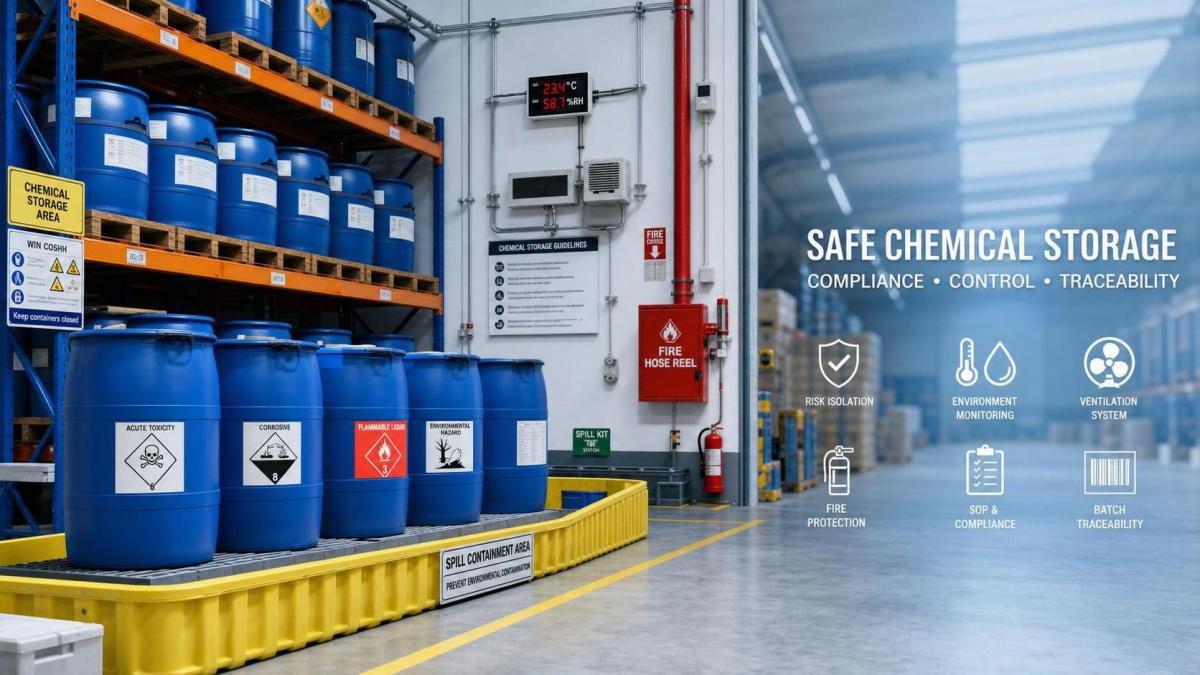
Agrochemicals storage is not just about keeping products indoors. It sits at the intersection of chemical safety, product integrity, traceability, and regulatory control.
In practice, a storage failure can start small. A torn label, a leaking cap, or an incompatible pallet layout may become a spill, a fire event, or a failed inspection.
That is why agrochemicals handling is closely tied to broader industrial disciplines. The same logic used in high-tech facilities applies here: control the environment, verify the data, and reduce uncertainty.
This is also where a benchmark-driven perspective matters. Organizations such as G-CST emphasize that reliable operations depend on verifiable engineering data, disciplined equipment selection, and alignment with recognized standards.
For agrochemicals, that means storage must support safety and compliance at the same time. If either side is weak, the warehouse becomes a hidden operational risk.
What are the most common agrochemicals storage hazards?
The main risks are usually predictable, but they are often underestimated until an incident happens. Most problems fall into a few recurring categories.
- Chemical incompatibility between oxidizers, flammables, corrosives, and reactive formulations.
- Temperature or humidity exposure that degrades packaging or changes product stability.
- Label loss, unreadable batch data, or poor segregation of expired and released stock.
- Spill migration caused by missing secondary containment or damaged flooring.
- Ignition sources near flammable agrochemicals, including chargers, switches, and hot work.
A useful way to look at agrochemicals risk is to separate safety hazards from quality hazards. A drum may not catch fire, yet still fail because active ingredients degrade after heat exposure.
More often, facilities struggle with combined failures. For example, poor ventilation increases vapor exposure, while weak stock rotation leaves old material in circulation.
A quick comparison helps identify priority controls
The table below summarizes how common agrochemicals storage issues translate into compliance and operational concerns.
Which compliance basics matter before local rules are reviewed?
Local laws always govern the final setup, but several compliance basics are nearly universal for agrochemicals storage.
First, every product should be matched to its current Safety Data Sheet. Storage rules, incompatibilities, ventilation needs, and emergency actions should not rely on memory.
Second, labels and inventory records must agree. If physical stock and digital records diverge, even a well-designed warehouse loses control quickly.
Third, facility design should reflect the hazard profile. Secondary containment, chemical-resistant surfaces, eye wash access, and fire separation are basic controls, not optional upgrades.
A fourth point is equipment reliability. Pumps, valves, vents, sensors, and monitoring systems need the same discipline seen in other regulated industries.
That broader engineering mindset is relevant here. G-CST often frames risk control around tested components, benchmarked standards, and operational integrity across complex industrial settings.
For agrochemicals, the lesson is straightforward: compliance basics are not only paperwork. They are physical, procedural, and data-based controls working together.
How do you judge whether an agrochemicals store is actually under control?
A compliant-looking room is not always a controlled room. The better question is whether the site can detect, prevent, and respond to predictable failures.
One practical indicator is change visibility. If a leaking container, out-of-range temperature, or mislocated pallet remains unnoticed for hours, control is weak.
Another indicator is how decisions are documented. Agrochemicals should be segregated by hazard class, not by convenience or temporary free space.
In real operations, stronger sites usually share a few habits:
- They use a formal incompatibility map linked to current SDS data.
- They verify ambient conditions instead of assuming HVAC performance.
- They separate quarantine, released, damaged, and expired agrochemicals physically.
- They test emergency response steps through drills, not only written procedures.
Where digital tools are available, monitoring becomes easier. Sensors, alarm history, and traceable movement logs reduce blind spots and support audit readiness.
That fits well with industrial digitalization trends. Data-backed oversight, similar to SCADA or digital twin logic, improves confidence in storage conditions and incident review.
What mistakes create the biggest compliance gaps?
The most serious failures usually come from routine shortcuts rather than rare technical events. Agrochemicals storage breaks down when everyday controls are treated as informal.
A common mistake is relying on product names instead of hazard classification. Two containers may look related commercially, yet require different separation and spill response measures.
Another gap appears when packaging condition is ignored. Swelling, corrosion, staining, and cap residue often signal an early containment problem.
Need-to-have records are also missed surprisingly often. Without receiving checks, movement logs, and disposal records, traceability becomes fragile during audits or incident investigations.
There is also a design misconception: some sites invest in shelving, but not in chemical-compatible transfer hardware. A good layout cannot compensate for the wrong pump seal or valve material.
That point matters across industries. G-CST’s cross-sector benchmarking shows that reliability failures often begin at component level, especially where chemicals, pressure, and temperature interact.
For agrochemicals, avoiding these mistakes usually costs less than correcting a spill event, disposal issue, or regulatory finding later.
What should be reviewed first when improving agrochemicals storage?
If improvements need to start quickly, begin with visibility and separation. Those two areas reveal most weaknesses fast and support better decisions afterward.
A practical review sequence
- Confirm the full agrochemicals inventory against current labels and SDS versions.
- Map incompatibilities and verify physical segregation on the warehouse floor.
- Check temperature, humidity, ventilation, and alarm evidence over time.
- Inspect containment, drainage isolation, and cleanup materials for realistic spill scenarios.
- Review records for receiving, stock rotation, damaged goods, and waste handling.
- Test whether emergency instructions are accessible and understood in live conditions.
This kind of review works best when technical data and compliance thinking are connected. Engineering reliability, documentation discipline, and operational response should not be treated as separate tracks.
That is also why many organizations now use external benchmarks, standards references, and structured risk data instead of relying only on internal habit.
Agrochemicals storage becomes easier to control when the site knows what is stored, why it is separated, how conditions are verified, and where failure would appear first.
A sensible next step is to build a short review checklist for layout, equipment, records, and emergency readiness. Once that baseline is visible, deeper upgrades become easier to prioritize.
Recommended News
 Sep 03, 2026What drives biocompatibility testing cost in Europe for medical devices?Biocompatibility testing cost Europe: discover the key factors shaping medical device budgets, from device contact and chemistry to sterilization, samples, and rework.
 Aug 28, 2026How to interpret adhesive outgassing vacuum data for material selectionAdhesive outgassing vacuum data reveals more than pass/fail results. Learn how TML, CVCM, cure conditions, and real-use risks guide confident material selection.
 Aug 24, 2026How to verify purity and trace contaminants in fine chemicalsFine chemicals purity verification made practical: learn how to detect trace contaminants, choose the right methods, reduce QC risk, and strengthen compliance with confidence.
 Aug 17, 2026When do surfactants improve coating uniformity in wet processes?Surfactants improve coating uniformity when wetting, spreading, or dispersion stability limits film quality. Learn where they add real value—and when they simply hide deeper process issues.
 Jul 28, 2026Organic Cotton vs Conventional Cotton: Key Differences in Comfort, Cost, and CareOrganic cotton vs conventional cotton: compare comfort, cost, and care in a clear, practical guide. Learn what certifications matter, why prices differ, and how to choose better value.
 Jul 16, 2026Automatic Mechanical Watches: How to Judge Quality Before You Buyautomaticmechanicalwatches buying guide: learn how to judge movement quality, finishing, materials, comfort, and service support before you buy with confidence.
 Jul 10, 2026Stable Nanomaterial Suspension: Common Failure Causes and Fix OptionsStable nanomaterial suspension issues often start with agglomeration, pH drift, shear, or contamination. Discover practical fix options to improve stability, consistency, and daily process control.
![]() Jul 07, 2026How to Evaluate Nanotechnology Manufacturing Suppliers for Process StabilityNanotechnology manufacturing suppliers should be assessed for process stability, traceability, and control discipline. Learn how to spot risks, compare capability, and choose with confidence.
Jul 07, 2026How to Evaluate Nanotechnology Manufacturing Suppliers for Process StabilityNanotechnology manufacturing suppliers should be assessed for process stability, traceability, and control discipline. Learn how to spot risks, compare capability, and choose with confidence. Jul 05, 2026Biocompatibility Data Europe: Key Testing Standards and Submission GapsBiocompatibility data Europe: discover key ISO 10993 testing standards, common submission gaps, and practical ways to strengthen traceability, reduce review delays, and improve approval readiness.
 Jun 25, 2026Sheet Masks OEM: Cost, MOQ, and Quality Checks Before You OrdersheetmasksOEM guide: compare real costs, MOQ terms, and must-have quality checks before ordering. Learn how to avoid hidden risks and choose a supplier with confidence.
 Jun 21, 2026Agrochemicals Storage Risks and Compliance BasicsAgrochemicals storage risks can trigger spills, product loss, and compliance failures. Learn the key hazards, controls, and practical basics to improve safety and audit readiness.
 Jun 11, 2026Wellness Products: Common Claims and Compliance RisksWellness products face growing claim and labeling risks. Learn which statements trigger scrutiny, how to support claims with evidence, and how to reduce cross-border compliance issues.
![]() Jun 05, 2026Catalysts Manufacturer Selection: Cost vs ConsistencyCatalysts manufacturer selection is more than price. Learn how to compare cost, consistency, compliance, and supply risk to choose the safest long-term partner.
Jun 05, 2026Catalysts Manufacturer Selection: Cost vs ConsistencyCatalysts manufacturer selection is more than price. Learn how to compare cost, consistency, compliance, and supply risk to choose the safest long-term partner. May 30, 2026Industrial Database for Chemical Industry: Data Quality Risks to CheckIndustrial database for chemical industry users: discover key data quality risks in traceability, compliance, supplier claims, and governance before making critical decisions.
 May 07, 2026Semiconductor Grade Gas Purity Standards and the Hidden Cost of Over-SpecifyingSemiconductor grade gas purity standards shape yield, sourcing risk, and total cost. Learn when higher purity protects value—and when over-specifying quietly drains budgets.
 May 05, 2026Semiconductor Grade Quartz Supplier Red Flags in High-Purity ApplicationsSemiconductor grade quartz supplier red flags explained: spot purity, traceability, and compliance risks early to protect yield, avoid qualification failures, and source with confidence.
 May 04, 2026Ion Implanter OEM Selection: Specs That Matter More Than Brochure ClaimsIon implanter OEM selection goes beyond brochure claims. Learn which specs truly impact dose accuracy, uptime, contamination control, and long-term fab ROI.
 May 03, 2026Material Innovation in Advanced Manufacturing: Which Changes Matter Most in 2026Material Innovation in advanced manufacturing is reshaping 2026 procurement, compliance, and uptime. Discover which material shifts deliver verified gains in reliability, supply resilience, and digital-ready performance.
 May 02, 2026Advanced Engineering Materials for Semiconductor Tools: What Matters MostAdvanced Engineering Materials for semiconductor tools drive uptime, yield, and contamination control. Discover what matters most for smarter sourcing and lower risk.
 May 01, 2026Material Innovation in Semiconductor: Which Changes Are Worth Validating FirstMaterial Innovation in semiconductor: discover which material changes are worth validating first to reduce risk, improve reliability, and capture faster value across packaging, thermal, and process-critical applications.
 Apr 28, 2026Nanotechnology in Manufacturing Trends Shift From Lab Wins to ScaleNanotechnology in manufacturing trends now focus on scale, ROI, and supply resilience. Explore SiC, sustainable polymers, and carbon fiber supply chain insights shaping industrial adoption.
 Apr 28, 2026Why Graphene Electrical Conductivity Still Varies Across SamplesGraphene electrical conductivity varies with defects, substrate, residues, metrology, and scale-up. Learn how to compare suppliers, reduce risk, and qualify graphene for reliable industrial performance.
 Apr 28, 2026Where Nanotechnology in Manufacturing Trends Are Headed in 2026Nanotechnology in manufacturing trends for 2026: explore carbon fiber supply chain news, sustainable polymers, SiC in power electronics, and graphene conductivity insights.
 Apr 25, 2026How to Source Nanomaterials for Industry OEMNanomaterials for industry OEM sourcing guide: compare graphene materials OEM supplier, boron nitride factory, and technical ceramics supplier options to cut risk and choose scalable, compliant partners.