Search News
Industry Portal
Popular Tags
Who Needs Biocompatible Materials OEM Most?
Author
Time
Click Count
From medical devices to semiconductor tools and high-reliability industrial systems, organizations that require strict safety, purity, and performance standards depend most on biocompatible materials OEM. For buyers comparing a graphene materials OEM supplier, zirconia ceramic supplier, or high performance polymer factory, understanding where biocompatibility matters most is essential for reducing risk, ensuring compliance, and improving long-term product reliability.
Which industries need biocompatible materials OEM most?
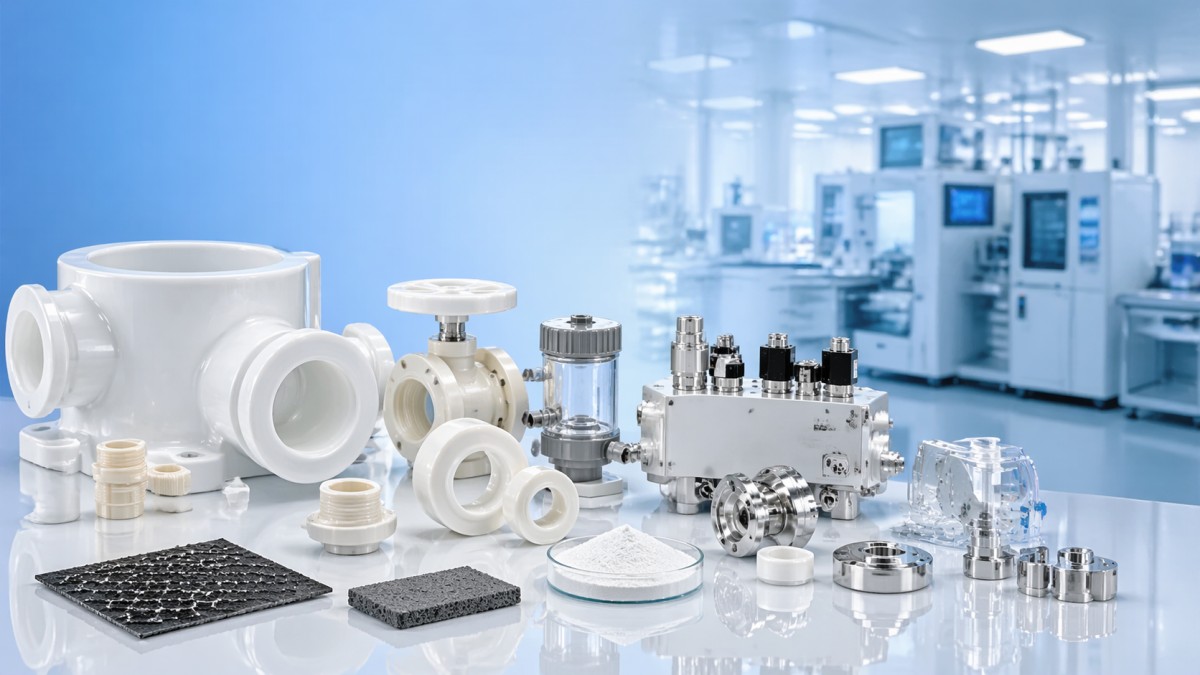
Biocompatible materials OEM is not limited to the medical field. It is most critical where a material contacts the human body, ultra-clean process media, sensitive electronics, or tightly regulated operating environments. In practice, the strongest demand comes from medical device manufacturing, life science systems, semiconductor fabrication equipment, analytical instruments, implant-adjacent components, and high-purity fluid handling assemblies.
For information researchers and procurement teams, the real question is not whether a material is labeled biocompatible, but whether it matches the application risk level. A polymer suitable for a 24-hour skin-contact wearable may not be appropriate for a long-term implant accessory. A ceramic that performs well in a dry laboratory environment may fail if exposed to sterilization cycles, plasma cleaning, or aggressive chemicals every week.
Operators and engineering users usually focus on surface cleanliness, particle shedding, friction stability, and chemical resistance over 6–24 month service intervals. Decision-makers look at a wider frame: compliance exposure, supplier consistency, lead time stability, and whether a biocompatible materials OEM partner can support pilot runs, qualification lots, and scaled production without forcing a redesign after 2–3 quarters.
Within G-CST’s cross-industry benchmarking model, biocompatibility is evaluated as part of a broader reliability framework. That matters in sectors where Advanced Engineering Materials intersect with Semiconductor Fabrication Equipment, precision pump systems, and motion assemblies. In these environments, the right supplier is rarely the cheapest source. It is the source that can align material purity, traceability, machining tolerance, and compliance documentation into one usable procurement package.
Typical high-demand buyer groups
- Medical and diagnostic OEMs needing body-contact, sterilizable, or low-extractables material components.
- Semiconductor equipment builders requiring low-particle, chemically stable, high-purity parts for wet process, wafer handling, or vacuum-adjacent systems.
- Industrial fluid system manufacturers using seals, valve seats, liners, and pump internals where contamination control and material compatibility are operationally critical.
- Wearable device and sensor integrators balancing skin safety, miniaturization, and long-cycle mechanical performance.
How do application scenarios change the material choice?
Not every project needs the same material family. Buyers often compare a graphene materials OEM supplier, a zirconia ceramic supplier, and a high performance polymer factory in one sourcing cycle, but these options serve very different engineering priorities. The correct choice depends on contact mode, mechanical load, sterilization method, thermal range, and whether the part is disposable, reusable, or expected to survive continuous operation for 1,000–10,000 hours.
High performance polymers are frequently selected when lightweight geometry, chemical resistance, and processability matter. Zirconia ceramic is often favored where hardness, wear resistance, electrical insulation, and dimensional stability are needed. Graphene-enhanced materials may become relevant when conductivity control, barrier properties, or functional surface performance are required, though qualification expectations usually become stricter as the application risk increases.
For operators, the practical difference appears during use. A polymer part may absorb repeated cleaning and lower assembly weight, but it can have creep or temperature limits. Zirconia can provide excellent wear resistance in valve, bearing, and guide components, but demands strict fracture-risk evaluation during design and handling. Functional composites may offer advanced performance, yet they require deeper validation of dispersion consistency, extractables, and process repeatability from batch to batch.
The table below helps procurement teams match common biocompatible materials OEM categories to industrial use cases without oversimplifying the decision. It is especially useful in mixed-industry sourcing, where a single project may involve clean fluid transfer, moving assemblies, and operator-contact surfaces in the same device platform.
This comparison shows why biocompatible materials OEM selection should be scenario-driven rather than material-driven. A procurement team that only compares unit price can overlook cleaning validation, requalification cost, scrap exposure, and the time needed for incoming inspection. In many B2B programs, these hidden costs become visible within the first 4–12 weeks after pilot assembly.
Three fast screening questions
What kind of contact occurs?
Separate direct body contact, indirect contact, process-fluid contact, and no-contact clean-environment exposure. Each path creates a different qualification burden.
What is the operating cycle?
A disposable used for 30 minutes has different risk logic from a component running every day under thermal and chemical stress.
What failure mode matters most?
Depending on the device, failure may mean cracking, deformation, contamination, outgassing, friction drift, or regulatory nonconformance.
What should buyers verify before choosing a biocompatible materials OEM supplier?
The highest-risk mistake is treating material sourcing like standard commodity purchasing. A biocompatible materials OEM supplier must be assessed across at least 5 dimensions: material origin, processing control, cleanliness management, documentation quality, and change notification discipline. Without these controls, even a technically suitable material can become a procurement liability during validation or field use.
Procurement personnel should ask whether the supplier can support prototype, pre-production, and serial supply under a controlled change framework. Typical industrial programs move through 3 stages: sample evaluation, engineering validation, and release purchasing. Problems usually arise when suppliers can only support one stage well. For example, a factory may deliver excellent machining samples in 10–15 days, but fail to maintain the same raw material source or surface finish across the next 2–4 production lots.
Users and operators should also be involved before final vendor nomination. They can identify practical issues that specification sheets miss, such as assembly brittleness, residue after cleaning, thread wear, seal deformation, or particulate generation during repeated motion. In clean manufacturing and precision fluid control, these operator-level observations often prevent expensive rework later.
G-CST’s value in this stage is its ability to connect material evaluation with adjacent system requirements. A part cannot be judged only by raw material type. It must be benchmarked against the motion load, fluid chemistry, pressure cycle, contamination threshold, and export-control-sensitive application context surrounding it. That is especially relevant for multinational buyers working across semiconductor, industrial automation, and advanced materials programs simultaneously.
Supplier evaluation checklist for procurement teams
- Confirm whether the supplier can define the material grade, processing route, and revision control clearly enough for repeat orders over 6–12 months.
- Check whether secondary processing such as polishing, sterilization preparation, bonding, or clean packaging is controlled and documented.
- Review incoming and outgoing inspection criteria, including dimensional tolerance, visual defects, particle concerns, and lot traceability.
- Ask about sample lead time, qualification lot size, and the expected delivery window for scaled runs, often ranging from 2–8 weeks depending on process complexity.
- Clarify how engineering changes, raw material substitutions, or sub-supplier shifts will be communicated before shipment.
When these checks are documented early, buyer confidence improves and cross-functional approval becomes faster. That reduces the common conflict between engineering urgency and compliance caution.
Which standards, documentation, and compliance signals matter most?
In biocompatible materials OEM projects, compliance is rarely a single certificate. It is a documentation chain that links material formulation, processing conditions, quality records, and intended use. Buyers should evaluate standards and test expectations in context rather than assuming one document solves every downstream requirement. Medical, analytical, semiconductor, and industrial applications each interpret risk differently.
Common reference frameworks may include ISO-based quality systems, application-specific material testing, cleanliness control practices, and customer-defined acceptance criteria. For semiconductor or high-purity equipment, factors such as low contamination, outgassing behavior, and chemical compatibility may matter as much as body-contact considerations. For reusable devices, sterilization compatibility over repeated cycles is often a decisive requirement.
A useful procurement habit is to divide documentation into 4 layers: material identification, process traceability, quality inspection, and application-fit evidence. This structure helps teams avoid two common errors: demanding irrelevant paperwork that slows sourcing, or accepting broad claims that do not actually support validation. Strong suppliers answer with a mapped documentation package rather than isolated declarations.
The table below summarizes practical compliance signals that buyers often review when sourcing from a biocompatible materials OEM supplier, zirconia ceramic supplier, or high performance polymer factory for regulated or high-reliability programs.
This framework helps teams compare suppliers on evidence quality, not just marketing language. It is particularly useful when multiple stakeholders are involved and each one defines “qualified” differently.
What are the most common sourcing mistakes and how can they be avoided?
One frequent mistake is assuming that a material accepted in one application will transfer directly to another. In reality, biocompatibility, wear behavior, and chemical stability are use-specific. A component approved for limited external contact may require additional review before being used in a fluid path, near sterilization heat, or inside a precision motion assembly with continuous cycling.
Another mistake is underestimating process sensitivity. A zirconia ceramic supplier may offer the right base material, but if finishing, edge condition, or packaging is inconsistent, the delivered part may chip or contaminate the assembly. The same applies to high performance polymer factory output: the polymer grade may be correct, yet molding, machining, or post-cleaning variations can alter fit and service life significantly over repeated use.
A third error is evaluating only the purchase price. In industrial B2B sourcing, a part that costs 8% less but increases incoming inspection, delays validation by 2 weeks, or raises scrap during assembly can become the more expensive option. Decision-makers should model total sourcing cost across at least 4 buckets: part price, qualification effort, operating reliability, and supply continuity.
G-CST helps address these risks by combining technical benchmarking with commercial intelligence. That means supplier comparison can include not only material suitability, but also supply chain resilience, project timing, and regulatory foresight. For organizations operating under export-control awareness or cross-border sourcing pressure, this wider view reduces last-minute disruptions and supports more stable planning.
Risk reduction actions that work well
- Run a small qualification lot before full release, especially for components with tight sealing, motion, or cleanliness requirements.
- Align engineering, quality, and procurement on 5–7 acceptance criteria before RFQ issuance.
- Ask suppliers to state typical lead times for samples, revised samples, and production separately rather than as one general promise.
- Verify how long documentation, lot records, and revision history can be retained for traceability purposes.
These actions are simple, but they often decide whether a project moves smoothly from sourcing to scale-up.
FAQ: what do buyers and engineers ask most often?
How do I know if I need a biocompatible materials OEM supplier instead of a general materials vendor?
If your component involves body contact, regulated fluid contact, clean-process exposure, or high documentation demands, a general vendor may not be enough. A specialized biocompatible materials OEM supplier is more likely to support traceability, controlled processing, and application-focused documentation over the full sourcing cycle.
When should I choose a zirconia ceramic supplier over a high performance polymer factory?
Choose zirconia when wear resistance, hardness, dimensional stability, or insulation under mechanical stress is central to performance. Choose high performance polymers when weight reduction, complex geometry, chemical resistance, or easier processing matters more. The right answer often depends on load, sterilization method, and service interval.
Are graphene materials OEM suppliers relevant for regulated applications?
They can be relevant in advanced sensors, conductive components, barrier layers, and specialty interfaces. However, qualification depth usually increases because buyers must verify dispersion control, consistency, and application-specific safety expectations. Early-stage technical review is especially important here.
What is a realistic lead time for qualification and supply?
For many custom industrial components, prototype lead time may range from 10–20 working days, while engineering validation and production release can take an additional 2–8 weeks depending on material route, finishing steps, and documentation complexity. Complex ceramic or multi-step clean-processing parts may take longer.
Why work with G-CST when evaluating biocompatible materials OEM options?
Biocompatible material sourcing becomes difficult when technical, regulatory, and commercial questions overlap. G-CST helps buyers structure that complexity. Our multidisciplinary framework connects Advanced Engineering Materials with semiconductor equipment, pump and valve systems, precision motion control, and industrial software contexts, giving procurement teams a clearer basis for supplier comparison and technical risk review.
For researchers, we help narrow the field between a graphene materials OEM supplier, a zirconia ceramic supplier, and a high performance polymer factory by focusing on application fit rather than generic claims. For users and operators, we map likely failure points such as wear, contamination, cleaning response, and handling sensitivity. For procurement teams, we support structured evaluation of lead time, documentation, and change-control readiness. For decision-makers, we align material choice with supply resilience and long-term deployment logic.
You can contact G-CST to discuss 6 practical areas: parameter confirmation, material route comparison, qualification planning, delivery window assessment, documentation expectations, and sample strategy. If your team is balancing compliance, reliability, and sourcing speed, this early benchmarking step can reduce redesign risk and shorten decision cycles.
Bring your drawings, operating conditions, target tolerances, cleaning or sterilization requirements, and expected order stage from prototype to volume. We can help you identify what should be verified first, which supplier type best fits the application, and where hidden sourcing risks are most likely to appear before RFQ or final vendor selection.
Recommended News
![]() Oct 22, 2026How Can Component Reliability Be Tested Under Actual Operating Conditions?How can I test component reliability under actual operating conditions? Explore practical methods for realistic test profiles, accelerated testing, field validation, and risk-based selection.
Oct 22, 2026How Can Component Reliability Be Tested Under Actual Operating Conditions?How can I test component reliability under actual operating conditions? Explore practical methods for realistic test profiles, accelerated testing, field validation, and risk-based selection. Sep 03, 2026What drives biocompatibility testing cost in Europe for medical devices?Biocompatibility testing cost Europe: discover the key factors shaping medical device budgets, from device contact and chemistry to sterilization, samples, and rework.
 Aug 28, 2026How to interpret adhesive outgassing vacuum data for material selectionAdhesive outgassing vacuum data reveals more than pass/fail results. Learn how TML, CVCM, cure conditions, and real-use risks guide confident material selection.
 Aug 24, 2026How to verify purity and trace contaminants in fine chemicalsFine chemicals purity verification made practical: learn how to detect trace contaminants, choose the right methods, reduce QC risk, and strengthen compliance with confidence.
 Aug 17, 2026When do surfactants improve coating uniformity in wet processes?Surfactants improve coating uniformity when wetting, spreading, or dispersion stability limits film quality. Learn where they add real value—and when they simply hide deeper process issues.
 Jul 28, 2026Organic Cotton vs Conventional Cotton: Key Differences in Comfort, Cost, and CareOrganic cotton vs conventional cotton: compare comfort, cost, and care in a clear, practical guide. Learn what certifications matter, why prices differ, and how to choose better value.
 Jul 16, 2026Automatic Mechanical Watches: How to Judge Quality Before You Buyautomaticmechanicalwatches buying guide: learn how to judge movement quality, finishing, materials, comfort, and service support before you buy with confidence.
 Jul 10, 2026Stable Nanomaterial Suspension: Common Failure Causes and Fix OptionsStable nanomaterial suspension issues often start with agglomeration, pH drift, shear, or contamination. Discover practical fix options to improve stability, consistency, and daily process control.
![]() Jul 07, 2026How to Evaluate Nanotechnology Manufacturing Suppliers for Process StabilityNanotechnology manufacturing suppliers should be assessed for process stability, traceability, and control discipline. Learn how to spot risks, compare capability, and choose with confidence.
Jul 07, 2026How to Evaluate Nanotechnology Manufacturing Suppliers for Process StabilityNanotechnology manufacturing suppliers should be assessed for process stability, traceability, and control discipline. Learn how to spot risks, compare capability, and choose with confidence. Jul 05, 2026Biocompatibility Data Europe: Key Testing Standards and Submission GapsBiocompatibility data Europe: discover key ISO 10993 testing standards, common submission gaps, and practical ways to strengthen traceability, reduce review delays, and improve approval readiness.
 Jun 25, 2026Sheet Masks OEM: Cost, MOQ, and Quality Checks Before You OrdersheetmasksOEM guide: compare real costs, MOQ terms, and must-have quality checks before ordering. Learn how to avoid hidden risks and choose a supplier with confidence.
 Jun 21, 2026Agrochemicals Storage Risks and Compliance BasicsAgrochemicals storage risks can trigger spills, product loss, and compliance failures. Learn the key hazards, controls, and practical basics to improve safety and audit readiness.
 Jun 11, 2026Wellness Products: Common Claims and Compliance RisksWellness products face growing claim and labeling risks. Learn which statements trigger scrutiny, how to support claims with evidence, and how to reduce cross-border compliance issues.
![]() Jun 05, 2026Catalysts Manufacturer Selection: Cost vs ConsistencyCatalysts manufacturer selection is more than price. Learn how to compare cost, consistency, compliance, and supply risk to choose the safest long-term partner.
Jun 05, 2026Catalysts Manufacturer Selection: Cost vs ConsistencyCatalysts manufacturer selection is more than price. Learn how to compare cost, consistency, compliance, and supply risk to choose the safest long-term partner. May 30, 2026Industrial Database for Chemical Industry: Data Quality Risks to CheckIndustrial database for chemical industry users: discover key data quality risks in traceability, compliance, supplier claims, and governance before making critical decisions.
 May 07, 2026Semiconductor Grade Gas Purity Standards and the Hidden Cost of Over-SpecifyingSemiconductor grade gas purity standards shape yield, sourcing risk, and total cost. Learn when higher purity protects value—and when over-specifying quietly drains budgets.
 May 05, 2026Semiconductor Grade Quartz Supplier Red Flags in High-Purity ApplicationsSemiconductor grade quartz supplier red flags explained: spot purity, traceability, and compliance risks early to protect yield, avoid qualification failures, and source with confidence.
 May 04, 2026Ion Implanter OEM Selection: Specs That Matter More Than Brochure ClaimsIon implanter OEM selection goes beyond brochure claims. Learn which specs truly impact dose accuracy, uptime, contamination control, and long-term fab ROI.
 May 03, 2026Material Innovation in Advanced Manufacturing: Which Changes Matter Most in 2026Material Innovation in advanced manufacturing is reshaping 2026 procurement, compliance, and uptime. Discover which material shifts deliver verified gains in reliability, supply resilience, and digital-ready performance.
 May 02, 2026Advanced Engineering Materials for Semiconductor Tools: What Matters MostAdvanced Engineering Materials for semiconductor tools drive uptime, yield, and contamination control. Discover what matters most for smarter sourcing and lower risk.
 May 01, 2026Material Innovation in Semiconductor: Which Changes Are Worth Validating FirstMaterial Innovation in semiconductor: discover which material changes are worth validating first to reduce risk, improve reliability, and capture faster value across packaging, thermal, and process-critical applications.
 Apr 28, 2026Nanotechnology in Manufacturing Trends Shift From Lab Wins to ScaleNanotechnology in manufacturing trends now focus on scale, ROI, and supply resilience. Explore SiC, sustainable polymers, and carbon fiber supply chain insights shaping industrial adoption.
 Apr 28, 2026Why Graphene Electrical Conductivity Still Varies Across SamplesGraphene electrical conductivity varies with defects, substrate, residues, metrology, and scale-up. Learn how to compare suppliers, reduce risk, and qualify graphene for reliable industrial performance.
 Apr 28, 2026Where Nanotechnology in Manufacturing Trends Are Headed in 2026Nanotechnology in manufacturing trends for 2026: explore carbon fiber supply chain news, sustainable polymers, SiC in power electronics, and graphene conductivity insights.