Search News
Industry Portal
Popular Tags
Material Innovation Is Moving Faster Than Qualification Cycles
Author
Time
Click Count
Material Innovation is outpacing traditional qualification cycles, creating new risks and opportunities for strategic procurement teams and frontline operators alike. The core issue is no longer whether new materials can improve performance, but whether organizations can validate, deploy, and scale them fast enough without compromising reliability, compliance, or uptime. For buyers, the challenge is avoiding costly adoption mistakes while still capturing competitive advantage. For operators, it is understanding how new material behavior affects maintenance, safety, and process stability. In sectors shaped by SEMI, ISO, ASME, and IEEE expectations, the winning approach is a more risk-based, data-backed qualification strategy that links engineering evidence with real operating conditions.
Why material innovation is now moving faster than qualification systems can handle
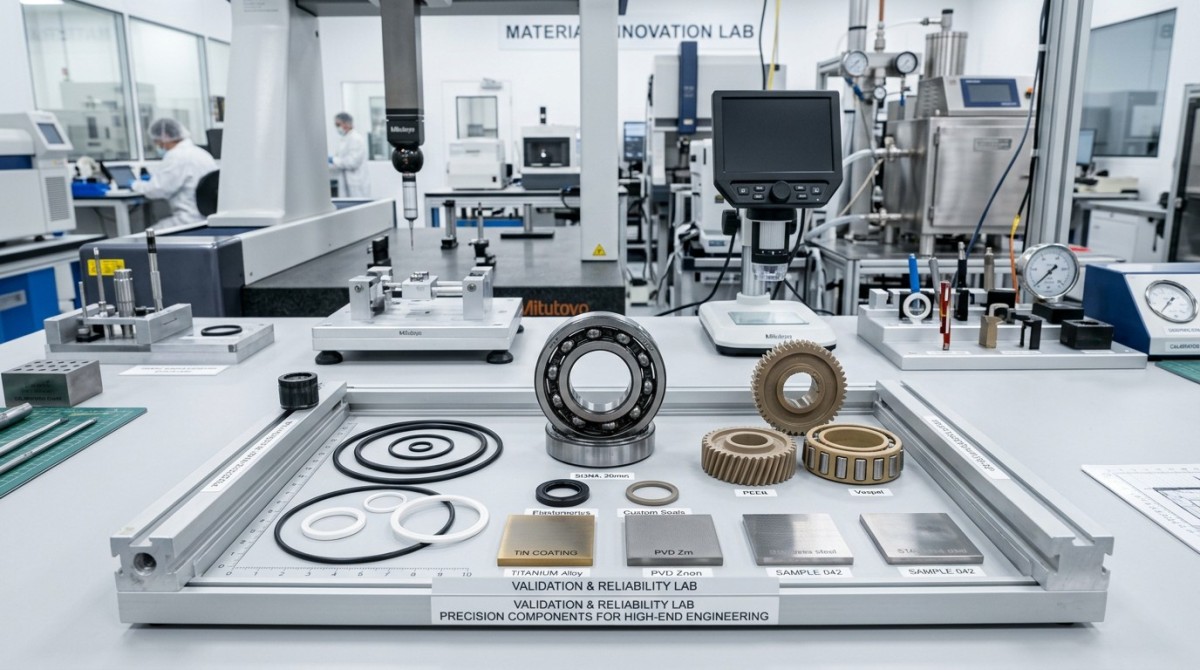
Across advanced manufacturing, energy systems, industrial automation, fluid handling, and semiconductor-adjacent supply chains, material innovation is accelerating for a simple reason: performance pressure is rising everywhere at once. Components are expected to run hotter, last longer, resist more aggressive chemistries, operate at tighter tolerances, and fit into increasingly digitized systems. That is pushing suppliers to introduce new ceramics, composites, coatings, elastomers, alloys, engineered polymers, and hybrid material systems faster than traditional qualification frameworks were designed to absorb.
Qualification cycles, by contrast, are still built around stability. They depend on repeated testing, documentation, field history, process validation, and regulatory or customer sign-off. In highly reliability-sensitive environments, that caution is justified. A material substitution in a chemical pump seal, ceramic bearing, wafer handling component, or motion control assembly can create failure modes that do not appear in early lab tests. The mismatch between innovation speed and qualification speed creates a practical gap: engineering teams may see performance upside, but procurement, quality, and operations teams still need enough verified evidence to trust deployment.
This is why the phrase material innovation is moving faster than qualification cycles matters operationally. It describes a growing bottleneck between what is technically possible and what is industrially acceptable.
What strategic procurement teams and operators are actually worried about
For information researchers and industrial users, the main concern is not novelty. It is decision risk.
Procurement and sourcing teams typically worry about:
- Whether a new material has enough qualification evidence for critical applications
- Whether supplier claims are backed by recognized standards and comparable test data
- How a material change affects total cost of ownership, warranty exposure, and lifecycle performance
- Whether export controls, sourcing concentration, or geopolitical issues may disrupt supply continuity
- How quickly they can approve alternatives without creating downstream compliance or reliability problems
Operators, maintenance teams, and technical users usually focus on:
- Whether the new material behaves differently under real load, temperature, pressure, vibration, or chemical exposure
- Whether installation, lubrication, cleaning, calibration, or maintenance procedures must change
- How failure signals will appear and whether existing monitoring systems can detect them
- Whether the material improves uptime or simply transfers risk to another part of the system
- Whether digital tools like SCADA, digital twins, and predictive maintenance platforms can model the new behavior accurately
These concerns are valid because in many industrial settings, material changes are not isolated events. They ripple across qualification documents, spare parts logic, sensor thresholds, operator training, and supplier accountability.
Where the risk is highest: bearings, pumps, precision systems, and semiconductor-related environments
Some applications are especially exposed when qualification lags behind innovation.
Ceramic bearings and precision motion systems: Advanced ceramics can deliver low friction, corrosion resistance, electrical insulation, and dimensional stability. But qualification must go beyond headline hardness or wear resistance. Teams need to examine thermal shock tolerance, fracture behavior, lubrication compatibility, contamination sensitivity, and long-duration fatigue performance under actual duty cycles.
Chemical pumps and valve systems: In corrosive or high-purity environments, new polymers, coatings, seal materials, and wetted surface technologies can improve chemical compatibility and leakage control. However, qualification must assess permeation, swelling, outgassing, mechanical integrity, and process contamination risk. In high-consequence systems, a small material mismatch can trigger downtime, environmental incidents, or product yield loss.
Semiconductor fabrication and clean process environments: Here, qualification cycles are especially strict because purity, repeatability, and contamination control are non-negotiable. New engineering materials may offer excellent lab performance, but they still need validation against SEMI standards, equipment interface requirements, traceability expectations, and long-term process behavior. Faster innovation without disciplined qualification can jeopardize both tool uptime and wafer yield.
Industrial software and digital twin environments: This may seem less material-centric, but it is increasingly relevant. New materials often change system response, thermal characteristics, maintenance intervals, and degradation patterns. If digital twins, condition monitoring systems, or SCADA models are not updated with verified material behavior, decisions based on those platforms can become misleading rather than helpful.
How to qualify faster without lowering reliability standards
The practical solution is not to abandon qualification discipline. It is to modernize how qualification is structured.
1. Use risk-based qualification instead of one-size-fits-all approval paths.
Not every material change deserves the same level of scrutiny. A non-critical housing component should not follow the same path as a high-purity wetted surface or ultra-precision bearing element. Teams should classify changes by safety impact, contamination sensitivity, process criticality, and failure consequence.
2. Demand evidence tied to application conditions, not generic datasheets.
A supplier’s published material properties are only a starting point. Procurement and engineering teams should ask for test data under realistic temperatures, pressures, motion profiles, chemical exposure, duty cycles, and cleaning regimes. Qualification decisions improve dramatically when material evidence resembles real use conditions.
3. Combine lab qualification with structured field validation.
Accelerated testing is important, but field pilots remain essential. A staged rollout in a controlled subset of assets can reveal installation issues, maintenance changes, and degradation patterns that bench testing misses.
4. Connect digital twin models to verified material behavior.
If a digital twin is used for reliability forecasting or process optimization, model assumptions must be updated when material properties change. Otherwise, simulation confidence drops just when organizations need it most.
5. Align qualification documentation with relevant standards early.
Where SEMI, ISO, ASME, or IEEE frameworks apply, teams should map qualification evidence to those expectations from the start. This reduces rework, shortens approval cycles, and improves audit readiness.
What good qualification evidence looks like in practice
Readers evaluating new advanced engineering materials should look for a stronger evidence package than basic marketing claims. Useful qualification evidence often includes:
- Material composition and batch traceability
- Test methods referenced to recognized industry standards
- Mechanical, thermal, chemical, and electrical performance data under defined conditions
- Contamination, outgassing, corrosion, or wear results where relevant
- Compatibility with adjacent materials, lubricants, cleaning agents, and process media
- Failure mode analysis and degradation thresholds
- Field performance history in similar operating environments
- Change control procedures for material formulation or manufacturing process updates
The more critical the application, the more important comparability becomes. Teams should be able to benchmark one supplier’s qualification package against another using a common technical framework. This is where technical benchmarking repositories and independent intelligence sources create real value: they reduce the risk of making decisions based on incomplete or non-comparable supplier data.
How SEMI and related standards help decision-makers move faster
For organizations working in semiconductor and adjacent advanced manufacturing environments, SEMI standards matter because they create a common language for qualification, interoperability, and reliability. They do not remove the need for internal testing, but they reduce ambiguity around what “acceptable” evidence should look like.
In practice, standards-based qualification helps in several ways:
- It makes supplier submissions easier to compare
- It supports cross-functional alignment between sourcing, engineering, quality, and operations
- It improves audit readiness and customer confidence
- It reduces the chance that a fast material substitution creates hidden downstream issues
- It shortens approval time by clarifying evidence expectations in advance
For operators, standards alignment also improves deployment confidence. If the qualification process clearly addresses contamination control, endurance, interface compatibility, and maintenance implications, frontline teams can adopt new materials with fewer surprises.
A practical decision framework for buyers and users
When a new material promises better performance but the qualification record is still developing, a simple framework can help:
- Define the criticality of the application. What happens if the material underperforms?
- Identify the claimed improvement. Is it wear life, purity, chemical resistance, thermal stability, efficiency, or maintenance reduction?
- Check evidence quality. Is the data independent, standardized, and relevant to your conditions?
- Assess system interaction. Will the material change behavior elsewhere in the assembly or process?
- Review supply resilience. Can the supplier maintain consistency across batches, regions, and regulatory environments?
- Plan controlled deployment. Start with monitored pilots before broad rollout.
- Feed results back into digital and maintenance systems. Update models, thresholds, and procedures based on actual performance.
This framework helps both strategic decision-makers and operational teams avoid two common mistakes: rejecting valuable innovation because qualification feels slow, or accepting innovation too quickly because performance claims look impressive on paper.
Conclusion: faster innovation requires smarter qualification, not weaker qualification
Material innovation is creating real competitive advantage across advanced engineering materials, precision manufacturing, chemical handling, motion control, and industrial automation. But the gap between innovation speed and qualification speed is now a strategic issue. The organizations that benefit most will not be the ones that adopt every new material first. They will be the ones that qualify intelligently, benchmark rigorously, align with standards early, and connect engineering evidence to real operating conditions.
For procurement teams, that means treating qualification as a strategic risk-control process rather than a documentation burden. For operators, it means understanding that new materials can change maintenance logic, failure patterns, and system behavior in subtle but important ways. In both cases, better decisions come from verifiable data, application-specific testing, and a disciplined approach to deployment. When material innovation moves faster than qualification cycles, the answer is not to slow innovation down. It is to make qualification more precise, more adaptive, and more connected to how industry actually works.
Recommended News
![]() Oct 22, 2026How Can Component Reliability Be Tested Under Actual Operating Conditions?How can I test component reliability under actual operating conditions? Explore practical methods for realistic test profiles, accelerated testing, field validation, and risk-based selection.
Oct 22, 2026How Can Component Reliability Be Tested Under Actual Operating Conditions?How can I test component reliability under actual operating conditions? Explore practical methods for realistic test profiles, accelerated testing, field validation, and risk-based selection. Sep 03, 2026What drives biocompatibility testing cost in Europe for medical devices?Biocompatibility testing cost Europe: discover the key factors shaping medical device budgets, from device contact and chemistry to sterilization, samples, and rework.
 Aug 28, 2026How to interpret adhesive outgassing vacuum data for material selectionAdhesive outgassing vacuum data reveals more than pass/fail results. Learn how TML, CVCM, cure conditions, and real-use risks guide confident material selection.
 Aug 24, 2026How to verify purity and trace contaminants in fine chemicalsFine chemicals purity verification made practical: learn how to detect trace contaminants, choose the right methods, reduce QC risk, and strengthen compliance with confidence.
 Aug 17, 2026When do surfactants improve coating uniformity in wet processes?Surfactants improve coating uniformity when wetting, spreading, or dispersion stability limits film quality. Learn where they add real value—and when they simply hide deeper process issues.
 Jul 28, 2026Organic Cotton vs Conventional Cotton: Key Differences in Comfort, Cost, and CareOrganic cotton vs conventional cotton: compare comfort, cost, and care in a clear, practical guide. Learn what certifications matter, why prices differ, and how to choose better value.
 Jul 16, 2026Automatic Mechanical Watches: How to Judge Quality Before You Buyautomaticmechanicalwatches buying guide: learn how to judge movement quality, finishing, materials, comfort, and service support before you buy with confidence.
 Jul 10, 2026Stable Nanomaterial Suspension: Common Failure Causes and Fix OptionsStable nanomaterial suspension issues often start with agglomeration, pH drift, shear, or contamination. Discover practical fix options to improve stability, consistency, and daily process control.
![]() Jul 07, 2026How to Evaluate Nanotechnology Manufacturing Suppliers for Process StabilityNanotechnology manufacturing suppliers should be assessed for process stability, traceability, and control discipline. Learn how to spot risks, compare capability, and choose with confidence.
Jul 07, 2026How to Evaluate Nanotechnology Manufacturing Suppliers for Process StabilityNanotechnology manufacturing suppliers should be assessed for process stability, traceability, and control discipline. Learn how to spot risks, compare capability, and choose with confidence. Jul 05, 2026Biocompatibility Data Europe: Key Testing Standards and Submission GapsBiocompatibility data Europe: discover key ISO 10993 testing standards, common submission gaps, and practical ways to strengthen traceability, reduce review delays, and improve approval readiness.
 Jun 25, 2026Sheet Masks OEM: Cost, MOQ, and Quality Checks Before You OrdersheetmasksOEM guide: compare real costs, MOQ terms, and must-have quality checks before ordering. Learn how to avoid hidden risks and choose a supplier with confidence.
 Jun 21, 2026Agrochemicals Storage Risks and Compliance BasicsAgrochemicals storage risks can trigger spills, product loss, and compliance failures. Learn the key hazards, controls, and practical basics to improve safety and audit readiness.
 Jun 11, 2026Wellness Products: Common Claims and Compliance RisksWellness products face growing claim and labeling risks. Learn which statements trigger scrutiny, how to support claims with evidence, and how to reduce cross-border compliance issues.
![]() Jun 05, 2026Catalysts Manufacturer Selection: Cost vs ConsistencyCatalysts manufacturer selection is more than price. Learn how to compare cost, consistency, compliance, and supply risk to choose the safest long-term partner.
Jun 05, 2026Catalysts Manufacturer Selection: Cost vs ConsistencyCatalysts manufacturer selection is more than price. Learn how to compare cost, consistency, compliance, and supply risk to choose the safest long-term partner. May 30, 2026Industrial Database for Chemical Industry: Data Quality Risks to CheckIndustrial database for chemical industry users: discover key data quality risks in traceability, compliance, supplier claims, and governance before making critical decisions.
 May 07, 2026Semiconductor Grade Gas Purity Standards and the Hidden Cost of Over-SpecifyingSemiconductor grade gas purity standards shape yield, sourcing risk, and total cost. Learn when higher purity protects value—and when over-specifying quietly drains budgets.
 May 05, 2026Semiconductor Grade Quartz Supplier Red Flags in High-Purity ApplicationsSemiconductor grade quartz supplier red flags explained: spot purity, traceability, and compliance risks early to protect yield, avoid qualification failures, and source with confidence.
 May 04, 2026Ion Implanter OEM Selection: Specs That Matter More Than Brochure ClaimsIon implanter OEM selection goes beyond brochure claims. Learn which specs truly impact dose accuracy, uptime, contamination control, and long-term fab ROI.
 May 03, 2026Material Innovation in Advanced Manufacturing: Which Changes Matter Most in 2026Material Innovation in advanced manufacturing is reshaping 2026 procurement, compliance, and uptime. Discover which material shifts deliver verified gains in reliability, supply resilience, and digital-ready performance.
 May 02, 2026Advanced Engineering Materials for Semiconductor Tools: What Matters MostAdvanced Engineering Materials for semiconductor tools drive uptime, yield, and contamination control. Discover what matters most for smarter sourcing and lower risk.
 May 01, 2026Material Innovation in Semiconductor: Which Changes Are Worth Validating FirstMaterial Innovation in semiconductor: discover which material changes are worth validating first to reduce risk, improve reliability, and capture faster value across packaging, thermal, and process-critical applications.
 Apr 28, 2026Nanotechnology in Manufacturing Trends Shift From Lab Wins to ScaleNanotechnology in manufacturing trends now focus on scale, ROI, and supply resilience. Explore SiC, sustainable polymers, and carbon fiber supply chain insights shaping industrial adoption.
 Apr 28, 2026Why Graphene Electrical Conductivity Still Varies Across SamplesGraphene electrical conductivity varies with defects, substrate, residues, metrology, and scale-up. Learn how to compare suppliers, reduce risk, and qualify graphene for reliable industrial performance.
 Apr 28, 2026Where Nanotechnology in Manufacturing Trends Are Headed in 2026Nanotechnology in manufacturing trends for 2026: explore carbon fiber supply chain news, sustainable polymers, SiC in power electronics, and graphene conductivity insights.