Search News
Industry Portal
Popular Tags
Why Graphene Electrical Conductivity Still Varies Across Samples
Author
Time
Click Count
Why does graphene electrical conductivity still vary across samples, even when producers use the same nominal material and similar process conditions? The short answer is that graphene is extraordinarily sensitive to its atomic structure, the surface it sits on, residual contamination, measurement method, and scale-up choices. For engineers, buyers, and strategy teams assessing graphene for electronics, coatings, sensors, energy systems, or conductive composites, conductivity variability is not a minor lab issue. It is a commercial and qualification issue that affects yield, repeatability, supplier comparison, and long-term reliability.
For organizations following nanotechnology commercialization and advanced materials sourcing, the key takeaway is clear: a graphene data sheet rarely tells the full story. Two samples described as “high-conductivity graphene” may perform very differently because they were made by different routes, transferred differently, doped unintentionally, or tested under different environmental and metrology conditions. That is why technical validation must go beyond headline conductivity numbers and examine process history, defect density, sheet resistance mapping, substrate interaction, and batch consistency.
This article focuses on the practical question behind the title: what really causes conductivity variation, how should different stakeholders interpret it, and what evidence is needed before a graphene material can be trusted in industrial use. Rather than repeating generic definitions, we will look at the factors that matter most for research teams, operators, procurement managers, and enterprise decision-makers evaluating graphene performance at scale.
What buyers and engineers actually need to know about graphene conductivity variation
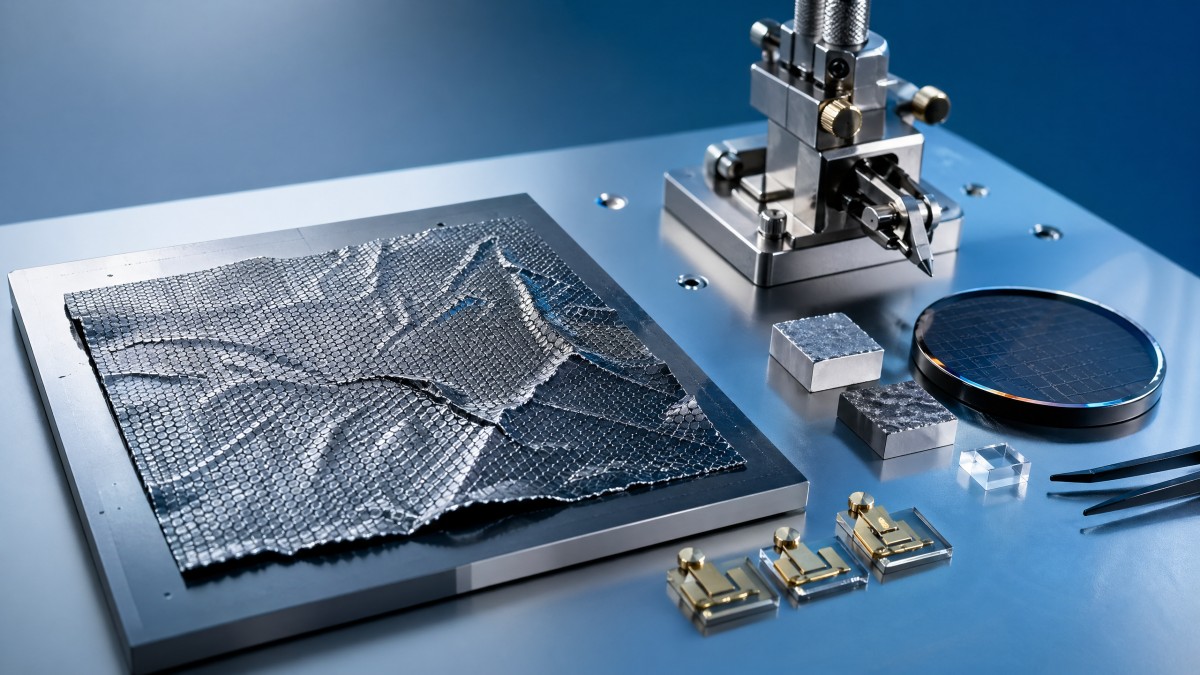
The most important point is that graphene does not behave like a conventional bulk metal sold to a fixed grade. Its electrical properties are highly dependent on microscopic and process-dependent conditions. A supplier can report excellent carrier mobility or low sheet resistance from one sample, while another batch from the same production line can show a materially different result. In industrial settings, this means conductivity should be treated as a controlled performance window, not a single universal number.
For technical users, the core issue is repeatability. Can the material maintain acceptable conductivity over multiple lots, after transfer or integration, and under actual operating conditions such as humidity, heat, bending, current loading, or chemical exposure? For procurement teams, the issue is comparability. Are two vendor claims based on equivalent test methods, sample geometries, and substrates? For executives, the concern is risk. If graphene variability is not understood upfront, qualification timelines lengthen and product roadmaps become exposed to reliability and supply-chain uncertainty.
This is why search intent behind this topic is usually not purely academic. Readers are looking for a reliable framework to judge whether conductivity variation is expected, manageable, or disqualifying. They want to know which variables are fundamental, which can be engineered out, and which should become supplier acceptance criteria. The rest of the article is built around those needs.
Why the “same graphene” is often not the same material in practice
Graphene is often discussed as if it were a single material, but commercially and technically it covers several forms: mechanically exfoliated graphene, chemical vapor deposition (CVD) graphene, epitaxial graphene, reduced graphene oxide, few-layer graphene, and graphene nanoplatelets. These forms may all be sold under a graphene label, yet their electrical behavior can differ dramatically because their thickness, disorder level, grain structure, and chemistry are different from the start.
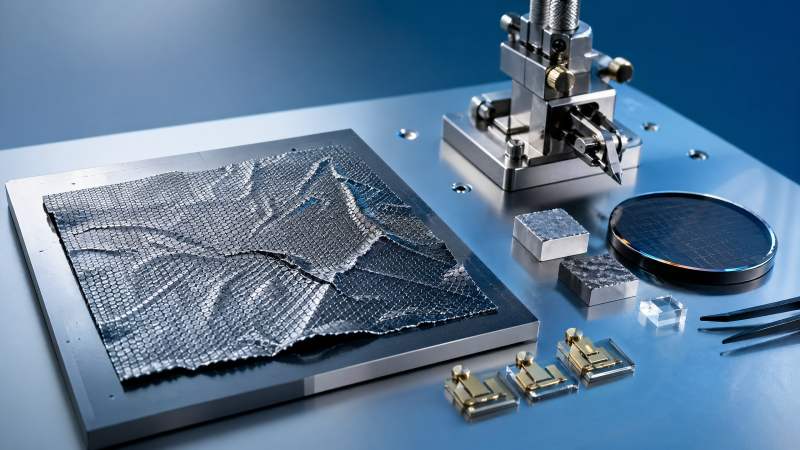
Even within one production route, graphene can vary at the atomic scale. A monolayer with large crystalline domains and low defect density will conduct very differently from a film with grain boundaries, wrinkles, tears, multilayer patches, or oxygen-containing groups. This means that the phrase “graphene electrical conductivity” is incomplete unless the material class and manufacturing route are specified. In many cases, apparent inconsistency is simply the result of comparing non-equivalent forms of graphene.
For industry readers, this distinction matters because application targets differ. A transparent electrode may prioritize low sheet resistance at high optical transmittance. A thermal interface or EMI shielding product may tolerate more structural disorder if network conductivity remains sufficient. A sensor may even rely on conductivity shifts caused by surface interactions. Therefore, the first judgment is not whether conductivity varies, but whether the observed variation remains acceptable for the intended use case.
Defects are still the first-order driver of conductivity loss
At the material level, defects remain the most widely recognized reason why graphene conductivity varies across samples. Electrons move efficiently through an ideal graphene lattice, but vacancies, Stone–Wales defects, grain boundaries, cracks, adatoms, and edge disorder act as scattering centers. These imperfections reduce carrier mobility and increase resistance. In real production environments, defects are unavoidable; the real question is how many are present, how they are distributed, and whether they are stable over time.
Defects can originate during growth, exfoliation, oxidation-reduction cycles, transfer, patterning, and post-processing. For instance, CVD graphene may develop domain boundaries as separate grains merge during growth. Transfer from metal foil to target substrate can introduce tears, wrinkles, trapped residues, or local delamination. Reduced graphene oxide may retain oxygen functionalities and structural damage that permanently limit conductivity compared with higher-quality lattice structures.
For validation teams, this means defect characterization should not be treated as optional background science. Raman spectroscopy, sheet resistance mapping, microscopy, and domain-size assessment are directly linked to electrical outcomes. If a supplier cannot connect conductivity data to defect metrics and spatial uniformity, performance claims may not be robust enough for procurement or design qualification.
Substrate effects are more important than many data sheets suggest
Graphene is a two-dimensional material, so what lies underneath it can strongly influence measured electrical behavior. Charges trapped in the substrate, surface roughness, dielectric properties, phonon interactions, and interfacial contamination all affect carrier transport. A graphene film measured on silicon dioxide may not behave the same way on sapphire, glass, polymer, ceramic, or a flexible barrier stack.
This is one reason published conductivity values can appear inconsistent. The graphene itself may not be the only variable; the test platform may be changing the result. On rough or chemically active substrates, local strain and charge inhomogeneity can create “puddles” of varying carrier density. On polymeric substrates, mechanical compliance and residual transfer chemistry can further complicate current flow. In device integration, metal contacts also contribute contact resistance, which may be wrongly attributed to the graphene layer alone.
For operators and process engineers, the practical implication is that incoming material inspection should be paired with application-relevant integration trials. A supplier’s excellent conductivity number measured on a highly optimized lab substrate may not translate to a production stack. Buyers should request data generated on equivalent or at least comparable substrates, with contact geometry and environmental conditions clearly documented.
Contamination and residues often explain “mysterious” batch-to-batch variation
Graphene’s surface is fully exposed, which makes it highly sensitive to contamination. Residual polymers from transfer, etchants from metal removal, solvents, adsorbed water, oxygen, airborne hydrocarbons, and handling-related particles can all shift conductivity. In some cases these contaminants unintentionally dope graphene, temporarily improving one metric while hurting long-term stability. In other cases they increase scattering and degrade performance immediately.
This is especially relevant for CVD graphene, where transfer chemistry can dominate final electrical quality. A film that looked excellent before transfer may show significantly higher sheet resistance after processing, not because the lattice quality changed fundamentally, but because residues and mechanical damage were introduced. Similarly, thermal annealing may initially improve conductivity by removing adsorbates, only for the result to drift again after storage in ambient conditions.
For purchasing and quality teams, contamination risk means that storage, packaging, handling, and cleaning protocols are part of the conductivity story. Conductive performance should be specified not just “as shipped” but also after defined environmental exposure or integration steps. If a supplier’s data are generated immediately after a favorable treatment and do not include stability windows, the reported value may have limited purchasing relevance.
Measurement method is a major source of disagreement between reported values
One of the most overlooked reasons for conductivity variation is that different groups do not measure the same thing in the same way. Some report intrinsic conductivity, others report sheet resistance, carrier mobility, or device-level resistance. The geometry of the test pattern, two-probe versus four-probe method, contact design, film continuity, temperature, humidity, and current density all influence the result. As a result, “better conductivity” in one brochure may not be directly comparable to “better conductivity” in another.
Four-probe methods are generally preferred for reducing contact resistance effects, but even then sample nonuniformity can distort the average. Localized testing may miss cracks or multilayer islands, while large-area measurements may reveal performance spread that a small benchmark coupon hides. Furthermore, mobility extracted from field-effect measurements is not identical to sheet conductivity in a practical electrode. Decision-makers should therefore ask what exact metric is being used and whether it maps to the product requirement.
A strong supplier comparison process includes metrology normalization. That means defining standard substrates, sample sizes, environmental conditions, aging conditions, and acceptance thresholds before benchmarking vendors. Without this discipline, organizations may select a material on the basis of incomparable claims and discover the mismatch only during pilot production.
Scale-up introduces variability that laboratory samples do not reveal
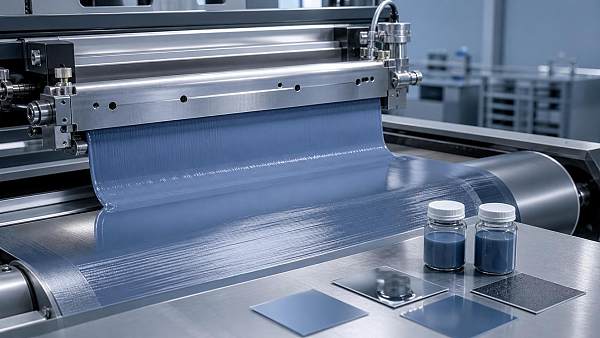
Graphene often performs best in small, carefully prepared research samples. Industrial adoption, however, depends on whether similar conductivity can be maintained over larger areas, faster throughput, and more complex handling. This is where variation typically increases. Roll-to-roll transfer, large-area deposition, web tension control, precursor purity, reactor temperature gradients, and inline contamination all create new sources of inconsistency that may be invisible in laboratory-scale demonstrations.
For companies evaluating graphene in conductive films, flexible electronics, batteries, sensors, or composite additives, scale-up risk should be assessed explicitly. A supplier may have excellent proof-of-concept data but weak process capability at commercial volume. Uniformity across width, lot-to-lot control, and defect escape rates become more important than a single peak conductivity record. In purchasing terms, process capability can be more valuable than an impressive but non-repeatable specification.
This is also why enterprise decision-makers should connect technical review with supplier manufacturing maturity. Questions about statistical process control, inline inspection, contamination control, and traceability are not secondary. They directly affect whether conductivity variation will remain within a manageable operating band or become a recurring qualification bottleneck.
How to evaluate whether conductivity variation is acceptable for your application
Not all variation is equally important. The right threshold depends on the application. In transparent conductors, small increases in sheet resistance may cause visible performance loss. In conductive composites, network formation and dispersion quality may matter more than intrinsic monolayer mobility. In sensors, controlled conductivity shifts may be the mechanism of operation. Therefore, the first practical step is defining which electrical parameter truly matters in the end product and what tolerance window is acceptable.
Next, evaluate variation at three levels: within-sample uniformity, batch-to-batch consistency, and post-integration stability. Within-sample mapping reveals local defects and process nonuniformity. Batch comparison reveals supplier control. Post-integration testing shows whether conductivity survives lamination, curing, lithography, thermal cycling, or environmental aging. This layered approach prevents a common mistake: approving material based on pristine incoming data that fail after real processing.
Finally, tie acceptance criteria to business impact. If conductivity spread changes yield, calibration effort, device lifetime, or warranty exposure, it is a commercial issue, not just a materials issue. Procurement and engineering teams should jointly define red lines such as maximum sheet resistance, allowable coefficient of variation, contact stability, and aging drift under specified conditions. That turns a vague advanced-materials evaluation into an actionable sourcing decision.
What to request from suppliers before making sourcing or design decisions
For organizations comparing graphene suppliers, a stronger request package can reduce uncertainty significantly. Ask for the production route, layer distribution, substrate or transfer details, defect characterization, sheet resistance or conductivity mapping, test method, environmental test conditions, and lot history. Require the supplier to distinguish best-case laboratory data from routine production data. This alone often clarifies whether a conductivity claim is commercially meaningful.
It is also useful to request data after representative downstream processes. For example, if your application involves thermal curing, flexible bending, humidity exposure, or contact metallization, ask for conductivity retention after those steps. The goal is not just to know the initial value, but to understand the process compatibility window. Materials that look similar on incoming inspection can diverge sharply after integration.
Where project scale justifies it, consider a structured technical-commercial scorecard. Weight conductivity consistency, defect control, metrology transparency, regulatory documentation, scale-up readiness, and change-control discipline alongside price. For high-consequence applications, this approach is usually more effective than selecting the lowest-cost graphene source and attempting to manage variability later.
Bottom line: conductivity variation is normal, but unmanaged variation is not
Graphene electrical conductivity still varies across samples because graphene is extremely sensitive to defects, grain structure, contamination, substrate interaction, measurement method, and manufacturing scale. That variation is not evidence that graphene lacks value. It is evidence that this is a high-performance material whose properties depend strongly on process discipline and application context.
For researchers and operators, the path forward is rigorous characterization linked to actual process steps. For procurement teams, the priority is comparable data, lot-level consistency, and supplier transparency. For decision-makers, the right question is not whether graphene can achieve excellent conductivity, but whether that performance can be reproduced, qualified, and sustained in the intended product and supply chain.
In practical terms, the most reliable decisions come from treating graphene conductivity as a system-level outcome rather than a single catalog number. When buyers and engineers evaluate defects, substrates, contamination, metrology, and scale-up together, conductivity variation becomes something that can be understood, specified, and managed—rather than a recurring surprise during commercialization.
Recommended News
![]() Oct 22, 2026How Can Component Reliability Be Tested Under Actual Operating Conditions?How can I test component reliability under actual operating conditions? Explore practical methods for realistic test profiles, accelerated testing, field validation, and risk-based selection.
Oct 22, 2026How Can Component Reliability Be Tested Under Actual Operating Conditions?How can I test component reliability under actual operating conditions? Explore practical methods for realistic test profiles, accelerated testing, field validation, and risk-based selection. Sep 03, 2026What drives biocompatibility testing cost in Europe for medical devices?Biocompatibility testing cost Europe: discover the key factors shaping medical device budgets, from device contact and chemistry to sterilization, samples, and rework.
 Aug 28, 2026How to interpret adhesive outgassing vacuum data for material selectionAdhesive outgassing vacuum data reveals more than pass/fail results. Learn how TML, CVCM, cure conditions, and real-use risks guide confident material selection.
 Aug 24, 2026How to verify purity and trace contaminants in fine chemicalsFine chemicals purity verification made practical: learn how to detect trace contaminants, choose the right methods, reduce QC risk, and strengthen compliance with confidence.
 Aug 17, 2026When do surfactants improve coating uniformity in wet processes?Surfactants improve coating uniformity when wetting, spreading, or dispersion stability limits film quality. Learn where they add real value—and when they simply hide deeper process issues.
 Jul 28, 2026Organic Cotton vs Conventional Cotton: Key Differences in Comfort, Cost, and CareOrganic cotton vs conventional cotton: compare comfort, cost, and care in a clear, practical guide. Learn what certifications matter, why prices differ, and how to choose better value.
 Jul 16, 2026Automatic Mechanical Watches: How to Judge Quality Before You Buyautomaticmechanicalwatches buying guide: learn how to judge movement quality, finishing, materials, comfort, and service support before you buy with confidence.
 Jul 10, 2026Stable Nanomaterial Suspension: Common Failure Causes and Fix OptionsStable nanomaterial suspension issues often start with agglomeration, pH drift, shear, or contamination. Discover practical fix options to improve stability, consistency, and daily process control.
![]() Jul 07, 2026How to Evaluate Nanotechnology Manufacturing Suppliers for Process StabilityNanotechnology manufacturing suppliers should be assessed for process stability, traceability, and control discipline. Learn how to spot risks, compare capability, and choose with confidence.
Jul 07, 2026How to Evaluate Nanotechnology Manufacturing Suppliers for Process StabilityNanotechnology manufacturing suppliers should be assessed for process stability, traceability, and control discipline. Learn how to spot risks, compare capability, and choose with confidence. Jul 05, 2026Biocompatibility Data Europe: Key Testing Standards and Submission GapsBiocompatibility data Europe: discover key ISO 10993 testing standards, common submission gaps, and practical ways to strengthen traceability, reduce review delays, and improve approval readiness.
 Jun 25, 2026Sheet Masks OEM: Cost, MOQ, and Quality Checks Before You OrdersheetmasksOEM guide: compare real costs, MOQ terms, and must-have quality checks before ordering. Learn how to avoid hidden risks and choose a supplier with confidence.
 Jun 21, 2026Agrochemicals Storage Risks and Compliance BasicsAgrochemicals storage risks can trigger spills, product loss, and compliance failures. Learn the key hazards, controls, and practical basics to improve safety and audit readiness.
 Jun 11, 2026Wellness Products: Common Claims and Compliance RisksWellness products face growing claim and labeling risks. Learn which statements trigger scrutiny, how to support claims with evidence, and how to reduce cross-border compliance issues.
![]() Jun 05, 2026Catalysts Manufacturer Selection: Cost vs ConsistencyCatalysts manufacturer selection is more than price. Learn how to compare cost, consistency, compliance, and supply risk to choose the safest long-term partner.
Jun 05, 2026Catalysts Manufacturer Selection: Cost vs ConsistencyCatalysts manufacturer selection is more than price. Learn how to compare cost, consistency, compliance, and supply risk to choose the safest long-term partner. May 30, 2026Industrial Database for Chemical Industry: Data Quality Risks to CheckIndustrial database for chemical industry users: discover key data quality risks in traceability, compliance, supplier claims, and governance before making critical decisions.
 May 07, 2026Semiconductor Grade Gas Purity Standards and the Hidden Cost of Over-SpecifyingSemiconductor grade gas purity standards shape yield, sourcing risk, and total cost. Learn when higher purity protects value—and when over-specifying quietly drains budgets.
 May 05, 2026Semiconductor Grade Quartz Supplier Red Flags in High-Purity ApplicationsSemiconductor grade quartz supplier red flags explained: spot purity, traceability, and compliance risks early to protect yield, avoid qualification failures, and source with confidence.
 May 04, 2026Ion Implanter OEM Selection: Specs That Matter More Than Brochure ClaimsIon implanter OEM selection goes beyond brochure claims. Learn which specs truly impact dose accuracy, uptime, contamination control, and long-term fab ROI.
 May 03, 2026Material Innovation in Advanced Manufacturing: Which Changes Matter Most in 2026Material Innovation in advanced manufacturing is reshaping 2026 procurement, compliance, and uptime. Discover which material shifts deliver verified gains in reliability, supply resilience, and digital-ready performance.
 May 02, 2026Advanced Engineering Materials for Semiconductor Tools: What Matters MostAdvanced Engineering Materials for semiconductor tools drive uptime, yield, and contamination control. Discover what matters most for smarter sourcing and lower risk.
 May 01, 2026Material Innovation in Semiconductor: Which Changes Are Worth Validating FirstMaterial Innovation in semiconductor: discover which material changes are worth validating first to reduce risk, improve reliability, and capture faster value across packaging, thermal, and process-critical applications.
 Apr 28, 2026Nanotechnology in Manufacturing Trends Shift From Lab Wins to ScaleNanotechnology in manufacturing trends now focus on scale, ROI, and supply resilience. Explore SiC, sustainable polymers, and carbon fiber supply chain insights shaping industrial adoption.
 Apr 28, 2026Why Graphene Electrical Conductivity Still Varies Across SamplesGraphene electrical conductivity varies with defects, substrate, residues, metrology, and scale-up. Learn how to compare suppliers, reduce risk, and qualify graphene for reliable industrial performance.
 Apr 28, 2026Where Nanotechnology in Manufacturing Trends Are Headed in 2026Nanotechnology in manufacturing trends for 2026: explore carbon fiber supply chain news, sustainable polymers, SiC in power electronics, and graphene conductivity insights.