Search News
Industry Portal
Popular Tags
2026 Manufacturing Trends Shaping Factory Investment

Author
Time
Click Count
As 2026 comes into view, factory investment is being shaped by a narrower, more demanding set of manufacturing trends. The issue is no longer whether automation, digitalization, or supply-chain redesign matter. The real question is which trends create durable value under tighter compliance rules, export controls, energy constraints, and rising performance expectations.
Across sectors, new capacity decisions now depend on engineering proof as much as market optimism. A plant that looks efficient on paper may still fail on uptime, material compatibility, software integration, or regulatory exposure. That is why manufacturing trends in 2026 are best read as investment signals, not headlines.
Why 2026 feels different for factory investment

Several pressures are converging at once. Industrial operators are expected to expand output, localize risk, document traceability, and improve resilience without letting capital efficiency slip.
This changes how manufacturing trends should be interpreted. In previous cycles, a trend often pointed to a productivity upgrade. In 2026, it also signals how exposed a factory may be to disruption, certification delays, data fragmentation, or component bottlenecks.
That broader lens matters in a cross-industry environment. Semiconductor tooling, fluid handling systems, precision bearings, industrial software, and advanced materials are no longer separate procurement topics. They increasingly determine one another’s reliability.
This is where a benchmark-driven perspective becomes useful. Platforms such as G-CST help connect technical performance, standards alignment, and commercial intelligence, making it easier to judge whether an investment thesis is operationally sound.
The manufacturing trends gaining the most attention
The most relevant manufacturing trends are not isolated technologies. They are linked shifts that influence capex timing, site design, vendor qualification, and long-term operating discipline.
Automation is moving from labor substitution to precision control
Automation remains central, but the emphasis is changing. The stronger investment case now comes from process stability, repeatability, and lower deviation across sensitive production steps.
In sectors using chemical transfer, ultra-clean handling, or micron-level motion, even small inconsistencies create outsized costs. Better automation reduces scrap, stabilizes throughput, and supports auditable quality control.
Digital twins are becoming capital planning tools
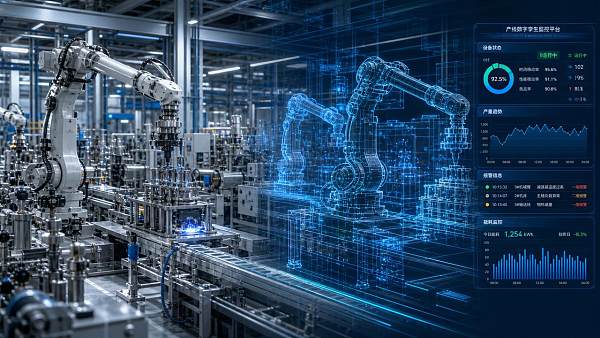
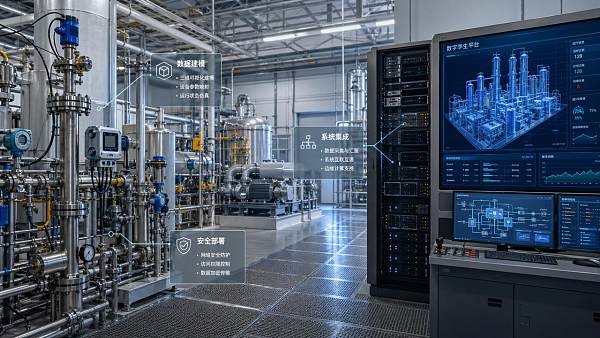
Digital twins are no longer just visualization assets. They are increasingly used to test equipment layouts, simulate bottlenecks, compare maintenance paths, and model how software interacts with physical systems.
For factory investment, that matters because early simulation can reveal hidden constraints before concrete is poured or a control system is locked in.
Supply-chain resilience is now designed into the plant
One of the strongest manufacturing trends is the shift from reactive sourcing to structural resilience. Companies are evaluating not only supplier cost, but also dual-source feasibility, export sensitivity, maintenance support, and lead-time volatility.
A factory built around a single hard-to-replace valve, bearing, or control platform may look optimized today while creating years of operational fragility.
Advanced materials are affecting more than product design
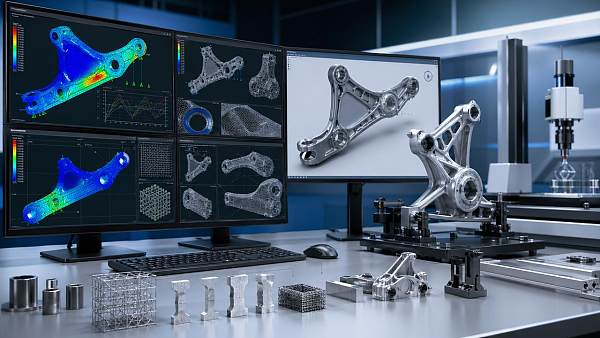
Material-led innovation is expanding upstream into plant engineering. Coatings, ceramics, composites, and specialty alloys influence corrosion resistance, thermal stability, wear life, and contamination control.
That means materials choices increasingly affect maintenance intervals, equipment qualification, and total lifecycle economics.
How these trends translate into business value
Not every trend deserves equal capital attention. The practical value of manufacturing trends comes from how they reduce uncertainty across the factory lifecycle.
The common thread is measurable confidence. Stronger factory investments usually come from decisions that improve performance while making future failure modes easier to predict and manage.
Where manufacturing trends show up first
Some of the clearest signals appear in technically demanding environments, where component performance and compliance requirements are tightly linked.
High-precision production lines
Semiconductor-adjacent operations reveal the sharpest version of these manufacturing trends. Subsystem drift, contamination, vibration, or thermal instability can quickly erase expected returns.
In such settings, equipment benchmarking against ISO, SEMI, ASME, and IEEE frameworks becomes more than documentation. It becomes a filter for investment quality.
Fluid and motion critical facilities
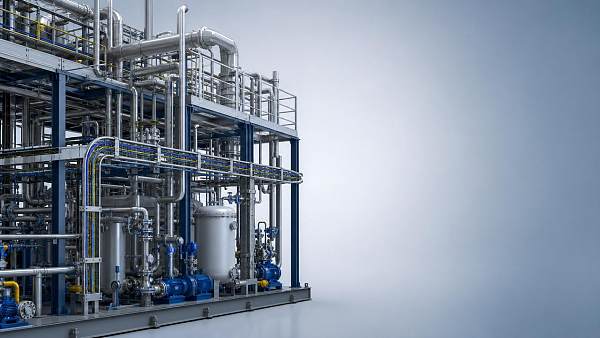
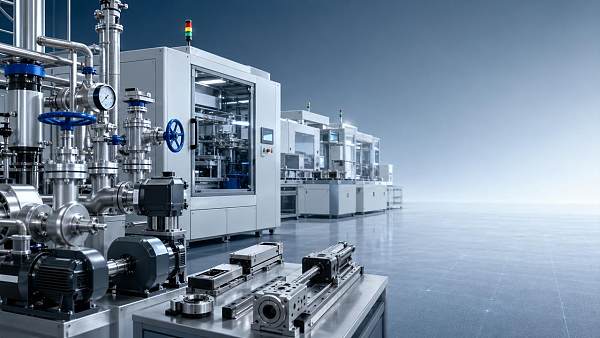
Chemical processing, energy infrastructure, advanced assembly, and clean manufacturing all depend on motion accuracy and fluid reliability. Pumps, valves, bearings, and control layers directly shape production stability.
Here, small design choices often influence safety, emissions control, maintenance access, and contamination risk.
Software-defined industrial environments
Factories with strong software orchestration are seeing faster gains from manufacturing trends because they can connect planning, monitoring, and maintenance in one operating model.
Still, digital maturity only adds value when sensor data, machine logic, and decision workflows are aligned. Otherwise, visibility increases without improving control.
What to examine before committing capital
A useful response to manufacturing trends is not to chase everything at once. It is to build a sharper screen for investment decisions.
- Check whether projected gains depend on a single supplier, proprietary interface, or restricted export route.
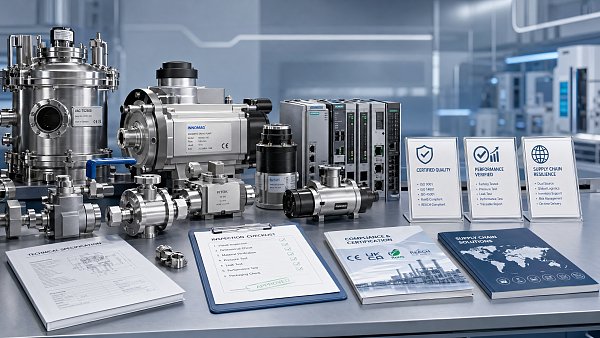
- Review standards alignment early, especially where uptime, safety, or cross-border acceptance matter.
- Test digital twin outputs against real maintenance conditions, not only ideal operating assumptions.
- Look at component-level reliability data, including wear behavior, contamination tolerance, and service intervals.
- Measure resilience in terms of recovery time and substitution options, not only inventory volume.
This is also where multidisciplinary intelligence matters. G-CST’s value lies in connecting technical benchmarking with tender visibility, regulatory updates, and supply-chain analysis across five industrial pillars.
That combination helps separate fashionable manufacturing trends from those supported by verifiable engineering and realistic procurement conditions.
A practical way to read 2026
The most important manufacturing trends for 2026 are not just about smarter factories. They are about building facilities that stay investable under technical, geopolitical, and operational pressure.
That means comparing technologies by evidence, not novelty. It means asking whether digital tools improve decisions, whether materials extend service life, and whether supply architecture can absorb disruption.
A sensible next step is to map current factory plans against a short list of criteria: standards readiness, subsystem reliability, software interoperability, and supply continuity. From there, the strongest manufacturing trends usually become easier to identify, prioritize, and act on with confidence.
Recommended News
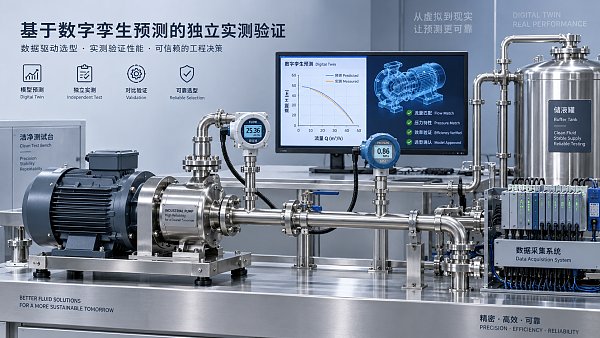
 Oct 13, 2026How to validate digital twin predictions before selecting equipmentCan digital twins be trusted for equipment selection? Learn how independent tests, uncertainty analysis, and performance margins validate predictions before you buy.
![]() Oct 14, 2026Can Digital Twins Be Trusted for Equipment Selection?Can digital twins be trusted for equipment selection? Discover how validated data, real-duty modeling, and failure analysis improve confident choices.
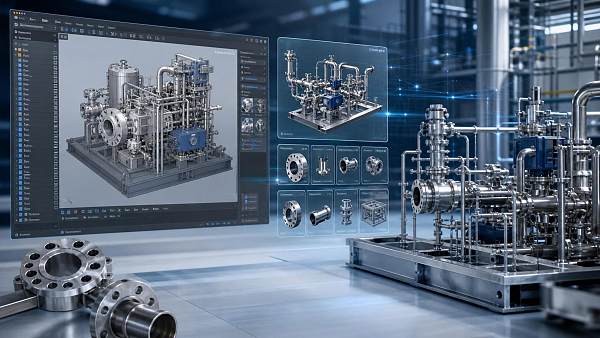
Oct 14, 2026Can Digital Twins Be Trusted for Equipment Selection?Can digital twins be trusted for equipment selection? Discover how validated data, real-duty modeling, and failure analysis improve confident choices. Jul 15, 2026Cloud Computer Aided Design CAD: When It Lowers Engineering ReworkCloud computer aided design CAD cuts engineering rework by improving revision control, supplier collaboration, and compliance traceability in complex projects. Learn where it delivers the biggest ROI.
 Jul 06, 2026Eco-Friendly Tourism Ideas That Balance Growth and Local ImpactEco-friendly tourism ideas that balance visitor growth with local impact. Explore practical strategies for cities, nature sites, and heritage areas to build sustainable, resilient destinations.
 Jul 03, 20263D Fashion Design Tools Compared for Faster Sample Approval3D fashion design tools compared for faster sample approval. Explore CLO, Browzwear, Style3D, and Optitex to cut review loops, improve team alignment, and choose the best-fit platform.
 Jun 21, 2026Agri-PV Systems: Key Site Factors That Decide ROIAgri-PV systems ROI starts with the right site. Discover how irradiance, crops, grid access, water, soil, and permitting shape returns and reduce project risk.
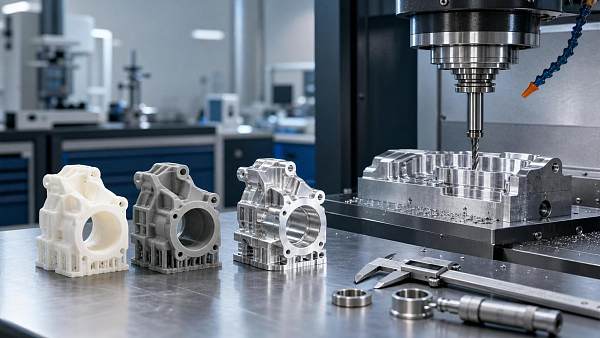
 Jun 18, 2026Rapid Prototyping vs CNC: Which Low-Volume Route Fits Better?Rapid prototyping or CNC for low-volume production? Compare speed, precision, cost, and risk to choose the best route for faster launches and stronger functional results.
![]() Jun 09, 2026Net Zero Energy in 2026: What Changes Project PlanningNet zero energy in 2026 is reshaping project planning from capex and procurement to controls and compliance. Learn what changes early, why it matters, and how to plan smarter.
Jun 09, 2026Net Zero Energy in 2026: What Changes Project PlanningNet zero energy in 2026 is reshaping project planning from capex and procurement to controls and compliance. Learn what changes early, why it matters, and how to plan smarter. Jun 08, 20262026 Manufacturing Trends Shaping Factory InvestmentManufacturing trends shaping 2026 factory investment: explore automation, digital twins, resilient supply chains, and materials strategies to reduce risk and improve returns.
![]() Jun 05, 2026Future of Metaverse in Industry: 2026 Use CasesFuture of metaverse in industry: explore 2026 use cases in digital twins, remote validation, immersive training, and compliance-driven collaboration shaping real industrial ROI.
Jun 05, 2026Future of Metaverse in Industry: 2026 Use CasesFuture of metaverse in industry: explore 2026 use cases in digital twins, remote validation, immersive training, and compliance-driven collaboration shaping real industrial ROI. May 28, 2026How to Evaluate Industrial AR/VR Training OEM ROI in 2026Industrial AR/VR training OEM ROI in 2026: use a practical checklist to compare costs, compliance, scalability, and performance gains for smarter enterprise investment decisions.
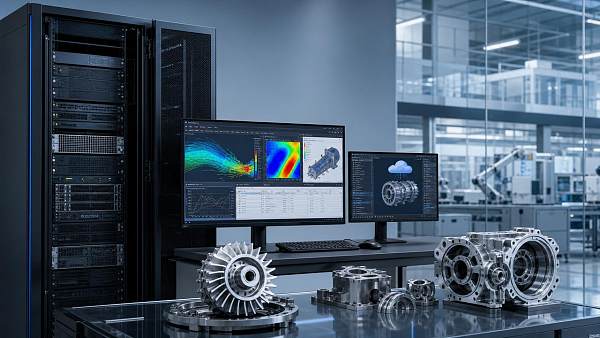
 May 26, 2026CAE Simulation Software Factory: Compare Speed vs CostCAE simulation software factory comparison guide: learn how to balance speed, cost, integration, and lifecycle value to choose a faster, lower-risk platform with confidence.
 May 26, 2026BIM Software for Industry OEM: What Scales Best?BIM software for industry OEM should scale beyond design. Learn how to compare platforms for integration, governance, compliance, and lifecycle value in complex industrial projects.
 May 24, 2026How to Evaluate a Digital Twin Platform Supplier in 2026Digital twin platform supplier evaluation in 2026: use a practical checklist to compare integration, security, scalability, and ROI before you choose.
 May 17, 2026Digital Twin for Pump Systems News: From Monitoring to ROIDigital twin for pump systems news reveals how predictive insight turns pump monitoring into lower energy costs, fewer failures, and measurable ROI across industrial operations.
 May 03, 2026Where Digital Twin Technology Solutions Deliver Value First on the Factory FloorDigital Twin Technology solutions deliver fastest ROI on the factory floor by reducing downtime, improving quality, and boosting throughput. See where manufacturers should start first.
 May 02, 2026Where Digital Twin Technology Improves Industrial Automation FirstDigital Twin Technology for industrial automation improves first where downtime, commissioning risk, and process variability are highest. See where teams gain faster ROI and smarter control.
 May 01, 2026What a Digital Twin Technology Supplier Should Deliver Before Full Plant RolloutDigital Twin Technology supplier selection starts with proof, not promises. Learn what to validate before full plant rollout to reduce risk, ensure integration, and scale with confidence.
 Apr 30, 2026How much CAE simulation accuracy data is enough to trust resultsCAE simulation accuracy data: learn how much evidence is enough to trust results. Discover a practical checklist for verification, realistic assumptions, and test correlation.
 Apr 30, 2026How AI is changing the value of digital twins in operationsImpact of AI on digital twins is reshaping operations with predictive insights, faster decisions, and lower risk. Discover how AI-driven twins improve reliability, uptime, and planning.
 Apr 30, 2026Future of metaverse in industry: where it may actually fitFuture of metaverse in industry: discover where immersive tools truly add value in digital twins, training, remote support, and asset oversight—and how to invest with less risk.
 Apr 27, 2026High-tech Procurement Intelligence Sourcing Is Shifting Beyond Price in 2026High-tech Procurement Intelligence sourcing in 2026 goes beyond price—compare SEMI Standards compliance, ISO Compliance Equipment custom, ASME Certified Components bulk order, and IEEE Compliant Systems OEM for lower risk and higher uptime.
![]() Apr 21, 2026Can Industrial Software Solutions Fix Bad Production Timing?Industrial Software Solutions reveal hidden timing losses, align Precision Motion Control, and accelerate Industrial Digitization—helping high-tech manufacturers improve throughput, quality, and delivery.
Apr 21, 2026Can Industrial Software Solutions Fix Bad Production Timing?Industrial Software Solutions reveal hidden timing losses, align Precision Motion Control, and accelerate Industrial Digitization—helping high-tech manufacturers improve throughput, quality, and delivery.![]() Apr 21, 2026When Digital Twin Technology Stops Matching Real OperationsDigital Twin Technology stops delivering value when real operations drift. Learn how Strategic Procurement, Reliability Engineering, and SEMI Standards reviews can reduce risk, improve uptime, and guide smarter industrial decisions.
Apr 21, 2026When Digital Twin Technology Stops Matching Real OperationsDigital Twin Technology stops delivering value when real operations drift. Learn how Strategic Procurement, Reliability Engineering, and SEMI Standards reviews can reduce risk, improve uptime, and guide smarter industrial decisions.