Search News
Industry Portal
Popular Tags
Where Digital Twin Technology Fails on the Factory Floor
Author
Time
Click Count
Digital twin technology does not usually fail on the factory floor because the idea is wrong. It fails because the model is cleaner than the plant, the data is weaker than the decisions built on it, and deployment teams underestimate how much standards, instrumentation, maintenance discipline, and material behavior shape real-world outcomes. For researchers and operators, the practical question is not “Is digital twin technology valuable?” but “Under what conditions is it trustworthy enough to support production, maintenance, and procurement decisions?”
For most searchers, the core intent behind this topic is diagnostic and practical: they want to understand why digital twins underperform after pilot success, where the hidden failure points are, and how to tell whether a deployment gap comes from software, sensors, process variability, supplier quality, or unrealistic expectations. They also want a decision framework they can use before investing more time or budget.
The most useful answer is therefore not a broad definition of digital twins. It is a factory-floor reality check: where models diverge from operations, why that happens across industrial software, chemical pumps, ceramic bearings, advanced materials, and automated production environments, and what must be verified before a twin is used for predictive maintenance, process optimization, or strategic procurement.
Where digital twin technology actually breaks down in production environments
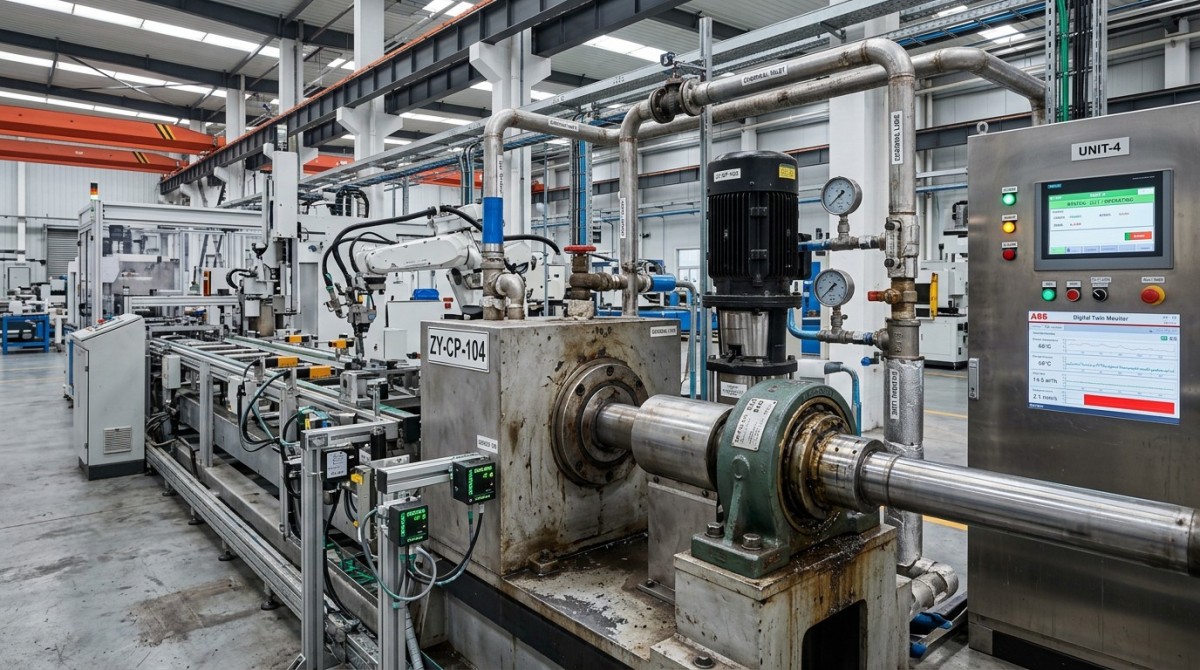
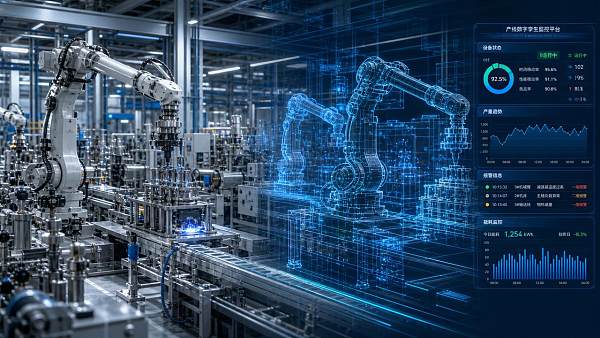
On the factory floor, digital twin technology most often fails at the interface between simulation assumptions and physical reality. In presentations, a digital twin appears as a continuous, high-fidelity mirror of equipment and process behavior. In production, it is usually a partial representation built on incomplete data, uneven sensor coverage, inconsistent maintenance records, and process conditions that shift faster than the model is updated.
This gap matters because industrial operations do not fail in abstract ways. They fail through wear, contamination, thermal drift, vibration, seal degradation, lubrication inconsistency, software latency, operator workarounds, undocumented parameter changes, and raw material variation. A digital twin that is blind to these mechanisms may still look mathematically elegant while producing decisions that are operationally unsafe or commercially misleading.
That is why deployment problems often appear in three stages:
- Pilot success: the model works in a narrow, controlled environment with clean data and close engineering oversight.
- Scale-up friction: multiple machines, lines, vendors, and maintenance conditions introduce variability the twin was not designed to absorb.
- Trust erosion: operators stop relying on the twin because recommendations no longer match observed equipment behavior.
In other words, digital twin technology fails less as a software concept than as an industrial reliability system that was never fully engineered for production complexity.
Why data quality is the first failure point, not the model itself
Many organizations blame the analytics layer when the deeper problem is poor industrial data quality. A factory-floor twin is only as good as the measurement chain behind it: sensors, calibration intervals, timestamp synchronization, historian integrity, communication protocols, and contextual tagging.
Common failure patterns include:
- Incomplete instrumentation: key process variables are not measured directly, so the model uses proxies.
- Dirty time-series data: missing values, drift, noise, and out-of-sequence records distort event reconstruction.
- Weak asset context: maintenance actions, part replacements, operator interventions, and batch changes are not linked to the data stream.
- Inconsistent naming and metadata: tags differ across lines, plants, or suppliers, making cross-site scaling unreliable.
- Low update discipline: the physical asset changes, but the digital twin assumptions do not.
For operators, this creates a practical problem: the twin may recommend action based on data that does not represent current machine state. For researchers and technical evaluators, it creates a validation problem: performance claims made in test conditions may not survive contact with live production histories.
This is especially serious in environments involving precision motion control, pump systems, semiconductor-adjacent manufacturing, or advanced engineering materials, where small deviations can create large downstream defects. If the data layer is weak, predictive control becomes predictive guesswork.
Why standards and interoperability issues quietly undermine deployment
Another major reason digital twin technology fails on the factory floor is that many implementations are built as isolated software projects rather than standards-grounded industrial systems. In high-consequence manufacturing, interoperability and compliance are not administrative details. They define whether a model can be trusted across equipment classes, suppliers, and audit requirements.
Where relevant, standards frameworks such as SEMI, ISO, ASME, and IEEE influence how equipment data is structured, how performance is benchmarked, and how operational assumptions are validated. If a digital twin ignores these frameworks, the result may be technically impressive but operationally non-transferable.
Typical weaknesses include:
- Proprietary data silos: equipment vendors expose only part of the machine state.
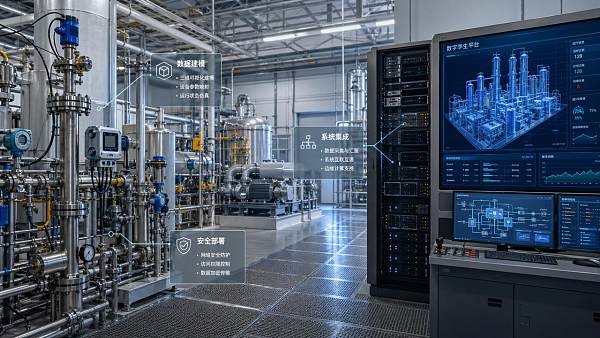
- Poor cross-system integration: MES, SCADA, PLC, CMMS, and historian systems do not align.
- Non-standard semantics: the same event or parameter is defined differently across suppliers.
- Weak traceability: engineering changes cannot be clearly tied to performance changes in the twin.
For strategic procurement teams, this matters because a digital twin platform that cannot integrate with plant reality creates lock-in risk, validation cost, and delayed return on investment. For end users, it means extra manual interpretation, more workarounds, and less confidence in recommendations.
Why physical wear, materials, and process drift are harder to model than vendors suggest
Factory-floor assets age in nonlinear ways. Bearings do not simply decline on a smooth curve. Chemical pumps do not respond identically across fluids, duty cycles, seal conditions, and contamination levels. Advanced engineering materials may behave differently under thermal cycling, abrasion, pressure changes, or chemical exposure than the original training data assumed.
This is where many digital twins become overly optimistic. They model nominal physics or historical averages but fail to capture the real degradation path of components under production stress.
Consider several examples:
- Ceramic bearings: excellent in specific high-speed, high-temperature, or corrosive contexts, but actual life depends on alignment, shock loading, lubrication regime, contamination control, and housing tolerances.
- Chemical pumps: pump health is shaped by fluid chemistry, cavitation risk, seal integrity, temperature, particulate load, and installation quality—not just runtime.
- Precision motion systems: micron-level performance can degrade through vibration, thermal expansion, encoder contamination, servo tuning changes, or mechanical backlash.
- Advanced materials in process lines: material substitution may pass specification review yet still alter wear rates, heat transfer, friction behavior, or corrosion resistance in unexpected ways.
A digital twin that does not continuously incorporate these real mechanisms may produce outputs that are directionally useful but not decision-grade. This distinction is crucial. Directional insight can help engineering teams investigate. Decision-grade confidence is what operators need before changing maintenance intervals, process windows, or spare-part strategies.
Why operator behavior and maintenance reality often invalidate the “perfect twin”
One of the least discussed failure points is human adaptation. Factory floors are dynamic social-technical systems. Operators compensate for equipment quirks, maintenance teams develop informal routines, and supervisors make judgment calls that are never fully documented in the data. These actions often keep production running, but they also weaken the correspondence between the digital model and the physical process.
Examples include:
- temporary parameter changes to recover yield,
- manual bypasses during sensor faults,
- partial repairs instead of full component replacement,
- unlogged consumable substitutions,
- different operator responses to the same alarm pattern.
From a modeling perspective, these are “exceptions.” From a plant perspective, they are normal operations. If the twin is built as though work is always executed exactly according to standard operating procedures, it will repeatedly diverge from reality.
This is why frontline trust is so important. When operators see the system miss obvious machine behavior, they stop engaging. Once that trust is lost, even valid recommendations may be ignored. Successful digital twin deployment therefore requires not only technical accuracy but also maintenance transparency, workflow integration, and feedback loops from actual users.
How to tell whether a digital twin is useful, misleading, or not yet mature enough
For information researchers and factory users, the most important practical question is how to evaluate a digital twin before relying on it. The following checks are more useful than generic claims about AI, simulation, or Industry 4.0 maturity.
1. Check whether the twin has a clear operational use case
A twin designed for visualization is not the same as one designed for predictive maintenance or process control. Ask what specific decision it supports, what error tolerance is acceptable, and what business or engineering consequence follows if it is wrong.
2. Verify the measurement chain
Review sensor placement, calibration discipline, data completeness, sampling frequency, and timestamp integrity. If the physical state is not measured well, the digital representation is structurally weak.
3. Demand failure-mode linkage
The twin should connect outputs to known failure mechanisms such as seal wear, vibration growth, thermal instability, contamination, corrosion, fatigue, or misalignment. If it only produces scores without physical explanation, be cautious.
4. Compare recommendations against maintenance history
If predicted issues do not align with actual work orders, inspections, or replaced components, investigate the mismatch. The problem may be the model, the data, or undocumented plant behavior.
5. Test under variability, not just ideal conditions
Ask whether the twin has been validated across shifts, product mixes, environmental conditions, raw material variation, and multiple equipment states. A model that works only in stable windows may not be robust enough for real operations.
6. Assess standards alignment and interoperability
Especially in regulated or precision manufacturing environments, check whether the system can work with existing industrial software frameworks and data architectures, and whether it supports traceability expectations relevant to ISO, SEMI, ASME, or IEEE-governed workflows.
7. Separate engineering insight from procurement claims
Vendor messaging may overstate autonomy, predictive certainty, or time-to-value. Procurement and technical teams should independently verify whether deployment assumptions match the plant’s actual instrumentation, maintenance maturity, and reliability requirements.
What organizations should do before expanding a factory-floor digital twin program
Before scaling a digital twin initiative, organizations should treat it as a reliability engineering and industrial data governance project, not just a software rollout. That means asking whether the plant is ready in operational terms.
A practical pre-scale checklist includes:
- Asset criticality mapping: identify which machines justify twin investment based on downtime cost, defect impact, safety, or maintenance burden.
- Failure-mode review: confirm that major degradation mechanisms are understood and measurable.
- Sensor and historian audit: fix coverage gaps and data integrity issues before expanding analytics.
- Standards and integration review: ensure compatibility with plant systems and reporting obligations.
- Operator feedback process: create a structured way for users to flag mismatches between the twin and equipment behavior.
- Validation governance: define who approves model changes, how performance is monitored, and when the twin should be withheld from decision-making.
This is also where material selection and component benchmarking matter. In sectors involving high-performance bearings, pumps, valves, precision motion systems, or advanced materials, digital twin outcomes are only as credible as the engineering assumptions tied to actual component quality and degradation behavior. If input assumptions about materials, tolerances, or supplier consistency are wrong, the model cannot compensate later.
Conclusion: digital twin technology fails when industrial reality is treated as optional
Digital twin technology can deliver real value on the factory floor, but only when it is grounded in reliable data, physical failure knowledge, standards-aware integration, and the lived reality of operators and maintenance teams. Most failures do not come from the concept itself. They come from using a partial, unvalidated, or poorly governed model as if it were a trusted representation of production truth.
For researchers, the key takeaway is to evaluate deployment claims through the lens of validation, interoperability, and failure-mode coverage. For operators and plant users, the practical rule is simpler: trust the twin only to the extent that it has proven alignment with actual equipment behavior under real plant conditions.
When precision manufacturing, advanced engineering materials, chemical handling systems, or reliability-critical automation are involved, simulation is never enough by itself. The real benchmark is whether the digital twin remains credible when exposed to drift, wear, contamination, maintenance variation, and production pressure. That is where factory-floor value is either earned or lost.
Recommended News
 Jun 18, 2026Rapid Prototyping vs CNC: Which Low-Volume Route Fits Better?Rapid prototyping or CNC for low-volume production? Compare speed, precision, cost, and risk to choose the best route for faster launches and stronger functional results.
![]() Jun 09, 2026Net Zero Energy in 2026: What Changes Project PlanningNet zero energy in 2026 is reshaping project planning from capex and procurement to controls and compliance. Learn what changes early, why it matters, and how to plan smarter.
Jun 09, 2026Net Zero Energy in 2026: What Changes Project PlanningNet zero energy in 2026 is reshaping project planning from capex and procurement to controls and compliance. Learn what changes early, why it matters, and how to plan smarter. Jun 08, 20262026 Manufacturing Trends Shaping Factory InvestmentManufacturing trends shaping 2026 factory investment: explore automation, digital twins, resilient supply chains, and materials strategies to reduce risk and improve returns.
![]() Jun 05, 2026Future of Metaverse in Industry: 2026 Use CasesFuture of metaverse in industry: explore 2026 use cases in digital twins, remote validation, immersive training, and compliance-driven collaboration shaping real industrial ROI.
Jun 05, 2026Future of Metaverse in Industry: 2026 Use CasesFuture of metaverse in industry: explore 2026 use cases in digital twins, remote validation, immersive training, and compliance-driven collaboration shaping real industrial ROI. May 28, 2026How to Evaluate Industrial AR/VR Training OEM ROI in 2026Industrial AR/VR training OEM ROI in 2026: use a practical checklist to compare costs, compliance, scalability, and performance gains for smarter enterprise investment decisions.
 May 26, 2026CAE Simulation Software Factory: Compare Speed vs CostCAE simulation software factory comparison guide: learn how to balance speed, cost, integration, and lifecycle value to choose a faster, lower-risk platform with confidence.
 May 26, 2026BIM Software for Industry OEM: What Scales Best?BIM software for industry OEM should scale beyond design. Learn how to compare platforms for integration, governance, compliance, and lifecycle value in complex industrial projects.
 May 24, 2026How to Evaluate a Digital Twin Platform Supplier in 2026Digital twin platform supplier evaluation in 2026: use a practical checklist to compare integration, security, scalability, and ROI before you choose.
 May 17, 2026Digital Twin for Pump Systems News: From Monitoring to ROIDigital twin for pump systems news reveals how predictive insight turns pump monitoring into lower energy costs, fewer failures, and measurable ROI across industrial operations.
 May 03, 2026Where Digital Twin Technology Solutions Deliver Value First on the Factory FloorDigital Twin Technology solutions deliver fastest ROI on the factory floor by reducing downtime, improving quality, and boosting throughput. See where manufacturers should start first.
 May 02, 2026Where Digital Twin Technology Improves Industrial Automation FirstDigital Twin Technology for industrial automation improves first where downtime, commissioning risk, and process variability are highest. See where teams gain faster ROI and smarter control.
 May 01, 2026What a Digital Twin Technology Supplier Should Deliver Before Full Plant RolloutDigital Twin Technology supplier selection starts with proof, not promises. Learn what to validate before full plant rollout to reduce risk, ensure integration, and scale with confidence.
 Apr 30, 2026How much CAE simulation accuracy data is enough to trust resultsCAE simulation accuracy data: learn how much evidence is enough to trust results. Discover a practical checklist for verification, realistic assumptions, and test correlation.
 Apr 30, 2026How AI is changing the value of digital twins in operationsImpact of AI on digital twins is reshaping operations with predictive insights, faster decisions, and lower risk. Discover how AI-driven twins improve reliability, uptime, and planning.
 Apr 30, 2026Future of metaverse in industry: where it may actually fitFuture of metaverse in industry: discover where immersive tools truly add value in digital twins, training, remote support, and asset oversight—and how to invest with less risk.
 Apr 27, 2026High-tech Procurement Intelligence Sourcing Is Shifting Beyond Price in 2026High-tech Procurement Intelligence sourcing in 2026 goes beyond price—compare SEMI Standards compliance, ISO Compliance Equipment custom, ASME Certified Components bulk order, and IEEE Compliant Systems OEM for lower risk and higher uptime.
![]() Apr 21, 2026Can Industrial Software Solutions Fix Bad Production Timing?Industrial Software Solutions reveal hidden timing losses, align Precision Motion Control, and accelerate Industrial Digitization—helping high-tech manufacturers improve throughput, quality, and delivery.
Apr 21, 2026Can Industrial Software Solutions Fix Bad Production Timing?Industrial Software Solutions reveal hidden timing losses, align Precision Motion Control, and accelerate Industrial Digitization—helping high-tech manufacturers improve throughput, quality, and delivery.![]() Apr 21, 2026When Digital Twin Technology Stops Matching Real OperationsDigital Twin Technology stops delivering value when real operations drift. Learn how Strategic Procurement, Reliability Engineering, and SEMI Standards reviews can reduce risk, improve uptime, and guide smarter industrial decisions.
Apr 21, 2026When Digital Twin Technology Stops Matching Real OperationsDigital Twin Technology stops delivering value when real operations drift. Learn how Strategic Procurement, Reliability Engineering, and SEMI Standards reviews can reduce risk, improve uptime, and guide smarter industrial decisions. Apr 21, 2026Where Digital Twin Technology Fails on the Factory FloorDigital Twin Technology fails when factory data, Reliability Engineering, and SEMI Standards fall short. Learn how Strategic Procurement, Ceramic Bearings, Chemical Pumps, and Industrial Automation Software affect real-world trust.