Search News
Industry Portal
Popular Tags
How much CAE simulation accuracy data is enough to trust results
Author
Time
Click Count
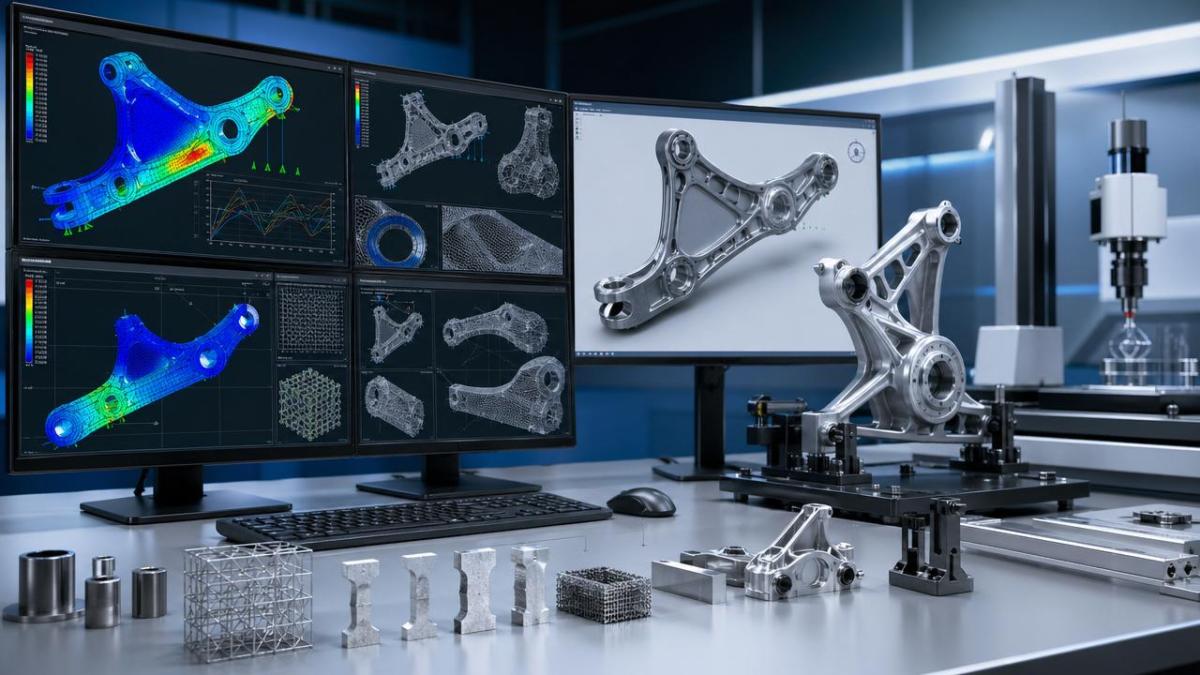
How much cae simulation accuracy data is enough to trust results? For technical evaluators, the answer determines whether a model can support procurement, design validation, or risk control. This article explains how to judge data sufficiency through verification depth, boundary-condition realism, material fidelity, and correlation with physical tests, helping you distinguish convincing simulation evidence from incomplete or misleading outputs.
Why a checklist is the fastest way to judge CAE simulation credibility
For technical evaluation teams, the problem is rarely whether CAE is useful. The real problem is whether the supplied cae simulation accuracy data is sufficient for the decision at hand. A simulation package may look polished, include colorful plots, and still fail to answer the essential procurement questions: Was the model verified? Were assumptions realistic? Does the result remain stable when loads, materials, or mesh settings change? Does it correlate with physical behavior under representative operating conditions?
A checklist approach is effective because trust in simulation is not built on one number. It comes from multiple layers of evidence. In multidisciplinary industries such as semiconductor equipment, pumps and valves, precision motion systems, industrial software, and advanced materials, simulation outputs often influence cost, qualification timing, reliability commitments, and warranty exposure. Evaluators need a practical framework that separates design insight from decision-grade proof.
First-pass checklist: what to confirm before reading any simulation result
Before reviewing stress maps, thermal contours, flow paths, or fatigue life predictions, confirm the following gate items. If several of these are missing, the cae simulation accuracy data is not yet strong enough to support a high-consequence decision.
- Clear decision purpose: confirm whether the simulation is intended for concept screening, detailed design validation, compliance support, failure investigation, or procurement comparison.
- Declared acceptance criteria: check whether the supplier defined pass/fail limits, not just relative improvements.
- Model scope boundaries: identify what was included, simplified, or excluded, such as fasteners, contact effects, thermal gradients, fluid-structure interaction, or control logic.
- Load case completeness: verify that nominal, peak, transient, startup, shutdown, and fault conditions were considered where relevant.
- Version traceability: ensure the geometry revision, solver version, material library, and input assumptions are controlled and documented.
- Correlation evidence: ask whether the model has been compared against test data, field data, benchmark cases, or published standards.
This first-pass screen saves time. It prevents evaluators from over-trusting simulation visuals that may not reflect the actual operating envelope.
Core judgment standard 1: verification depth must be visible, not implied
Verification asks whether the equations were solved correctly for the chosen model. Many vendors claim “high accuracy” without showing how numerical quality was established. Strong cae simulation accuracy data should include a visible verification trail.
The most important verification checks are mesh independence, solver convergence, contact stability, time-step adequacy for transient studies, and sensitivity to numerical settings. For example, if peak stress shifts sharply when the mesh is refined, then the reported maximum may not be decision-ready. If residuals converge but integrated quantities such as pressure drop, temperature rise, or displacement keep drifting, the model may still be numerically unstable in practice.
Technical evaluators should ask for at least one quantitative verification summary, not only screenshots. Useful evidence includes percentage change after mesh refinement, convergence criteria, energy balance error, mass conservation performance, or comparison with a handbook benchmark. The absence of this evidence is one of the clearest warning signs that simulation confidence is being overstated.
Core judgment standard 2: boundary conditions must resemble the real system
Boundary conditions often determine whether cae simulation accuracy data is meaningful or misleading. Even a mathematically clean model becomes unreliable if it assumes ideal supports, steady ambient conditions, uniform heat flux, or simplified inlet behavior that does not exist in service.
For procurement and design validation, pay close attention to how the simulation reflects installation constraints, preload, vibration sources, duty cycles, fluid contamination, thermal contact resistance, and operator-induced variations. In industrial equipment, interfaces matter: clamps, seals, bearings, couplings, and mounting frames can alter stress paths and dynamic response more than the core component geometry itself.
A practical test is to ask: if the real system shifts by 10% to 20% in operating condition, does the model still support the same conclusion? If not, the result may be too narrow for risk-based decision making.
Core judgment standard 3: material fidelity must match the failure mode being predicted
Material assumptions are a common weak point in cae simulation accuracy data. A linear elastic property set may be adequate for low-load stiffness checks, but it is insufficient for thermal cycling, creep, fatigue, wear, anisotropic composites, elastomer sealing, or ceramic brittleness assessments. Evaluators should match the material model to the question being answered.
Ask whether material data came from generic libraries, supplier datasheets, coupon tests, or production-lot characterization. Also confirm temperature dependence, strain-rate effects, moisture influence, porosity, coating behavior, and manufacturing-induced variability where relevant. In advanced engineering materials and high-precision components, a small mismatch in modulus, thermal expansion, or friction coefficient can materially change the reliability prediction.
Core judgment standard 4: correlation with test data is the trust multiplier
No matter how complete the model appears, physical correlation remains the strongest proof that cae simulation accuracy data is enough to trust. The key is not whether test data exists, but whether it is relevant, traceable, and interpreted correctly.
The best correlation practice links simulation outputs to measurable quantities under representative conditions: deflection, pressure loss, natural frequency, temperature, leak rate, deformation, fatigue crack initiation, or control response. One-point matching is weaker than trend matching across several load cases. If a model only aligns after arbitrary tuning without explanation, confidence should remain limited.
For technical evaluators, a useful decision rule is simple: the higher the consequence of the decision, the closer the test environment should be to the real use case. Concept screening may tolerate partial correlation. Final qualification should not.
Scenario guide: how much evidence is enough for different decisions
Not every application needs the same depth of cae simulation accuracy data. The required evidence depends on risk, cost of failure, and reversibility of the decision.
Commonly overlooked gaps that weaken simulation trust
- Only average results are shown while local hotspots, contact pressures, or transient peaks are hidden.
- Results are reported for ideal geometry, but manufacturing tolerances, misalignment, and assembly variation are not considered.
- The model predicts performance at beginning of life but ignores aging, fouling, wear, drift, corrosion, or thermal cycling.
- Physical tests are performed on a different configuration than the simulated design revision.
- Correlation is based on one successful case while contradictory cases are excluded without justification.
- Simulation claims are treated as equivalent to compliance proof without reference to ISO, SEMI, ASME, IEEE, or project-specific criteria.
These gaps are especially important in B2B evaluations where the downstream cost of error may include retrofit work, line stoppage, contamination risk, export requalification, or contractual disputes.
Execution advice: a practical review workflow for technical evaluators
If your team needs to assess cae simulation accuracy data efficiently, use a staged review process.
- Start with the decision context: define whether the simulation must justify selection, ranking, qualification, or root-cause judgment.
- Screen for completeness: collect model assumptions, revision history, load cases, material sources, and solver settings.
- Test numerical robustness: request mesh and convergence evidence for the most decision-critical output.
- Challenge realism: compare boundary conditions with actual operating, assembly, and environmental conditions.
- Check correlation quality: ask for test linkage by quantity, condition, and tolerance band.
- Document residual uncertainty: list what remains unknown and whether that uncertainty is acceptable for the business risk.
This process keeps the review objective. It also helps procurement, engineering, and quality teams speak the same language when weighing model evidence against schedule and budget pressure.
Questions to ask suppliers before accepting simulation-based claims
When simulation results are used to support a bid, a product claim, or a design change, ask targeted questions. These questions reveal whether the available cae simulation accuracy data is truly decision-grade:
- What specific decision is this model intended to support, and what decisions should it not be used for?
- Which assumptions most influence the output, and how sensitive are results to those assumptions?
- How was mesh independence or numerical stability demonstrated?
- Which physical tests or field measurements were used for correlation, and on which configuration revision?
- What operating extremes, fault cases, and degradation modes were excluded?
- What uncertainty range should be applied when using these results for procurement or reliability commitments?
Final decision rule: enough accuracy data means enough evidence for the risk level
There is no universal amount of cae simulation accuracy data that guarantees trust. The right threshold depends on consequence. For low-risk comparative studies, credible assumptions and basic verification may be enough. For qualification, warranty exposure, or mission-critical equipment, trust requires a chain of evidence: verified numerics, realistic boundary conditions, appropriate material models, and strong correlation with physical tests.
If your organization needs to move from simulation review to actionable evaluation, prioritize collecting five items first: the exact use case, the governing load cases, the material data source, the verification record, and the correlation plan. Those five inputs usually reveal whether the current evidence is sufficient, what risks remain open, and what additional testing or modeling should be requested before approval.
For deeper technical assessment, it is wise to align early on required standards, acceptable uncertainty bands, validation milestones, timeline constraints, and who owns the cost of extra testing. That conversation turns simulation from a persuasive graphic into a reliable engineering decision tool.
Recommended News
 Jun 18, 2026Rapid Prototyping vs CNC: Which Low-Volume Route Fits Better?Rapid prototyping or CNC for low-volume production? Compare speed, precision, cost, and risk to choose the best route for faster launches and stronger functional results.
![]() Jun 09, 2026Net Zero Energy in 2026: What Changes Project PlanningNet zero energy in 2026 is reshaping project planning from capex and procurement to controls and compliance. Learn what changes early, why it matters, and how to plan smarter.
Jun 09, 2026Net Zero Energy in 2026: What Changes Project PlanningNet zero energy in 2026 is reshaping project planning from capex and procurement to controls and compliance. Learn what changes early, why it matters, and how to plan smarter. Jun 08, 20262026 Manufacturing Trends Shaping Factory InvestmentManufacturing trends shaping 2026 factory investment: explore automation, digital twins, resilient supply chains, and materials strategies to reduce risk and improve returns.
![]() Jun 05, 2026Future of Metaverse in Industry: 2026 Use CasesFuture of metaverse in industry: explore 2026 use cases in digital twins, remote validation, immersive training, and compliance-driven collaboration shaping real industrial ROI.
Jun 05, 2026Future of Metaverse in Industry: 2026 Use CasesFuture of metaverse in industry: explore 2026 use cases in digital twins, remote validation, immersive training, and compliance-driven collaboration shaping real industrial ROI. May 28, 2026How to Evaluate Industrial AR/VR Training OEM ROI in 2026Industrial AR/VR training OEM ROI in 2026: use a practical checklist to compare costs, compliance, scalability, and performance gains for smarter enterprise investment decisions.
 May 26, 2026CAE Simulation Software Factory: Compare Speed vs CostCAE simulation software factory comparison guide: learn how to balance speed, cost, integration, and lifecycle value to choose a faster, lower-risk platform with confidence.
 May 26, 2026BIM Software for Industry OEM: What Scales Best?BIM software for industry OEM should scale beyond design. Learn how to compare platforms for integration, governance, compliance, and lifecycle value in complex industrial projects.
 May 24, 2026How to Evaluate a Digital Twin Platform Supplier in 2026Digital twin platform supplier evaluation in 2026: use a practical checklist to compare integration, security, scalability, and ROI before you choose.
 May 17, 2026Digital Twin for Pump Systems News: From Monitoring to ROIDigital twin for pump systems news reveals how predictive insight turns pump monitoring into lower energy costs, fewer failures, and measurable ROI across industrial operations.
 May 03, 2026Where Digital Twin Technology Solutions Deliver Value First on the Factory FloorDigital Twin Technology solutions deliver fastest ROI on the factory floor by reducing downtime, improving quality, and boosting throughput. See where manufacturers should start first.
 May 02, 2026Where Digital Twin Technology Improves Industrial Automation FirstDigital Twin Technology for industrial automation improves first where downtime, commissioning risk, and process variability are highest. See where teams gain faster ROI and smarter control.
 May 01, 2026What a Digital Twin Technology Supplier Should Deliver Before Full Plant RolloutDigital Twin Technology supplier selection starts with proof, not promises. Learn what to validate before full plant rollout to reduce risk, ensure integration, and scale with confidence.
 Apr 30, 2026How much CAE simulation accuracy data is enough to trust resultsCAE simulation accuracy data: learn how much evidence is enough to trust results. Discover a practical checklist for verification, realistic assumptions, and test correlation.
 Apr 30, 2026How AI is changing the value of digital twins in operationsImpact of AI on digital twins is reshaping operations with predictive insights, faster decisions, and lower risk. Discover how AI-driven twins improve reliability, uptime, and planning.
 Apr 30, 2026Future of metaverse in industry: where it may actually fitFuture of metaverse in industry: discover where immersive tools truly add value in digital twins, training, remote support, and asset oversight—and how to invest with less risk.
 Apr 27, 2026High-tech Procurement Intelligence Sourcing Is Shifting Beyond Price in 2026High-tech Procurement Intelligence sourcing in 2026 goes beyond price—compare SEMI Standards compliance, ISO Compliance Equipment custom, ASME Certified Components bulk order, and IEEE Compliant Systems OEM for lower risk and higher uptime.
![]() Apr 21, 2026Can Industrial Software Solutions Fix Bad Production Timing?Industrial Software Solutions reveal hidden timing losses, align Precision Motion Control, and accelerate Industrial Digitization—helping high-tech manufacturers improve throughput, quality, and delivery.
Apr 21, 2026Can Industrial Software Solutions Fix Bad Production Timing?Industrial Software Solutions reveal hidden timing losses, align Precision Motion Control, and accelerate Industrial Digitization—helping high-tech manufacturers improve throughput, quality, and delivery.![]() Apr 21, 2026When Digital Twin Technology Stops Matching Real OperationsDigital Twin Technology stops delivering value when real operations drift. Learn how Strategic Procurement, Reliability Engineering, and SEMI Standards reviews can reduce risk, improve uptime, and guide smarter industrial decisions.
Apr 21, 2026When Digital Twin Technology Stops Matching Real OperationsDigital Twin Technology stops delivering value when real operations drift. Learn how Strategic Procurement, Reliability Engineering, and SEMI Standards reviews can reduce risk, improve uptime, and guide smarter industrial decisions. Apr 21, 2026Where Digital Twin Technology Fails on the Factory FloorDigital Twin Technology fails when factory data, Reliability Engineering, and SEMI Standards fall short. Learn how Strategic Procurement, Ceramic Bearings, Chemical Pumps, and Industrial Automation Software affect real-world trust.