Search News
Industry Portal
Popular Tags
IIoT Gateway Wholesale: Key Cost and Compatibility Checks
Author
Time
Click Count
For procurement teams evaluating iiot gateway wholesale options, cost alone is never the full picture. Compatibility with industrial protocols, legacy equipment, cybersecurity standards, and long-term integration requirements can determine whether a purchase delivers value or creates operational risk. This guide explains the key checks that matter before committing to iiot gateway wholesale for scalable industrial use.
What should be included in the true cost of iiot gateway wholesale?
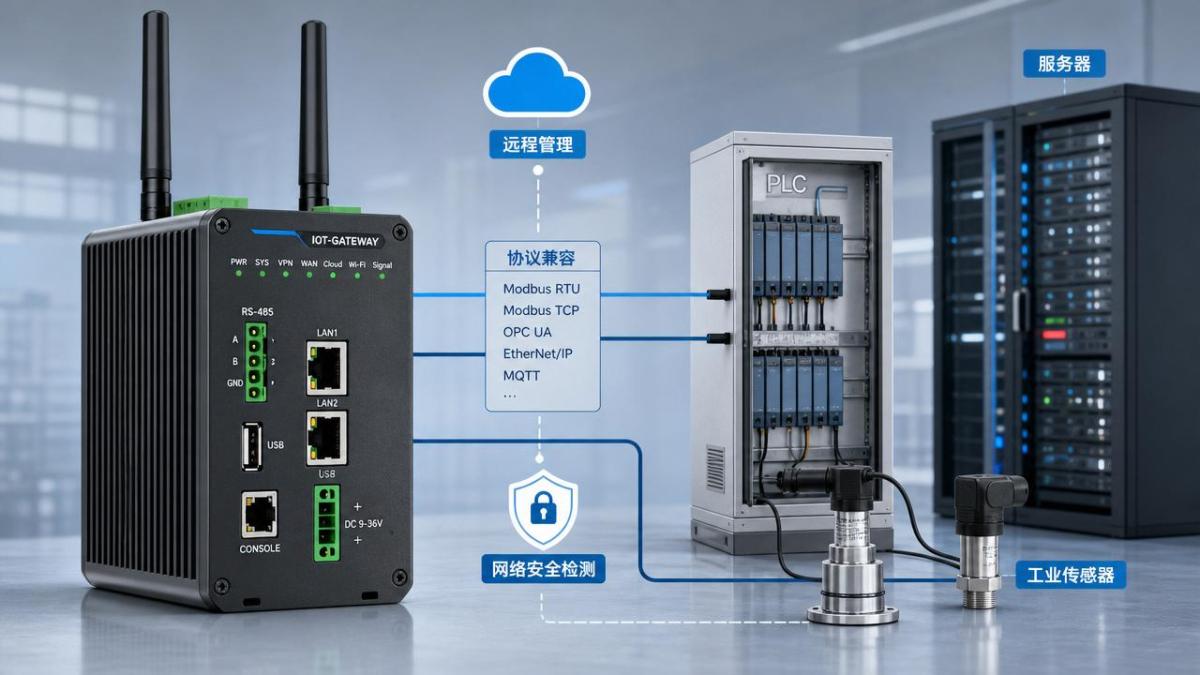
The visible unit price is only one layer in iiot gateway wholesale evaluation. The more important number is total lifecycle cost across deployment, integration, maintenance, and replacement risk.
A low-cost gateway may require expensive protocol converters, custom drivers, or field engineering hours. That turns a cheap hardware order into a costly integration project.
Buyers should separate cost into five categories. This makes supplier comparisons more accurate and easier to defend internally.
- Hardware cost: gateway price, antennas, power modules, mounting kits, and accessories.
- Software cost: licenses, cloud connectors, device management, and edge analytics features.
- Integration cost: protocol mapping, API work, PLC connection, and SCADA or MES adaptation.
- Security cost: certificates, patch management, VPN setup, and compliance documentation.
- Support cost: warranty, spare units, firmware updates, and regional technical response.
In industrial settings, downtime often exceeds device price by a wide margin. A gateway that fails in a critical line can create losses far beyond initial procurement savings.
When reviewing iiot gateway wholesale quotes, ask whether the price includes onboarding tools, documentation quality, and certified compatibility. Those items frequently reduce commissioning time.
How do you verify protocol and system compatibility before placing a wholesale order?
Compatibility is often the deciding factor in iiot gateway wholesale success. Industrial environments rarely operate on a single standard or generation of equipment.
A gateway may support Ethernet and still fail the real test. The real question is whether it supports the exact protocols, versions, data models, and timing needs on site.
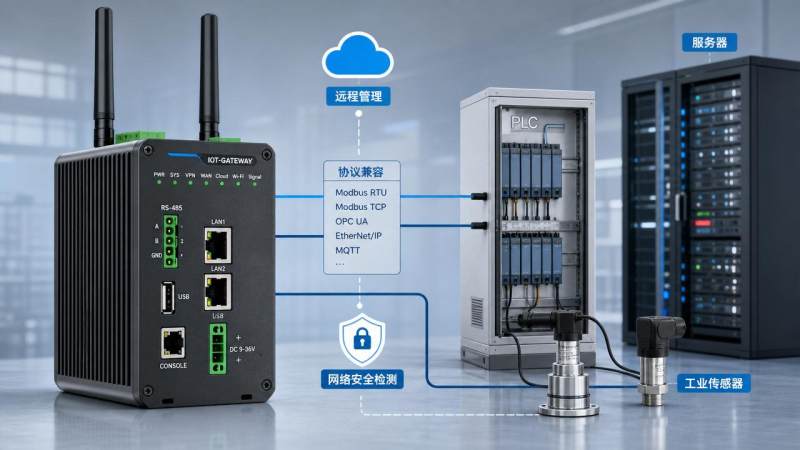
Check protocol support across operational technology and information technology layers. Common industrial requirements include Modbus RTU, Modbus TCP, OPC UA, PROFINET, EtherNet/IP, BACnet, and MQTT.
Legacy environments deserve special attention. Serial devices, custom registers, and older PLC families may require driver validation before bulk purchase approval.
Compatibility checks should cover more than communications. They should also include electrical, environmental, and software integration points.
- Confirm supported protocols and exact firmware versions.
- Verify serial ports, I/O, SIM options, and network interfaces.
- Review API availability for ERP, MES, SCADA, and digital twin platforms.
- Check edge processing capacity for filtering, buffering, and local rules.
- Request a pilot test using actual field devices and data points.
For organizations operating across multiple plants, standardizing a narrower gateway portfolio simplifies training, spare stocking, cybersecurity governance, and remote maintenance.
Which technical specifications matter most for industrial deployment?
Specifications should be judged against the application, not the brochure. In iiot gateway wholesale, the best device is the one that matches data load, environment, and uptime expectations.
Processing power matters when the gateway performs edge analytics, protocol conversion, encryption, or local alarming. Basic telemetry forwarding needs less compute.
Memory and storage become important during network outages. Buffering must preserve data until the cloud, historian, or supervisory system reconnects.
Environmental resilience is another key checkpoint. Industrial sites may involve vibration, dust, electromagnetic noise, high humidity, or wide temperature swings.
Review these specification categories before final iiot gateway wholesale approval:
- CPU, RAM, and local storage for edge workloads.
- Port types such as RS-232, RS-485, USB, LAN, DI, and DO.
- 5G, 4G, Wi-Fi, Bluetooth, or wired backhaul options.
- Ingress protection, shock resistance, and operating temperature range.
- Dual power input, watchdog functions, and failover support.
Certifications also influence deployment confidence. Depending on the environment, review CE, FCC, UL, IEC, RoHS, or sector-specific industrial compliance requirements.
A specification sheet should never replace field validation. Test under realistic loads, especially when gateways connect many endpoints or compress large data volumes.
How should cybersecurity and remote management be assessed?
Cybersecurity is not an optional feature in iiot gateway wholesale. A gateway sits between operational assets and enterprise or cloud systems, making it a high-value control point.
Security evaluation should begin with device identity, encrypted communication, access control, and update mechanisms. Missing basics can create exposure across the whole network.
Important questions include whether the device supports secure boot, signed firmware, TLS, VPN, certificate-based authentication, and role-based user permissions.
Remote fleet management matters just as much. Wholesale deployments can involve dozens or hundreds of gateways across sites, regions, or contractors.
Look for centralized tools that support:
- Device enrollment and configuration templates.
- Over-the-air firmware updates with rollback options.
- Security event logging and alert visibility.
- Health monitoring for signal quality, CPU use, and storage.
- Lifecycle control for decommissioning or credential rotation.
If a supplier cannot explain patch cadence and vulnerability handling, iiot gateway wholesale risk rises quickly. Industrial uptime depends on both security strength and maintenance discipline.
What common mistakes increase risk in iiot gateway wholesale projects?
Many failures start with assumptions. Decision teams often assume one gateway can fit every line, region, and protocol stack without performance trade-offs.
Another common mistake is evaluating only current use cases. Future expansions may require additional tags, analytics, cloud services, or stricter segmentation policies.
The following issues regularly create preventable cost and delay:
- Skipping pilot testing with real controllers and sensors.
- Ignoring legacy protocol edge cases and driver limitations.
- Choosing gateways without long-term firmware support.
- Underestimating installation labor and enclosure needs.
- Failing to align gateway data models with enterprise systems.
Supply continuity should also be checked. In volatile electronics markets, availability, lead time, and component change control are part of practical compatibility.
A technically capable device can still become a weak choice if the supplier lacks stable production, regulatory transparency, or support coverage.
What is a practical checklist for comparing iiot gateway wholesale options?
A structured comparison table helps convert broad technical claims into practical selection criteria. It also supports consistent evaluation across multiple vendors.
A useful shortlisting method is to score each gateway against site-specific priorities. Weight compatibility and support more heavily than list price where uptime is critical.
How can buyers move from evaluation to a reliable rollout plan?
After selecting iiot gateway wholesale candidates, the next step is controlled validation. Begin with a pilot covering one representative line, one legacy asset group, and one target software platform.
Measure installation time, data integrity, latency, buffering behavior, and remote update performance. These results often reveal hidden differences between similar devices.
Then define a rollout package that includes approved firmware, hardened settings, wiring standards, labeling rules, and support escalation paths.
For multi-site programs, a benchmark-driven approach helps reduce procurement risk. Organizations such as G-CST support this process by connecting verifiable engineering data, standards alignment, and supply-chain intelligence.
The strongest iiot gateway wholesale decision balances price, interoperability, security, and lifecycle support. A disciplined checklist today prevents fragmented architectures and expensive rework later.
As a next step, build a comparison matrix using your actual protocols, environmental conditions, and integration targets. Then validate the shortlist with a pilot before final volume commitment.
Recommended News
 Oct 18, 2026How to reduce nuisance alarms in water treatment SCADA systemsOptimize SCADA systems for water treatment. Discover proven ways to reduce nuisance alarms, tune alarm logic, and improve operator focus without compromising treatment safeguards.
 Oct 15, 2026Can digital manufacturing solutions work with legacy factory PLCs?Explore digital manufacturing solutions for factories that work with legacy PLCs. Learn how to assess connectivity, data quality, and security before investing in integration.
 Oct 14, 2026Why Does SCADA Data Differ from Field Device Readings?Why does SCADA data fail to match field device readings? Discover common scaling, timing, and communication errors, plus practical checks to pinpoint mismatches and avoid unnecessary calibration.
 Oct 03, 2026How IoT integration for smart agriculture reduces irrigation wasteIoT integration for smart agriculture cuts irrigation waste with soil, weather, flow, and pressure data—helping farms automate smarter watering and detect leaks early.
 Sep 24, 2026How Zigbee mesh latency affects smart hotel guest room controlsSmart hotel Zigbee mesh latency can shape guest comfort and system reliability. Learn how to design, test, and optimize responsive hotel room controls.
![]() Oct 15, 2026How Much Does Industrial Automation Software Implementation Cost?How much does industrial automation software implementation cost? Explore project pricing, key cost drivers, hidden expenses, and smart budgeting strategies.
Oct 15, 2026How Much Does Industrial Automation Software Implementation Cost?How much does industrial automation software implementation cost? Explore project pricing, key cost drivers, hidden expenses, and smart budgeting strategies. Sep 11, 2026How edge processing latency affects real-time SCADA alarmsEdge processing latency can make or break real-time SCADA alarms. Learn how to benchmark delay, improve alarm integrity, and build resilient response paths.
 Sep 09, 2026How energy management analytics uncovers avoidable peak-demand costsEnergy management analytics reveals avoidable peak-demand costs, identifies controllable load spikes, and helps finance teams cut utility charges with confidence.
 Aug 31, 2026How SCADA data polling frequency affects alarm response timeSCADA data polling frequency directly shapes alarm response time. Learn how scan rates, latency, delays, and network behavior affect reliable detection.
 Aug 29, 2026When open source industrial OPC UA is the right fit for SCADA integrationOpen source industrial OPC UA for SCADA integration: explore interoperability, security, lifecycle ownership, and evaluation steps for scalable multi-vendor operations.
 Aug 12, 2026How to Scope an Industrial Cybersecurity Risk Assessment for SCADA and IIoT SystemsIndustrial cybersecurity risk assessment for SCADA and IIoT starts with the right scope. Learn how to define boundaries, map consequences, and uncover hidden attack paths.
 Aug 06, 2026How to Evaluate Data Historian Software for Automation Integration and ScalingData historian software for automation: learn how to evaluate integration, scalability, data integrity, and security to choose a platform that supports growth and smarter decisions.
 Jul 31, 2026How Smart Hotel AI Helps Reduce Energy Costs Without Hurting Guest ExperienceSmart hotel AI helps hotels cut energy costs by controlling HVAC, lighting, and occupancy-based settings—without hurting guest comfort. Learn what to check before you buy.
 Jul 30, 2026How Industrial Digitization for Electronics Cuts Downtime in High-Mix ProductionIndustrial Digitization for electronics helps high-mix manufacturers cut downtime by improving changeovers, traceability, maintenance response, and line decisions. Learn where digital tools deliver the fastest ROI.
 Jul 22, 2026Supply Chain Resilience Risk Management: Key Metrics and Response PlansSupply Chain Resilience risk management explained with key metrics, scenario-based thresholds, and response plans to reduce disruption, qualification delays, and hidden supply risk.
 Jul 15, 2026Energy Software for Manufacturing Plants: Cost Savings vs Integration RiskEnergy software for manufacturing plants can cut utility waste, but only if savings outweigh integration risk. Learn how to evaluate ROI, data quality, cybersecurity, and rollout fit.
 Jul 14, 2026Fintech in 2026: Which Operating Trends Matter Most for Growth PlanningFintech in 2026 is shifting from rapid expansion to governed scale. Explore the key trends shaping growth planning, from embedded finance and AI risk controls to resilience and compliance.
 Jul 13, 2026When Data Historian Software for Manufacturing Delivers ROIData historian software for manufacturing delivers ROI by reducing downtime, improving quality, and speeding compliance. See how to evaluate value before you buy.
 Jul 13, 20265G IIoT Gateway Wholesale: Key Specs That Affect Deployment Cost5g iiot gateway wholesale decisions should go beyond unit price. Learn which specs cut deployment cost, reduce integration risk, and improve long-term industrial ROI.
 Jul 11, 2026SCADA Systems in the Middle East: Key Compliance and Integration ChecksSCADA Systems Middle East projects need more than features. Discover key compliance, cybersecurity, and integration checks to reduce risk, protect uptime, and choose the right platform.
 Jul 09, 2026Industrial Technology Platform Pricing: What Drives Total Cost Beyond the LicenseIndustrial technology platform pricing goes far beyond the license. Learn the hidden cost drivers—integration, compliance, scalability, and support—to make smarter buying decisions.
 Jul 09, 2026Industrial Standards Compliance for Electronics: Key Gaps That Delay Market AccessIndustrial standards compliance for electronics often stalls market access due to hidden gaps in testing, traceability, supplier records, and regional rules. Learn how to spot risks early and accelerate certification.
 Jul 08, 2026IT Infrastructure Gaps That Slow Industrial GrowthIT infrastructure gaps can quietly slow industrial growth, raise risk, and weaken supply chains. Learn which issues matter most and how to fix them for faster, smarter scaling.
 Jul 06, 2026Open Source Industrial SCADA: Key Risks, Benefits, and FitOpen source industrial SCADA: explore key benefits, cybersecurity risks, costs, and best-fit use cases to see if it can support reliable, scalable industrial operations.