Search News
Industry Portal
Popular Tags
IT Infrastructure Gaps That Slow Industrial Growth

Author
Time
Click Count
IT Infrastructure Gaps That Slow Industrial Growth

Industrial growth now depends on digital stability as much as physical capacity. Plants, suppliers, and engineering teams move faster when IT infrastructure supports real-time decisions.
Yet many companies still run on fragmented platforms, aging networks, and weak system integration. These IT infrastructure gaps quietly slow expansion before leaders see obvious operational failure.
The cost is rarely limited to downtime. It shows up in delayed product launches, inconsistent quality, slower procurement cycles, and rising exposure across global supply chains.
In practical terms, weak IT infrastructure limits how well industrial businesses scale, adapt, and compete. That makes infrastructure quality a board-level growth issue, not just an internal technology matter.
The first step is to identify which gaps create the biggest drag. The next is to fix them in a sequence that supports both resilience and growth.
Why IT Infrastructure Matters More in Industrial Expansion
Industrial operations have become deeply data-driven. Production planning, predictive maintenance, inventory balancing, and compliance reporting all depend on reliable IT infrastructure.
From recent market shifts, one pattern stands out. Companies adding automation often discover that old systems cannot support higher volumes of machine, process, and supplier data.
That mismatch creates bottlenecks. A modern production asset may run at full design speed, while decisions around it still depend on spreadsheets, manual handoffs, or disconnected dashboards.
This also means growth capital can underperform. New facilities, software, and advanced equipment produce weaker returns when the underlying IT infrastructure cannot connect workflows end to end.
The Hidden Effect on Strategic Speed
Industrial leaders often focus on capacity, cost, and output. But strategic speed depends on how quickly data moves across engineering, operations, procurement, and supplier management.
If IT infrastructure is weak, each function reacts late. Forecast changes take longer to reflect in sourcing, quality alerts travel slowly, and risk signals arrive after disruption has spread.
The Most Common IT Infrastructure Gaps Slowing Growth
Not every gap has the same business impact. In industrial environments, several patterns repeatedly block expansion, digital maturity, and supply-chain responsiveness.
- Legacy systems that cannot integrate with MES, ERP, SCADA, or digital twin platforms.
- Limited network reliability across plants, warehouses, and remote industrial sites.
- Poor data governance, creating inconsistent records across operations and procurement.
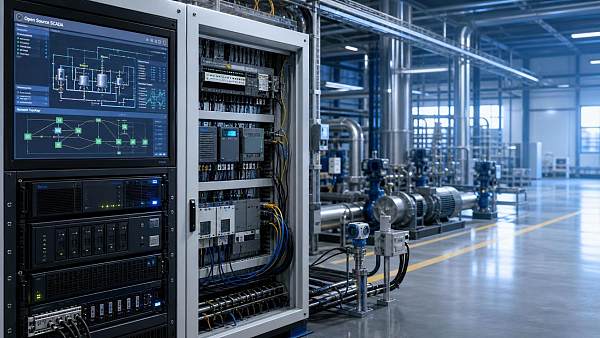
- Weak cybersecurity controls around industrial control systems and supplier access points.
- Insufficient cloud and edge architecture for real-time visibility and scaling.
- Slow reporting infrastructure that delays action on quality, maintenance, and inventory issues.
These weaknesses rarely stay isolated. One gap in IT infrastructure usually amplifies another, especially where industrial assets, software, and multi-region suppliers must work together.
Fragmented Systems and Data Silos
Data silos remain one of the biggest barriers to industrial growth. Engineering data, maintenance logs, supplier status, and cost data often sit in separate platforms.
As a result, teams make decisions with partial visibility. They spend more time validating information than acting on it, which slows both operations and investment decisions.
Outdated Network and Compute Foundations
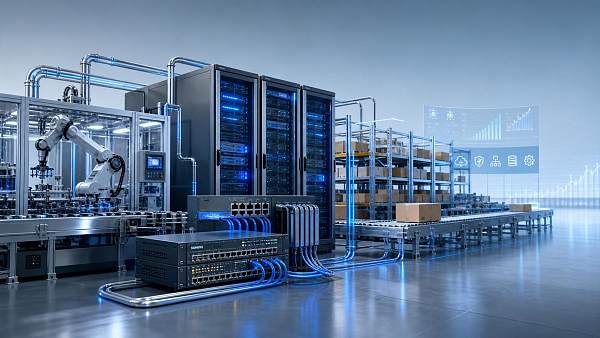
Industrial automation increases demand on networks, storage, and processing layers. Older IT infrastructure often struggles with sensor density, video monitoring, and analytics traffic.
When latency rises or network resilience drops, digital tools lose credibility. Operators fall back to manual workarounds, and the business loses the benefits of its technology investments.
How Weak IT Infrastructure Increases Operational Risk
The business case for better IT infrastructure is not only about speed. It is also about controlling risk in environments where failure can affect quality, safety, compliance, and customer trust.
A disconnected infrastructure makes it harder to trace product history, validate process changes, or respond to unexpected supply disruption. That weakens resilience exactly when it matters most.
Cybersecurity Exposure in Industrial Environments
As operational technology and enterprise systems converge, the attack surface expands. Many companies still rely on aging controls that were never designed for connected industrial ecosystems.
In practice, weak IT infrastructure increases the chance of ransomware, unauthorized remote access, and supplier-linked vulnerabilities. Recovery costs can quickly exceed the original modernization budget.
Compliance and Audit Challenges
Industrial sectors face strict expectations around traceability, uptime, quality management, and technical documentation. Gaps in IT infrastructure make those controls harder to prove and maintain.
That matters for regulated supply chains and high-value procurement. If records are inconsistent or access controls are weak, audits become slower and contract confidence declines.
What Decision-Makers Should Assess First
Before launching a full modernization program, start with a focused assessment. The goal is to locate the IT infrastructure constraints that directly affect growth, continuity, and investment returns.
- Map critical business processes from supplier input to production output and customer delivery.
- Identify where systems break visibility, slow decisions, or require manual reconciliation.
- Measure infrastructure performance against uptime, latency, recovery, and security requirements.
- Review whether data architecture supports analytics, forecasting, and digital operations at scale.
- Rank gaps by business impact, not by technical inconvenience alone.
This approach keeps the discussion tied to operational outcomes. It also helps distinguish urgent infrastructure weaknesses from lower-priority technical debt.
A Simple Prioritization View
Practical Ways to Close IT Infrastructure Gaps
Effective modernization does not require replacing everything at once. The strongest programs improve IT infrastructure in layers, starting with the areas that unlock visibility and reduce risk fastest.
Build a Unified Data Foundation
Connect core industrial systems so operational, maintenance, and supplier data can be trusted across functions. This creates the baseline for better planning, analytics, and digital execution.
Strengthen Network and Recovery Design
Review plant connectivity, redundancy, and disaster recovery against actual business continuity needs. Industrial growth requires IT infrastructure that remains stable under volume, disruption, and cyber stress.
Secure the OT-IT Boundary
Segment networks, tighten identity controls, and audit vendor access. These steps reduce avoidable exposure while supporting the connected workflows modern industry now depends on.
Modernize with Standards and Measurable Benchmarks
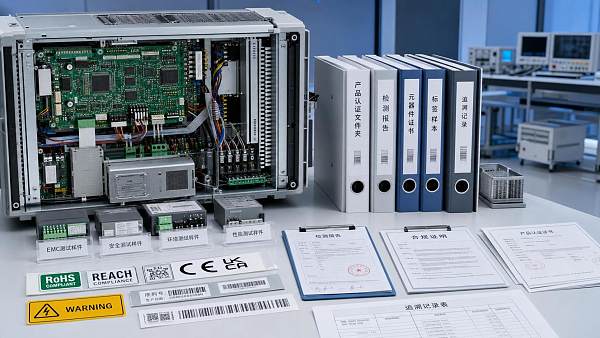
Benchmark infrastructure decisions against recognized industrial and technical standards. That improves procurement quality and makes system upgrades easier to defend internally.
In sectors shaped by precision, reliability, and cross-border sourcing, trusted benchmarking matters. Verifiable technical data helps organizations compare options with less guesswork and lower execution risk.
Turning IT Infrastructure Into a Growth Enabler
Industrial growth slows when IT infrastructure is treated as background support. It accelerates when infrastructure is managed as a strategic capability tied to resilience, productivity, and investment quality.
The clearer signal today is that digital readiness shapes industrial competitiveness. Companies with stronger IT infrastructure adapt faster, scale more confidently, and respond to disruption with less friction.
A useful next move is simple. Audit the gaps that slow visibility, expose operations, and weaken coordination across plants and suppliers, then prioritize the fixes with the highest business return.
That is how IT infrastructure stops being a hidden constraint and starts becoming a practical engine for industrial growth.
Recommended News
 Oct 18, 2026How to reduce nuisance alarms in water treatment SCADA systemsOptimize SCADA systems for water treatment. Discover proven ways to reduce nuisance alarms, tune alarm logic, and improve operator focus without compromising treatment safeguards.
 Oct 15, 2026Can digital manufacturing solutions work with legacy factory PLCs?Explore digital manufacturing solutions for factories that work with legacy PLCs. Learn how to assess connectivity, data quality, and security before investing in integration.
 Oct 14, 2026Why Does SCADA Data Differ from Field Device Readings?Why does SCADA data fail to match field device readings? Discover common scaling, timing, and communication errors, plus practical checks to pinpoint mismatches and avoid unnecessary calibration.
 Oct 03, 2026How IoT integration for smart agriculture reduces irrigation wasteIoT integration for smart agriculture cuts irrigation waste with soil, weather, flow, and pressure data—helping farms automate smarter watering and detect leaks early.
 Sep 24, 2026How Zigbee mesh latency affects smart hotel guest room controlsSmart hotel Zigbee mesh latency can shape guest comfort and system reliability. Learn how to design, test, and optimize responsive hotel room controls.
![]() Oct 15, 2026How Much Does Industrial Automation Software Implementation Cost?How much does industrial automation software implementation cost? Explore project pricing, key cost drivers, hidden expenses, and smart budgeting strategies.
Oct 15, 2026How Much Does Industrial Automation Software Implementation Cost?How much does industrial automation software implementation cost? Explore project pricing, key cost drivers, hidden expenses, and smart budgeting strategies. Sep 11, 2026How edge processing latency affects real-time SCADA alarmsEdge processing latency can make or break real-time SCADA alarms. Learn how to benchmark delay, improve alarm integrity, and build resilient response paths.
 Sep 09, 2026How energy management analytics uncovers avoidable peak-demand costsEnergy management analytics reveals avoidable peak-demand costs, identifies controllable load spikes, and helps finance teams cut utility charges with confidence.
 Aug 31, 2026How SCADA data polling frequency affects alarm response timeSCADA data polling frequency directly shapes alarm response time. Learn how scan rates, latency, delays, and network behavior affect reliable detection.
 Aug 29, 2026When open source industrial OPC UA is the right fit for SCADA integrationOpen source industrial OPC UA for SCADA integration: explore interoperability, security, lifecycle ownership, and evaluation steps for scalable multi-vendor operations.
 Aug 12, 2026How to Scope an Industrial Cybersecurity Risk Assessment for SCADA and IIoT SystemsIndustrial cybersecurity risk assessment for SCADA and IIoT starts with the right scope. Learn how to define boundaries, map consequences, and uncover hidden attack paths.
 Aug 06, 2026How to Evaluate Data Historian Software for Automation Integration and ScalingData historian software for automation: learn how to evaluate integration, scalability, data integrity, and security to choose a platform that supports growth and smarter decisions.
 Jul 31, 2026How Smart Hotel AI Helps Reduce Energy Costs Without Hurting Guest ExperienceSmart hotel AI helps hotels cut energy costs by controlling HVAC, lighting, and occupancy-based settings—without hurting guest comfort. Learn what to check before you buy.
 Jul 30, 2026How Industrial Digitization for Electronics Cuts Downtime in High-Mix ProductionIndustrial Digitization for electronics helps high-mix manufacturers cut downtime by improving changeovers, traceability, maintenance response, and line decisions. Learn where digital tools deliver the fastest ROI.
 Jul 22, 2026Supply Chain Resilience Risk Management: Key Metrics and Response PlansSupply Chain Resilience risk management explained with key metrics, scenario-based thresholds, and response plans to reduce disruption, qualification delays, and hidden supply risk.
 Jul 15, 2026Energy Software for Manufacturing Plants: Cost Savings vs Integration RiskEnergy software for manufacturing plants can cut utility waste, but only if savings outweigh integration risk. Learn how to evaluate ROI, data quality, cybersecurity, and rollout fit.
 Jul 14, 2026Fintech in 2026: Which Operating Trends Matter Most for Growth PlanningFintech in 2026 is shifting from rapid expansion to governed scale. Explore the key trends shaping growth planning, from embedded finance and AI risk controls to resilience and compliance.
 Jul 13, 2026When Data Historian Software for Manufacturing Delivers ROIData historian software for manufacturing delivers ROI by reducing downtime, improving quality, and speeding compliance. See how to evaluate value before you buy.
 Jul 13, 20265G IIoT Gateway Wholesale: Key Specs That Affect Deployment Cost5g iiot gateway wholesale decisions should go beyond unit price. Learn which specs cut deployment cost, reduce integration risk, and improve long-term industrial ROI.
 Jul 11, 2026SCADA Systems in the Middle East: Key Compliance and Integration ChecksSCADA Systems Middle East projects need more than features. Discover key compliance, cybersecurity, and integration checks to reduce risk, protect uptime, and choose the right platform.
 Jul 09, 2026Industrial Technology Platform Pricing: What Drives Total Cost Beyond the LicenseIndustrial technology platform pricing goes far beyond the license. Learn the hidden cost drivers—integration, compliance, scalability, and support—to make smarter buying decisions.
 Jul 09, 2026Industrial Standards Compliance for Electronics: Key Gaps That Delay Market AccessIndustrial standards compliance for electronics often stalls market access due to hidden gaps in testing, traceability, supplier records, and regional rules. Learn how to spot risks early and accelerate certification.
 Jul 08, 2026IT Infrastructure Gaps That Slow Industrial GrowthIT infrastructure gaps can quietly slow industrial growth, raise risk, and weaken supply chains. Learn which issues matter most and how to fix them for faster, smarter scaling.
 Jul 06, 2026Open Source Industrial SCADA: Key Risks, Benefits, and FitOpen source industrial SCADA: explore key benefits, cybersecurity risks, costs, and best-fit use cases to see if it can support reliable, scalable industrial operations.