Search News
Industry Portal
Popular Tags
How to Vet a Zirconia Ceramic Supplier
Author
Time
Click Count
Choosing the right zirconia ceramic supplier is more than comparing prices—it is a decision that affects durability, precision, compliance, and long-term supply stability. For buyers evaluating technical ceramics supplier capabilities alongside advanced material sources such as boron nitride factory, synthetic sapphire factory, or graphene materials OEM supplier, a structured vetting process helps reduce risk and secure reliable performance in demanding industrial applications.
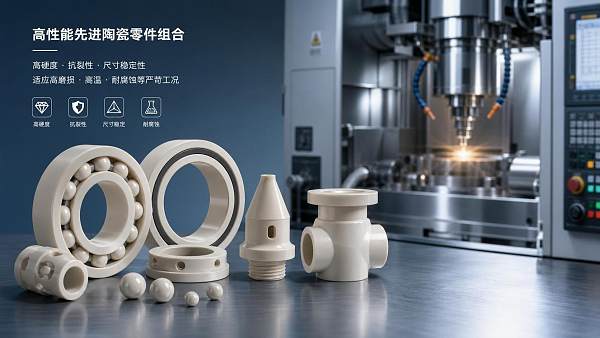
Zirconia ceramics are often selected for applications where failure is expensive: wear components, insulation parts, pump elements, valve seats, bearings, medical-grade components, semiconductor fixtures, and high-precision industrial assemblies. That means the real question is not simply “Who can supply zirconia ceramic parts?” but “Which supplier can consistently deliver the right grade, the right tolerances, the right documentation, and the right production stability for our use case?”
For most procurement teams, engineers, and decision-makers, the best way to vet a zirconia ceramic supplier is to assess five things in order: material capability, manufacturing control, quality assurance, commercial reliability, and application support. If a supplier is weak in any of these areas, low unit pricing can quickly turn into hidden cost through scrap, downtime, qualification delays, or field failure.
What should you check first when vetting a zirconia ceramic supplier?
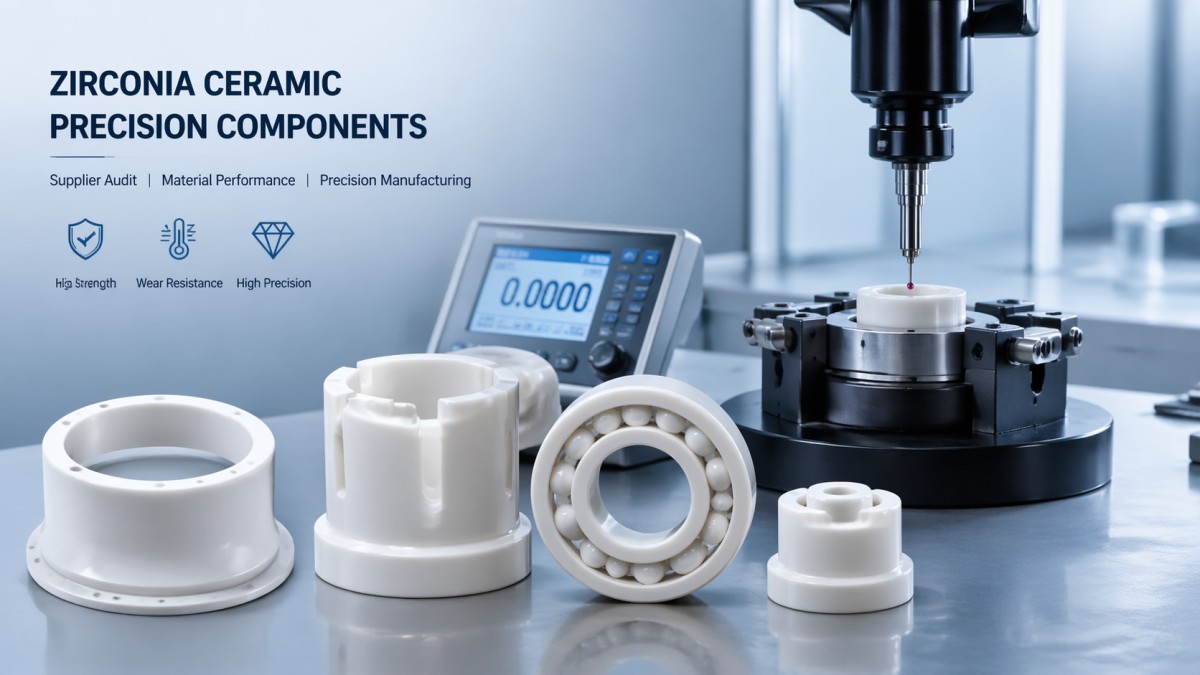
Start with the supplier’s actual ability to make zirconia ceramic components that match your application, not just their website claims. Many companies list zirconia among dozens of materials, but only a smaller number truly control the full process from powder selection to sintering, finishing, inspection, and batch consistency.
The first screening questions should include:
- Which zirconia grades do they offer, such as Y-TZP, magnesia-stabilized zirconia, or partially stabilized zirconia?
- Can they explain the difference between strength, fracture toughness, wear resistance, thermal behavior, and chemical resistance across grades?
- Do they manufacture standard components only, or can they support custom geometries and precision-machined parts?
- What industries do they already serve: semiconductor, medical, pump and valve, electronics, mechanical systems, or laboratory equipment?
- Can they provide technical data sheets with verifiable values rather than marketing descriptions?
A credible zirconia ceramic supplier should be able to discuss density, flexural strength, hardness, grain structure, sintering behavior, surface finish capability, and dimensional tolerances with confidence. If conversations stay vague, that is an early warning sign.
How do you verify material quality instead of relying on brochure claims?
Material quality is the foundation of zirconia ceramic performance. Since zirconia is often chosen for its high toughness compared with other ceramics, inconsistent powder quality or unstable process control can directly undermine the reason you selected it in the first place.
Ask the supplier for documented material information such as:
- Material composition and stabilizer type
- Density and porosity data
- Flexural strength and fracture toughness ranges
- Hardness values
- Thermal expansion and thermal shock behavior, if relevant
- Chemical resistance data for your operating environment
- Batch traceability and lot identification practices
If the part will be used in critical equipment, ask whether the supplier can support third-party testing, incoming material verification, or sample qualification runs. A strong supplier will not resist this. They will usually understand that industrial buyers need evidence, especially in regulated or high-reliability sectors.
It is also useful to compare how the supplier handles zirconia relative to other advanced material manufacturers. For example, when buyers review a boron nitride factory, synthetic sapphire factory, or graphene materials OEM supplier, they typically focus on purity, process repeatability, and application-specific validation. Zirconia sourcing should be approached with the same discipline.
Can the supplier actually hold the tolerances and surface finish your application needs?
This is where many sourcing projects succeed or fail. A supplier may produce zirconia ceramic parts in general, but not necessarily at the precision level your design requires. Zirconia shrinks during sintering, and post-sinter machining can be difficult, costly, and capability-dependent. That is why manufacturing control matters as much as raw material quality.
Key points to evaluate include:
- Forming methods used, such as dry pressing, isostatic pressing, injection molding, or CNC green machining
- Sintering process stability and furnace control
- Post-sinter grinding, lapping, polishing, and finishing capability
- Typical tolerance ranges for inner diameters, outer diameters, flatness, concentricity, and surface roughness
- Ability to control cracking, warpage, chipping, and edge integrity
- Capacity for prototype-to-production transfer without major dimensional drift
Ask for real examples of similar parts. A supplier that routinely manufactures zirconia shafts, plungers, nozzles, valve seats, guide rollers, ceramic bearings, or semiconductor handling parts should be able to describe common tolerance challenges and how they solve them.
If your application depends on sealing performance, friction behavior, wear life, or assembly fit, request sample inspection reports or first article data. In technical ceramics, a “capable” supplier is one whose process output is predictable, not one who says “customization is available.”
What certifications and quality systems matter most for industrial buyers?
Certifications alone do not prove technical excellence, but they do help indicate process discipline. For zirconia ceramic procurement, the relevant question is whether the supplier’s quality system supports consistent production, traceability, corrective action, and documentation.
Look for evidence such as:
- ISO 9001 certification as a baseline quality management system
- Industry-specific certifications if your sector requires them
- Incoming material inspection procedures
- In-process dimensional and visual inspection controls
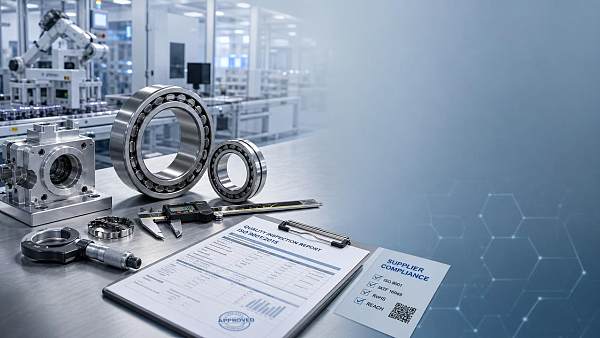
- Final inspection reports and certificate of conformity availability
- Nonconformance handling and root-cause analysis process
- Document retention and traceability by batch or production lot
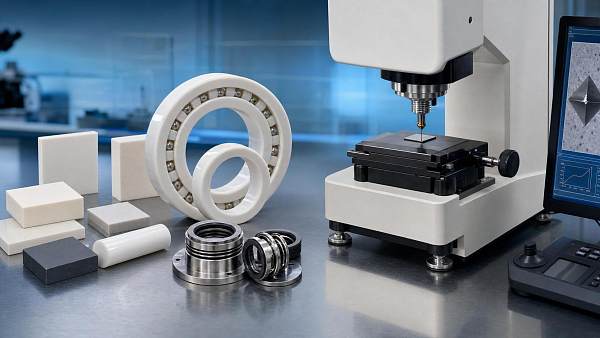
For high-spec applications, also ask what metrology tools they use. Can they measure complex geometry accurately? Do they inspect surface finish? Can they verify microstructural features through microscopy or advanced material testing when needed?
Buyers in semiconductor, precision fluid control, medical devices, and critical industrial equipment should place extra weight on documentation quality. Even a technically strong part becomes risky if the supplier cannot support qualification records, material traceability, or change notification procedures.
How do you assess supply reliability, lead time risk, and commercial stability?
Even excellent zirconia ceramic parts are a procurement problem if delivery is inconsistent. A supplier should be evaluated not only as a technical producer, but as a long-term manufacturing partner.
Ask practical commercial questions:
- What are standard lead times for prototypes, pilot lots, and mass production?
- Do they maintain safety stock for common grades or process-critical raw materials?
- How do they handle sudden demand increases?
- What is their on-time delivery performance?
- Do they depend on a single powder source or single critical machine?
- Can they support forecast-based production planning?
- What export, shipping, or regional supply-chain risks may affect delivery?
This is especially important for global buyers building resilient sourcing strategies. In advanced materials, supply continuity is part of product quality. A technically qualified supplier that cannot manage capacity, logistics, or communication may still create operational risk.
It is wise to review the supplier’s responsiveness during the quoting phase. Slow, unclear, or inconsistent communication often predicts future execution issues. Good suppliers usually ask informed technical questions, clarify drawings early, and flag manufacturability concerns before production begins.
What questions should procurement, engineering, and management each ask?
Different stakeholders evaluate zirconia ceramic suppliers from different angles. The best supplier selection process combines all three views.
Procurement should ask:
- Is pricing transparent by tooling, sampling, production quantity, and finishing steps?
- What are the payment terms, MOQ, and reorder flexibility?
- Can the supplier support dual-source strategy or long-term agreements?
- What is the total cost of ownership, not just unit price?
Engineering should ask:
- Is the proposed zirconia grade right for the load, wear, temperature, and environment?
- Can the design be optimized for ceramic manufacturability?
- What dimensions are most difficult to control?
- What failure modes have they seen in similar applications?
Management should ask:
- Does this supplier reduce long-term operational and quality risk?
- Can they support growth, global delivery, and future product programs?
- Are they strategically stable and credible enough for critical supply?
- Will qualification effort be justified by reliability and continuity benefits?
When these perspectives align, supplier selection becomes more defensible and less reactive.
What are the most common red flags when evaluating a zirconia ceramic supplier?
Several warning signs appear repeatedly in technical ceramics sourcing:
- They cannot clearly explain the zirconia grade they recommend.
- Technical data sheets are incomplete, generic, or inconsistent.
- Tolerances are promised without process explanation or inspection evidence.
- Sample quality differs significantly from production quality.
- They avoid questions about scrap rate, traceability, or quality complaints.
- Lead times change frequently without clear cause.
- Communication is fast during quoting but weak after order confirmation.
- There is no structured process for drawing review, change control, or corrective action.
Another red flag is excessive focus on being a “one-stop supplier” without proof of depth in zirconia manufacturing. Breadth can be useful, but for critical advanced materials, process competence matters more than catalog size.
A practical supplier vetting checklist for zirconia ceramic sourcing
To simplify evaluation, use a checklist that scores suppliers across the categories that actually affect project success:
- Material fit: correct zirconia grade, documented properties, traceability
- Manufacturing capability: suitable forming, sintering, finishing, precision control
- Quality system: certifications, inspection methods, reporting, CAPA process
- Application support: design feedback, failure analysis insight, sample validation support
- Commercial reliability: lead time, responsiveness, capacity, logistics stability
- Total cost: scrap risk, qualification burden, lifespan impact, not unit price alone
If possible, qualify suppliers in stages: desk review, technical Q&A, sample order, audit or remote process review, then controlled production approval. This approach reduces risk and creates a stronger basis for long-term sourcing decisions.
Conclusion: the best zirconia ceramic supplier is the one that proves consistency, not just capability
Vetting a zirconia ceramic supplier should be treated as a risk management process, not a simple price comparison. The best suppliers do more than offer zirconia parts—they demonstrate stable material quality, controlled manufacturing, reliable inspection, responsive engineering support, and dependable delivery.
For information researchers, operators, procurement teams, and business decision-makers, the most valuable approach is to ask evidence-based questions: What zirconia grade is being used? How is the part made? How is consistency verified? What documentation is available? Can the supplier support the application over time?
When those answers are clear and verifiable, you are far more likely to secure a zirconia ceramic supplier that delivers real long-term value—whether you are comparing technical ceramics vendors or evaluating adjacent advanced material partners such as a boron nitride factory, synthetic sapphire factory, or graphene materials OEM supplier.
Recommended News
 Oct 18, 2026Which Quality Checks Matter Most for Precision Ceramic Bearings?What quality checks matter most for precision-manufactured parts? Discover essential ceramic bearing inspections, from defect screening to preload testing, to reduce risk and buy confidently.
 Oct 19, 2026How dust exposure changes hybrid bearing lubrication intervalsOptimize your bearing lubrication interval for dust-exposed hybrid bearings. Learn when to grease more often, fix ingress paths and use condition checks to reduce costly downtime.
 Oct 18, 2026How to calculate relubrication intervals for hybrid ceramic bearingsMaster relubrication interval calculation for hybrid ceramic bearings. Learn to adjust for speed, temperature, and contamination to reduce downtime and avoid overgreasing.
![]() Oct 18, 2026Do Robotics Applications Need Higher-Precision Bearing Grades?Is a higher precision bearing grade necessary for robotics? Explore how runout, stiffness, preload, loads, and operating conditions shape robot accuracy, reliability, and cost.
Oct 18, 2026Do Robotics Applications Need Higher-Precision Bearing Grades?Is a higher precision bearing grade necessary for robotics? Explore how runout, stiffness, preload, loads, and operating conditions shape robot accuracy, reliability, and cost.![]() Oct 17, 2026How Often Should Ceramic Bearings Be Inspected?How often should ceramic bearings be inspected? Learn condition-based intervals, warning signs, and maintenance tips to improve reliability and prevent costly downtime.
Oct 17, 2026How Often Should Ceramic Bearings Be Inspected?How often should ceramic bearings be inspected? Learn condition-based intervals, warning signs, and maintenance tips to improve reliability and prevent costly downtime. Sep 01, 2026How to use bearing lubrication interval benchmarks for service schedulingBearing lubrication interval benchmarks help maintenance teams build smarter service schedules, reduce failures, prevent overgreasing, and improve asset reliability.
 Jul 27, 2026Bearing Lubrication Interval by ISO: How to Set Safe Relubrication CyclesBearing lubrication interval ISO guide: learn how to set safe relubrication cycles using speed, temperature, contamination, and grease quantity to reduce downtime and improve bearing reliability.
 Jul 18, 2026Advanced Materials Ceramics: Key Performance Factors for High-Wear ApplicationsAdvanced Materials ceramics for high-wear applications: explore key factors like toughness, thermal stability, surface quality, and lifecycle value to choose reliable industrial components.
 Jul 13, 2026Ceramic Hardness Scale Explained for Material SelectionCeramic hardness scale explained for smarter material selection. Compare Mohs, Vickers, and Knoop methods to improve wear resistance, reliability, and cost-fit decisions.
 Jun 27, 2026Cross Roller Bearing Inner Ring Tolerance BasicsCross roller bearing inner ring tolerance basics explained: learn how fit, runout, roundness, and surface quality affect precision, reliability, and inspection decisions.
 Jun 23, 2026How to Compare Bearing Suppliers on Quality, Lead Time, and CostBearing suppliers compared the smart way: learn how to evaluate quality consistency, lead time risk, and total cost to choose reliable partners and avoid costly sourcing mistakes.
: Common Causes and Fixes") Jun 10, 2026Bearing Noise and Vibration (NVH): Common Causes and FixesBearing noise and vibration (NVH) explained: discover common causes, warning signs, and proven fixes to prevent repeat failures, cut downtime, and improve equipment reliability.
Jun 10, 2026Bearing Noise and Vibration (NVH): Common Causes and FixesBearing noise and vibration (NVH) explained: discover common causes, warning signs, and proven fixes to prevent repeat failures, cut downtime, and improve equipment reliability. Jun 03, 2026How to Read Technical Ceramics Hardness DataTechnical ceramics hardness data helps you compare wear resistance, test methods, and supplier claims—learn how to read values with confidence before material selection.
 May 24, 2026Aerospace Bearing Market Insights: 2026 Cost and Supply RisksAerospace bearing market insights for 2026: uncover cost drivers, lead-time risks, and supplier qualification challenges to make smarter sourcing decisions and protect delivery stability.
 May 23, 2026Global Bearing Supply Chain Alerts: 2026 Risk SignalsGlobal bearing supply chain alerts reveal the top 2026 risk signals affecting lead times, quality, compliance, and sourcing. Learn how buyers can spot exposure early and build a smarter response.
 May 23, 2026Innovations in Friction Reduction That Improve UptimeInnovations in friction reduction help maintenance teams cut wear, extend service intervals, and improve uptime across pumps, bearings, valves, and precision systems.
 May 23, 2026New ISO Standards for Bearings: What Changes in 2026New ISO standards for bearings in 2026 will reshape inspection, supplier audits, and compliance. Learn the key changes and how to prepare early to reduce risk.
 May 22, 2026Advancements in Ceramic Materials for High-Speed Wear ControlAdvancements in ceramic materials are reshaping high-speed wear control with lower friction, cleaner operation, and longer uptime. Discover where ceramics deliver measurable lifecycle gains.
 May 21, 2026Bearing Fatigue Life L10 Data and Replacement TimingBearing fatigue life (L10) data helps maintenance teams set smarter replacement timing using real load, lubrication, and condition signals to reduce downtime, improve reliability, and optimize spares.
 May 21, 2026Bearing Noise and Vibration NVH: Pass or Fail?Bearing noise and vibration (NVH): pass or fail? Learn the key criteria, test logic, and practical benchmarks quality teams use to reduce risk, improve reliability, and make confident acceptance decisions.
 May 20, 2026Ceramic Bearing Speed and Load Data: What Matters MostCeramic bearing speed and load data explained for real operating conditions—learn how speed, load, lubrication, and thermal limits affect reliability, precision, and service life.
 May 19, 2026Miniature Bearing Factory Checks for Low-Particle RunsMiniature bearing factory checks now go beyond precision alone. Discover how low-particle validation, traceability, and clean process control reduce risk and strengthen supplier confidence.
 May 18, 2026Wholesale Ceramic Bearings: When Higher Unit Cost Lowers Total MaintenanceWholesale ceramic bearings can cost more upfront, but they often reduce total maintenance through longer life, less downtime, and lower lubrication and failure-related costs.
 May 03, 2026Ceramic Bearings Solutions: When the Higher Upfront Cost Pays OffCeramic Bearings solutions deliver ROI when downtime, corrosion, high speed, or electrical damage make steel bearings costly. Learn when the premium pays off.