Search News
Industry Portal
Popular Tags
High-performance Bearings: When Higher Speed Shortens Service Life
Author
Time
Click Count
In High-performance Bearings applications, higher speed does not always mean better reliability. From Precision Motion Control in Semiconductor Fabrication Equipment to High-tech Infrastructure shaped by Industrial Digitization, understanding thermal load, lubrication limits, and Technical Benchmarking is essential. This article explains why speed can shorten bearing life and how smarter selection, operation, and Export Control Compliance awareness reduce risk.
For information researchers, maintenance teams, and equipment operators, the practical question is not whether a bearing can spin faster on paper. The real question is whether it can sustain that speed under actual load, contamination, alignment, temperature, and duty-cycle conditions for 8,000 to 40,000 operating hours.
Across semiconductor tools, industrial pumps, digitalized manufacturing assets, and advanced material processing lines, bearing failure often begins with a mismatch between speed expectations and system-level constraints. Procurement and operating decisions that ignore lubrication regime, preload, cage stability, and thermal growth can reduce service life long before the catalog limit is reached.
Why Higher Speed Can Accelerate Bearing Wear
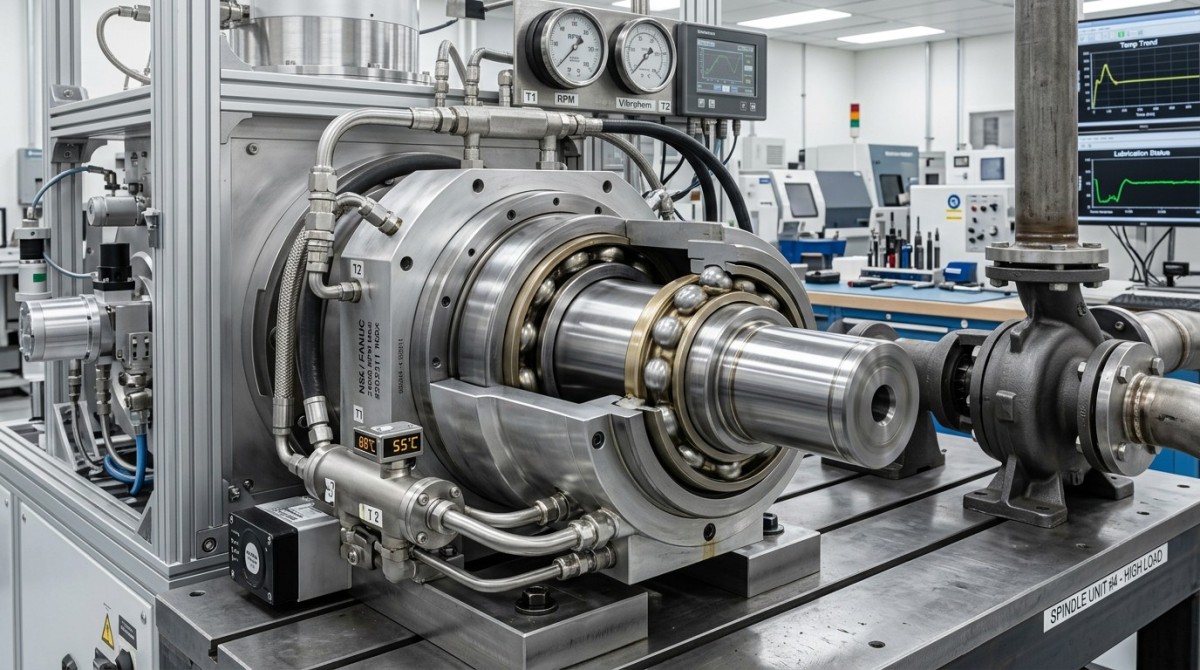
A high-performance bearing is designed to support rotation with minimal friction, controlled vibration, and stable dimensional accuracy. Yet every increase in rotational speed raises frictional heat, shear stress in the lubricant film, and dynamic load on rolling elements. In many applications, speed increases of 20% can produce a temperature rise disproportionate to that gain, especially when lubrication and cooling remain unchanged.
The key issue is that bearing life is not governed by speed alone. It depends on the combined effect of speed, radial and axial load, shaft alignment, housing rigidity, contamination level, and mounting precision. A bearing operating at 18,000 rpm with stable preload may last longer than one running at 12,000 rpm under marginal lubrication and shaft runout above 5–10 microns.
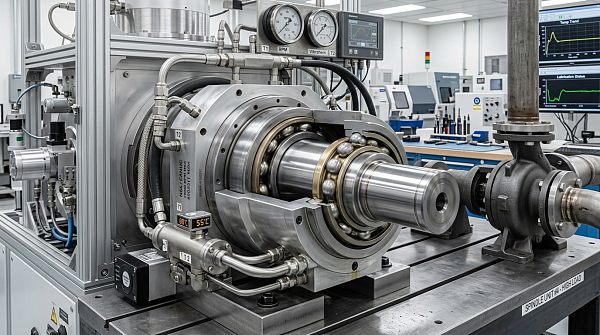
In precision motion control environments such as wafer handling stages, spindle units, and inspection modules, heat generation can alter internal clearance and preload within minutes. Once temperature exceeds the lubricant’s optimal viscosity window, the oil film thins, metal-to-metal contact risk rises, and fatigue spalling begins earlier than expected.
Another overlooked factor is cage behavior. At very high speed, cage instability, skidding, and poor lubricant distribution can occur before the rolling elements reach their nominal fatigue limit. This is why catalog speed values should be treated as reference points, not universal operating targets.
The Four Main Speed-Driven Failure Mechanisms
- Thermal overload: rising friction pushes bearing temperature from a stable 55–70°C range toward 85–110°C, accelerating grease degradation and viscosity loss.
- Lubrication starvation: at higher DN values, grease may channel away from contact zones, while oil-air systems may become insufficient if flow and timing are not calibrated.
- Skidding and micro-slip: rolling elements do not purely roll under low load and high speed, creating surface distress and premature raceway damage.
- Structural instability: shaft deflection, housing distortion, and resonance are amplified at higher rpm, reducing actual life even when theoretical load ratings appear acceptable.
Why theoretical life and actual life diverge
Theoretical bearing life calculations often assume ideal cleanliness, proper mounting, and stable lubrication. Real systems rarely meet those conditions. In industrial environments, contamination particles above 10 microns, misalignment beyond 0.03 mm, or repeated start-stop cycles can cut achievable life by 30% to 70% compared with a clean laboratory assumption.
Thermal Load, Lubrication Limits, and Operating Windows
If speed is the visible variable, lubrication is the hidden control point. High-performance bearings fail early not only because they rotate faster, but because the lubrication regime becomes unstable. Grease, oil mist, oil-air, and circulating oil each have different speed ceilings, heat removal capacity, and contamination sensitivity.
In compact semiconductor subassemblies and digitally monitored precision units, grease lubrication may remain practical up to moderate high-speed ranges, but once heat cannot dissipate efficiently, relubrication intervals shrink. A system that performs well with relubrication every 2,000 hours at 9,000 rpm may need service every 600 to 1,000 hours after a speed increase to 15,000 rpm.
Oil-air systems usually improve speed capability because they supply small, metered lubricant volumes and help reduce churning losses. However, their benefit depends on nozzle positioning, air quality, pressure stability, and clean supply lines. A poorly adjusted oil-air setup can still lead to starvation, especially during transient acceleration and deceleration phases.
Operators should also remember that temperature limits are system limits, not only bearing limits. Adjacent seals, sensors, motor windings, and precision structures may have lower thermal tolerance than the bearing itself. In advanced manufacturing assets, a 12°C to 18°C temperature rise can already be enough to shift accuracy outside process tolerance.
Typical lubrication and temperature considerations
The table below compares common lubrication approaches used in high-speed industrial and precision bearing applications. The values are general operating ranges used for planning and benchmarking rather than fixed design approvals.
The practical conclusion is straightforward: higher speed requires not only a stronger bearing, but also a better thermal management and lubrication architecture. Many service-life problems blamed on bearing quality are actually lubrication system design issues.
Recommended operating checks
- Track stabilized temperature after 30, 60, and 120 minutes of operation rather than checking only startup condition.
- Compare current draw and vibration trend before and after speed changes of more than 10%.
- Inspect relubrication intervals against actual contamination and duty cycle, not only vendor default recommendations.
- Verify whether seals, housing materials, and adjacent sensors remain within their rated thermal envelope.
Selection Criteria for High-performance Bearings in B2B Applications
Selecting a bearing for high-speed duty is a system engineering task. Procurement teams often compare bore size, material, and dynamic load rating, but in advanced industries those three factors are only the starting point. The more reliable approach is to evaluate the complete operating envelope, including speed profile, duty cycle, contamination exposure, mounting accuracy, service access, and compliance constraints.
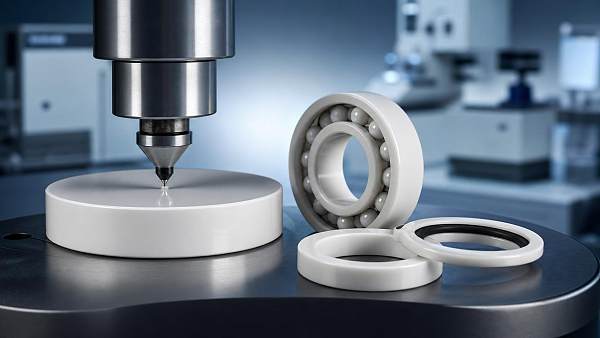
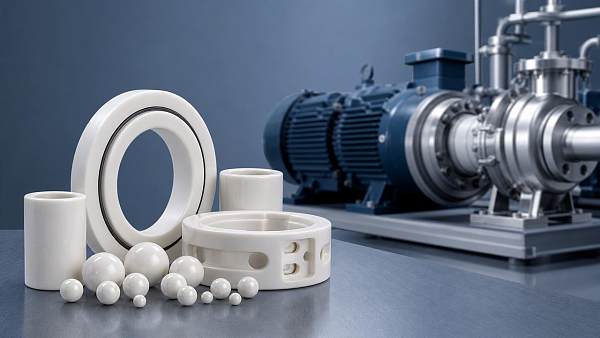
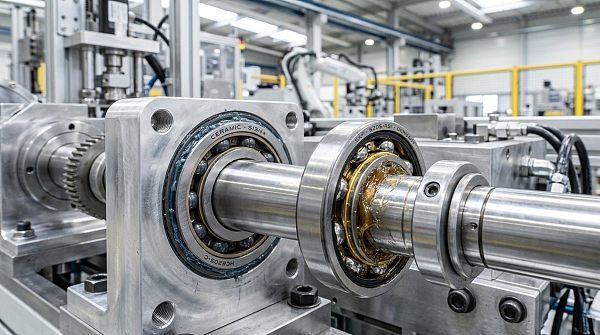
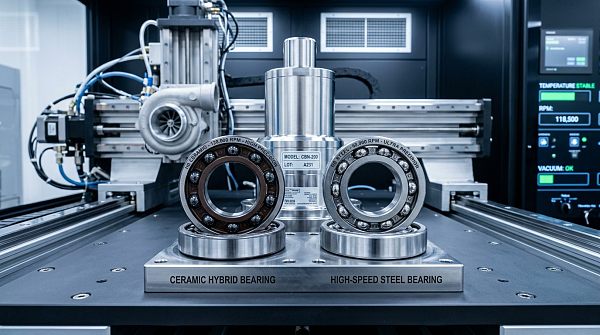
For example, ceramic hybrid bearings may reduce centrifugal load and support high-speed operation, but they are not automatically the best choice for every line. In some applications, steel bearings with optimized preload and superior lubrication control offer better total cost of ownership over 3 to 5 years. Likewise, ultra-high precision classes bring value only when the shaft, housing, and assembly process can preserve that accuracy.
Information researchers should pay attention to how suppliers benchmark products against international standards such as ISO, ASME, SEMI, and relevant testing protocols. Operators should focus on measurable field indicators: temperature stability, noise trend, vibration growth, relubrication needs, and the time required to restore service after failure.
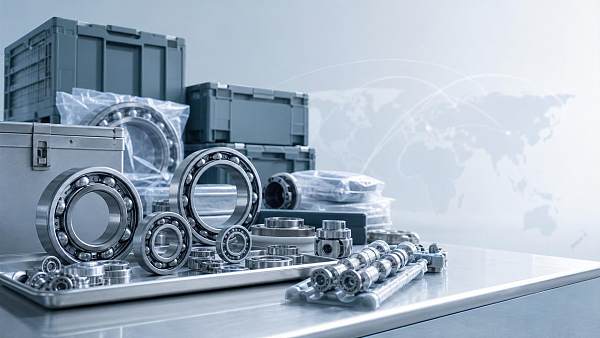
In global sourcing environments, export control and supply-chain resilience matter as much as technical fit. Bearings used in semiconductor fabrication equipment, motion subsystems, or strategic infrastructure may face restrictions related to destination, end use, or material content. A technically suitable part that cannot be shipped or supported consistently is not a low-risk choice.
A practical procurement checklist
The following table summarizes the most important selection factors for B2B buyers and technical users assessing high-performance bearings across multiple industrial sectors.
This kind of multi-factor evaluation is especially important for institutions and manufacturers using technical benchmarking. The bearing should be judged not just by maximum speed, but by how consistently it performs within the plant’s real environment over a defined maintenance cycle.
Three common selection mistakes
- Choosing by catalog speed limit without validating preload, lubrication, and heat removal.
- Upgrading to a premium bearing while leaving shaft accuracy and housing rigidity unchanged.
- Ignoring lead-time risk, dual-source feasibility, and export compliance for critical assets.
Application Scenarios, Operating Practices, and Risk Control
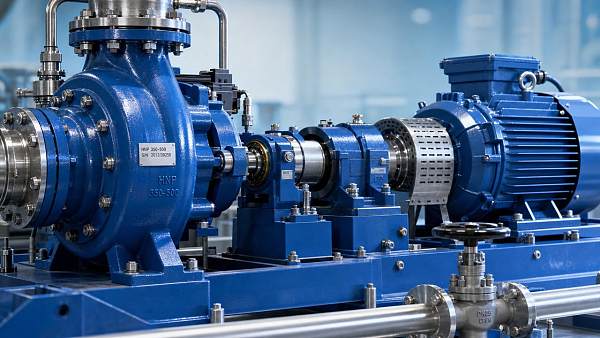
Different industries expose high-performance bearings to different stress patterns. In semiconductor fabrication equipment, low particle generation, precise motion, and thermal stability are often more important than raw speed. In pump and valve systems, fluid-induced vibration, seal interaction, and continuous duty are major concerns. In industrial software-linked assets, condition monitoring can reveal early warning signals before catastrophic failure occurs.
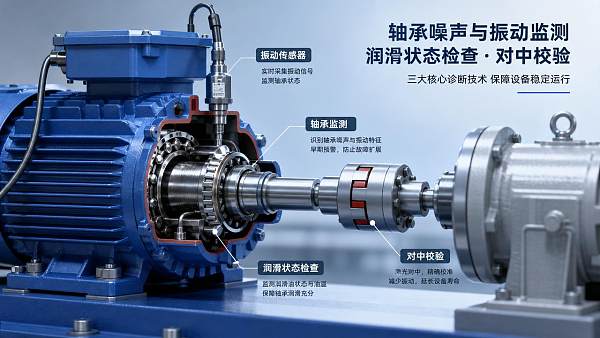
Operators should treat speed increases as controlled engineering changes rather than simple production optimizations. Before moving from one operating level to another, teams should document at least 5 checkpoints: bearing temperature, housing temperature, vibration trend, lubricant condition, and alignment status. A 2-week observation window is often more useful than a single pass/fail test during commissioning.
Risk control also depends on installation discipline. Even premium bearings can fail early if mounting force passes through rolling elements, if contamination enters during assembly, or if preload is adjusted inconsistently. In precision applications, contamination introduced during a 15-minute maintenance event can undo months of stable operation.
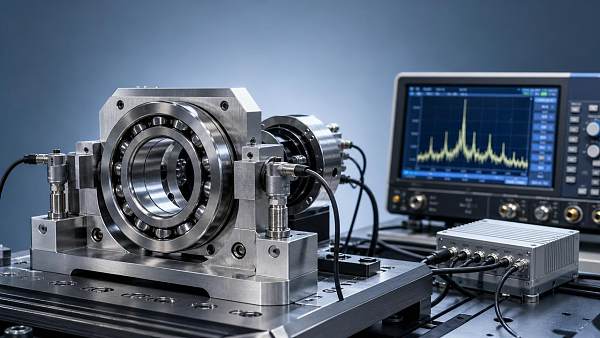
Digital monitoring adds real value when the right signals are tracked. Temperature rise rate, vibration spectrum shift, lubricant pressure stability, and power consumption trend are more actionable than a generic alarm threshold. For many rotating assets, detecting a 15% vibration increase over baseline is enough to trigger inspection before severe damage spreads to shaft and housing components.
Typical scenarios and control priorities
The table below maps several common industrial scenarios to the bearing risks that most often shorten service life when speed is increased.
A shared lesson across these sectors is that sustainable speed requires coordinated control of mechanics, lubrication, data monitoring, and maintenance timing. Raising rpm without raising monitoring quality usually increases risk faster than it increases output.
Field practices that improve life expectancy
- Run a staged speed ramp in 3 steps instead of jumping directly to maximum rpm.
- Record thermal stabilization time and compare it over several cycles to identify lubrication decline.
- Inspect mounting tools and cleanliness controls before each replacement event.
- Establish a spare-parts strategy for critical bearings with lead times longer than 6 to 12 weeks.
FAQ: Practical Questions from Researchers and Operators
How do I know if a bearing is running too fast for its real operating condition?
Do not rely on catalog rpm alone. Compare stabilized temperature, vibration trend, lubricant condition, and noise against baseline values. If temperature rises more than 10°C to 15°C after a speed increase, or if vibration grows by around 15% without another known cause, the system may already be outside its reliable operating window.
Are ceramic hybrid bearings always better for high speed?
Not always. They can reduce centrifugal force and support higher speed, but performance still depends on preload, lubrication, fit, and contamination control. If the surrounding system is not designed for high-speed precision, the extra bearing capability may not convert into longer service life.
What maintenance interval should operators expect?
There is no single interval for all sectors. In moderate-speed clean applications, inspection may follow 1,000 to 2,000 operating hours. In hotter or more contaminated environments, checks may be needed every 250 to 500 hours. The interval should tighten whenever speed, load, or ambient temperature changes significantly.
Why does export control matter in bearing procurement?
For advanced manufacturing and strategic infrastructure, certain components may involve destination controls, end-use screening, or documentation requirements. Procurement teams should verify compliance early because a delayed approval or restricted shipment can extend downtime far more than the part cost itself.
High-performance bearings deliver value when speed, load, lubrication, precision, and compliance are managed as one system. The most durable solution is rarely the one with the highest advertised rpm. It is the one benchmarked for real operating conditions, supported by stable supply, and monitored with discipline across the full lifecycle.
G-CST supports global buyers, researchers, and operators with technical benchmarking, application-oriented evaluation, and cross-sector intelligence spanning precision motion control, semiconductor equipment, industrial software integration, and advanced engineering materials. If you need help assessing bearing life risk, comparing lubrication strategies, or reviewing sourcing and compliance considerations, contact us to discuss a tailored solution and learn more about the right bearing strategy for your application.
Recommended News
 Jun 23, 2026How to Compare Bearing Suppliers on Quality, Lead Time, and CostBearing suppliers compared the smart way: learn how to evaluate quality consistency, lead time risk, and total cost to choose reliable partners and avoid costly sourcing mistakes.
: Common Causes and Fixes") Jun 10, 2026Bearing Noise and Vibration (NVH): Common Causes and FixesBearing noise and vibration (NVH) explained: discover common causes, warning signs, and proven fixes to prevent repeat failures, cut downtime, and improve equipment reliability.
Jun 10, 2026Bearing Noise and Vibration (NVH): Common Causes and FixesBearing noise and vibration (NVH) explained: discover common causes, warning signs, and proven fixes to prevent repeat failures, cut downtime, and improve equipment reliability. Jun 03, 2026How to Read Technical Ceramics Hardness DataTechnical ceramics hardness data helps you compare wear resistance, test methods, and supplier claims—learn how to read values with confidence before material selection.
 May 24, 2026Aerospace Bearing Market Insights: 2026 Cost and Supply RisksAerospace bearing market insights for 2026: uncover cost drivers, lead-time risks, and supplier qualification challenges to make smarter sourcing decisions and protect delivery stability.
 May 23, 2026Global Bearing Supply Chain Alerts: 2026 Risk SignalsGlobal bearing supply chain alerts reveal the top 2026 risk signals affecting lead times, quality, compliance, and sourcing. Learn how buyers can spot exposure early and build a smarter response.
 May 23, 2026Innovations in Friction Reduction That Improve UptimeInnovations in friction reduction help maintenance teams cut wear, extend service intervals, and improve uptime across pumps, bearings, valves, and precision systems.
 May 23, 2026New ISO Standards for Bearings: What Changes in 2026New ISO standards for bearings in 2026 will reshape inspection, supplier audits, and compliance. Learn the key changes and how to prepare early to reduce risk.
 May 22, 2026Advancements in Ceramic Materials for High-Speed Wear ControlAdvancements in ceramic materials are reshaping high-speed wear control with lower friction, cleaner operation, and longer uptime. Discover where ceramics deliver measurable lifecycle gains.
 May 21, 2026Bearing Fatigue Life L10 Data and Replacement TimingBearing fatigue life (L10) data helps maintenance teams set smarter replacement timing using real load, lubrication, and condition signals to reduce downtime, improve reliability, and optimize spares.
 May 21, 2026Bearing Noise and Vibration NVH: Pass or Fail?Bearing noise and vibration (NVH): pass or fail? Learn the key criteria, test logic, and practical benchmarks quality teams use to reduce risk, improve reliability, and make confident acceptance decisions.
 May 20, 2026Ceramic Bearing Speed and Load Data: What Matters MostCeramic bearing speed and load data explained for real operating conditions—learn how speed, load, lubrication, and thermal limits affect reliability, precision, and service life.
 May 19, 2026Miniature Bearing Factory Checks for Low-Particle RunsMiniature bearing factory checks now go beyond precision alone. Discover how low-particle validation, traceability, and clean process control reduce risk and strengthen supplier confidence.
 May 18, 2026Wholesale Ceramic Bearings: When Higher Unit Cost Lowers Total MaintenanceWholesale ceramic bearings can cost more upfront, but they often reduce total maintenance through longer life, less downtime, and lower lubrication and failure-related costs.
 May 03, 2026Ceramic Bearings Solutions: When the Higher Upfront Cost Pays OffCeramic Bearings solutions deliver ROI when downtime, corrosion, high speed, or electrical damage make steel bearings costly. Learn when the premium pays off.
 May 02, 2026Ceramic Bearings for High Temperature Applications: Common Selection MistakesCeramic Bearings for high temperature applications: avoid costly selection mistakes in material, clearance, load, and lubrication to improve reliability and extend service life.
 May 01, 2026Ceramic Bearings Manufacturer Checklist: What Matters for Cleanroom PerformanceCeramic Bearings manufacturer checklist for cleanroom performance: compare traceability, precision, particle control, and packaging to reduce risk and choose a reliable supplier.
 Apr 28, 2026Ceramic Thermal Shock Resistance Often Fails at the Design StageCeramic thermal shock resistance starts failing at design. Learn how composite layer bonding strength, thermal gradients, and material selection affect reliability, cost, and uptime.
 Apr 27, 2026Why Sub-micron Bearings Manufacturers Focus on Thermal Drift FirstSub-micron Bearings manufacturer insights: learn why thermal drift drives SEMI Standards compliance, precision uptime, and smarter High-tech Procurement Intelligence sourcing.
![]() Apr 25, 2026Technical Ceramics Supplier: What Matters Most?Technical ceramics supplier selection starts with consistency, precision, compliance, and reliable delivery. Learn how to compare a zirconia ceramic supplier and reduce sourcing risk.
Apr 25, 2026Technical Ceramics Supplier: What Matters Most?Technical ceramics supplier selection starts with consistency, precision, compliance, and reliable delivery. Learn how to compare a zirconia ceramic supplier and reduce sourcing risk. Apr 25, 2026How to Vet a Zirconia Ceramic SupplierZirconia ceramic supplier selection guide: learn how to vet a technical ceramics supplier for quality, tolerances, traceability, and reliable delivery in industrial applications.
 Apr 21, 2026High-performance Bearings vs Heat Buildup in Cleanroom ToolsHigh-performance Bearings reduce heat buildup in cleanroom tools, improving Precision Motion Control and Semiconductor Fabrication Equipment uptime. Explore smart benchmarking insights.
 Apr 21, 2026High-performance Bearings: When Higher Speed Shortens Service LifeHigh-performance Bearings in Industrial Software Solutions: learn why higher speed can cut service life in Semiconductor Fabrication Equipment, and how Precision Motion Control, Technical Benchmarking, and Export Control Compliance reduce risk.
 Apr 21, 2026Ceramic Bearings Are Not Always the Low-Maintenance OptionCeramic Bearings are not always low-maintenance—learn how Digital Twin Technology and Strategic Procurement improve Chemical Pumps reliability, lifecycle cost, and standards-based decisions.
 Apr 21, 2026Ceramic Bearings vs Steel in High-Speed Clean EnvironmentsCeramic Bearings vs Steel in high-speed clean environments: compare contamination control, thermal stability, reliability engineering, and SEMI standards to choose the best fit for precision manufacturing.