Search News
Industry Portal
Popular Tags
Ceramic Bearings Manufacturer Checklist: What Matters for Cleanroom Performance
Author
Time
Click Count
Selecting a Ceramic Bearings manufacturer for cleanroom applications requires more than reviewing catalog specs. For business evaluators, the real decision hinges on contamination control, material traceability, precision tolerance, and long-term reliability under critical operating conditions. This checklist highlights the factors that directly affect cleanroom performance, helping procurement teams compare suppliers with greater technical confidence and lower operational risk.
In semiconductor tools, precision motion platforms, wafer handling modules, metrology assemblies, and high-purity process equipment, bearing selection has a direct effect on particle generation, chemical compatibility, uptime, and maintenance intervals. For procurement and commercial evaluation teams, the challenge is not simply identifying a low-friction component. It is validating whether a Ceramic Bearings manufacturer can consistently deliver controlled quality across batches, document process stability, and support long-life operation in ISO-classified production environments.
This article is designed for business evaluators working in advanced manufacturing and cleanroom-driven supply chains. It focuses on the commercial and technical checkpoints that matter most when comparing suppliers, from raw material control and dimensional accuracy to packaging discipline, test records, and after-sales responsiveness.
Why Cleanroom Bearing Selection Requires a Different Supplier Checklist
A standard industrial bearing evaluation often emphasizes speed, load, lubrication, and unit cost. Cleanroom applications add at least 4 more procurement layers: airborne particle risk, outgassing behavior, traceability depth, and contamination-safe packaging. A Ceramic Bearings manufacturer serving vacuum-compatible or clean-process environments must therefore be assessed with tighter acceptance thresholds than a general-purpose bearing supplier.
For example, a bearing used in a dry process transfer arm may operate under low torque but extremely high cleanliness expectations, while a bearing in a chemical delivery subsystem may require resistance to corrosive media and repeated washdown cycles. In both cases, the total cost of failure is rarely the bearing price itself. It may include tool downtime of 8-24 hours, requalification work, scrap risk, and contamination investigations across multiple production stages.
What makes ceramic bearings relevant in clean environments
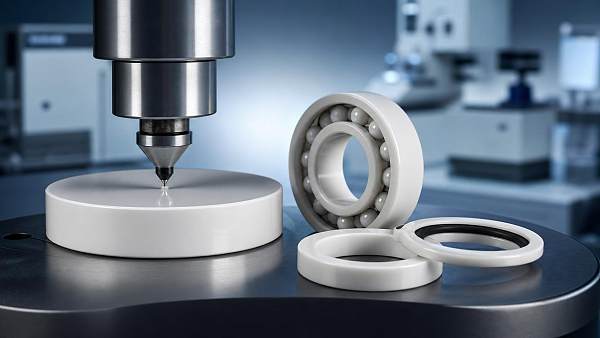
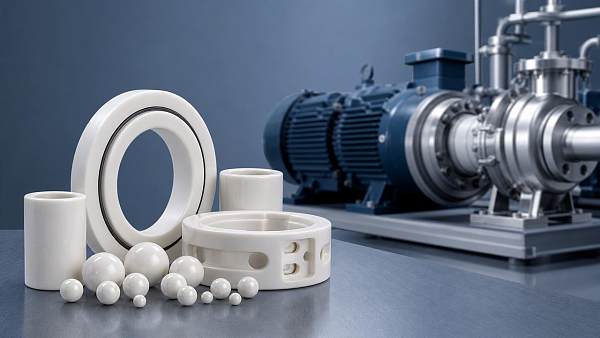
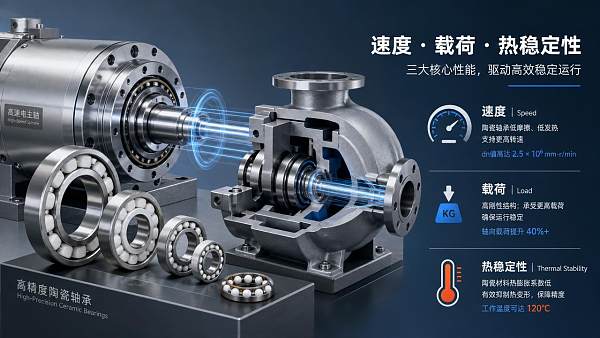
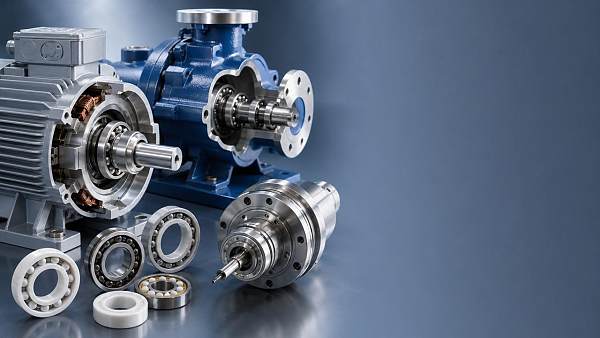
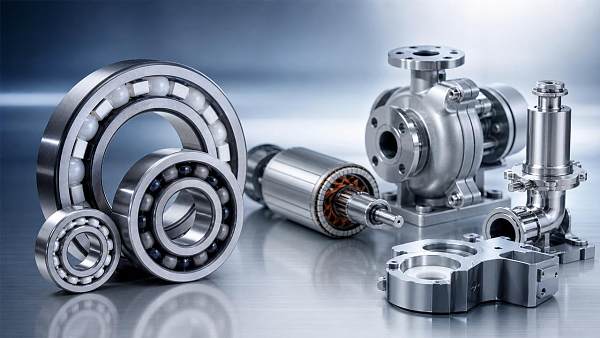
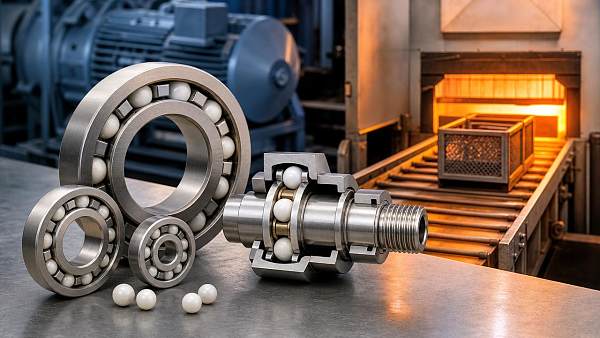
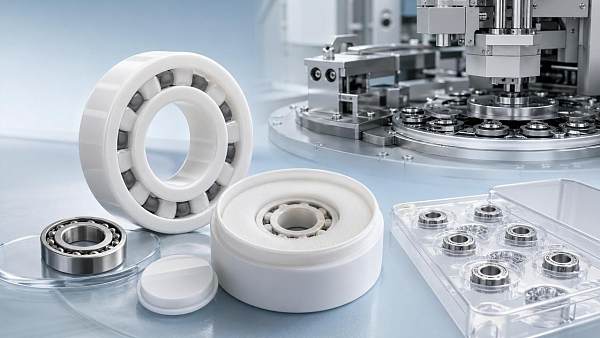
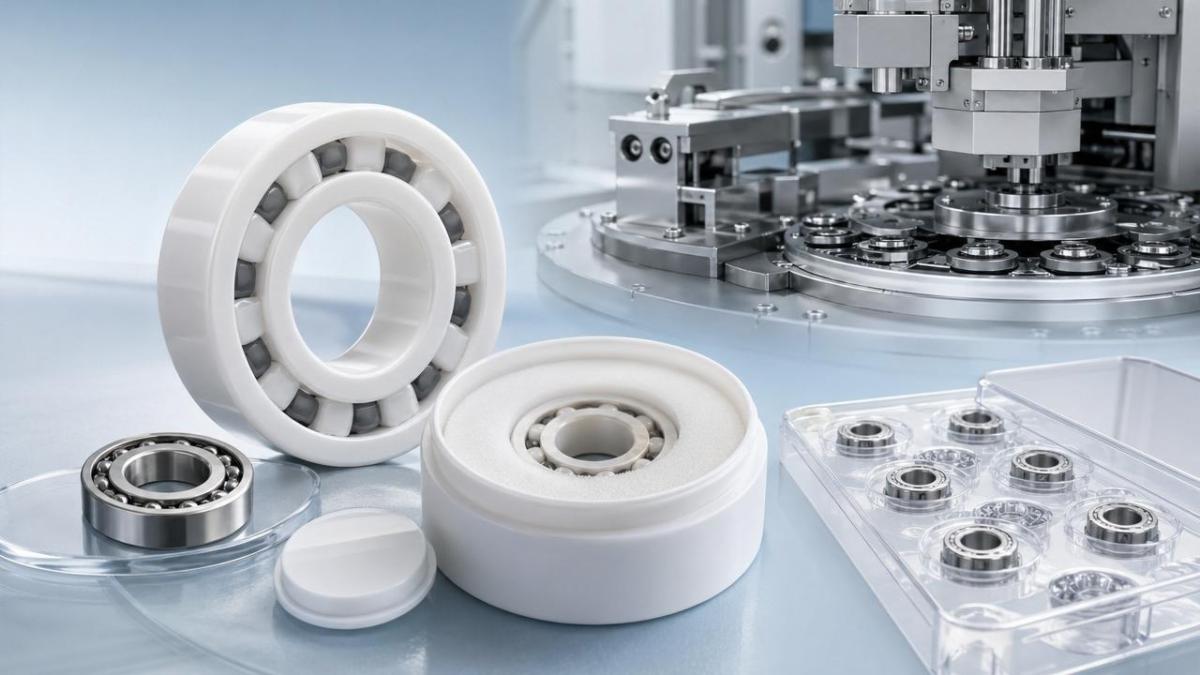
Ceramic rolling elements and hybrid or full-ceramic designs are commonly considered for cleanroom assemblies because they can offer low wear, corrosion resistance, electrical insulation, and stable performance in environments where traditional lubricants are restricted. Depending on the application, buyers may compare silicon nitride rolling elements, zirconia components, and hybrid configurations paired with stainless steel races.
- Lower risk of oxidation in high-purity environments
- Better suitability for dry-running or limited-lubrication scenarios
- Reduced electrical pitting risk in high-speed motorized systems
- Improved chemical resistance in selected corrosive process conditions
The first commercial mistake: evaluating only by datasheet minimums
A datasheet can show ABEC-level accuracy, speed limits, and base material information, but it often does not show how consistently those values are achieved across 10, 100, or 1,000 units. Business evaluators should request process capability evidence, inspection frequency, and batch-level records. In cleanroom procurement, consistency is usually more valuable than isolated peak performance.
In practice, an acceptable supplier profile should cover at least 5 control areas: incoming raw material inspection, dimensional verification, surface finish control, contamination management, and final packaging discipline. If even 1 of these areas is weak, the operational risk can rise sharply in high-purity production settings.
Core Technical Criteria to Evaluate a Ceramic Bearings Manufacturer
The most reliable way to compare suppliers is to turn cleanroom performance into a structured evaluation checklist. Rather than relying on generic claims such as “high precision” or “long life,” business teams should test whether the Ceramic Bearings manufacturer can explain its controls with measurable, reviewable data.
1. Material traceability and lot integrity
Traceability should begin at the ceramic powder or finished raw stock level and continue through machining, lapping, assembly, cleaning, inspection, and packaging. Ask whether each lot can be linked to a production traveler, inspection sheet, and operator history. In strategic procurement, traceability windows of 5-10 years are often preferred for regulated or mission-critical sectors.
A qualified supplier should also explain how mixed lots are prevented. If rings, balls, and cages are sourced from different batches without documented controls, reliability analysis becomes difficult after a field issue. This is especially relevant for fabs, advanced motion systems, and high-value instrumentation where root-cause response time may need to stay within 24-72 hours.
2. Dimensional tolerance and running accuracy
Precision in cleanroom equipment is not just about fit. It also affects vibration, noise, heat generation, and micro-wear. Buyers should ask for radial runout, roundness, raceway geometry, and bore/outer diameter tolerances. Depending on the application, tolerance expectations may be in the micron range, such as ±1-3 μm for critical dimensions in compact precision assemblies.
The evaluation should also cover how measurements are taken. A stronger Ceramic Bearings manufacturer will specify calibrated equipment, environmental control in the inspection room, and final sampling rules. If measurement methods are undefined, the reported tolerance values may not be reliable enough for clean equipment qualification.
3. Surface finish, particle control, and cleaning process
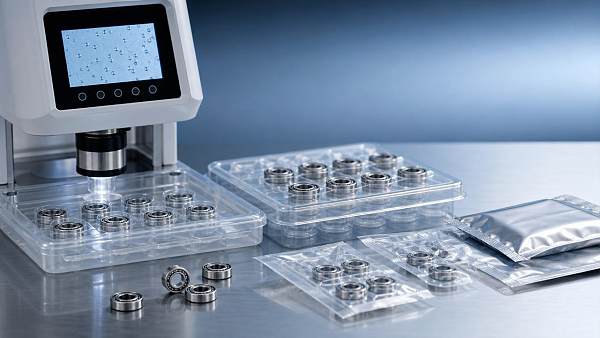
Surface finish has a direct relationship with friction, wear, and debris generation. In cleanroom-oriented procurement, it is useful to ask not only for Ra values, but also for cleaning sequence details. Does the supplier use ultrasonic cleaning, filtered rinse stages, non-shedding handling tools, and sealed final packaging? Are components inspected after cleaning or only before cleaning?
A manufacturer that understands contamination-sensitive applications should be able to define at least 3 process stages between final machining and dispatch. Typical controls include particle-sensitive washing, dried-air or nitrogen-assisted drying, and double-bag packaging for transfer into controlled receiving areas.
The table below can help business evaluators translate technical bearing characteristics into practical supplier assessment questions.
The strongest insight from this checklist is that bearing quality is multidimensional. A supplier may perform well in geometry but still fail in packaging discipline or batch documentation. For cleanroom buyers, the total qualification decision should weigh all 4 areas together.
4. Cage materials, lubrication strategy, and compatibility limits
Not every ceramic bearing is full ceramic, and not every cleanroom application is oil-free. Business evaluators should verify cage material, lubricant type, and any compatibility restrictions with vacuum, solvents, or high-purity gas environments. A mismatch at this level can compromise a system even when the rolling elements themselves are suitable.
If the application involves aggressive chemistry, temperatures above 80-120°C, or repeated sterilization or cleaning cycles, the manufacturer should clearly define what has been tested versus what remains application-dependent. A careful supplier will state operating envelopes, not broad promises.
Questions buyers should ask before approval
- What ceramic material system is used, and why was it selected for this duty profile?
- What dimensions are inspected 100% versus sampled?
- How are contamination-sensitive parts cleaned and packaged?
- Can the supplier support custom documentation for incoming quality control?
- What is the standard lead time for prototypes, pilot lots, and repeat production?
Supplier Qualification, Delivery Risk, and Commercial Fit
Even a technically capable Ceramic Bearings manufacturer may not be the right fit if delivery stability, communication speed, or engineering support is weak. For business evaluators, commercial reliability should be reviewed with the same discipline as product capability, especially when bearings are used in critical nodes of semiconductor, medical, analytical, or advanced automation systems.
Lead time realism and capacity transparency
Typical lead times can vary from 2-4 weeks for standard hybrid configurations to 8-12 weeks or more for custom dimensions, matched assemblies, or special packaging. The key question is not whether the quote looks attractive on day 1, but whether the supplier can maintain schedule reliability across multiple purchase cycles.
Ask how the supplier manages raw material inventory, machine loading, subcontract dependencies, and final inspection bottlenecks. Capacity transparency matters because a single delayed lot in a high-mix production environment can interrupt qualification plans, spare parts stocking, and field service commitments.
Documentation package and change control discipline
Many procurement failures happen after initial approval, when an unnoticed process change affects downstream performance. A robust Ceramic Bearings manufacturer should explain what triggers formal notification: raw material source changes, grinding parameter changes, cage design changes, lubricant substitutions, or packaging modifications.
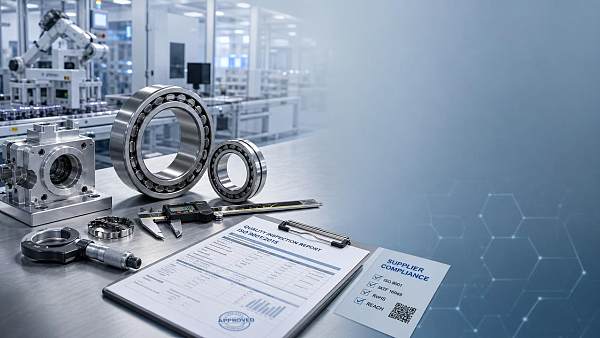
For cleanroom-facing industries, a useful documentation package may include certificate of conformity, dimensional report, lot identification, cleaning declaration when applicable, and packing details. At a minimum, buyers should define 3 acceptance layers: technical conformity, documentation completeness, and packaging integrity upon receipt.
The following comparison matrix is useful during supplier shortlisting and commercial review.
This matrix helps evaluators separate a transactional vendor from a strategic supply partner. In cleanroom-critical sourcing, communication quality and change control often influence long-term cost more than the initial unit price difference.
Audit focus areas for business evaluators
A site audit does not need to be overly complex to be useful. Even a 60-90 minute remote or on-site review can reveal how mature a supplier really is. Focus on workflow clarity, nonconformance handling, cleaning segregation, final inspection control, and packaging conditions.
- Is there clear separation between machining, cleaning, and packing zones?
- Are rejected parts physically segregated and documented?
- Can the team retrieve lot data quickly during the audit?
- Are instruments calibrated and linked to inspection records?
- Is export, compliance, or shipping documentation handled predictably?
Common Mistakes When Comparing Ceramic Bearing Suppliers
Business teams often lose time or accept hidden risk because the comparison process is too narrow. A Ceramic Bearings manufacturer should not be selected only through price-per-unit analysis, sample appearance, or broad statements about precision performance.
Mistake 1: treating all ceramic bearing designs as functionally equivalent
A hybrid bearing with ceramic balls and metal rings behaves differently from a full-ceramic assembly. Load handling, shock sensitivity, lubrication needs, and contamination behavior can vary significantly. Buyers should confirm design intent instead of assuming “ceramic” automatically means superior in every condition.
Mistake 2: approving samples without reviewing repeatability
A sample lot of 5 or 10 pieces may pass inspection, while later production batches drift in geometry or cleaning quality. It is better to define pilot-lot verification, such as first article review plus repeat batch evaluation after 30-90 days, before full qualification.
Mistake 3: ignoring packaging and inbound handling
A technically good product can still enter the factory in poor condition if packaging is not controlled. Sealing layers, labeling clarity, desiccant usage when needed, and outer carton cleanliness can all influence receiving quality. In contamination-sensitive operations, packaging should be evaluated as part of the product, not as an afterthought.
Practical approval sequence
- Define application conditions: speed, load, temperature, chemical exposure, cleanliness level.
- Request technical and commercial documentation from the Ceramic Bearings manufacturer.
- Review sample inspection data and packaging method.
- Run pilot validation under actual or simulated duty cycle.
- Approve with change-control and repeat-order conditions in writing.
How G-CST-Oriented Procurement Teams Can Build a Lower-Risk Decision Framework
For organizations operating across semiconductor fabrication equipment, precision motion control, advanced materials, and critical infrastructure supply chains, supplier evaluation works best when technical benchmarking and commercial intelligence are connected. That means looking beyond the bearing as a component and assessing the supplier as part of a larger reliability system.
A disciplined sourcing framework should combine 4 decision dimensions: product suitability, process control, documentation maturity, and supply resilience. This is particularly important where procurement teams must align engineering requirements with quality assurance, operations, and long-term regional sourcing strategy.
A practical decision model for business evaluators
One effective approach is to score each Ceramic Bearings manufacturer on a 100-point basis, for example: 35 points for technical compliance, 25 points for cleanliness and packaging control, 20 points for documentation and traceability, and 20 points for delivery reliability and support responsiveness. This creates a balanced view and reduces the chance of overvaluing the lowest quotation.
Where supply continuity matters, buyers may also maintain 2 approved sources: a primary supplier for recurring production and a secondary supplier for risk mitigation. Although dual qualification requires more up-front effort, it can reduce exposure to disruptions, especially when custom ceramic components have lead times beyond 8 weeks.
Choosing the right Ceramic Bearings manufacturer for cleanroom use is ultimately a matter of verified control, not marketing language. The most dependable suppliers can explain their material chain, dimensional discipline, cleaning process, packaging method, and change-control practice with clear evidence. For business evaluators, that evidence supports faster qualification, lower contamination risk, and better long-term operating confidence.
If your team is reviewing bearing sources for contamination-sensitive equipment, high-precision motion systems, or advanced manufacturing projects, now is the right time to standardize your supplier checklist. Contact us to discuss application-specific evaluation criteria, request a tailored sourcing framework, or learn more about cleanroom-focused component benchmarking and procurement support.
Recommended News
 Jun 23, 2026How to Compare Bearing Suppliers on Quality, Lead Time, and CostBearing suppliers compared the smart way: learn how to evaluate quality consistency, lead time risk, and total cost to choose reliable partners and avoid costly sourcing mistakes.
: Common Causes and Fixes") Jun 10, 2026Bearing Noise and Vibration (NVH): Common Causes and FixesBearing noise and vibration (NVH) explained: discover common causes, warning signs, and proven fixes to prevent repeat failures, cut downtime, and improve equipment reliability.
Jun 10, 2026Bearing Noise and Vibration (NVH): Common Causes and FixesBearing noise and vibration (NVH) explained: discover common causes, warning signs, and proven fixes to prevent repeat failures, cut downtime, and improve equipment reliability. Jun 03, 2026How to Read Technical Ceramics Hardness DataTechnical ceramics hardness data helps you compare wear resistance, test methods, and supplier claims—learn how to read values with confidence before material selection.
 May 24, 2026Aerospace Bearing Market Insights: 2026 Cost and Supply RisksAerospace bearing market insights for 2026: uncover cost drivers, lead-time risks, and supplier qualification challenges to make smarter sourcing decisions and protect delivery stability.
 May 23, 2026Global Bearing Supply Chain Alerts: 2026 Risk SignalsGlobal bearing supply chain alerts reveal the top 2026 risk signals affecting lead times, quality, compliance, and sourcing. Learn how buyers can spot exposure early and build a smarter response.
 May 23, 2026Innovations in Friction Reduction That Improve UptimeInnovations in friction reduction help maintenance teams cut wear, extend service intervals, and improve uptime across pumps, bearings, valves, and precision systems.
 May 23, 2026New ISO Standards for Bearings: What Changes in 2026New ISO standards for bearings in 2026 will reshape inspection, supplier audits, and compliance. Learn the key changes and how to prepare early to reduce risk.
 May 22, 2026Advancements in Ceramic Materials for High-Speed Wear ControlAdvancements in ceramic materials are reshaping high-speed wear control with lower friction, cleaner operation, and longer uptime. Discover where ceramics deliver measurable lifecycle gains.
 May 21, 2026Bearing Fatigue Life L10 Data and Replacement TimingBearing fatigue life (L10) data helps maintenance teams set smarter replacement timing using real load, lubrication, and condition signals to reduce downtime, improve reliability, and optimize spares.
 May 21, 2026Bearing Noise and Vibration NVH: Pass or Fail?Bearing noise and vibration (NVH): pass or fail? Learn the key criteria, test logic, and practical benchmarks quality teams use to reduce risk, improve reliability, and make confident acceptance decisions.
 May 20, 2026Ceramic Bearing Speed and Load Data: What Matters MostCeramic bearing speed and load data explained for real operating conditions—learn how speed, load, lubrication, and thermal limits affect reliability, precision, and service life.
 May 19, 2026Miniature Bearing Factory Checks for Low-Particle RunsMiniature bearing factory checks now go beyond precision alone. Discover how low-particle validation, traceability, and clean process control reduce risk and strengthen supplier confidence.
 May 18, 2026Wholesale Ceramic Bearings: When Higher Unit Cost Lowers Total MaintenanceWholesale ceramic bearings can cost more upfront, but they often reduce total maintenance through longer life, less downtime, and lower lubrication and failure-related costs.
 May 03, 2026Ceramic Bearings Solutions: When the Higher Upfront Cost Pays OffCeramic Bearings solutions deliver ROI when downtime, corrosion, high speed, or electrical damage make steel bearings costly. Learn when the premium pays off.
 May 02, 2026Ceramic Bearings for High Temperature Applications: Common Selection MistakesCeramic Bearings for high temperature applications: avoid costly selection mistakes in material, clearance, load, and lubrication to improve reliability and extend service life.
 May 01, 2026Ceramic Bearings Manufacturer Checklist: What Matters for Cleanroom PerformanceCeramic Bearings manufacturer checklist for cleanroom performance: compare traceability, precision, particle control, and packaging to reduce risk and choose a reliable supplier.
 Apr 28, 2026Ceramic Thermal Shock Resistance Often Fails at the Design StageCeramic thermal shock resistance starts failing at design. Learn how composite layer bonding strength, thermal gradients, and material selection affect reliability, cost, and uptime.
 Apr 27, 2026Why Sub-micron Bearings Manufacturers Focus on Thermal Drift FirstSub-micron Bearings manufacturer insights: learn why thermal drift drives SEMI Standards compliance, precision uptime, and smarter High-tech Procurement Intelligence sourcing.
![]() Apr 25, 2026Technical Ceramics Supplier: What Matters Most?Technical ceramics supplier selection starts with consistency, precision, compliance, and reliable delivery. Learn how to compare a zirconia ceramic supplier and reduce sourcing risk.
Apr 25, 2026Technical Ceramics Supplier: What Matters Most?Technical ceramics supplier selection starts with consistency, precision, compliance, and reliable delivery. Learn how to compare a zirconia ceramic supplier and reduce sourcing risk. Apr 25, 2026How to Vet a Zirconia Ceramic SupplierZirconia ceramic supplier selection guide: learn how to vet a technical ceramics supplier for quality, tolerances, traceability, and reliable delivery in industrial applications.
 Apr 21, 2026High-performance Bearings vs Heat Buildup in Cleanroom ToolsHigh-performance Bearings reduce heat buildup in cleanroom tools, improving Precision Motion Control and Semiconductor Fabrication Equipment uptime. Explore smart benchmarking insights.
 Apr 21, 2026High-performance Bearings: When Higher Speed Shortens Service LifeHigh-performance Bearings in Industrial Software Solutions: learn why higher speed can cut service life in Semiconductor Fabrication Equipment, and how Precision Motion Control, Technical Benchmarking, and Export Control Compliance reduce risk.
 Apr 21, 2026Ceramic Bearings Are Not Always the Low-Maintenance OptionCeramic Bearings are not always low-maintenance—learn how Digital Twin Technology and Strategic Procurement improve Chemical Pumps reliability, lifecycle cost, and standards-based decisions.
 Apr 21, 2026Ceramic Bearings vs Steel in High-Speed Clean EnvironmentsCeramic Bearings vs Steel in high-speed clean environments: compare contamination control, thermal stability, reliability engineering, and SEMI standards to choose the best fit for precision manufacturing.