Search News
Industry Portal
Popular Tags
How to Read Technical Ceramics Hardness Data
Author
Time
Click Count
Understanding technical ceramics hardness data is essential for evaluating wear resistance, machining limits, and long-term reliability in high-performance industrial systems.
Hardness values are not standalone numbers. They must be read with test methods, composition, microstructure, surface condition, and application stress.
As advanced materials enter semiconductor, motion control, pump, valve, and infrastructure systems, technical ceramics hardness data is becoming a stronger decision signal.
How Technical Ceramics Hardness Data Is Becoming a Reliability Benchmark
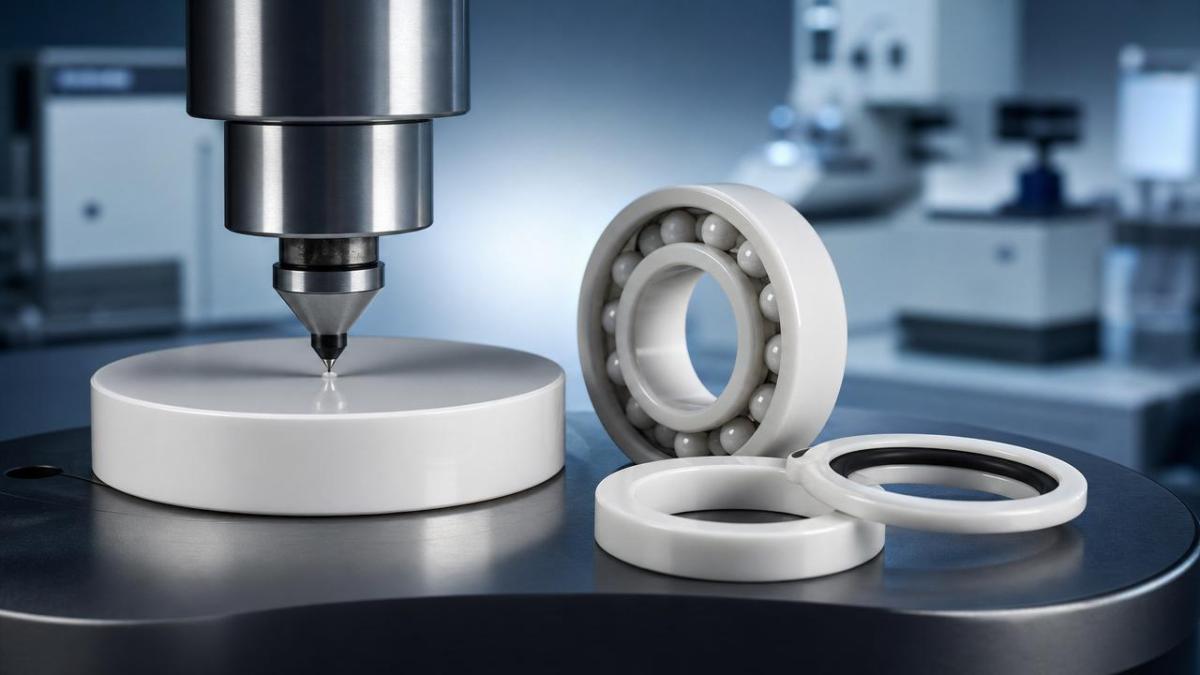
Technical ceramics hardness data now supports more than material screening. It helps estimate abrasion risk, contact damage, edge stability, and process compatibility.
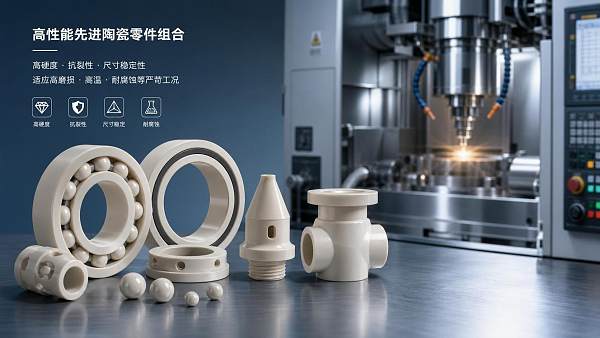
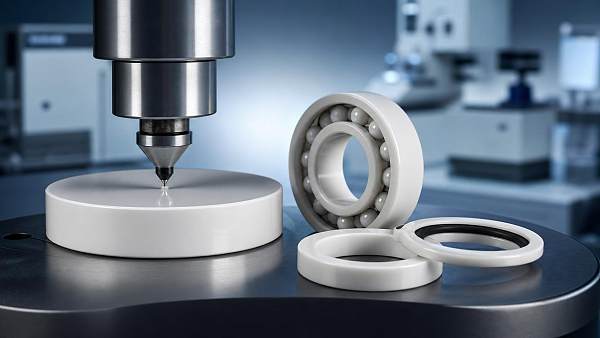
In ceramic bearings, seals, nozzles, liners, and wafer-handling parts, surface durability directly affects uptime and contamination control.
This shift reflects a broader industrial trend. Engineering teams increasingly compare materials through quantified, traceable, and standards-based performance evidence.
For that reason, technical ceramics hardness data should be interpreted as part of a technical evidence package, not as a single ranking.
Current Signals Behind Hardness Data Scrutiny
The demand for reliable hardness interpretation is rising as industrial systems move toward tighter tolerances and harsher service environments.
Semiconductor equipment needs ceramics with high wear resistance, low particle generation, and stable behavior under corrosive chemistries.
Precision motion systems require rolling or sliding components that resist indentation, polishing wear, and micro-cracking.
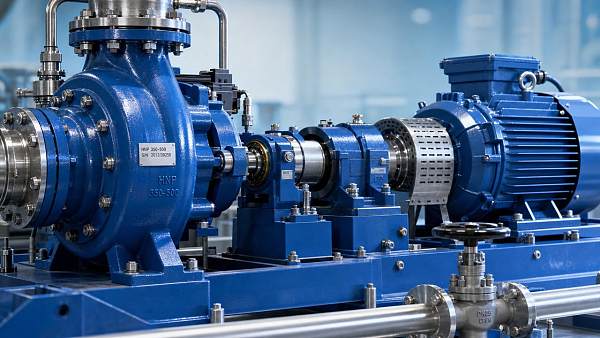
Pump and valve assemblies increasingly use ceramics where metals face erosion, cavitation, aggressive fluids, or unacceptable leakage risk.
Across these applications, technical ceramics hardness data is being reviewed alongside fracture toughness, density, grain size, and surface finish.
Why Reported Hardness Values Can Look Different
Hardness is a measured response, not a fixed material constant. Test scale, load, indenter type, and specimen preparation can change results.
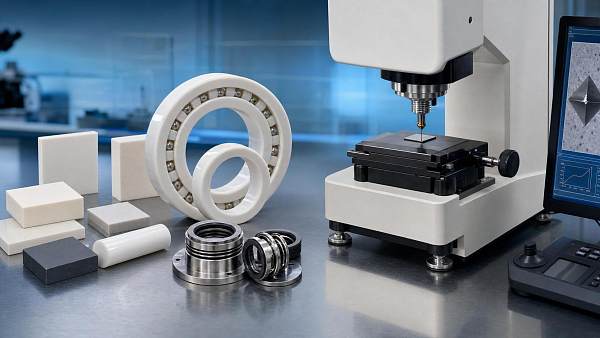
Technical ceramics hardness data may be reported using Vickers, Knoop, Rockwell, or Mohs scales, depending on purpose and tradition.
A Vickers value without load, dwell time, surface finish, or standard reference is incomplete for comparative assessment.
When technical ceramics hardness data differs between suppliers, the first question should be whether the test conditions were identical.
Forces Driving Better Interpretation of Technical Ceramics Hardness Data
Several structural factors are pushing the market toward more disciplined hardness interpretation and traceable material benchmarking.
- Higher equipment utilization makes wear-related downtime more expensive and visible.
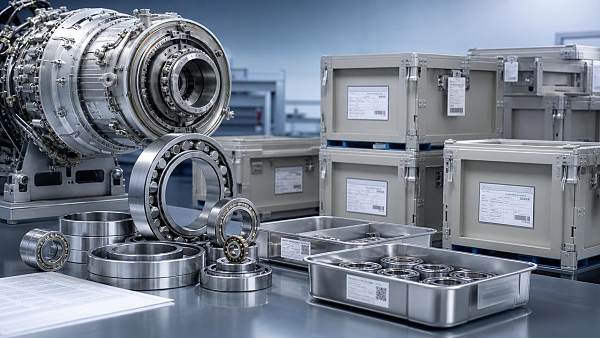
- Export-sensitive supply chains require verifiable material specifications and alternate-source comparison.
- Miniaturized components magnify the effect of surface defects and indentation damage.
- Digital quality systems favor measurable data over broad material claims.
- Standards alignment improves communication across global engineering and sourcing networks.
These forces explain why technical ceramics hardness data is now reviewed together with certificates, inspection reports, and application-specific qualification records.
How Material Type Changes the Meaning of Hardness
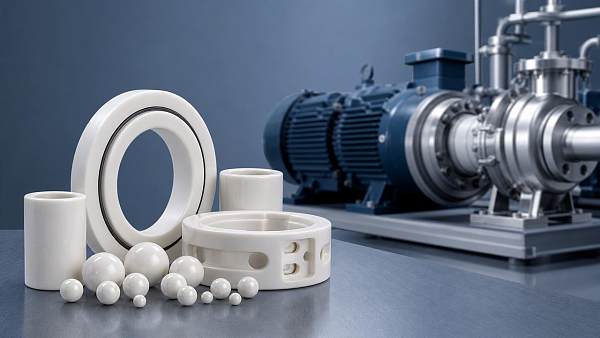
The same hardness number may carry different implications across alumina, zirconia, silicon carbide, silicon nitride, and aluminum nitride.
Alumina commonly offers strong wear resistance and cost efficiency, but grade purity and porosity strongly influence final performance.
Zirconia can show lower hardness than alumina, yet its toughness may improve resistance to impact or edge chipping.
Silicon carbide often provides very high hardness and chemical resistance, making it relevant for seals, liners, and abrasive environments.
Silicon nitride combines hardness, toughness, and thermal shock resistance, which explains its role in bearings and high-speed mechanical systems.
Therefore, technical ceramics hardness data must be interpreted through the intended failure mode, not through a universal material hierarchy.
Microstructure Is the Hidden Context
Grain size, residual glass phase, pore distribution, and sintering quality shape the hardness response measured under an indenter.
A dense, fine-grained ceramic may show stronger indentation resistance than a similar composition with residual porosity.
This is why technical ceramics hardness data should be paired with density, phase composition, and microscopy evidence whenever possible.
Impact Across Engineering, Quality, and Supply Decisions
In design work, hardness supports estimates of sliding wear, abrasive exposure, and contact stress tolerance.
In quality control, hardness trends can indicate process drift, abnormal porosity, poor sintering, or inconsistent surface preparation.
In supplier comparison, technical ceramics hardness data helps separate equivalent grades from superficially similar materials.
However, higher hardness is not always better. Excessive brittleness may create risk in shock, misalignment, or edge-loaded service.
- Wear-facing parts need hardness plus stable surface finish.
- Load-bearing parts need hardness plus fracture toughness.
- Thermal systems need hardness plus thermal shock performance.
- Chemical systems need hardness plus corrosion compatibility.
This integrated view reduces the risk of selecting a hard ceramic that fails for non-hardness reasons.
Key Checks Before Comparing Supplier Values
Before comparing technical ceramics hardness data, confirm whether the reported figures share a common testing basis.
- Identify the hardness scale, such as HV or HK.
- Check the applied load and dwell time.
- Confirm the testing standard and laboratory method.
- Review specimen polishing and surface roughness.
- Ask whether values are typical, minimum, or guaranteed.
- Compare lot-level data, not only catalogue values.
- Check supporting density, toughness, and microstructure data.
A robust review treats technical ceramics hardness data as traceable evidence connected to actual production capability.
Reading Hardness Data in Application Context
For sliding seals, hardness helps predict resistance to abrasive particles, but mating material and lubrication are equally important.
For ceramic bearings, hardness contributes to rolling contact durability, yet fatigue behavior and surface defects remain critical.
For semiconductor handling components, technical ceramics hardness data relates to wear and particle control under repeated contact.
For pump and valve parts, hardness must be considered with erosion patterns, chemical compatibility, and thermal cycling.
The practical question is not which ceramic is hardest. The better question is which ceramic remains stable under the operating envelope.
Recommended Response Framework for Future Benchmarking
As material qualification becomes more data-driven, hardness interpretation should move from catalogue reading to structured benchmarking.
This approach turns technical ceramics hardness data into a practical tool for lifecycle risk assessment and specification control.
What to Watch Next
Future ceramic qualification will likely emphasize richer datasets, including hardness mapping, surface integrity, and statistical variation across batches.
Digital technical repositories will make it easier to compare hardness with reliability history, processing routes, and standards compliance.
Technical ceramics hardness data will also become more useful when linked with simulation models and digital twin environments.
For critical systems, the winning practice is evidence-based interpretation, not simple acceptance of the highest number on a datasheet.
Actionable Next Step
Build a comparison sheet for each candidate ceramic grade before final selection or qualification testing.
Include hardness scale, load, standard, material grade, density, toughness, surface finish, and intended operating conditions.
Then review technical ceramics hardness data against real failure risks, not only against competing catalogue values.
A disciplined review improves material selection, strengthens benchmarking, and supports more dependable advanced industrial systems.
Recommended News
 Oct 18, 2026Which Quality Checks Matter Most for Precision Ceramic Bearings?What quality checks matter most for precision-manufactured parts? Discover essential ceramic bearing inspections, from defect screening to preload testing, to reduce risk and buy confidently.
 Oct 19, 2026How dust exposure changes hybrid bearing lubrication intervalsOptimize your bearing lubrication interval for dust-exposed hybrid bearings. Learn when to grease more often, fix ingress paths and use condition checks to reduce costly downtime.
 Oct 18, 2026How to calculate relubrication intervals for hybrid ceramic bearingsMaster relubrication interval calculation for hybrid ceramic bearings. Learn to adjust for speed, temperature, and contamination to reduce downtime and avoid overgreasing.
![]() Oct 18, 2026Do Robotics Applications Need Higher-Precision Bearing Grades?Is a higher precision bearing grade necessary for robotics? Explore how runout, stiffness, preload, loads, and operating conditions shape robot accuracy, reliability, and cost.
Oct 18, 2026Do Robotics Applications Need Higher-Precision Bearing Grades?Is a higher precision bearing grade necessary for robotics? Explore how runout, stiffness, preload, loads, and operating conditions shape robot accuracy, reliability, and cost.![]() Oct 17, 2026How Often Should Ceramic Bearings Be Inspected?How often should ceramic bearings be inspected? Learn condition-based intervals, warning signs, and maintenance tips to improve reliability and prevent costly downtime.
Oct 17, 2026How Often Should Ceramic Bearings Be Inspected?How often should ceramic bearings be inspected? Learn condition-based intervals, warning signs, and maintenance tips to improve reliability and prevent costly downtime. Sep 01, 2026How to use bearing lubrication interval benchmarks for service schedulingBearing lubrication interval benchmarks help maintenance teams build smarter service schedules, reduce failures, prevent overgreasing, and improve asset reliability.
 Jul 27, 2026Bearing Lubrication Interval by ISO: How to Set Safe Relubrication CyclesBearing lubrication interval ISO guide: learn how to set safe relubrication cycles using speed, temperature, contamination, and grease quantity to reduce downtime and improve bearing reliability.
 Jul 18, 2026Advanced Materials Ceramics: Key Performance Factors for High-Wear ApplicationsAdvanced Materials ceramics for high-wear applications: explore key factors like toughness, thermal stability, surface quality, and lifecycle value to choose reliable industrial components.
 Jul 13, 2026Ceramic Hardness Scale Explained for Material SelectionCeramic hardness scale explained for smarter material selection. Compare Mohs, Vickers, and Knoop methods to improve wear resistance, reliability, and cost-fit decisions.
 Jun 27, 2026Cross Roller Bearing Inner Ring Tolerance BasicsCross roller bearing inner ring tolerance basics explained: learn how fit, runout, roundness, and surface quality affect precision, reliability, and inspection decisions.
 Jun 23, 2026How to Compare Bearing Suppliers on Quality, Lead Time, and CostBearing suppliers compared the smart way: learn how to evaluate quality consistency, lead time risk, and total cost to choose reliable partners and avoid costly sourcing mistakes.
: Common Causes and Fixes") Jun 10, 2026Bearing Noise and Vibration (NVH): Common Causes and FixesBearing noise and vibration (NVH) explained: discover common causes, warning signs, and proven fixes to prevent repeat failures, cut downtime, and improve equipment reliability.
Jun 10, 2026Bearing Noise and Vibration (NVH): Common Causes and FixesBearing noise and vibration (NVH) explained: discover common causes, warning signs, and proven fixes to prevent repeat failures, cut downtime, and improve equipment reliability. Jun 03, 2026How to Read Technical Ceramics Hardness DataTechnical ceramics hardness data helps you compare wear resistance, test methods, and supplier claims—learn how to read values with confidence before material selection.
 May 24, 2026Aerospace Bearing Market Insights: 2026 Cost and Supply RisksAerospace bearing market insights for 2026: uncover cost drivers, lead-time risks, and supplier qualification challenges to make smarter sourcing decisions and protect delivery stability.
 May 23, 2026Global Bearing Supply Chain Alerts: 2026 Risk SignalsGlobal bearing supply chain alerts reveal the top 2026 risk signals affecting lead times, quality, compliance, and sourcing. Learn how buyers can spot exposure early and build a smarter response.
 May 23, 2026Innovations in Friction Reduction That Improve UptimeInnovations in friction reduction help maintenance teams cut wear, extend service intervals, and improve uptime across pumps, bearings, valves, and precision systems.
 May 23, 2026New ISO Standards for Bearings: What Changes in 2026New ISO standards for bearings in 2026 will reshape inspection, supplier audits, and compliance. Learn the key changes and how to prepare early to reduce risk.
 May 22, 2026Advancements in Ceramic Materials for High-Speed Wear ControlAdvancements in ceramic materials are reshaping high-speed wear control with lower friction, cleaner operation, and longer uptime. Discover where ceramics deliver measurable lifecycle gains.
 May 21, 2026Bearing Fatigue Life L10 Data and Replacement TimingBearing fatigue life (L10) data helps maintenance teams set smarter replacement timing using real load, lubrication, and condition signals to reduce downtime, improve reliability, and optimize spares.
 May 21, 2026Bearing Noise and Vibration NVH: Pass or Fail?Bearing noise and vibration (NVH): pass or fail? Learn the key criteria, test logic, and practical benchmarks quality teams use to reduce risk, improve reliability, and make confident acceptance decisions.
 May 20, 2026Ceramic Bearing Speed and Load Data: What Matters MostCeramic bearing speed and load data explained for real operating conditions—learn how speed, load, lubrication, and thermal limits affect reliability, precision, and service life.
 May 19, 2026Miniature Bearing Factory Checks for Low-Particle RunsMiniature bearing factory checks now go beyond precision alone. Discover how low-particle validation, traceability, and clean process control reduce risk and strengthen supplier confidence.
 May 18, 2026Wholesale Ceramic Bearings: When Higher Unit Cost Lowers Total MaintenanceWholesale ceramic bearings can cost more upfront, but they often reduce total maintenance through longer life, less downtime, and lower lubrication and failure-related costs.
 May 03, 2026Ceramic Bearings Solutions: When the Higher Upfront Cost Pays OffCeramic Bearings solutions deliver ROI when downtime, corrosion, high speed, or electrical damage make steel bearings costly. Learn when the premium pays off.