Search News
Industry Portal
Popular Tags
Cross Roller Bearing Inner Ring Tolerance Basics
Author
Time
Click Count
In precision motion systems, the smallest geometry errors often create the largest reliability problems. That is why cross roller bearing inner ring tolerance deserves close attention wherever stability, repeatability, and low vibration matter.
A loose reading of tolerance data can lead to misalignment during assembly, abnormal preload, rising noise, and early fatigue. In sectors tied to semiconductor tools, automation platforms, metrology stages, and critical machinery, those risks quickly move from quality concern to safety exposure.
Within the broader industrial landscape tracked by G-CST, bearing tolerances are not isolated drawing notes. They sit inside a larger chain of benchmarking, standards compliance, maintenance planning, and investment risk control.
Why the inner ring matters so much
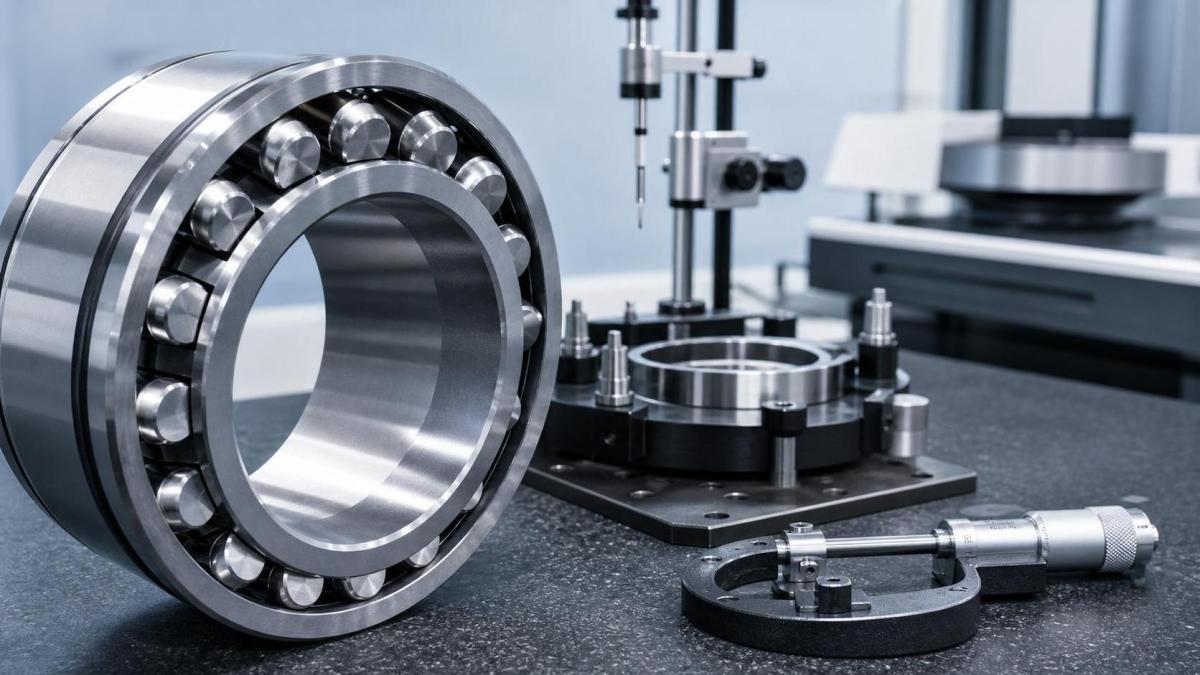
A cross roller bearing carries loads through cylindrical rollers arranged in alternating directions. This layout gives one bearing the ability to support radial load, axial load, and moment load at the same time.
The inner ring is the reference surface for fit, rotation accuracy, and load transfer. If its dimensions drift beyond control, the entire bearing system can behave differently from the design assumption.
That is the practical meaning of cross roller bearing inner ring tolerance. It defines how much variation is allowed in size, roundness, runout, width, and related geometry before function begins to degrade.
In actual production, tolerance is never only about passing inspection. It shapes mounting force, shaft interaction, rotational smoothness, lubricant film behavior, and the bearing’s response to thermal change.
The basic tolerance elements behind performance
Several measurements together describe whether a cross roller bearing inner ring is fit for service. Looking at only one value, such as bore diameter, can hide the real risk.
Dimensional control
Bore diameter tolerance affects the fit between the ring and shaft or mounting journal. Too tight, and assembly stress rises. Too loose, and micro-movement can damage surfaces.
Ring width tolerance also matters. Small width variation can shift axial positioning, alter preload, and complicate stack-up accuracy in compact assemblies.
Geometric accuracy
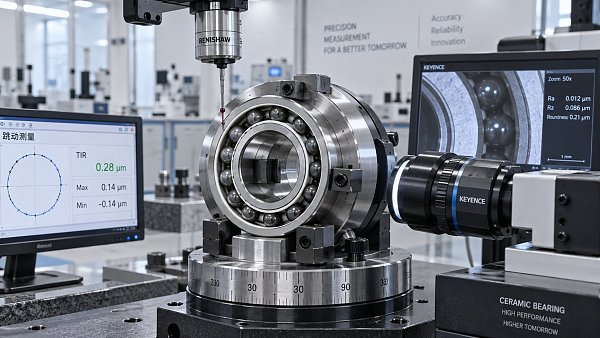
Roundness influences how evenly rolling elements contact the raceway. Out-of-round conditions create localized stress, unstable torque, and vibration peaks.
Runout is another key check. Excessive radial or axial runout often appears later as positioning error, noise, sealing wear, and control instability in servo-driven systems.
Surface and raceway condition
Tolerance discussions often stop at dimensions, but surface finish is part of the real picture. Raceway waviness, burrs, or handling damage can undermine an otherwise compliant ring.
For this reason, cross roller bearing inner ring evaluation should connect dimensional data with visual inspection, hardness verification, and traceable process records.
Why industry attention is increasing
Tolerance control has become more visible because modern equipment leaves less margin for mechanical inconsistency. Digital twins, tighter servo loops, and higher throughput make small bearing errors easier to detect and harder to ignore.
In semiconductor fabrication equipment, a cross roller bearing inner ring may influence wafer stage motion, vacuum-compatible handling modules, or compact rotary tables. In these cases, vibration and repeatability are linked directly to process yield.
In robotics, machine tools, inspection platforms, and medical devices, tolerance drift can reduce path accuracy, shorten calibration intervals, and raise maintenance uncertainty. Those are operational costs, not just engineering details.
This is where the G-CST perspective becomes useful. Benchmarking components against ISO, ASME, IEEE, and sector-specific practice helps decision-makers compare not only price and lead time, but also verification depth and long-term reliability confidence.
What should be checked during inspection
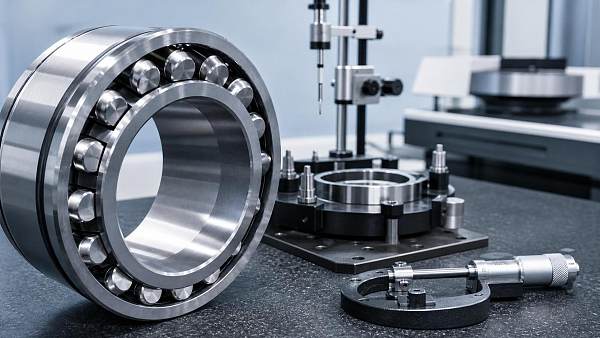
Inspection of a cross roller bearing inner ring works best when dimensional checks are tied to the intended application. A ring for a low-speed positioning table may tolerate different behavior from one used in a high-precision cleanroom module.
Good inspection practice also considers measurement method. Gauge repeatability, temperature stabilization, and datum selection can change the conclusion, especially when tolerance bands are narrow.
Common failure paths linked to tolerance errors
Not every failure begins with material defects or overload. Many begin earlier, with a cross roller bearing inner ring that looked acceptable on paper but interacted poorly with the housing, shaft, or preload scheme.
- Interference fit beyond design intent can distort the ring and alter roller contact patterns.
- Undersized fit can allow creeping, corrosion marks, and unstable rotational behavior.
- Runout outside target values can amplify vibration in high-speed or high-resolution systems.
- Inconsistent ring width can disrupt preload consistency across production batches.
- Poor surface integrity can accelerate debris generation and lubricant degradation.
These issues are especially costly when installed components are hard to access, validated under regulated procedures, or integrated into clean, hazardous, or uptime-critical environments.
How to read tolerance data in a business context
Tolerance data should be read alongside application demands, not in isolation. A tighter number is not automatically better if it complicates assembly, raises scrap risk, or exceeds the control capability of the supply base.
The useful question is whether the cross roller bearing inner ring specification matches the risk profile of the equipment. Mission-critical systems need traceability, process discipline, and evidence that the tolerance can be maintained consistently.
G-CST’s multidisciplinary model is relevant here because bearing selection rarely stands alone. Motion hardware, digital monitoring, material selection, and compliance frameworks all influence what tolerance level is commercially and technically realistic.
Practical review points
- Confirm which tolerance values are functional requirements and which are legacy defaults.
- Check whether mounting fits were validated under operating temperature, not only room conditions.
- Look for correlation between inspection data and vibration or torque test results.
- Review supplier capability, calibration discipline, and lot-level traceability.
- Use standards references consistently when comparing global sources.
Where to focus next
A sound understanding of cross roller bearing inner ring tolerance starts with geometry, but it should end with better decisions. The next step is to connect drawing limits with real operating conditions, inspection capability, and failure history.
That usually means reviewing fit calculations, comparing tolerance certificates against internal acceptance criteria, and checking whether field issues map back to ring accuracy rather than broader system assumptions.
Where equipment reliability is strategic, a structured benchmark against recognized standards and verified supplier data is often more useful than relying on nominal catalog values alone. That approach makes the cross roller bearing inner ring a controllable variable, not a hidden source of risk.
Recommended News
 Oct 18, 2026Which Quality Checks Matter Most for Precision Ceramic Bearings?What quality checks matter most for precision-manufactured parts? Discover essential ceramic bearing inspections, from defect screening to preload testing, to reduce risk and buy confidently.
 Oct 19, 2026How dust exposure changes hybrid bearing lubrication intervalsOptimize your bearing lubrication interval for dust-exposed hybrid bearings. Learn when to grease more often, fix ingress paths and use condition checks to reduce costly downtime.
 Oct 18, 2026How to calculate relubrication intervals for hybrid ceramic bearingsMaster relubrication interval calculation for hybrid ceramic bearings. Learn to adjust for speed, temperature, and contamination to reduce downtime and avoid overgreasing.
![]() Oct 18, 2026Do Robotics Applications Need Higher-Precision Bearing Grades?Is a higher precision bearing grade necessary for robotics? Explore how runout, stiffness, preload, loads, and operating conditions shape robot accuracy, reliability, and cost.
Oct 18, 2026Do Robotics Applications Need Higher-Precision Bearing Grades?Is a higher precision bearing grade necessary for robotics? Explore how runout, stiffness, preload, loads, and operating conditions shape robot accuracy, reliability, and cost.![]() Oct 17, 2026How Often Should Ceramic Bearings Be Inspected?How often should ceramic bearings be inspected? Learn condition-based intervals, warning signs, and maintenance tips to improve reliability and prevent costly downtime.
Oct 17, 2026How Often Should Ceramic Bearings Be Inspected?How often should ceramic bearings be inspected? Learn condition-based intervals, warning signs, and maintenance tips to improve reliability and prevent costly downtime. Sep 01, 2026How to use bearing lubrication interval benchmarks for service schedulingBearing lubrication interval benchmarks help maintenance teams build smarter service schedules, reduce failures, prevent overgreasing, and improve asset reliability.
 Jul 27, 2026Bearing Lubrication Interval by ISO: How to Set Safe Relubrication CyclesBearing lubrication interval ISO guide: learn how to set safe relubrication cycles using speed, temperature, contamination, and grease quantity to reduce downtime and improve bearing reliability.
 Jul 18, 2026Advanced Materials Ceramics: Key Performance Factors for High-Wear ApplicationsAdvanced Materials ceramics for high-wear applications: explore key factors like toughness, thermal stability, surface quality, and lifecycle value to choose reliable industrial components.
 Jul 13, 2026Ceramic Hardness Scale Explained for Material SelectionCeramic hardness scale explained for smarter material selection. Compare Mohs, Vickers, and Knoop methods to improve wear resistance, reliability, and cost-fit decisions.
 Jun 27, 2026Cross Roller Bearing Inner Ring Tolerance BasicsCross roller bearing inner ring tolerance basics explained: learn how fit, runout, roundness, and surface quality affect precision, reliability, and inspection decisions.
 Jun 23, 2026How to Compare Bearing Suppliers on Quality, Lead Time, and CostBearing suppliers compared the smart way: learn how to evaluate quality consistency, lead time risk, and total cost to choose reliable partners and avoid costly sourcing mistakes.
: Common Causes and Fixes") Jun 10, 2026Bearing Noise and Vibration (NVH): Common Causes and FixesBearing noise and vibration (NVH) explained: discover common causes, warning signs, and proven fixes to prevent repeat failures, cut downtime, and improve equipment reliability.
Jun 10, 2026Bearing Noise and Vibration (NVH): Common Causes and FixesBearing noise and vibration (NVH) explained: discover common causes, warning signs, and proven fixes to prevent repeat failures, cut downtime, and improve equipment reliability. Jun 03, 2026How to Read Technical Ceramics Hardness DataTechnical ceramics hardness data helps you compare wear resistance, test methods, and supplier claims—learn how to read values with confidence before material selection.
 May 24, 2026Aerospace Bearing Market Insights: 2026 Cost and Supply RisksAerospace bearing market insights for 2026: uncover cost drivers, lead-time risks, and supplier qualification challenges to make smarter sourcing decisions and protect delivery stability.
 May 23, 2026Global Bearing Supply Chain Alerts: 2026 Risk SignalsGlobal bearing supply chain alerts reveal the top 2026 risk signals affecting lead times, quality, compliance, and sourcing. Learn how buyers can spot exposure early and build a smarter response.
 May 23, 2026Innovations in Friction Reduction That Improve UptimeInnovations in friction reduction help maintenance teams cut wear, extend service intervals, and improve uptime across pumps, bearings, valves, and precision systems.
 May 23, 2026New ISO Standards for Bearings: What Changes in 2026New ISO standards for bearings in 2026 will reshape inspection, supplier audits, and compliance. Learn the key changes and how to prepare early to reduce risk.
 May 22, 2026Advancements in Ceramic Materials for High-Speed Wear ControlAdvancements in ceramic materials are reshaping high-speed wear control with lower friction, cleaner operation, and longer uptime. Discover where ceramics deliver measurable lifecycle gains.
 May 21, 2026Bearing Fatigue Life L10 Data and Replacement TimingBearing fatigue life (L10) data helps maintenance teams set smarter replacement timing using real load, lubrication, and condition signals to reduce downtime, improve reliability, and optimize spares.
 May 21, 2026Bearing Noise and Vibration NVH: Pass or Fail?Bearing noise and vibration (NVH): pass or fail? Learn the key criteria, test logic, and practical benchmarks quality teams use to reduce risk, improve reliability, and make confident acceptance decisions.
 May 20, 2026Ceramic Bearing Speed and Load Data: What Matters MostCeramic bearing speed and load data explained for real operating conditions—learn how speed, load, lubrication, and thermal limits affect reliability, precision, and service life.
 May 19, 2026Miniature Bearing Factory Checks for Low-Particle RunsMiniature bearing factory checks now go beyond precision alone. Discover how low-particle validation, traceability, and clean process control reduce risk and strengthen supplier confidence.
 May 18, 2026Wholesale Ceramic Bearings: When Higher Unit Cost Lowers Total MaintenanceWholesale ceramic bearings can cost more upfront, but they often reduce total maintenance through longer life, less downtime, and lower lubrication and failure-related costs.
 May 03, 2026Ceramic Bearings Solutions: When the Higher Upfront Cost Pays OffCeramic Bearings solutions deliver ROI when downtime, corrosion, high speed, or electrical damage make steel bearings costly. Learn when the premium pays off.