Search News
Industry Portal
Popular Tags
Bearing Fatigue Life L10 Data and Replacement Timing

Author
Time
Click Count
For after-sales maintenance teams, accurate bearing fatigue life (L10) data is no longer a static catalog value. It is becoming a decision signal for uptime, safety, and inventory discipline.
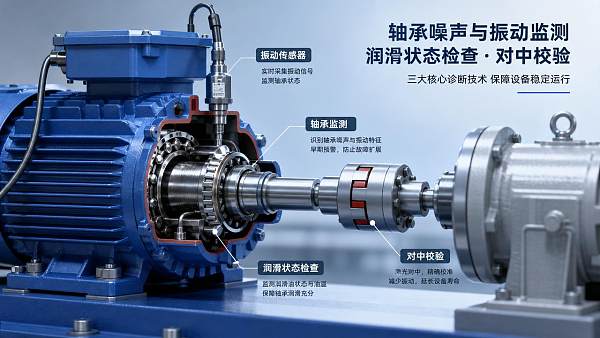
As industrial assets run faster, hotter, and with tighter tolerance windows, bearing fatigue life (L10) data must be interpreted against real conditions. Replacement timing now depends on load variation, lubrication quality, contamination risk, and duty cycle stability.
In cross-industry environments, from pumps to motion systems, better use of bearing fatigue life (L10) data supports fewer surprise failures, cleaner shutdown planning, and stronger spare-parts forecasting.
Why bearing fatigue life (L10) data is gaining strategic importance
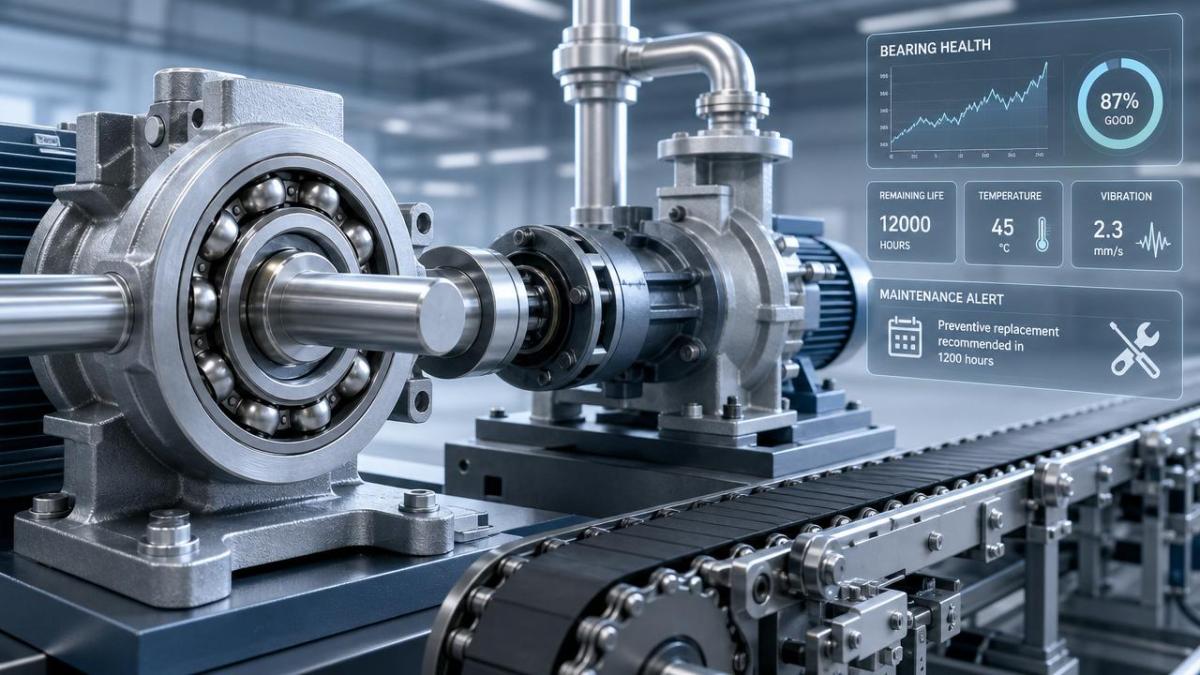
A decade ago, many facilities treated L10 as a rough engineering estimate. Today, the same number is being used more carefully because downtime costs have risen across critical production and infrastructure systems.
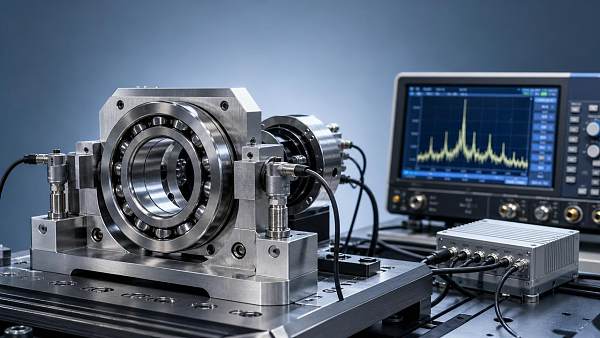
Digital monitoring also changed expectations. Vibration, temperature, and lubrication data now reveal whether actual bearing stress matches design assumptions. That makes bearing fatigue life (L10) data more useful, but also more exposed to misuse.
The main trend is clear: maintenance programs are moving from fixed replacement intervals toward risk-weighted timing. In that shift, bearing fatigue life (L10) data serves as a baseline, not the final answer.
Current signals show replacement timing is becoming more condition-linked
Several field signals explain why replacement timing is being recalibrated. Equipment life is no longer judged only by operating hours. Load peaks, starts and stops, and contamination events increasingly shape service life.
This is especially relevant in comprehensive industrial settings. Mixed asset fleets often include pumps, conveyors, machine tools, fans, robotics, and test rigs. Each applies different stress patterns to the same bearing family.
When teams rely on untreated catalog numbers alone, replacement may come too early or too late. Both outcomes hurt performance. Early replacement wastes inventory. Late replacement raises failure risk and extends recovery time.
The most visible trend signals
- Higher rotational speeds in compact equipment platforms
- More variable loads caused by automation cycles
- Greater contamination sensitivity in harsh environments
- Stricter uptime targets in continuous operations
- Wider adoption of condition monitoring and CMMS integration
What is pushing the shift in how bearing fatigue life (L10) data is used
The drivers are technical and operational. L10 still represents the life at which 10% of a sufficiently large bearing group is expected to fail from fatigue. Yet real service conditions often differ sharply from standard assumptions.
How to connect bearing fatigue life (L10) data with real service conditions
The practical shift is not to reject L10. It is to contextualize it. Bearing fatigue life (L10) data should be checked against actual radial and axial loads, speed profile, lubrication condition, and environmental cleanliness.
A useful method starts with segmenting assets by service severity. Similar bearings can have very different replacement timing if one runs steady and clean while another sees shocks, washdowns, or frequent acceleration.
A simple interpretation framework
- Confirm catalog bearing fatigue life (L10) data and basic rating assumptions.
- Convert operating history into realistic load and speed profiles.
- Assess lubrication intervals, grease type, and contamination exposure.
- Review condition indicators such as vibration trend and temperature drift.
- Set a replacement window, not a single fixed date.
This approach is especially valuable where asset criticality differs. A noncritical fan may run closer to predicted life. A critical process pump may justify earlier changeout despite acceptable bearing fatigue life (L10) data.
The impact reaches maintenance planning, inventory, and reliability performance
When interpreted correctly, bearing fatigue life (L10) data improves more than component life prediction. It influences work order timing, outage coordination, technician utilization, and spare stock levels.
The biggest operational gain often comes from avoiding false certainty. Many failures occur not because L10 was unknown, but because teams assumed the same timing fit every operating context.
Observed business effects of better L10 interpretation
- Lower unplanned stoppage frequency on rotating equipment
- Reduced emergency freight for replacement bearings
- More accurate spare-parts reservation by asset group
- Better alignment between shutdown windows and actual degradation risk
- More credible reliability reporting across mixed industrial systems
The priority now is building replacement windows instead of fixed dates
A growing best practice is to define three thresholds. The first is expected life from bearing fatigue life (L10) data. The second is the inspection trigger. The third is the latest acceptable replacement point.
This structure works well in plants with mixed criticality. It allows maintenance teams to intervene earlier when symptoms rise, while avoiding unnecessary early replacement on stable assets.
Key points that deserve attention
- Do not treat bearing fatigue life (L10) data as a guaranteed service life.
- Separate fatigue risk from wear, contamination, and mounting damage.
- Use severity categories for assets with similar bearings but different duties.
- Link inspection timing to trend changes, not only operating hours.
- Review replacement outcomes to refine future L10-based planning.
A practical decision model for the next planning cycle
The next step is not a large transformation project. It is a disciplined review of where bearing fatigue life (L10) data already exists and where service assumptions are weakest.
A reliable program combines engineering logic with field evidence. In that model, bearing fatigue life (L10) data becomes a strong anchor for planning, but never the only source of truth.
Start with the highest-impact assets. Compare predicted life, actual failure history, and monitoring trends. Then update replacement windows, stocking rules, and inspection frequency based on evidence.
Done well, this creates a practical balance: fewer unexpected failures, less premature replacement, and smarter use of maintenance resources across industrial operations.
Recommended News
 Oct 18, 2026Which Quality Checks Matter Most for Precision Ceramic Bearings?What quality checks matter most for precision-manufactured parts? Discover essential ceramic bearing inspections, from defect screening to preload testing, to reduce risk and buy confidently.
 Oct 19, 2026How dust exposure changes hybrid bearing lubrication intervalsOptimize your bearing lubrication interval for dust-exposed hybrid bearings. Learn when to grease more often, fix ingress paths and use condition checks to reduce costly downtime.
 Oct 18, 2026How to calculate relubrication intervals for hybrid ceramic bearingsMaster relubrication interval calculation for hybrid ceramic bearings. Learn to adjust for speed, temperature, and contamination to reduce downtime and avoid overgreasing.
![]() Oct 18, 2026Do Robotics Applications Need Higher-Precision Bearing Grades?Is a higher precision bearing grade necessary for robotics? Explore how runout, stiffness, preload, loads, and operating conditions shape robot accuracy, reliability, and cost.
Oct 18, 2026Do Robotics Applications Need Higher-Precision Bearing Grades?Is a higher precision bearing grade necessary for robotics? Explore how runout, stiffness, preload, loads, and operating conditions shape robot accuracy, reliability, and cost.![]() Oct 17, 2026How Often Should Ceramic Bearings Be Inspected?How often should ceramic bearings be inspected? Learn condition-based intervals, warning signs, and maintenance tips to improve reliability and prevent costly downtime.
Oct 17, 2026How Often Should Ceramic Bearings Be Inspected?How often should ceramic bearings be inspected? Learn condition-based intervals, warning signs, and maintenance tips to improve reliability and prevent costly downtime. Sep 01, 2026How to use bearing lubrication interval benchmarks for service schedulingBearing lubrication interval benchmarks help maintenance teams build smarter service schedules, reduce failures, prevent overgreasing, and improve asset reliability.
 Jul 27, 2026Bearing Lubrication Interval by ISO: How to Set Safe Relubrication CyclesBearing lubrication interval ISO guide: learn how to set safe relubrication cycles using speed, temperature, contamination, and grease quantity to reduce downtime and improve bearing reliability.
 Jul 18, 2026Advanced Materials Ceramics: Key Performance Factors for High-Wear ApplicationsAdvanced Materials ceramics for high-wear applications: explore key factors like toughness, thermal stability, surface quality, and lifecycle value to choose reliable industrial components.
 Jul 13, 2026Ceramic Hardness Scale Explained for Material SelectionCeramic hardness scale explained for smarter material selection. Compare Mohs, Vickers, and Knoop methods to improve wear resistance, reliability, and cost-fit decisions.
 Jun 27, 2026Cross Roller Bearing Inner Ring Tolerance BasicsCross roller bearing inner ring tolerance basics explained: learn how fit, runout, roundness, and surface quality affect precision, reliability, and inspection decisions.
 Jun 23, 2026How to Compare Bearing Suppliers on Quality, Lead Time, and CostBearing suppliers compared the smart way: learn how to evaluate quality consistency, lead time risk, and total cost to choose reliable partners and avoid costly sourcing mistakes.
: Common Causes and Fixes") Jun 10, 2026Bearing Noise and Vibration (NVH): Common Causes and FixesBearing noise and vibration (NVH) explained: discover common causes, warning signs, and proven fixes to prevent repeat failures, cut downtime, and improve equipment reliability.
Jun 10, 2026Bearing Noise and Vibration (NVH): Common Causes and FixesBearing noise and vibration (NVH) explained: discover common causes, warning signs, and proven fixes to prevent repeat failures, cut downtime, and improve equipment reliability. Jun 03, 2026How to Read Technical Ceramics Hardness DataTechnical ceramics hardness data helps you compare wear resistance, test methods, and supplier claims—learn how to read values with confidence before material selection.
 May 24, 2026Aerospace Bearing Market Insights: 2026 Cost and Supply RisksAerospace bearing market insights for 2026: uncover cost drivers, lead-time risks, and supplier qualification challenges to make smarter sourcing decisions and protect delivery stability.
 May 23, 2026Global Bearing Supply Chain Alerts: 2026 Risk SignalsGlobal bearing supply chain alerts reveal the top 2026 risk signals affecting lead times, quality, compliance, and sourcing. Learn how buyers can spot exposure early and build a smarter response.
 May 23, 2026Innovations in Friction Reduction That Improve UptimeInnovations in friction reduction help maintenance teams cut wear, extend service intervals, and improve uptime across pumps, bearings, valves, and precision systems.
 May 23, 2026New ISO Standards for Bearings: What Changes in 2026New ISO standards for bearings in 2026 will reshape inspection, supplier audits, and compliance. Learn the key changes and how to prepare early to reduce risk.
 May 22, 2026Advancements in Ceramic Materials for High-Speed Wear ControlAdvancements in ceramic materials are reshaping high-speed wear control with lower friction, cleaner operation, and longer uptime. Discover where ceramics deliver measurable lifecycle gains.
 May 21, 2026Bearing Fatigue Life L10 Data and Replacement TimingBearing fatigue life (L10) data helps maintenance teams set smarter replacement timing using real load, lubrication, and condition signals to reduce downtime, improve reliability, and optimize spares.
 May 21, 2026Bearing Noise and Vibration NVH: Pass or Fail?Bearing noise and vibration (NVH): pass or fail? Learn the key criteria, test logic, and practical benchmarks quality teams use to reduce risk, improve reliability, and make confident acceptance decisions.
 May 20, 2026Ceramic Bearing Speed and Load Data: What Matters MostCeramic bearing speed and load data explained for real operating conditions—learn how speed, load, lubrication, and thermal limits affect reliability, precision, and service life.
 May 19, 2026Miniature Bearing Factory Checks for Low-Particle RunsMiniature bearing factory checks now go beyond precision alone. Discover how low-particle validation, traceability, and clean process control reduce risk and strengthen supplier confidence.
 May 18, 2026Wholesale Ceramic Bearings: When Higher Unit Cost Lowers Total MaintenanceWholesale ceramic bearings can cost more upfront, but they often reduce total maintenance through longer life, less downtime, and lower lubrication and failure-related costs.
 May 03, 2026Ceramic Bearings Solutions: When the Higher Upfront Cost Pays OffCeramic Bearings solutions deliver ROI when downtime, corrosion, high speed, or electrical damage make steel bearings costly. Learn when the premium pays off.