Search News
Industry Portal
Popular Tags
Shaft Coupling Misalignment Data: Safe Tolerance Limits
Author
Time
Click Count
For quality control and safety teams, reliable shaft coupling misalignment data is essential to prevent vibration, seal failure, premature bearing wear, and unplanned downtime. Understanding safe tolerance limits helps verify installation accuracy, support compliance, and reduce operational risk across rotating equipment. This guide explains the key misalignment thresholds that matter most in daily inspection and maintenance decisions.
In high-value industrial environments, coupling alignment is not a minor installation detail. It is a measurable condition that affects equipment life, process continuity, and safety performance across pumps, motors, compressors, gearboxes, and driven assemblies.
For procurement, inspection, and maintenance leaders working with benchmarked engineering data, shaft coupling misalignment data provides a practical basis for acceptance criteria, contractor evaluation, and condition-based maintenance planning.
Why shaft coupling misalignment data matters in quality and safety control
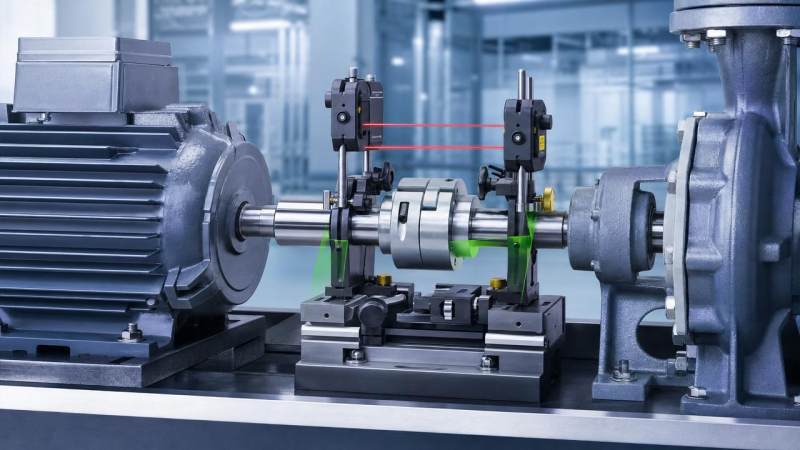
Misalignment occurs when two connected shafts do not share the same centerline under operating conditions. In field practice, the issue appears in 3 main forms: angular misalignment, parallel offset misalignment, and axial displacement.
Even when a coupling can mechanically transmit torque, excessive misalignment can increase radial load, raise bearing temperature by several degrees, and amplify vibration bands that damage seals and connected components within weeks or months.
For quality control personnel, shaft coupling misalignment data supports incoming inspection, installation sign-off, and restart approval. For safety managers, it helps reduce the probability of leakage, coupling failure, shaft fatigue, and unexpected stoppage during critical production runs.
Typical operational consequences of poor alignment
- Vibration increase above normal alarm bands, often seen as 1× RPM or 2× RPM patterns
- Bearing life reduction that may exceed 20% to 50% when offset is left uncorrected
- Mechanical seal overheating, face wear, or leakage in pump and process systems
- Higher energy consumption due to friction and dynamic load imbalance
- Repeat maintenance events within 3 to 12 months after commissioning
Why safe tolerance limits are not universal
There is no single alignment number that fits every machine. Safe tolerance limits depend on shaft speed, coupling type, machine frame stiffness, bearing arrangement, thermal growth, base condition, and whether the equipment is fixed, skid-mounted, or field-assembled.
A flexible elastomer coupling may tolerate more apparent movement than a disc coupling, but that does not mean the machine is well aligned. Quality teams should distinguish between coupling flexibility and acceptable machine alignment condition.
Safe tolerance limits: practical ranges used in inspection and acceptance
The most useful shaft coupling misalignment data is expressed as offset and angular values measured at the coupling. In many industrial applications, acceptable cold alignment is set tighter than coupling catalog capacity to account for dynamic movement during operation.
The table below summarizes commonly used field ranges for general rotating equipment. These are practical reference bands for quality review, not a substitute for OEM instructions or machine-specific engineering requirements.
These values show an important principle: as rotational speed increases, allowable misalignment decreases. A machine running above 3000 RPM generally needs tighter control than a slow-speed utility pump, even when both use flexible couplings.
How to interpret offset, angle, and axial movement
Offset misalignment
Offset, or parallel misalignment, is the lateral distance between shaft centerlines. Values beyond 0.05 mm to 0.10 mm on many standard motor-pump sets often justify correction, especially where seals, rolling bearings, or rigid baseplates are involved.
Angular misalignment
Angular misalignment reflects the slope difference between shafts. It is often recorded as mm per 100 mm or as a gap difference across the coupling face. Small angle errors can create high reaction loads when the coupling span is short.
Axial displacement
Axial position must also remain within the coupling’s permitted travel. A common review point is whether end float or thermal movement pushes the coupling beyond its designed axial window, especially in vertical pumps and hot process services.
A practical acceptance hierarchy for inspection teams
- First check soft foot, base distortion, and pipe strain before measuring final alignment.
- Record cold alignment values in both vertical and horizontal planes.
- Compare results with speed-based targets and coupling manufacturer limits.
- Review thermal growth if operating temperature changes exceed 30°C to 50°C.
- Approve only after bolt torque, repeatability, and re-measurement are confirmed.
Measurement methods and how to improve data reliability
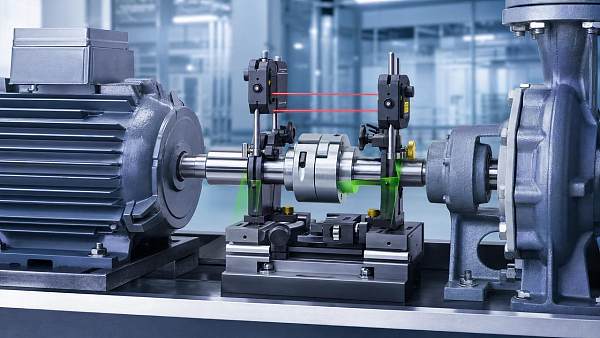
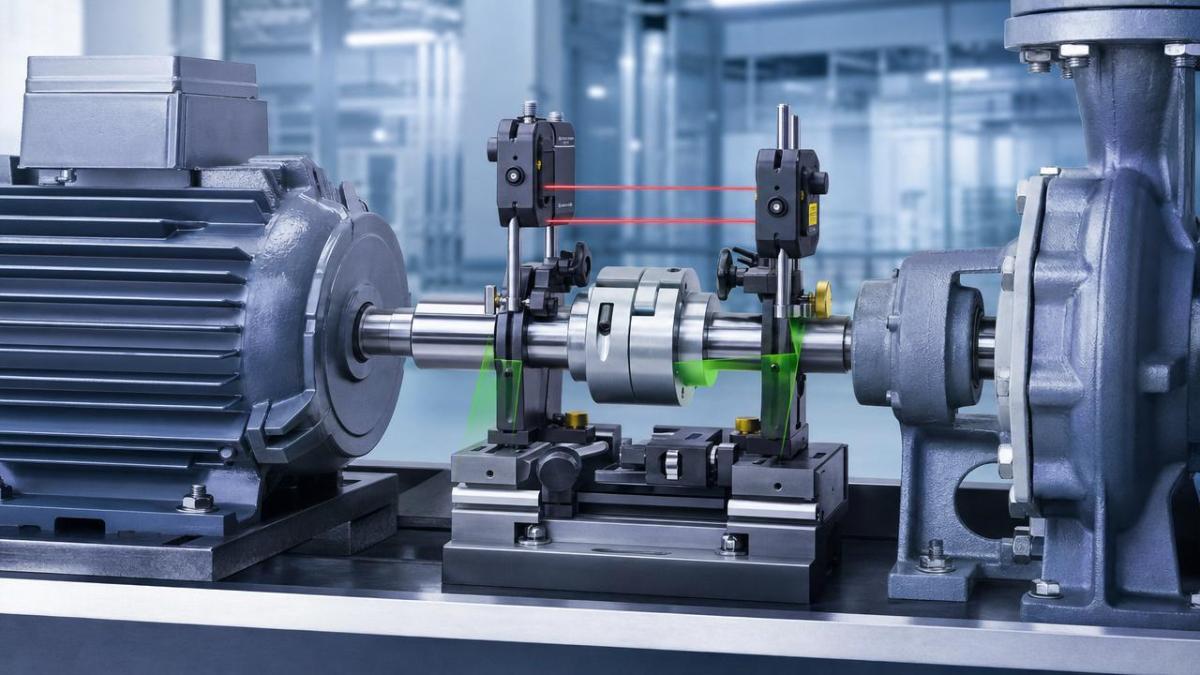
Accurate shaft coupling misalignment data depends as much on method as on instrument quality. A laser system can provide faster correction, but poor setup, loose brackets, or base instability can still produce unreliable readings.
For quality and safety teams, repeatability is a critical metric. If 3 consecutive readings vary beyond 0.02 mm under unchanged conditions, the issue may be measurement technique, soft foot, or machine movement rather than actual shaft position.
Common measurement options
Most sites use 2 main approaches: dial indicator methods and laser alignment systems. Both can be effective when technicians understand fixture rigidity, shaft rotation requirements, and thermal compensation inputs.
The decision is not simply manual versus digital. In many regulated or high-value environments, laser tools reduce setup time and support traceable reports, while dial systems remain useful for verification, training, and constrained access areas.
Four data quality checks before releasing equipment
- Soft foot correction is below 0.05 mm at each foot location after torque verification.
- Pipe strain does not shift the machine by more than 0.03 mm after flange connection.
- Final readings are taken after at least 2 complete measurement cycles.
- Thermal growth assumptions are documented for hot, vertical, or variable-load machines.
Risk factors that can invalidate alignment results
A machine can meet static alignment targets and still fail early if surrounding conditions are ignored. This is why shaft coupling misalignment data should always be reviewed together with base condition, operating temperature, lubrication state, and process piping loads.
Frequent hidden causes
Soft foot and frame distortion
If one machine foot lifts by 0.05 mm to 0.10 mm before tightening, the frame can distort during bolt-down and invalidate the final reading. This is one of the most common reasons why newly aligned assets still vibrate after startup.
Thermal growth mismatch
A hot pump at 120°C and a cooler motor can move relative to each other during service. Cold alignment must sometimes include intentional offsets so that the shafts approach true alignment at operating temperature rather than at ambient conditions.
Pipe strain and foundation movement
Connected piping can shift a pump casing after the final alignment reading. Foundation looseness, grout degradation, or skid flex may also change alignment within days, making post-start verification within 24 to 72 hours a sound control step.
When to tighten tolerance limits
More conservative limits are advisable for 4 common cases: speeds above 3000 RPM, mechanical seal critical pumps, precision bearing systems, and process lines where leakage or product contamination creates safety or compliance exposure.
In these scenarios, teams often adopt a target of 0.02 mm to 0.03 mm offset and similarly tight angular control, provided the machine structure and measurement method can reliably achieve that precision.
How quality and safety teams can turn alignment data into a control process
The most effective use of shaft coupling misalignment data is procedural, not only technical. Organizations that reduce repeat failure typically embed alignment checks into installation, inspection, and maintenance workflows rather than treating them as one-time tasks.
Recommended control points across the asset lifecycle
- Pre-installation: verify base flatness, shim condition, and coupling condition.
- Installation: perform rough alignment, soft foot correction, and final precision alignment.
- Commissioning: document cold targets, operating assumptions, and acceptance signatures.
- Early run period: recheck within 24 to 72 hours for critical assets.
- Routine maintenance: reassess after seal replacement, bearing work, or piping changes.
What to require from contractors or suppliers
For procurement and vendor management, alignment quality should be part of technical scope. Request the measurement method, target tolerances, soft foot criteria, correction records, and final as-left values instead of accepting a general statement that the machine was aligned.
Where rotating equipment supports semiconductor utilities, chemical dosing, water treatment, or precision manufacturing infrastructure, documented traceability can be as important as the final number. This supports benchmarking, incident review, and future maintenance planning.
Common mistakes to avoid
- Using coupling catalog maximums as installation targets
- Ignoring thermal growth in hot or variable-duty service
- Approving alignment before full piping connection
- Skipping recheck after bolt torque, grout cure, or first startup
- Recording pass or fail without actual shaft coupling misalignment data values
For teams responsible for reliability, compliance, and safe operations, good alignment control means more than preventing one repair event. It improves audit readiness, lowers vibration-related risk, and helps preserve bearing, seal, and coupling life across the full operating cycle.
G-CST supports data-driven industrial decisions by connecting practical engineering thresholds with procurement discipline and operational integrity. If you need deeper guidance on tolerance benchmarking, rotating equipment risk review, or supplier-aligned inspection criteria, contact us to discuss a tailored solution or learn more about related technical intelligence services.
Recommended News
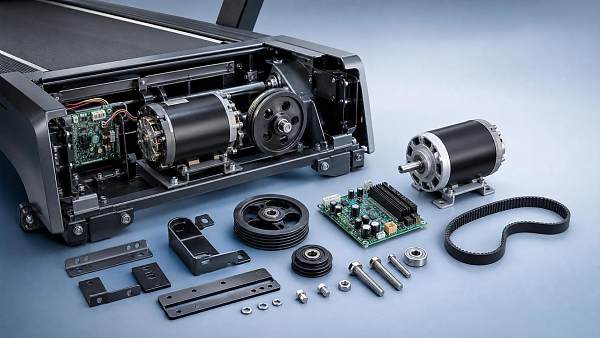
 Jul 05, 2026Treadmill Motor Replacement: Repair or Replace for Lower Long-Term Costtreadmillmotorreplacement made simple: compare repair vs. replacement costs, spot true motor failure, and choose the safest, lowest long-term cost solution.
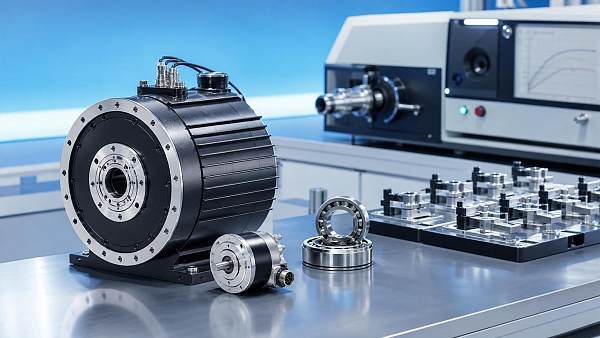
 Jul 02, 2026Torque Direct Drive Motor OEM Selection: Key Checks for Precision and Lead TimeTorque direct drive motor OEM selection starts with the right checks. Learn how to verify precision, quality systems, and lead time to reduce sourcing risk and choose with confidence.
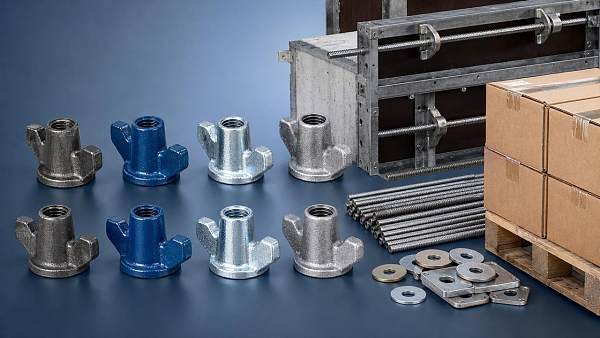
 Jun 11, 2026Tie Rod Wing Nuts Bulk: Cost vs Coating Trade-OffsTie rod wing nuts bulk sourcing is more than unit price. Compare coating options, corrosion resistance, lifecycle cost, and supplier consistency to choose the best value for demanding formwork use.
![]() Jun 04, 2026Impact of EV on Motor Precision: What Will Change by 2026?Impact of EV on motor precision is reshaping design, materials, and control by 2026. Discover key risks, tighter standards, and smart sourcing strategies for enterprise buyers.
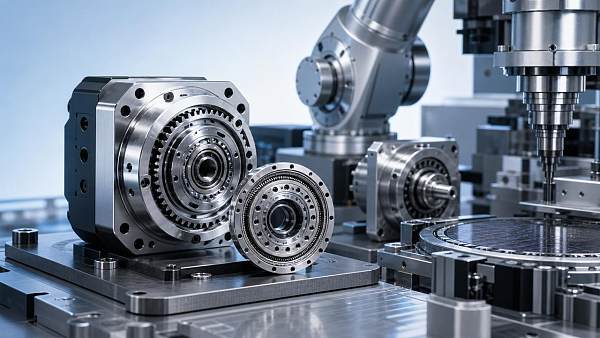
Jun 04, 2026Impact of EV on Motor Precision: What Will Change by 2026?Impact of EV on motor precision is reshaping design, materials, and control by 2026. Discover key risks, tighter standards, and smart sourcing strategies for enterprise buyers. May 23, 2026Precision Gearbox Market Share Report: 2026 OutlookPrecision gearbox market share report for 2026 reveals where competitive shifts, regional demand, and application-specific performance create the best benchmarking and supplier evaluation opportunities.
 May 22, 2026Shaft Coupling Misalignment Data: Safe Tolerance LimitsShaft coupling misalignment data explained with safe tolerance limits, inspection targets, and risk controls to reduce vibration, seal failure, and costly downtime.
 May 21, 2026Slewing Drive Tilting Moment in Real Load CasesSlewing drive tilting moment explained through real load cases. Learn how to assess risk, compare designs, and improve selection accuracy for safer, longer-lasting industrial performance.
 May 21, 2026Planetary Gearbox Backlash Metrics Before You ComparePlanetary gearbox backlash metrics matter before any brand comparison. Learn how backlash affects accuracy, noise, risk, and sourcing decisions for precision motion systems.
 May 21, 2026Gearbox Thermal Power Limits and Hidden Downtime RiskGearbox thermal power limits directly affect uptime, lubricant life, and hidden downtime risk. Learn how to verify thermal margins early and make smarter buying decisions.
 May 20, 2026Planetary Reducer Wholesale: Cost Risks to Check FirstPlanetary reducer wholesale buyers: uncover hidden cost risks before you source. Learn how to compare suppliers, verify quality, reduce warranty exposure, and protect long-term ROI.
 May 20, 2026How to Read Servo Motor Torque-Speed Curves CorrectlyServo motor torque-speed curves explained clearly: learn how to compare continuous and peak torque, avoid sizing mistakes, and choose reliable motion systems with confidence.
 May 19, 2026Flexible Coupling Wholesale: Misalignment Risks and SavingsFlexible coupling wholesale guide: learn how to reduce misalignment risk, cut downtime, compare suppliers, and unlock long-term savings for smarter industrial sourcing.
 May 19, 2026Slewing Drive Manufacturer Comparison for Load ReliabilitySlewing drive manufacturer comparison starts with load reliability. Learn how to evaluate testing, sealing, fatigue life, and support across solar, mobile, marine, and automation applications.
 May 19, 2026Shaft Collar Factory Selection Mistakes That Cause DowntimeShaft collar factory selection mistakes can trigger slippage, vibration, and costly downtime. Learn how to evaluate suppliers by application to improve reliability and uptime.
 May 18, 2026Planetary Gearbox Wholesale: Cost Drivers That Impact MarginPlanetary gearbox wholesale cost drivers explained: learn how materials, precision, lead time, and supplier reliability impact margin, reduce risk, and improve sourcing decisions.
 May 14, 2026Magnetic Drive Coupling Torque Limits in High-Load Chemical Pump SystemsMagnetic drive coupling torque is critical in high-load chemical pump systems. Learn key limits, failure risks, and smarter sizing strategies to improve reliability.