Search News
Industry Portal
Popular Tags
Vacuum Pump Ultimate Pressure Data: When Specs Mislead
Author
Time
Click Count
For commercial evaluators comparing vacuum systems, vacuum pump ultimate pressure data can look definitive—but specs often hide test conditions, gas load assumptions, and measurement methods that distort real-world performance.
In advanced manufacturing, laboratories, coating lines, and semiconductor support utilities, this single number often shapes shortlist decisions too early.
Yet vacuum pump ultimate pressure data rarely describes operating stability, contamination behavior, recovery time, or pressure under process load.
A better reading method reduces technical ambiguity, avoids specification traps, and improves commercial confidence across broader industrial procurement programs.
Why vacuum pump ultimate pressure data needs structured verification
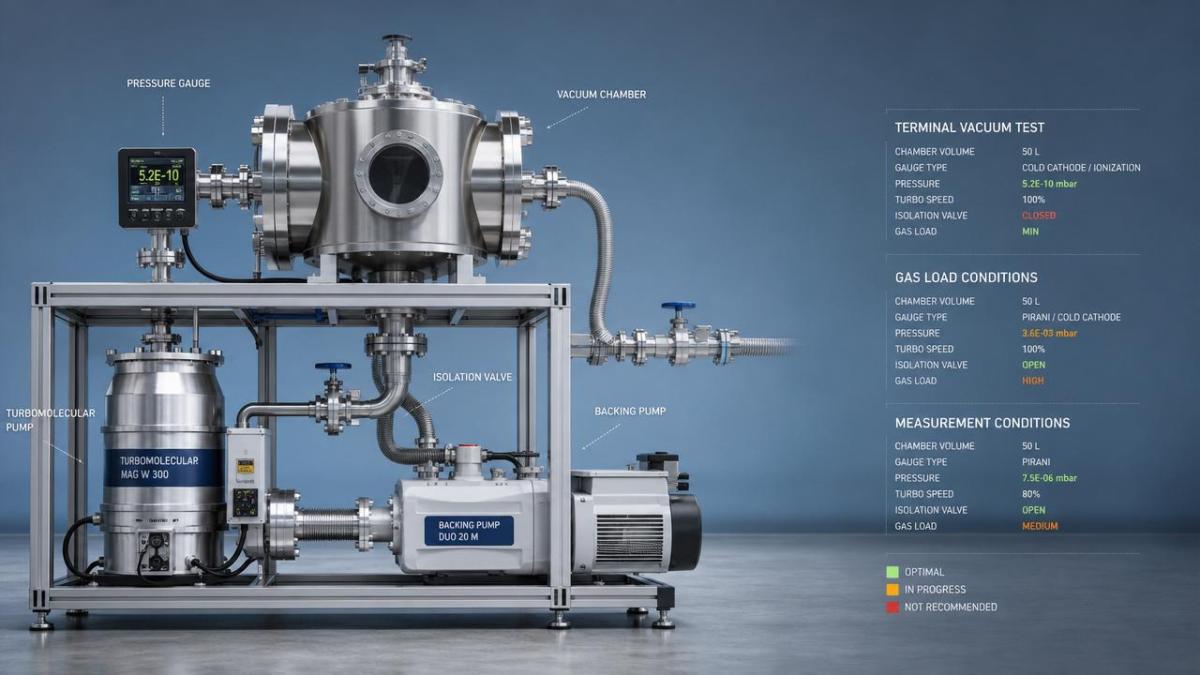
The headline figure usually comes from controlled tests, not from a working chamber with valves, piping losses, outgassing surfaces, and fluctuating gas composition.
This matters across the general industrial sector because system uptime depends on the full pumping architecture, not on isolated brochure values.
Vacuum pump ultimate pressure data can also be influenced by gauge selection, clean-condition preparation, test duration, backing pump quality, and ambient temperature.
Without a structured review, apparently superior numbers may deliver weaker field performance than less aggressive but more transparent specifications.
Core points to review before trusting vacuum pump ultimate pressure data
- Confirm the test gas, because nitrogen, dry air, water vapor, and process vapors produce different pressure behavior and can change apparent vacuum pump ultimate pressure data significantly.
- Check whether the value was measured at the pump inlet or inside a chamber, since conductance losses make system pressure very different from pump-end readings.
- Review the gauge type and calibration range, because Pirani, capacitance manometer, and ionization gauges do not interpret low-pressure conditions in the same way.
- Ask for stabilization time and base-condition preparation, since bakeout, seal condition, oil freshness, and leak checking strongly influence reported ultimate pressure results.
- Verify the backing configuration for turbomolecular or roots systems, because weak foreline performance can make excellent high-vacuum stages appear inconsistent or unstable.
- Separate ultimate pressure from usable process pressure, since many operations value pumping speed at load more than the lowest pressure reached after long idle periods.
- Examine gas ballast settings, especially for wet or solvent-rich duty, because ballast often protects reliability while worsening brochure-level vacuum pump ultimate pressure data.
- Check contamination and backstreaming limits, because low pressure alone does not guarantee clean vacuum conditions for optics, semiconductors, analytical instruments, or coatings.
- Request performance curves across pressure ranges, since a single endpoint hides crossover behavior, pump-down efficiency, and conductance sensitivity in actual installations.
- Compare maintenance intervals with the claimed value, because some systems reach attractive ultimate pressure only when newly serviced and under carefully controlled laboratory conditions.
How misleading specs appear in different applications
Semiconductor and electronics environments
In semiconductor-adjacent utilities, cleanliness often matters more than the lowest advertised pressure. Hydrocarbon backstreaming, particle generation, and water handling can outweigh pure vacuum pump ultimate pressure data.
Systems serving load locks, metrology tools, or dry process modules should be compared by base pressure repeatability, crossover speed, and contamination controls under realistic cycling.
Coating, heat treatment, and metallurgical systems
Large chambers create conductance penalties that can make brochure numbers meaningless. Here, chamber size, fixture mass, and outgassing profiles reshape expected vacuum pump ultimate pressure data.
A more relevant review compares pump-down time to target pressure, partial pressure control, and robustness during repeated thermal cycles or vapor-rich processes.
Analytical, research, and laboratory setups
Laboratory users often see very low published values and assume better instrument sensitivity. But tubing length, valves, traps, and sample desorption can dominate actual system pressure.
For these setups, vacuum pump ultimate pressure data should be checked alongside residual gas behavior, vibration, acoustic output, and restart consistency after venting.
Packaging, medical, and general process industries
Many industrial duties never need extreme vacuum. The better commercial question is whether the pump holds stable operating pressure with moisture, particles, or frequent starts.
In these sectors, vacuum pump ultimate pressure data may distract from energy use, service access, corrosion resistance, and total cost of ownership.
Commonly ignored factors that distort comparison
Outgassing is often mistaken for pump weakness
Elastomers, oils, plastics, and untreated chamber surfaces release gas over time. This can prevent low pressures even when vacuum pump ultimate pressure data is technically accurate.
Leak rate and permeation are not the same issue
A leak test may pass while material permeation still limits base pressure. Comparison based only on vacuum pump ultimate pressure data misses this practical distinction.
Measurement units can create false confidence
Pa, mbar, Torr, and micron are often converted incorrectly in commercial documents. Even small unit mistakes can exaggerate vacuum pump ultimate pressure data by orders of magnitude.
Test duration affects the final reported number
Some systems need long conditioning to approach the advertised endpoint. If production cycles are short, that ultimate figure may have little operational meaning.
Service condition can erase brochure advantages
Seal wear, oil degradation, fouling, and improper ballast use often widen the gap between published vacuum pump ultimate pressure data and field reality.
Practical steps for stronger technical and commercial evaluation
- Request the full test protocol, including gas species, ambient temperature, backing arrangement, gauge model, calibration date, and stabilization period.
- Map vacuum pump ultimate pressure data against process pressure, pump-down time, throughput, contamination risk, and maintenance intervals.
- Use a side-by-side matrix with units normalized to one standard, preferably Pa or mbar, to eliminate conversion errors.
- Ask for performance after defined service hours, not only as-new condition, to capture durability and lifecycle realism.
- Validate with a small acceptance test using representative chamber volume, piping layout, and gas load whenever the application is mission-critical.
For broader enterprise benchmarking, it also helps to align pump data with ISO, SEMI, ASME, or internal qualification methods where applicable.
That approach turns vacuum pump ultimate pressure data from a marketing endpoint into a verifiable engineering input.
Summary and next action
Vacuum pump ultimate pressure data is useful, but only when tied to test method, gas composition, system architecture, and long-term operating condition.
The strongest decisions compare endpoint pressure with pumping speed, cleanliness, recovery behavior, maintenance burden, and application-specific load.
Before approving any shortlist, convert every claimed vacuum pump ultimate pressure data point into a documented verification checklist with normalized units and realistic duty assumptions.
That final step improves comparability, reduces hidden risk, and supports more defensible technical selection across high-value industrial vacuum programs.
Recommended News
 Oct 16, 2026How Do I Size a Pump System for Variable Production Demand?How do I size a pump system for variable production demand? Discover how to match flow, head, VFDs, and staged pumps to reduce energy waste and keep production reliable.
 Sep 27, 2026How valve pressure containment data supports safe system designValve pressure containment data helps engineers verify ratings, materials, tests, and temperature limits for safer system design. Explore practical selection insights.
![]() Oct 16, 2026Which Valve Specifications Help Prevent Chemical Media Leakage?Which valve specification prevents chemical media leakage? Explore sealing, materials, pressure ratings, and fugitive-emission features for safer chemical containment.
Oct 16, 2026Which Valve Specifications Help Prevent Chemical Media Leakage?Which valve specification prevents chemical media leakage? Explore sealing, materials, pressure ratings, and fugitive-emission features for safer chemical containment. Sep 20, 2026When strategic procurement reduces total cost without disrupting supplyStrategic Procurement lowers total cost without risking supply continuity. Learn how to compare delivered value, qualify suppliers, and prevent hidden rework.
 Sep 04, 2026When do oil and gas industrial valves require API 6D certification?Industrial Valves for oil and gas may require API 6D certification for pipeline isolation and transportation systems. Learn key compliance triggers, procurement checks, and safety standards before sourcing.
 Aug 27, 2026Industrial supply chain analysis for finding single-source riskIndustrial Supply Chain Analysis resilience helps uncover hidden single-source risks, map critical dependencies, and build practical mitigation plans for stronger operational continuity.
 Jul 21, 2026How to Evaluate an ISO Compliance Equipment ManufacturerISO compliance equipment manufacturer evaluation starts with more than certificates. Learn how to verify capability, traceability, documentation, and supply reliability.
 Jul 12, 2026Rotary Lobe Pump Exporter Checklist: Certifications, Materials, and Service RiskRotary lobe pump exporter checklist: verify certifications, wetted materials, traceability, and after-sales support to reduce compliance risk, hidden costs, and downtime before you buy.
 Jul 10, 2026ASME Certified Components Quotation: Cost Drivers and Hidden Review PointsASME Certified Components quotation explained: uncover real cost drivers, hidden review points, and supplier risks to compare quotes fairly and avoid costly approval delays.
 Jul 09, 2026How to Compare Global Water and Oil Valve Tenders Databases by Coverage and Update SpeedGlobal water and oil valve tenders database comparison starts with coverage and update speed. Learn how to spot faster, deeper tender intelligence before opportunities are missed.
![]() Jul 07, 2026Air Filters for Clean Processes: When Pressure Drop Becomes a Cost ProblemAir filters can quietly raise clean-process costs through pressure drop, energy loss, and downtime. Learn how to balance filtration efficiency, uptime, and lifecycle savings.
Jul 07, 2026Air Filters for Clean Processes: When Pressure Drop Becomes a Cost ProblemAir filters can quietly raise clean-process costs through pressure drop, energy loss, and downtime. Learn how to balance filtration efficiency, uptime, and lifecycle savings.![]() Jul 07, 2026Metering Pump Manufacturer Checklist for Accuracy and Lifecycle CostMetering pump manufacturer selection goes beyond flow accuracy. Learn how to compare lifecycle cost, reliability, materials, service support, and compliance before you buy.
Jul 07, 2026Metering Pump Manufacturer Checklist for Accuracy and Lifecycle CostMetering pump manufacturer selection goes beyond flow accuracy. Learn how to compare lifecycle cost, reliability, materials, service support, and compliance before you buy.![]() Jul 07, 2026CIP Rotary Lobe Pump Selection: Cleanability, Shear, and Downtime RiskCIP rotary lobe pump selection starts with cleanability, shear control, and downtime risk. Learn how to choose a hygienic, low-maintenance pump that protects product quality.
Jul 07, 2026CIP Rotary Lobe Pump Selection: Cleanability, Shear, and Downtime RiskCIP rotary lobe pump selection starts with cleanability, shear control, and downtime risk. Learn how to choose a hygienic, low-maintenance pump that protects product quality. Jul 06, 2026Food Grade Lobe Pump Shear: How It Affects Product TextureFood grade lobe pump shear directly affects texture, particle retention, and filling stability. Learn how to evaluate shear, protect product quality, and choose the right hygienic pump.
 Jun 30, 2026API Valve Tenders: Cost and Delivery Risks in Global ProjectsGlobal water and oil valve tenders for API valves often hide cost and delivery risks. Learn how to compare bids, spot exclusions, and avoid expensive project delays.
 Jun 27, 2026Slurry Pump for Mining: Common Wear Problems and FixesSlurry pump for mining wear issues explained: spot abrasive wear, cavitation, corrosion, seal leaks, and bearing damage early, with practical fixes to cut downtime and repair costs.
 Jun 25, 2026How to Use an Industrial Buyers Directory for Construction VendorsIndustrial buyers directory for construction: learn how to find, compare, and qualify vendors faster, reduce sourcing risk, and make smarter purchasing decisions for complex projects.
 Jun 23, 2026Radiators vs Heat Exchangers: Which Fits Industrial Cooling Better?Radiators or heat exchangers? Discover which industrial cooling solution delivers better efficiency, uptime, and cost control—and when radiators are the smarter choice.
 Jun 18, 2026Rotary Lobe Pump Factory Checklist: What to Verify Before OrderingRotary lobe pump factory checklist: verify application fit, quality control, material traceability, lead times, and support before ordering to reduce risk and buy with confidence.
 Jun 17, 2026How to Choose Dust Collectors for Fine Powder Controldustcollectors for fine powder control: learn how to compare collector types, filter media, safety, and lifecycle cost to choose a safer, more efficient system.
 Jun 15, 2026How to Compare Storage Solutions for Energy Density and RiskStorage solutions compared by energy density and risk: learn how to evaluate safety, compliance, lifecycle cost, and reliability to choose the right system with confidence.
 Jun 14, 2026Car Batteries Wholesale: Cost Factors, MOQ, and Warranty RisksCar batteries wholesale buying is about more than price. Learn key cost drivers, MOQ terms, landed cost, and warranty risks to choose safer suppliers and protect margins.
 Jun 11, 2026How to Evaluate an Air Compressors Supplier for UptimeAir compressors supplier selection directly affects uptime. Learn how to compare service, parts, data visibility, and technical fit to reduce risk and choose with confidence.
![]() Jun 09, 2026How to Read Centrifugal Pump Head and Flow Data CorrectlyLearn how to read centrifugal pump head and flow data correctly, avoid sizing mistakes, check BEP and NPSH, and make smarter pump selection decisions with confidence.
Jun 09, 2026How to Read Centrifugal Pump Head and Flow Data CorrectlyLearn how to read centrifugal pump head and flow data correctly, avoid sizing mistakes, check BEP and NPSH, and make smarter pump selection decisions with confidence.