Search News
Industry Portal
Popular Tags
Wafer Inspection Sensitivity Metrics: Which Specs Actually Reduce Escape Risk

Author
Time
Click Count
For quality and safety leaders in semiconductor operations, wafer inspection sensitivity metrics are more than technical specs—they are early indicators of escape risk, yield instability, and downstream reliability failures. Understanding which metrics truly correlate with defect capture helps teams prioritize capital decisions, tighten process control, and reduce costly field exposure with evidence-based confidence.
Which wafer inspection sensitivity metrics actually matter for escape risk?

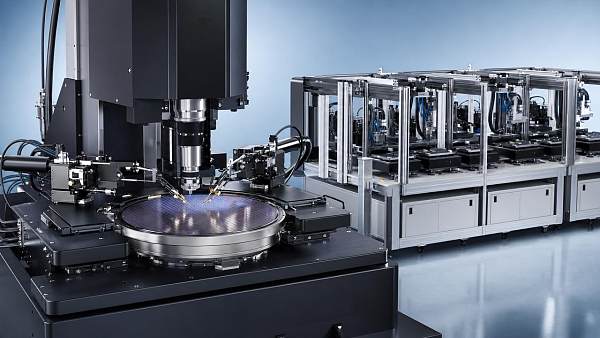
Many teams still evaluate wafer inspection tools by headline sensitivity alone. That approach is risky. A lower advertised detection threshold does not automatically reduce defect escape if the tool underperforms in nuisance rejection, edge coverage, recipe stability, or throughput under production conditions. For quality control personnel and safety managers, the real question is simpler: which wafer inspection sensitivity metrics improve the probability of catching yield-relevant and reliability-relevant defects before they move downstream?
In practice, escape risk is shaped by the interaction of optics, algorithm design, wafer type, process layer, defect morphology, and inspection strategy. A fab can own a highly sensitive platform and still miss killer defects if the sampled layers are wrong, the review loop is weak, or the detection performance is inconsistent across patterned and unpatterned areas. That is why wafer inspection sensitivity metrics should be interpreted as part of a risk model, not as isolated brochure values.
At G-CST, benchmarking is approached from a multidisciplinary procurement and reliability perspective. Semiconductor fabrication equipment does not exist in isolation. Vibration behavior from motion systems, fluid stability from specialized pump and valve assemblies, software integration with digital twins, and materials compatibility all influence the stability of inspection performance. For buyers in Top 500 technology ecosystems, that systems-level view is often the difference between theoretical detection capability and measurable escape reduction.
- Detection threshold matters, but only when tied to actual defect classes that drive line yield loss or field reliability returns.
- Signal-to-noise ratio and nuisance defect filtering often influence operational usefulness more than a single sensitivity headline number.
- Recipe repeatability across toolsets and lots is essential for consistent risk control in high-volume manufacturing.
- Inspection coverage, especially at wafer edge and process-sensitive zones, can materially change true escape probability.
How to interpret wafer inspection sensitivity metrics beyond the datasheet
The most useful wafer inspection sensitivity metrics are the ones that can be linked to business consequences: scrap avoidance, excursion containment, customer quality protection, and safety-critical reliability prevention. Quality teams should evaluate metrics in context of defect capture effectiveness, not just smallest detectable particle claims.
The table below summarizes the metrics that usually deserve the most attention when assessing whether a tool will truly reduce escape risk in semiconductor operations.
The key insight is that no single wafer inspection sensitivity metric predicts outcome quality on its own. Procurement teams should ask how each metric translates into defect Pareto improvement, lot disposition confidence, and excursion response time. That is especially important in mixed-node environments where tool recipes must handle multiple products and process stacks.
Why false alarms and stability can matter more than extreme sensitivity
An inspection system that reports every small optical variation may look impressive in a demo, yet create operational noise in production. When false alarm rates are high, engineering review queues increase, defect classification quality drops, and urgent lots may move before sufficient disposition confidence is reached. In that setting, apparent sensitivity can increase escape risk rather than reduce it.
Safety managers should care because unstable inspection signals can also hide systemic equipment drift. If a process excursion is masked by excessive nuisance events, the fab may continue shipping material through multiple downstream steps before the root cause is isolated. That amplifies cost and reliability exposure.
Which defect scenarios should drive metric selection?
Different fabs have different escape mechanisms. A logic line concerned with pattern fidelity may prioritize bridge and line-collapse sensitivity. A power device manufacturer may focus more on particles, scratches, crystal-originated anomalies, backside contamination, and edge chipping that later compromise package reliability or thermal behavior. The right wafer inspection sensitivity metrics therefore depend on failure mode linkage.
Before selecting a tool or tightening a recipe, quality teams should map inspection priorities to actual defect risk scenarios.
This scenario view helps prevent overspending on the wrong specification. Teams often pay for extreme particle sensitivity while their actual field-return driver is edge damage or unstable patterned defect classification. Matching metrics to failure modes is one of the fastest ways to improve capital efficiency and risk reduction simultaneously.
How should procurement teams compare tools and suppliers?
Procurement for wafer inspection is no longer a single-equipment decision. It is a lifecycle decision involving metrology integration, spares access, software compatibility, qualification burden, and long-term recipe governance. Quality leaders should therefore compare platforms using a structured scorecard, not only a technical demo result.
A practical procurement checklist for quality and safety leaders
- Define the top defect escape modes by product family, not by generic fab averages.
- Request sensitivity evidence by defect class, process layer, and wafer condition, including edge and backside cases where relevant.
- Evaluate false alarm behavior and classification burden under realistic lot volumes, not only during engineering review lots.
- Check repeatability across shifts, operators, and tool states to understand real SPC usability.
- Confirm integration requirements with MES, yield systems, review tools, and data historians.
- Review service model, parts exposure, upgrade path, and vulnerability to export control or regional supply-chain disruption.
This is where G-CST brings unusual value. Because the platform spans semiconductor fabrication equipment, precision motion systems, industrial software, materials, and infrastructure-grade procurement intelligence, buyers can validate not only performance claims but also operational dependencies. A vibration-sensitive inspection stage, for example, may benchmark well in isolation but underperform in a facility with known floor or environmental constraints. A software stack may offer strong defect analytics but create cybersecurity or interoperability friction. These are commercial and reliability issues, not just engineering details.
What to ask during technical and commercial evaluation
- What defect Pareto was used to demonstrate wafer inspection sensitivity metrics, and does it match your own failure analysis history?
- How stable is sensitivity after preventive maintenance, optics cleaning, recipe transfer, or illumination recalibration?
- What is the expected review workload per lot under your real sampling plan?
- What spare parts or service dependencies could threaten uptime in a geopolitically constrained supply chain?
Standards, qualification, and implementation: what should not be overlooked?
Wafer inspection sensitivity metrics should be embedded in a formal qualification and control framework. That includes alignment with relevant SEMI practices, internal change control, traceable calibration routines, and documented acceptance criteria linked to process risk. In regulated or customer-audited sectors, a weak validation package can undermine confidence even when the tool itself is technically strong.
A reliable implementation plan usually includes technical acceptance, correlation with review or reference methods, control limit design, operator training, and alarm escalation logic. Teams that skip these steps often discover too late that sensitivity changes do not map cleanly into decision-making thresholds.
Core implementation controls
- Define golden wafers or reference conditions for routine health checks and drift monitoring.
- Link defect signals to review sampling so that nuisance trends and true excursions can be separated quickly.
- Set alert and action limits based on risk to product quality, not only historical averages.
- Validate recipe portability if multiple tools or sites are expected to share workflows.
Because G-CST tracks standards alignment, export control developments, and supplier ecosystem resilience across industrial pillars, it can support decision-makers who need more than a simple equipment shortlist. The same inspection tool may fit one region and one customer compliance framework, yet become a riskier choice elsewhere due to service access, software constraints, or component dependencies.
Common misconceptions about wafer inspection sensitivity metrics
Is the smallest detectable defect always the best buying criterion?
No. It is important, but only when the detected defect type has a proven relationship with yield loss or reliability fallout. If the tool becomes too sensitive to harmless background variation, the operational burden may outweigh the benefit. Quality teams should ask whether the metric improves actionable detection, not just theoretical visibility.
Can higher sensitivity compensate for weak process control?
Not sustainably. Inspection can reveal excursions, but it cannot replace stable process capability, contamination control, equipment maintenance discipline, or robust handling practices. If root causes persist, inspection merely becomes a more expensive sorting layer.
Are patterned and unpatterned sensitivity claims interchangeable?
No. Pattern noise, layer topography, and algorithmic complexity make patterned inspection fundamentally different from bare wafer or simple surface inspection. Buyers should request data that reflects their actual layer architecture and defect modes.
Do edge defects deserve separate attention?
Yes, especially in applications where handling stress, downstream packaging, thermal cycling, or automotive-grade reliability are relevant. Edge exclusion assumptions can create blind spots that later appear as latent failures. In many fabs, edge strategy is one of the most under-discussed contributors to escape risk.
Why choose us for benchmarking, selection, and risk-focused decision support?
G-CST is positioned for organizations that need to evaluate wafer inspection sensitivity metrics in the broader context of procurement risk, standards alignment, supply-chain resilience, and system interoperability. Rather than treating inspection as a single spec comparison, we help quality, safety, and sourcing teams assess which performance indicators are most likely to reduce escapes in their own manufacturing environment.
Our institutional strength lies in cross-pillar benchmarking. Semiconductor fabrication equipment performance can be read alongside motion control stability, software architecture, materials interaction, and infrastructure constraints. That allows decision-makers to move from isolated claims to verifiable implementation judgment.
- Request parameter confirmation for the wafer inspection sensitivity metrics most relevant to your defect Pareto and process node.
- Discuss product selection criteria for patterned inspection, surface inspection, edge coverage strategy, or mixed-product recipe governance.
- Review delivery timing, service exposure, and supply-chain dependencies that may affect qualification schedules.
- Explore customized benchmarking support for standards expectations, integration readiness, and commercial risk screening.
- Open a quotation dialogue based on your target inspection layer set, validation scope, and required comparison depth.
If your team is deciding which wafer inspection sensitivity metrics should drive capital approval, supplier comparison, or escape-risk reduction programs, contact us with your defect priorities, qualification timeline, and compliance requirements. We can help structure the evaluation around measurable risk reduction instead of brochure-driven assumptions.
Recommended News
 Jun 08, 2026Technical Benchmarking Methods for Fair Performance ComparisonTechnical Benchmarking methods for fair performance comparison: learn how to standardize test conditions, validate metrics, and compare lifecycle value for smarter industrial decisions.
 May 30, 2026Spectrophotometers: Key Specs That Affect Measurement AccuracySpectrophotometers accuracy starts with the right specs. Learn how wavelength, stray light, bandwidth, stability, and calibration impact quality, compliance, and risk control.
 May 28, 2026Machine Vision Software Supplier Checklist for Stable InspectionMachine vision software supplier checklist for stable inspection: compare architecture, integration, support, compliance, and total cost to choose a reliable partner with confidence.
 May 18, 2026Spindle Bearing OEM: Key Checks for Runout, Heat, and ReliabilitySpindle bearing OEM selection starts with the right checks. Learn how to verify runout, heat control, preload, and reliability to reduce risk and choose a proven supplier.
 May 09, 2026Impact of AI on Wafer Testing: Faster Defect Detection or More Noise?Impact of AI on wafer testing: discover how fabs use AI for faster defect detection, stronger yield control, and smarter decisions—without adding costly noise.
 May 08, 2026Wafer Inspection Sensitivity Metrics: Which Specs Actually Reduce Escape RiskWafer inspection sensitivity metrics that truly cut escape risk: learn which specs matter beyond headline sensitivity, from false alarms to edge coverage, for smarter semiconductor tool decisions.
 May 08, 2026Metrology Tool Resolution Benchmarks: What Matters More Than the Smallest NumberMetrology tool resolution benchmarks matter most when backed by repeatability, low noise, stability, and calibration integrity. Learn how to compare tools with confidence.
 May 07, 2026Wafer Dicing Precision Benchmarks: What to Review Before Expanding CapacityWafer dicing precision benchmarks explained for capacity expansion: review yield stability, cut quality, compatibility, and service value to reduce procurement risk.
 May 07, 2026CMP Slurry Particle Size Distribution: Key Checks Before Supplier ApprovalCMP slurry particle size distribution affects yield, defects, and supplier risk. Learn the key checks buyers should review before approval and compare vendors with more confidence.
 May 07, 2026How to Compare Wafer Carrier ESD Compliance Data Without Missing Failure RisksWafer carrier esd compliance data comparison helps quality teams uncover hidden failure risks, verify real test relevance, and choose suppliers with confidence before audits or yield loss hit.
 May 06, 2026Wafer Testing Throughput Benchmarks: When Higher Numbers Do Not Mean Better OutputWafer testing throughput benchmarks reveal more than speed. Learn how uptime, accuracy, coverage, and cost shape real output so you can compare suppliers with confidence.
 May 05, 2026Wafer Probe Station Wholesale Guide for Multi-Site Test Capacity PlanningWafer probe station wholesale guide for multi-site capacity planning. Compare platforms, improve uptime, standardize sourcing, and scale semiconductor test lines with lower risk.
 May 04, 2026Wafer Dicing Machine Manufacturer Shortlist: How to Balance Precision, Throughput, and ServiceWafer dicing machine manufacturer shortlist guide: learn how to balance precision, throughput, and service to reduce risk, improve yield, and choose a supplier with confidence.
 May 04, 2026How to Compare Semiconductor Testing Equipment Factory Options for Stable YieldSemiconductor testing equipment factory selection affects yield, compliance, and uptime. Learn a practical checklist to compare process control, calibration, traceability, and support.
 May 01, 2026Precision Manufacturing Solutions: How to Judge Capability Before Scaling OrdersPrecision Manufacturing solutions: learn how to verify supplier capability, process stability, and quality control before scaling orders—reduce sourcing risk and choose reliable partners.
 Apr 30, 2026Machine vision recognition rate drops for reasons teams missMachine vision recognition rate dropping despite good cameras and lighting? Discover the hidden process, software, and benchmarking issues that cut accuracy—and how teams can restore reliable performance fast.
![]() Apr 21, 2026Technical Benchmarking Gets Misleading When Test Conditions DifferTechnical Benchmarking in Industrial Software Solutions reveals why varying test conditions distort High-performance Bearings, EUV Lithography Systems, and Precision Motion Control decisions—click for smarter procurement.
Apr 21, 2026Technical Benchmarking Gets Misleading When Test Conditions DifferTechnical Benchmarking in Industrial Software Solutions reveals why varying test conditions distort High-performance Bearings, EUV Lithography Systems, and Precision Motion Control decisions—click for smarter procurement.