Search News
Industry Portal
Popular Tags
Can Engineering Materials Be Substituted Without Redesign?

Author
Time
Click Count
Can Engineering Materials Be Substituted Without Redesign?
Sometimes—but only when “without redesign” is defined honestly. A material substitution may require no change to the part drawing, yet still demand new machining parameters, qualification testing, documentation, supplier controls, or maintenance instructions. In other cases, a seemingly simple swap changes stress distribution, heat transfer, chemical compatibility, or dimensional stability enough that the original design basis is no longer valid.
For a low-consequence bracket in a controlled indoor environment, substitution can be straightforward. For a semiconductor wet-process component, a zero-leakage pump housing, a high-speed bearing cage, or a structural part exposed to cyclic thermal loads, it rarely is. Matching tensile strength or purchasing a lower-cost grade does not prove equivalence. Engineering materials operate inside systems, not on datasheets.
The practical answer to the question, “Can engineering materials be substituted without redesign?”, is therefore: only after the replacement has been shown to preserve the actual functional requirements of the component and the wider assembly. That evidence may be limited for a non-critical item. It may be extensive for equipment subject to contamination control, pressure integrity, fatigue loading, electrical isolation, export restrictions, or formal customer approval.
A drawing-compatible material is not necessarily functionally equivalent
The first trap is assuming that a material is interchangeable because it can be made into the same geometry. A supplier may offer an alloy, polymer, ceramic, coating system, or composite that fits the existing bill of materials and nominal dimensions. That is only a starting point.
Consider a stainless-steel valve component replaced with another corrosion-resistant stainless grade. The two materials may appear comparable in a general catalog, but their response to chlorides, acids, cleaning media, temperature excursions, weld heat input, or crevice conditions can differ. The original component may have relied on a particular surface finish, passivation route, or inclusion-control level as much as on the base chemistry. If the service environment is not precisely known, “stainless for stainless” is not an engineering conclusion.
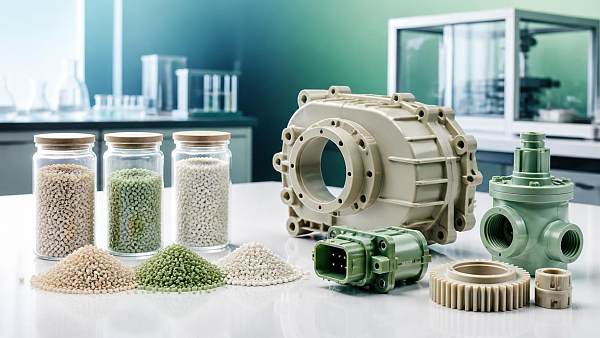
A polymer substitution can be even less forgiving. Two thermoplastics may have similar room-temperature strength, while one absorbs more moisture, creeps under sustained clamp load, sheds particles during wear, or softens at a lower process temperature. In high-purity fluid handling, semiconductor fabrication, medical processing, or instrumentation, extractables and particle generation can matter as much as mechanical performance. Those properties often do not appear in a simple procurement comparison.
The same logic applies to ceramics, bearing materials, elastomers, adhesives, thermal interface materials, and plated surfaces. A substitute may solve an immediate availability problem while creating a slower failure mode that does not show up during incoming inspection.

What must be checked before approving a substitution?
A disciplined review begins with the part’s function, not the material name. Engineers should ask what the component is actually doing in service: carrying load, resisting wear, containing pressure, managing heat, isolating electricity, limiting contamination, surviving a chemical medium, or maintaining alignment over time. Many parts do several of these jobs simultaneously.
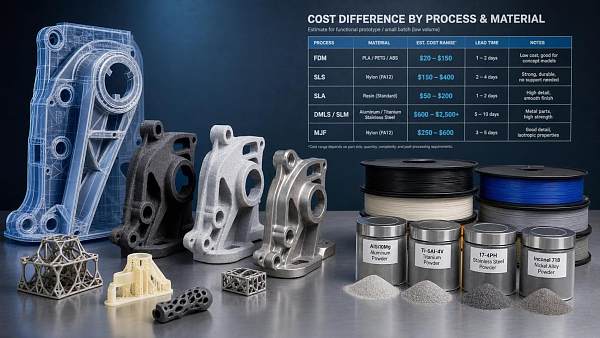
The review should include property variation, not just typical values. Published data may represent a particular product form, orientation, heat treatment, filler system, or test condition. A forged alloy, cast alloy, powder-metallurgy part, and additively manufactured part can share a broad material designation while behaving differently in a critical application. Material equivalency is often conditional on how the material is made.
When a substitution may be possible without changing the design
A no-redesign pathway is most realistic when the original specification already allows alternatives or is written around measurable performance requirements rather than a single proprietary grade. It is also more plausible when the component has generous safety margins, a well-understood service environment, and no special role in safety, containment, purity, precision, or regulatory compliance.
For example, a substitution may be manageable where the proposed material has equivalent form, dimensions, mechanical behavior over the full service temperature range, compatible joining and finishing characteristics, and no adverse interaction with adjacent parts. Even then, “no redesign” does not mean “no engineering work.” A controlled change can still require a technical justification, sample inspection, process validation, and a documented release decision.
In practice, teams often separate substitutions into three levels. A low-risk substitution may be handled through drawing and certificate review. A moderate-risk change may need prototype parts and focused functional tests. A high-risk change—such as material replacement in a pressure boundary, chemical process path, precision motion assembly, or semiconductor tool subsystem—should be treated as a design change until evidence shows otherwise.
Why system interfaces usually decide the outcome
Most material-substitution failures occur at interfaces. A replacement metal may be strong enough but galvanically incompatible with a fastener or housing. A higher-stiffness ceramic may improve wear resistance while increasing contact stress in the mating raceway. A low-friction polymer may reduce sliding force but relax under load and compromise a seal. A thermally conductive filler may create a new electrical path where isolation was assumed.
This is particularly relevant in integrated industrial equipment. Motion-control assemblies depend on preload, lubrication behavior, vibration response, and thermal growth. Pump and valve systems depend on fluid chemistry, seal compatibility, pressure cycling, and surface condition. Digital-twin models can be useful here, but only if their material inputs and boundary conditions reflect reality. A model built from generic values may produce a tidy answer to the wrong question.
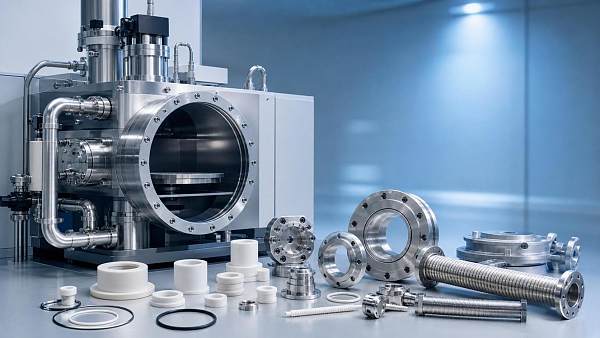
For semiconductor fabrication equipment, the hidden variables can include outgassing, cleanroom compatibility, particle shedding, ultra-pure chemical exposure, and thermal stability near tightly controlled process zones. The substitute does not need to fail catastrophically to be unacceptable. A small contamination or repeatability issue can be enough to invalidate the change.
Documentation is part of the engineering, not administrative overhead
Material changes are frequently triggered by shortages, long lead times, regional sourcing requirements, or cost pressure. Those are legitimate commercial drivers. But urgency is precisely when traceability tends to weaken: a buyer obtains an “equivalent” material, a production team adjusts the process locally, and the resulting deviation is not fully connected to the original qualification basis.
A useful substitution package typically records the original requirement, the proposed replacement, the reason for change, relevant property comparisons, manufacturing implications, test evidence, approvals, and restrictions on use. It should also identify whether material certificates, lot traceability, or additional inspection are needed. If the component is supplied into a larger OEM system, contractual change-notification provisions may be as important as the engineering assessment.
This is where technical benchmarking has real commercial value. Organizations working across advanced materials, industrial software, precision motion, fluid systems, and semiconductor equipment need more than a supplier cross-reference. They need to compare data definitions, standards references, product-form limitations, regional availability, and change-control exposure. G-CST’s cross-sector approach reflects a practical reality: a material decision in one component can affect procurement, manufacturing, reliability, and compliance teams at the same time.
Common substitution mistakes that deserve more attention
One common mistake is comparing only minimum tensile strength. Stiffness, fatigue resistance, elongation, hardness, thermal expansion, conductivity, permeability, and corrosion behavior may be more relevant. Another is relying on generic “equivalent grade” tables without checking the governing edition of the relevant standard, product form, and the actual service condition.
A third mistake is ignoring process-induced changes. Replacing a material can alter cutting forces, burr formation, residual stress, welding response, curing conditions, plating adhesion, or inspection sensitivity. A part may pass dimensional inspection and still carry a different residual-stress state or surface condition that affects fatigue life.
Finally, teams sometimes over-test the obvious property and under-test the real failure mechanism. If the concern is chemical attack at elevated temperature, a room-temperature tensile comparison offers little confidence. If the concern is a bearing assembly’s dynamic behavior, static hardness alone will not settle the question. Test plans should follow the credible failure mode, not the easiest available test.
A practical decision rule for procurement and engineering teams
Before accepting a substitute, ask one direct question: If this material behaves differently in the worst credible operating condition, what fails first—and how would we know before field use? If the answer is unclear, the substitution is not yet ready for approval.
For non-critical parts, a structured review may be sufficient. For high-consequence assemblies, the prudent route is to involve design engineering, quality, manufacturing, procurement, and the responsible system owner early. The goal is not to block sourcing flexibility. It is to prevent a local purchasing decision from becoming a system-level reliability problem months later.
Engineering materials can be substituted without redesign in some circumstances. What cannot be substituted is the evidence behind the original material choice. When that evidence is preserved, tested where necessary, and documented through proper change control, supply-chain resilience and technical integrity do not have to be in conflict.
Recommended News
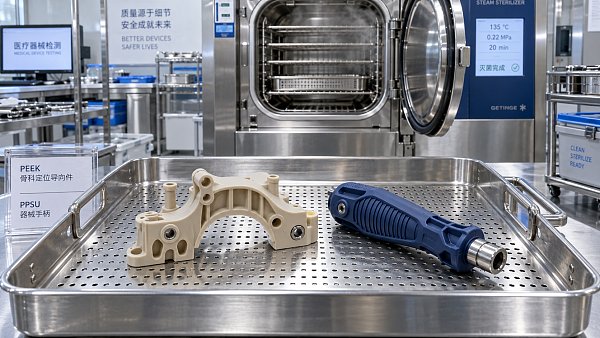
 Oct 17, 2026Can engineering plastics for orthopaedics withstand steam sterilisation?Can engineering plastics for orthopaedics withstand steam sterilisation? Explore PEEK, PPSU and essential testing criteria to choose durable materials for reusable devices.
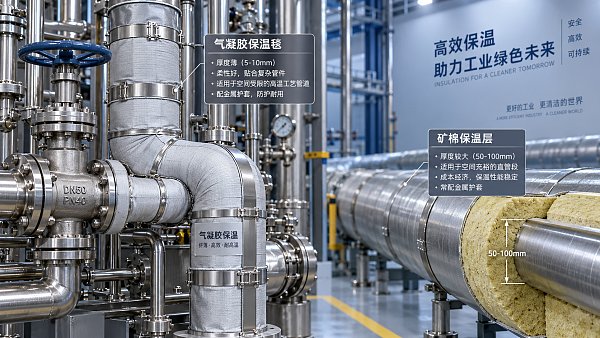
 Oct 07, 2026When does an aerogel insulation blanket outperform mineral wool?Aerogel insulation blanket vs. mineral wool: discover when thinner, high-efficiency insulation delivers better thermal control, retrofit flexibility, and lifecycle value.
![]() Oct 20, 2026Can Engineering Materials Be Substituted Without Redesign?Can engineering materials be substituted without redesign? Explore the critical checks for performance, compliance, testing, and reliable material change approval.
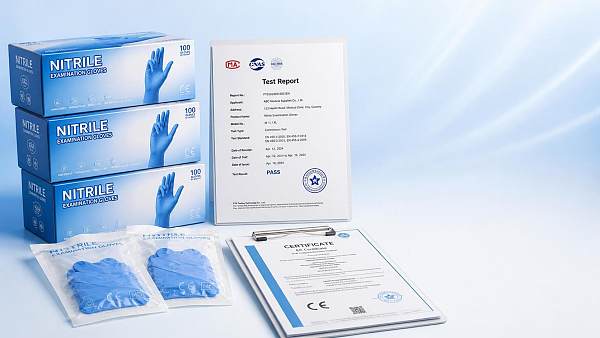
 Aug 26, 2026How to check whether medical gloves meet the right safety standardMedical gloves safety starts with the right standard. Learn how to verify claims, test reports, labeling, and batch records to choose compliant gloves with confidence.
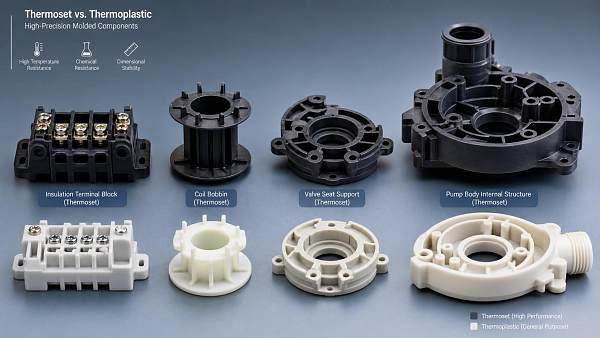
 Aug 19, 2026When does thermoset molding resin outperform thermoplastics in parts design?Thermoset molding resin outperforms thermoplastics in high-heat, chemical, and electrical applications. Learn when its crosslinked stability delivers longer-lasting part performance.
 Aug 14, 2026How to choose bio-based engineering plastics for European supply chainsBio-based engineering plastics Europe guide: learn how to choose the right grade for performance, compliance, and supply chain reliability.
 Jul 12, 2026Conductive Polymers for Antistatic Packaging: What Impacts ESD Stability MostConductive polymers for antistatic packaging: learn what really drives ESD stability most—formulation, dispersion, environment, and process control—to reduce risk and choose reliable packaging.
 Jul 05, 2026Engineering Material Selection for Semiconductors: Failure Risks to AvoidEngineering material selection for semiconductors: learn the failure risks that hurt yield, uptime, and compliance, and discover smarter choices for reliable fab performance.
 Jul 04, 2026PTFE Sheet RoHS Factory Checklist: Material Proof, Testing, and Compliance Riskptfe sheet RoHS factory checklist: verify material proof, test records, traceability, and change control to reduce compliance risk and approve suppliers with confidence.
 Jun 29, 2026How to Compare Home Accessories by Material, Style, and Room FitHome accessories comparison made simple: learn how to evaluate material, style, and room fit to choose durable, cohesive pieces that elevate every space with confidence.
 Jun 28, 20263D Printing Quotation: What Changes Price the Most?3D printing quotation costs can change fast based on material, geometry, tolerance, finishing, and lead time. Learn what drives pricing most and compare quotes with confidence.
 Jun 26, 2026Commercial Refrigerators: Capacity vs. Operating CostCommercialrefrigerators buyers can compare capacity vs. operating cost to find the best fit for efficiency, workflow, and long-term value.
 Jun 26, 2026Commercial Refrigerators: Energy-Saving Buying GuideCommercial refrigerators energy-saving buying guide for procurement teams: compare efficiency, reliability, and total cost to choose smarter, lower-operating-cost models.
 Jun 24, 2026Silicone Products Failure Causes in Sealing and Insulation UseSilicone products often fail when real sealing and insulation conditions are overlooked. Learn key causes, warning signs, and smarter selection tips to prevent leaks, aging, and early downtime.
 Jun 24, 2026How to Compare Silicone Products by Heat, Wear, and ComplianceSilicone products compared the right way: learn how to assess heat resistance, wear performance, and compliance data to choose safer, longer-lasting options with confidence.
 Jun 21, 2026Foldable Screen Technology for Tablets: Durability vs. WeightFoldable screen technology for tablets explained: compare durability, weight, hinge reliability, materials, and repair risk to choose a foldable tablet that truly lasts.
 Jun 20, 2026Jewelry Display Stands: Common Material Mistakes to AvoidJewelrydisplaystands buying guide: avoid common material mistakes that cause scratches, fading, peeling, and fast wear. Learn how to choose durable, attractive stands for every retail setting.
 Jun 19, 2026Polyurethane Foam Insulation Bulk: When Lower Price Leads to Higher Jobsite WastePolyurethane foam insulation bulk may look cheaper upfront, but inconsistent yield, rework, and jobsite waste can raise total cost. Learn how to choose for real installed value.
 Jun 18, 2026How to Choose Car Seat Covers for Pets That Actually Stay CleanCar seat covers for pets that truly stay clean start with the right materials, fit, and design. Learn how to choose durable, easy-clean options that handle fur, mud, and daily travel.
 Jun 17, 2026Acrylic Keychains: Cost, MOQ, and Print Quality FactorsAcrylickeychains sourcing guide: compare cost, MOQ, and print quality factors to avoid hidden risks, improve supplier decisions, and secure consistent branded results.
 Jun 15, 2026EPDM Rubber Extrusion: Common Defects and How to Prevent ThemEPDMrubberextrusion defects can lead to leaks, poor fit, and early aging. Discover common issues, root causes, and practical prevention tips to improve quality and reliability.
 Jun 14, 2026Resins and Hardeners: How to Match Pot Life, Strength, and FinishResins and hardeners guide pot life, strength, and finish in real production. Learn how to match systems for reliable performance, better quality control, and fewer costly failures.
 Jun 10, 20263D Printing Material Breakthroughs Shaping Production in 20263d printing material breakthroughs are reshaping 2026 production with stronger polymers, cleaner metal powders, and scalable qualification paths—see what drives lower risk and faster adoption.
![]() Jun 09, 2026Papercupswholesale: 7 Hidden Cost Factors Before You OrderPapercupswholesale buyers often miss the real cost behind low quotes. Discover 7 hidden factors—from freight and compliance to MOQ and print risk—before you order.