Search News
Industry Portal
Popular Tags
Commercial Refrigerators: Capacity vs. Operating Cost
Author
Time
Click Count
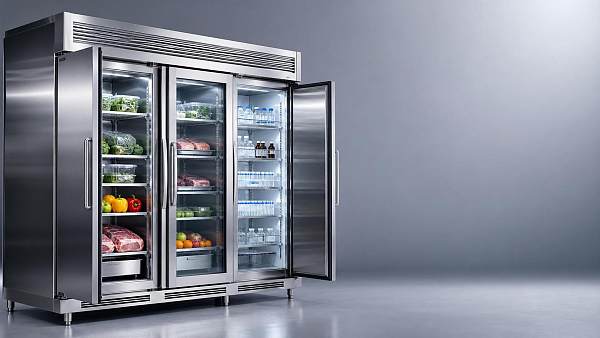
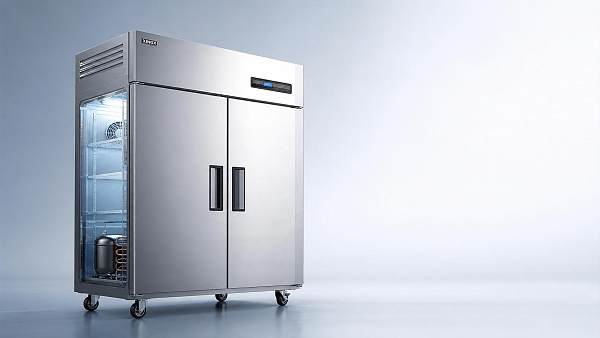
For enterprise buyers evaluating commercialrefrigerators, the real decision goes beyond storage volume. Capacity shapes workflow, product safety, and expansion room, while operating cost defines how much value the unit keeps over time. In sectors where food service, healthcare, laboratories, retail support, and industrial facilities all depend on stable cooling, that balance is no longer a technical detail. It is a business decision tied to uptime, energy use, and total cost discipline.
Why capacity and operating cost are judged together
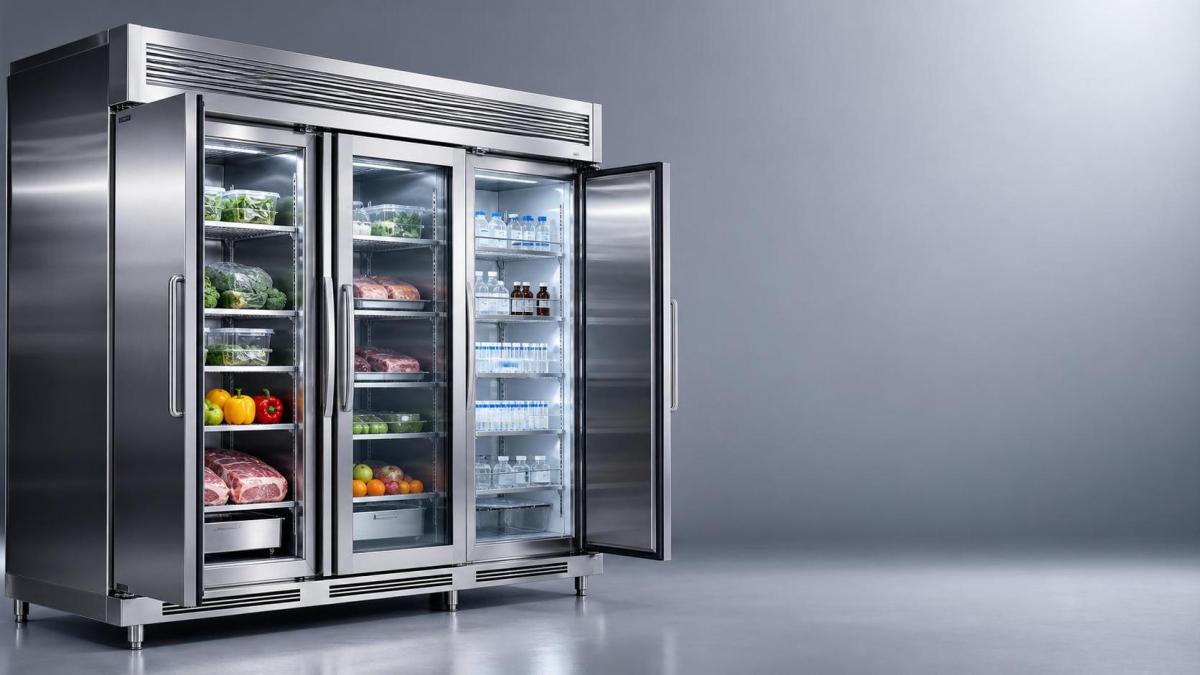
A larger cabinet does not automatically mean a better commercialrefrigerators purchase. Extra space can reduce stock rotation pressure, but it also increases energy demand, footprint requirements, and maintenance exposure. If the cabinet is oversized, empty volume still has to be cooled. If it is undersized, staff spend more time reorganizing inventory, and temperature stability can suffer during busy periods.
That is why capacity and operating cost should be read as a paired metric. The first affects usable workflow, the second affects every month of ownership. G-CST’s benchmarking approach is useful here because it mirrors how many industrial buyers already evaluate critical assets: not by nameplate size alone, but by measurable performance, reliability, and lifecycle economics.
In practical terms, commercialrefrigerators sit at the intersection of service continuity and utility control. In a restaurant, they support prep speed and food safety. In a hospital or research setting, they protect sensitive materials. In retail or logistics, they stabilize throughput. In each case, capacity is operational, and cost is strategic.
What “capacity” really means in day-to-day use
Capacity is often described in cubic feet or liters, but real value comes from usable storage behavior. Shelf layout, door count, depth, airflow design, and load distribution all decide how much inventory can be stored without creating hot spots or access delays. A well-sized commercialrefrigerators unit supports faster retrieval and fewer door openings, which helps preserve stable internal temperatures.
Capacity also needs to match demand variability. A stable operation may only need modest buffer space, while a facility with seasonal peaks, menu changes, or irregular deliveries needs a margin of flexibility. If the unit cannot absorb temporary spikes, the hidden cost appears in rushed replenishment, product loss, and operational friction.
That is where many buyers make their first mistake. They compare catalog volume, then ignore how the unit performs under load. In commercialrefrigerators, usable capacity is rarely equal to listed capacity. The difference matters when the system is running near full utilization, especially in environments with strict temperature control or frequent access cycles.
Operating cost is more than electricity
Energy use is the visible part of operating cost, but it is not the whole picture. Compressor efficiency, insulation quality, defrost strategy, door seals, ambient temperature tolerance, and control logic all influence how much a commercialrefrigerators system costs to run. A model with a lower purchase price can still become the more expensive asset if it consumes excess power or requires frequent service.
Maintenance is equally important. Poor airflow design, worn gaskets, and unstable controls increase service calls and shorten component life. In larger fleets, these small issues multiply into measurable cost. For organizations managing multiple sites, standardized commercialrefrigerators platforms can also simplify spare parts, monitoring, and technician training, reducing indirect expense.
There is also a climate and compliance angle. Energy-efficient refrigeration supports sustainability targets, but it can also reduce strain on electrical infrastructure and improve resilience during peak demand. In distributed operations, that matters as much as monthly utility bills.
How different operating environments change the balance
The same commercialrefrigerators specification can produce very different results depending on the environment. A compact unit in a controlled kitchen may deliver strong efficiency. The same unit in a hot backroom, a dusty service area, or a high-traffic retail floor may work harder and consume more power than expected.
This is why the right commercialrefrigerators choice is context-specific. A procurement specification that works in one site can fail in another if ambient load, access patterns, or operating hours are different. Cross-site benchmarking helps expose those differences before capital is committed.
Decision points that usually reveal the best fit
A practical review should start with demand profile, not product category. How often is the door opened? How predictable is the inventory? Is the system expected to support short bursts or constant turnover? Those questions define whether to prioritize larger capacity, tighter efficiency, or a balanced middle ground.
- Match internal volume to real stock rotation, not just future ambition.
- Check energy ratings under realistic ambient conditions.
- Review door configuration, shelving, and access frequency.
- Estimate service cost across the full ownership cycle.
- Compare fleet compatibility if multiple sites are involved.
For commercialrefrigerators, the lowest operating cost is not always the smallest unit, and the highest capacity is not always the safest choice. The better answer is the one that aligns thermal stability, workflow speed, and lifetime expense with the actual business model.
A useful way to compare options before buying
When options look similar on paper, it helps to compare them through a simple three-layer lens: usable capacity, energy profile, and maintenance behavior. This makes commercialrefrigerators easier to evaluate across brands and formats, especially when technical sheets are incomplete or formatted differently.
A strong shortlist usually includes units that can hold expected demand with a modest buffer, maintain stable performance during peak usage, and avoid hidden costs from excessive heat gain or frequent repair. In larger industrial and institutional settings, those same criteria also support procurement consistency and asset benchmarking.
That is where G-CST-style intelligence is relevant: decision quality improves when equipment is assessed with verifiable data, standard benchmarks, and an understanding of operational risk. For commercialrefrigerators, the same discipline helps buyers move from specification reading to informed selection.
If the next step is evaluation, focus on the actual storage pattern, the expected duty cycle, and the long-term utility load. Those three signals usually reveal whether a commercialrefrigerators model will remain efficient after installation, or become a recurring cost center.
A well-chosen system should do more than keep items cold. It should support throughput, reduce waste, and remain economical across the full operating life. That is the real balance between capacity and operating cost.
Recommended News
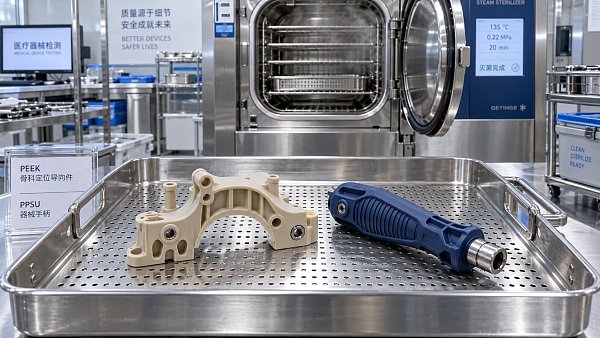
 Oct 17, 2026Can engineering plastics for orthopaedics withstand steam sterilisation?Can engineering plastics for orthopaedics withstand steam sterilisation? Explore PEEK, PPSU and essential testing criteria to choose durable materials for reusable devices.
 Oct 07, 2026When does an aerogel insulation blanket outperform mineral wool?Aerogel insulation blanket vs. mineral wool: discover when thinner, high-efficiency insulation delivers better thermal control, retrofit flexibility, and lifecycle value.
 Aug 26, 2026How to check whether medical gloves meet the right safety standardMedical gloves safety starts with the right standard. Learn how to verify claims, test reports, labeling, and batch records to choose compliant gloves with confidence.
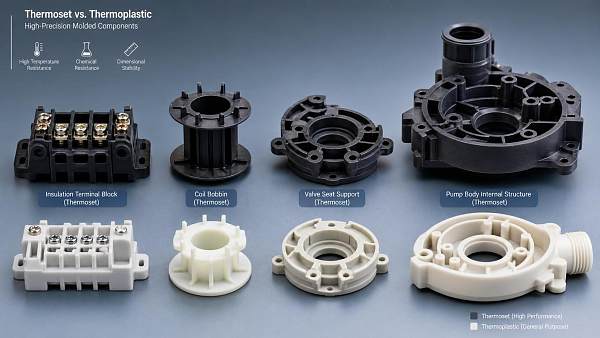
 Aug 19, 2026When does thermoset molding resin outperform thermoplastics in parts design?Thermoset molding resin outperforms thermoplastics in high-heat, chemical, and electrical applications. Learn when its crosslinked stability delivers longer-lasting part performance.
 Aug 14, 2026How to choose bio-based engineering plastics for European supply chainsBio-based engineering plastics Europe guide: learn how to choose the right grade for performance, compliance, and supply chain reliability.
 Jul 12, 2026Conductive Polymers for Antistatic Packaging: What Impacts ESD Stability MostConductive polymers for antistatic packaging: learn what really drives ESD stability most—formulation, dispersion, environment, and process control—to reduce risk and choose reliable packaging.
 Jul 05, 2026Engineering Material Selection for Semiconductors: Failure Risks to AvoidEngineering material selection for semiconductors: learn the failure risks that hurt yield, uptime, and compliance, and discover smarter choices for reliable fab performance.
 Jul 04, 2026PTFE Sheet RoHS Factory Checklist: Material Proof, Testing, and Compliance Riskptfe sheet RoHS factory checklist: verify material proof, test records, traceability, and change control to reduce compliance risk and approve suppliers with confidence.
 Jun 29, 2026How to Compare Home Accessories by Material, Style, and Room FitHome accessories comparison made simple: learn how to evaluate material, style, and room fit to choose durable, cohesive pieces that elevate every space with confidence.
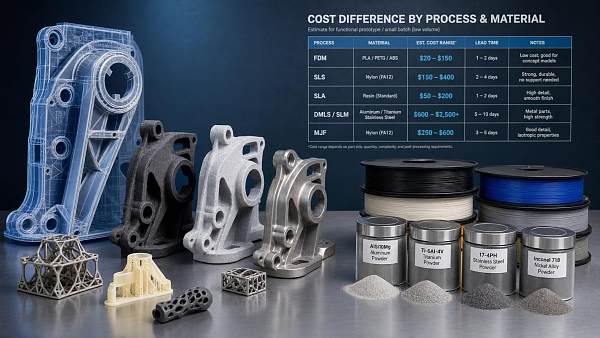
 Jun 28, 20263D Printing Quotation: What Changes Price the Most?3D printing quotation costs can change fast based on material, geometry, tolerance, finishing, and lead time. Learn what drives pricing most and compare quotes with confidence.
 Jun 26, 2026Commercial Refrigerators: Capacity vs. Operating CostCommercialrefrigerators buyers can compare capacity vs. operating cost to find the best fit for efficiency, workflow, and long-term value.
 Jun 26, 2026Commercial Refrigerators: Energy-Saving Buying GuideCommercial refrigerators energy-saving buying guide for procurement teams: compare efficiency, reliability, and total cost to choose smarter, lower-operating-cost models.
 Jun 24, 2026Silicone Products Failure Causes in Sealing and Insulation UseSilicone products often fail when real sealing and insulation conditions are overlooked. Learn key causes, warning signs, and smarter selection tips to prevent leaks, aging, and early downtime.
 Jun 24, 2026How to Compare Silicone Products by Heat, Wear, and ComplianceSilicone products compared the right way: learn how to assess heat resistance, wear performance, and compliance data to choose safer, longer-lasting options with confidence.
 Jun 21, 2026Foldable Screen Technology for Tablets: Durability vs. WeightFoldable screen technology for tablets explained: compare durability, weight, hinge reliability, materials, and repair risk to choose a foldable tablet that truly lasts.
 Jun 20, 2026Jewelry Display Stands: Common Material Mistakes to AvoidJewelrydisplaystands buying guide: avoid common material mistakes that cause scratches, fading, peeling, and fast wear. Learn how to choose durable, attractive stands for every retail setting.
 Jun 19, 2026Polyurethane Foam Insulation Bulk: When Lower Price Leads to Higher Jobsite WastePolyurethane foam insulation bulk may look cheaper upfront, but inconsistent yield, rework, and jobsite waste can raise total cost. Learn how to choose for real installed value.
 Jun 18, 2026How to Choose Car Seat Covers for Pets That Actually Stay CleanCar seat covers for pets that truly stay clean start with the right materials, fit, and design. Learn how to choose durable, easy-clean options that handle fur, mud, and daily travel.
 Jun 17, 2026Acrylic Keychains: Cost, MOQ, and Print Quality FactorsAcrylickeychains sourcing guide: compare cost, MOQ, and print quality factors to avoid hidden risks, improve supplier decisions, and secure consistent branded results.
 Jun 15, 2026EPDM Rubber Extrusion: Common Defects and How to Prevent ThemEPDMrubberextrusion defects can lead to leaks, poor fit, and early aging. Discover common issues, root causes, and practical prevention tips to improve quality and reliability.
 Jun 14, 2026Resins and Hardeners: How to Match Pot Life, Strength, and FinishResins and hardeners guide pot life, strength, and finish in real production. Learn how to match systems for reliable performance, better quality control, and fewer costly failures.
 Jun 10, 20263D Printing Material Breakthroughs Shaping Production in 20263d printing material breakthroughs are reshaping 2026 production with stronger polymers, cleaner metal powders, and scalable qualification paths—see what drives lower risk and faster adoption.
![]() Jun 09, 2026Papercupswholesale: 7 Hidden Cost Factors Before You OrderPapercupswholesale buyers often miss the real cost behind low quotes. Discover 7 hidden factors—from freight and compliance to MOQ and print risk—before you order.
Jun 09, 2026Papercupswholesale: 7 Hidden Cost Factors Before You OrderPapercupswholesale buyers often miss the real cost behind low quotes. Discover 7 hidden factors—from freight and compliance to MOQ and print risk—before you order. Jun 07, 2026Extruded Polystyrene XPS Board vs EPS: Key Performance DifferencesExtruded polystyrene XPS board vs EPS: discover key differences in strength, moisture resistance, thermal stability, and lifecycle value for smarter insulation decisions.