Search News
Industry Portal
Popular Tags
Chemical Resistance Chart for Pumps: Material Choice Guide
Author
Time
Click Count
Selecting pump materials has become a higher-stakes decision across process industries. A reliable chemical resistance chart for pumps now supports safety, uptime, compliance, and lifecycle cost control under harsher media and tighter audit expectations.
As chemical streams grow more complex, material choice can no longer depend on habit alone. Corrosion failures increasingly emerge from mixed chemistries, elevated temperatures, cleaning cycles, and trace contaminants that attack metals, plastics, and elastomers differently.
This guide explains how to use a chemical resistance chart for pumps as a practical decision tool. It connects trend signals, material behavior, operating risks, and selection logic for broader industrial applications.
Why chemical compatibility is becoming a strategic operating issue
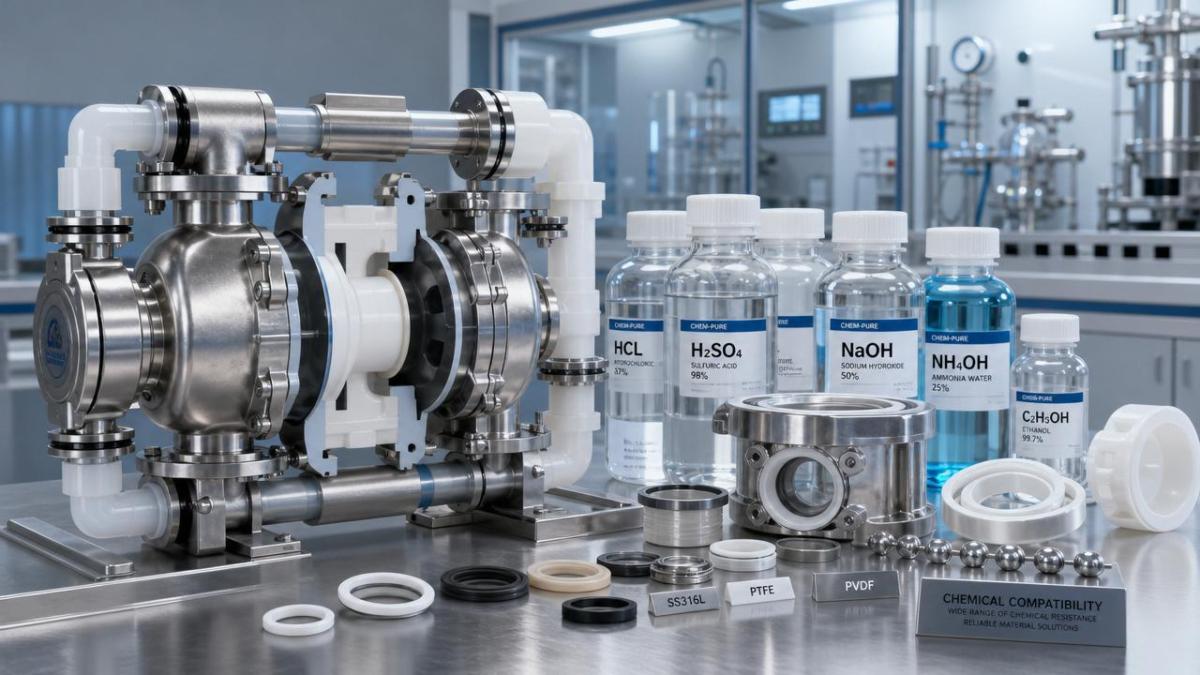
The chemical resistance chart for pumps is no longer just a maintenance reference. It has become a strategic baseline for equipment reliability in water treatment, electronics, pharmaceuticals, mining, coatings, and specialty chemicals.
Several changes are driving this shift. Fluids are more concentrated, cleaning regimes are more aggressive, and environmental rules increasingly penalize leakage, contamination, and unplanned discharge.
At the same time, supply chains are diversifying. Replacement pumps and spare parts may now come from multiple regions, making material verification and compatibility checking more important than before.
A chemical resistance chart for pumps helps standardize decisions across these variables. It creates a shared technical language for matching wetted materials to fluid chemistry, temperature, concentration, and mechanical stress.
The strongest trend signals behind material selection upgrades
Across the broader industrial landscape, five signals consistently appear when reviewing pump failures, retrofit programs, and specification revisions. Each one increases the need for more disciplined compatibility analysis.
These signals explain why old assumptions often fail. A material that handled one solvent at ambient conditions may fail quickly when concentration, pressure pulsation, or cleaning chemistry changes.
How a chemical resistance chart for pumps should actually be read
Many compatibility tables appear simple, but their value depends on interpretation. The best chemical resistance chart for pumps should be treated as a starting filter, not a final engineering guarantee.
Key variables that alter the rating
- Chemical identity, including impurities and stabilizers
- Concentration range, especially during batch peaks
- Operating and cleaning temperature
- Exposure pattern, continuous or intermittent
- Pressure, cavitation, and abrasion conditions
- Need for food, pharma, or semiconductor cleanliness
Typical material families to compare
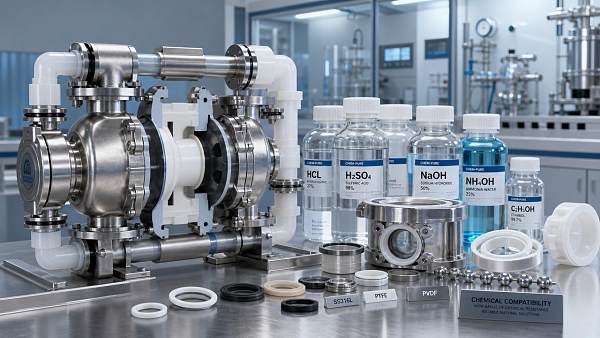
Metals such as 316 stainless steel offer strength and familiar fabrication. They perform well in many neutral or mildly corrosive services, but chlorides, strong acids, and oxidizers can create rapid attack.
Higher alloys including Hastelloy, titanium, and duplex stainless grades expand chemical coverage. However, cost and lead time can rise sharply, especially when global sourcing conditions tighten.
Thermoplastics like PP, PVDF, PVC, and PTFE provide strong corrosion resistance in many acid and alkali duties. Mechanical strength, temperature limits, and permeation behavior still need close review.
Elastomers often become the hidden failure point. EPDM, FKM, FFKM, NBR, and PTFE-encapsulated options can react very differently to the same fluid, especially under heat and repeated cycling.
Material behavior is shifting from simple corrosion control to system-level risk control
The modern chemical resistance chart for pumps must support more than corrosion prevention. It should also reduce contamination risk, seal failure, emission exposure, maintenance interruption, and compliance disputes.
This broader view matters because pump reliability depends on the full wetted path. Housing, impeller, liner, shaft sleeve, O-ring, diaphragm, gasket, and mechanical seal faces all require coordinated compatibility.
A strong material in the casing cannot compensate for a weak elastomer in the seal. Many leaks begin with swelling, embrittlement, softening, or compression set in smaller components.
In highly regulated operations, a wrong material choice also creates documentation risk. If field performance conflicts with generic catalog ratings, traceability and test evidence become essential.
What different industrial workflows are experiencing now
Material compatibility pressures are not identical across all workflows. The same chemical resistance chart for pumps may serve different priorities depending on fluid purity, process continuity, and environmental exposure.
- Chemical processing emphasizes corrosion margin, thermal stability, and seal integrity.
- Water and wastewater applications often prioritize oxidizer resistance and cost balance.
- Semiconductor and electronics environments focus on ultra-clean surfaces and trace contamination control.
- Food, beverage, and pharma processes require compatibility during both production and sanitation cycles.
- Mining and slurry transfer need combined chemical and abrasion resistance, not chemistry alone.
This variation explains why one universal material answer rarely works. Selection should follow process conditions, failure consequences, and expected service life rather than isolated media names.
Priority checkpoints when using a chemical resistance chart for pumps
A useful compatibility review should move through clear checkpoints. These points help convert a chemical resistance chart for pumps into a more dependable material screening workflow.
- Define the exact fluid, including concentration limits and impurities.
- Record normal, upset, and cleaning temperatures separately.
- List every wetted component material, not only the casing.
- Check whether the chart rating covers continuous exposure.
- Review pressure, solids, and flow turbulence conditions.
- Request application validation where data is uncertain or mixed.
- Compare lifecycle cost against expected replacement intervals.
A practical decision matrix for next-step evaluation
What deserves closer attention over the next planning cycle
- Charts that include temperature-specific ratings are more useful than simple A-B-C lists.
- Seal compatibility data should be reviewed alongside body material data.
- Application notes for mixed chemicals are becoming increasingly valuable.
- Traceable standards alignment supports audit readiness and supplier comparison.
- Digital material databases can improve consistency across sites and projects.
The most resilient approach combines a chemical resistance chart for pumps with operating context, supplier validation, and field feedback. That combination reduces failure surprises more effectively than any standalone rating table.
Turning chart data into a better sourcing and reliability decision
Begin with the fluid profile, then map every wetted material and every temperature state. Use the chemical resistance chart for pumps to narrow options, but confirm the final choice against real operating conditions.
Where duty conditions are severe, ask for documented compatibility evidence, seal detail, and service assumptions. This step improves confidence, shortens troubleshooting later, and strengthens lifecycle performance across industrial systems.
A disciplined material review today can prevent corrosion, leakage, contamination, and unnecessary replacements tomorrow. That is why the chemical resistance chart for pumps remains a foundational tool for sound technical and commercial judgment.
Recommended News
 May 31, 2026Garden Ornaments: Materials, Weathering, and ValueGarden ornaments can transform outdoor spaces—learn how stone, metal, ceramic, and resin weather over time, what maintenance they need, and how to choose pieces with lasting value.
 May 30, 2026Technical Apparel: Material Choices That Improve DurabilityTechnical apparel built with the right fibers, finishes, and reinforcements improves durability, comfort, and protection in demanding work environments.
 May 29, 2026Industrialrubberhoses: Failure Signs to Watchindustrialrubberhoses failure signs can reveal cracks, leaks, swelling, and hidden wear early. Learn scene-based inspection tips to reduce downtime, safety risk, and costly repairs.
 May 15, 2026Chemical Resistance Chart for Pumps: Material Choice GuideChemical resistance chart for pumps: compare metals, plastics, and elastomers to reduce corrosion, leakage, and downtime. Use this guide to choose safer, longer-lasting pump materials.
 May 02, 2026How to Vet a Material Innovation Supplier for Long-Term ProductionMaterial Innovation supplier evaluation for long-term production: learn how to assess scale readiness, compliance, consistency, and supply resilience to choose a reliable partner.
 May 01, 2026How to Vet an Advanced Engineering Materials Supplier for High-Purity ApplicationsAdvanced Engineering Materials supplier vetting for high-purity applications: learn how to assess contamination control, traceability, compliance, and supply reliability before you buy.
 Apr 28, 2026When Plastic Chemical Resistance Data Conflicts With Field ResultsPlastic chemical resistance data can mislead real-world material selection. Learn why lab ratings fail in the field, how to validate risk, and what buyers should check before specifying polymers.
 Apr 28, 2026Can Sustainable Polymers Match Performance Without Cost Spikes?Future of sustainable polymers explained: compare cost control, nanotechnology in manufacturing trends, carbon fiber supply chain news, and plastic chemical resistance data for smarter sourcing.
 Apr 28, 2026Plastic Chemical Resistance Data Can Mislead Under Real ExposurePlastic chemical resistance data can mislead when real exposure adds heat, stress, and contamination. Discover practical selection insights tied to the future of sustainable polymers and reduce costly material failure risks.
 Apr 28, 2026Future of Sustainable Polymers Depends on More Than RecyclingFuture of sustainable polymers goes beyond recycling—explore performance data, compliance, and supply resilience with insights on nanotechnology in manufacturing trends and the global advanced materials report 2026.
 Apr 25, 2026High Performance Polymer Factory: Key Buying TipsHigh performance polymer factory buying tips: compare thermoset resin manufacturer, conductive polymers manufacturer, and PEEK material wholesale options for quality, compliance, and reliable supply.
 Apr 25, 2026Conductive Polymers Manufacturer Selection GuideConductive polymers manufacturer selection guide for buyers comparing quality, compliance, scale, and supply risk—ideal for sourcing advanced materials from OEM, wholesale, factory, and supplier partners.
![]() Apr 25, 2026PEEK Material Wholesale: Which Grade Fits Best?peek material wholesale guide: compare unfilled, glass-filled, carbon-filled, and bearing grades to match heat, wear, and purity needs—reduce sourcing risk and choose the best PEEK grade faster.
Apr 25, 2026PEEK Material Wholesale: Which Grade Fits Best?peek material wholesale guide: compare unfilled, glass-filled, carbon-filled, and bearing grades to match heat, wear, and purity needs—reduce sourcing risk and choose the best PEEK grade faster. Apr 25, 2026Teflon PTFE Sheet Factory: What Buyers MissTeflon (PTFE) sheet factory selection goes beyond price. Learn the hidden checks buyers miss on traceability, tolerance, compliance, and supply risk before approving suppliers.
 Apr 26, 2026Aerogel Insulation Wholesale: Where Costs Add UpAerogel insulation wholesale costs go beyond unit price—learn how logistics, compliance, installation, and lifecycle value compare with options from a boron nitride factory to a technical ceramics supplier.
 Apr 26, 2026Flame Retardant Plastics Wholesale: Common MistakesFlame retardant plastics wholesale: avoid costly sourcing mistakes in certification, compliance, material fit, and supplier stability. Compare thermoset resin manufacturer and high performance polymer factory options.
 Apr 26, 2026Thermoset Resin Manufacturer: Cost vs PerformanceThermoset resin manufacturer guide: compare cost vs performance, hidden lifecycle risks, and supplier quality. Ideal for buyers sourcing carbon fiber composite OEM and high performance polymer factory solutions.