Search News
Industry Portal
Popular Tags
Flame Retardant Plastics Wholesale: Common Mistakes

Author
Time
Click Count
Buying flame retardant plastics wholesale seems straightforward, but costly mistakes often hide in certification gaps, application mismatch, and unstable supply quality. For procurement teams, engineers, and decision-makers comparing thermoset resin manufacturer options, high performance polymer factory capabilities, or technical ceramics supplier alternatives, understanding these pitfalls is essential to reduce risk, control compliance, and secure long-term performance.
In industrial and infrastructure supply chains, flame retardant plastics are rarely bought for price alone. They are selected for electrical safety, thermal stability, dimensional consistency, processing behavior, and regulatory acceptance across sectors such as electronics, pumps and valves, motion systems, industrial equipment, and engineered material assemblies. A poor purchasing decision can delay validation by 2–8 weeks, increase scrap rates, or trigger compliance failures during inspection and export review.
For B2B buyers working in data-driven environments like G-CST’s technical benchmarking landscape, wholesale procurement should be treated as a risk-controlled engineering process. The key is not only identifying a supplier that can ship volume, but also verifying whether the material grade, flame class, lot stability, documentation quality, and long-term supply resilience match the intended application.
Why Flame Retardant Plastics Wholesale Goes Wrong

One of the most common mistakes in flame retardant plastics wholesale is assuming that all flame retardant grades offer comparable protection. In reality, a material rated for one test condition may fail in another assembly environment. A compound that performs acceptably in a 1.5 mm lab sample may behave differently at 3.0 mm wall thickness, under continuous heat, or in a confined electrical enclosure.
A second problem is overreliance on generic data sheets. Many buyers review only basic properties such as tensile strength, density, and nominal flame rating. However, for industrial applications, a more complete review should include comparative tracking index, glow-wire behavior, water absorption, thermal aging, dimensional tolerance, and batch-to-batch consistency. Missing even 2 or 3 of these factors can create failure points during field use.
Another frequent issue is procurement separation from engineering review. Purchasing teams may target lower unit pricing at high volume, while operators and designers focus on processing windows, mold behavior, and assembly reliability. If the resin requires a drying range of 80–120°C for 3–6 hours and this is not aligned with factory capability, the material may enter production under improper conditions and lose performance.
Supply instability also causes avoidable losses. A supplier may quote a competitive lot for an initial order of 500 kg, but struggle to maintain the same additive package, color stability, or lead time once monthly demand rises to 3–5 tons. In regulated sectors, changing material source without revalidation can increase testing costs and extend project approval cycles.
Typical sources of procurement failure
- Choosing by nominal flame class alone without checking thickness, end-use conditions, and assembly geometry.
- Approving a supplier before reviewing lot traceability, certificate format, and incoming inspection discipline.
- Ignoring molding, machining, or post-processing constraints such as drying, shrinkage, and moisture sensitivity.
- Failing to confirm whether the quoted grade is standard stock, custom compounded, or dependent on imported additives.
Common warning signs before purchase approval
If a supplier cannot explain test thickness, resin base family, or the difference between short-term lab performance and long-term service behavior, that is an early warning. The same applies when response times exceed 48–72 hours for technical questions, or when revised documents arrive with inconsistent property values.
The table below summarizes where wholesale projects most often fail and what procurement teams should verify before placing repeat orders.
The main conclusion is simple: flame retardant plastics wholesale fails less from dramatic defects and more from unchecked assumptions. A structured technical-commercial review at the start can prevent requalification costs, supply interruption, and downstream assembly risk.
Certification, Compliance, and Documentation Gaps
In many industrial buying projects, documentation gaps are the fastest route to delay. Buyers often receive a flame retardant plastics quote with a broad statement like “compliant material” or “industrial grade flame resistance,” but these claims are not enough for engineering approval. Procurement teams should request material declarations, test references, lot traceability records, and any relevant application limitations before issuing a purchase order.
The challenge is that compliance is multidimensional. A resin can satisfy one flame test and still fall short in electrical insulation, halogen preference, export destination requirements, or customer-specific restricted substance screening. For global projects, especially those linked to electronics, semiconductor support systems, SCADA cabinets, or precision equipment, even one missing document can delay a release by 1–3 approval rounds.
Documentation quality also reflects supplier discipline. Reliable vendors can usually provide controlled versions of technical data, certificate issue dates, revision histories, and lot-linked quality records within 24–72 hours. By contrast, fragmented documentation often signals inconsistent compounding control or weak internal QA procedures.
This matters not only for auditors, but also for plant operators and maintenance teams. If the incoming material is mixed across undocumented lots, troubleshooting becomes difficult when color shift, warpage, or flame performance variation appears after processing or field installation.
Documents buyers should request before wholesale approval
- Latest technical data sheet with revision date and test condition notes.
- Flame performance documentation indicating grade, thickness, and applicable standards.
- Material safety and restricted substance declarations where required by the project.
- Certificate of analysis or batch quality record for each shipment lot.
- Statement of supply consistency, including whether formulation changes require prior notice.
How to read documentation beyond the headline claim
A common purchasing error is treating a flame rating as a universal guarantee. In practice, buyers should check at least 4 additional details: sample thickness, color dependency, filler impact, and processing condition. Some properties vary significantly after moisture exposure, repeated thermal cycling, or prolonged service above 100°C.
The following table helps teams compare what is often quoted versus what should actually be reviewed in a compliance-focused sourcing workflow.
For enterprise buyers, documentation is not paperwork overhead. It is a control layer that protects procurement, engineering, legal review, and field reliability at the same time. The more critical the application, the less acceptable a generic certificate package becomes.
Material Selection Mistakes: Matching Resin to Real Use Conditions
Another major issue in flame retardant plastics wholesale is application mismatch. The selected polymer may pass a basic flame requirement but still fail under load, friction, chemicals, pressure, vibration, or outdoor exposure. This is especially common when buyers source one “universal” grade for several product families to simplify procurement, even though the actual service environments differ significantly.
For example, a housing used in industrial software hardware interfaces may prioritize electrical insulation, dimensional stability, and low warpage. A component near pump and valve systems may need stronger chemical resistance and heat tolerance. A precision motion subsystem may require low creep, tighter tolerances, and predictable behavior after 500–1,000 hours of thermal cycling. Flame retardancy alone cannot define suitability.
Buyers comparing a thermoset resin manufacturer, a high performance polymer factory, and a technical ceramics supplier should also avoid false equivalence. These are not interchangeable routes. Thermosets may offer rigidity and heat resistance, engineering thermoplastics may provide process flexibility and high-volume economy, while technical ceramics may solve extreme wear or thermal problems but at different machining cost and fragility profiles.
A disciplined selection process starts with use-case mapping. Teams should define operating temperature, expected mechanical stress, assembly method, contact media, thickness range, and service life target. Even 5 parameters can narrow the material field more effectively than reviewing 20 generic marketing claims.
Four selection questions that reduce mismatch risk
- Will the part operate continuously above 85°C, intermittently above 120°C, or near hot electrical sources?
- Is the component molded, machined, extruded, or assembled with inserts, screws, or ultrasonic welding?
- Will it contact oils, solvents, cleaning agents, humidity, or outdoor UV exposure for more than 12 months?
- Does the application require tight tolerance control, such as ±0.1 mm to ±0.3 mm after cooling or post-processing?
When alternative materials should enter the comparison
In some industrial assemblies, the better decision may be partial substitution rather than a single resin choice. Flame retardant plastics can handle housings, connectors, covers, and support frames efficiently, but highly abrasive seats, valve internals, or ultra-high temperature insulators may justify ceramic or specialty composite inserts. This hybrid approach can lower total system risk without overengineering the full bill of materials.
What matters is not buying the most advanced resin available. It is buying the most appropriate material system for the actual duty cycle, process route, and compliance burden.
Supplier Evaluation: Capacity, Consistency, and Technical Support
A low quote in flame retardant plastics wholesale can hide a weak production base. Buyers often focus on price per kilogram but fail to evaluate compounding consistency, incoming raw material control, color repeatability, and formulation change management. In industrial supply chains, these factors often influence total cost more than a 3%–8% unit price difference.
Consistency matters because flame retardant systems depend on additive distribution, moisture management, and process control. If a supplier changes one additive source, filler ratio, or pigment loading without formal notice, the resulting lot may still appear acceptable visually while performing differently in molding, machining, or dielectric use. That is why serious buyers request retention samples, lot coding logic, and a defined change-notification policy.
Capacity review is equally important. A supplier that supports pilot demand of 200–500 kg may not be ready for annual framework demand of 20–50 tons across multiple plants. Buyers should ask whether the grade is made on a regular campaign schedule, whether key additives are single-source, and whether replenishment lead time is 10–15 days, 3–4 weeks, or longer during demand peaks.
Technical support is another differentiator. Good suppliers do more than send a quotation. They help define drying settings, gate location sensitivity, expected shrinkage ranges, approved regrind limits, and storage windows. This can reduce start-up scrap during first articles and shorten validation by several production shifts.
Supplier audit points for B2B buyers
- Check whether the supplier has stable production records for the exact grade, not just a similar resin family.
- Confirm quality control frequency, such as every lot, every campaign, or every fixed tonnage interval.
- Ask for standard lead time, rush-order capability, and realistic MOQ levels, for example 25 kg, 500 kg, or 1 ton.
- Review escalation speed for technical issues and whether support is commercial-only or engineering-backed.
Signs of a resilient supply partner
The strongest suppliers usually demonstrate control in 3 areas: technical data discipline, manufacturing repeatability, and communication clarity. They can explain not only what the material can do, but also where it should not be used. That kind of limitation transparency is a positive signal, not a weakness.
For organizations using technical benchmarking platforms such as G-CST, supplier evaluation should link materials data with operational realities: export sensitivity, substitution risk, field reliability, and long-cycle procurement continuity. That broader view supports better capital planning and lower lifecycle uncertainty.
A Practical Buying Framework for Flame Retardant Plastics Wholesale
The safest way to buy flame retardant plastics wholesale is to formalize the process as a cross-functional sourcing workflow. That means procurement, engineering, quality, and operations should align before the first large-volume order. A 5-step structure is often enough to reduce avoidable surprises while keeping the process commercially efficient.
Step 1 is application definition. Record the target environment, thickness, assembly method, operating temperature, and service expectations. Step 2 is supplier prequalification, including document review and capacity screening. Step 3 is sample validation, ideally using 1–3 lots rather than a single perfect sample. Step 4 is pilot production with process parameter tracking. Step 5 is contract control, including change notification, inspection protocol, and replenishment planning.
This method is especially important when multiple factories or countries are involved. What works in one molding line may not transfer directly to another plant with different dryers, screw designs, ambient humidity, or operator routines. Recording accepted process windows early saves time during expansion.
Below is a concise procurement decision matrix that helps teams evaluate not just price, but fit, control, and supply risk together.
The key takeaway from this framework is that wholesale success depends on repeatability, not just first-order acceptance. A supplier that performs well across documentation, process support, and replenishment control is often more valuable than a lower-cost source that performs well only on the quotation sheet.
FAQ for research and procurement teams
How many lots should be tested before approving a wholesale supplier?
For critical industrial applications, testing 2–3 lots is more reliable than approving from a single sample. This reveals whether the supplier can maintain consistent molding behavior, color, and basic performance across normal production variation.
What is a realistic lead time for wholesale flame retardant plastics?
Standard stocked grades may ship in 7–15 days, while custom colors, reinforced compounds, or imported additive dependencies may extend lead times to 3–6 weeks. Buyers should confirm both normal and peak-demand scenarios.
Should buyers compare plastics directly with technical ceramics?
Yes, but only in clearly defined use zones. Technical ceramics may outperform plastics in wear, insulation, or high heat, yet they introduce different machining cost, brittleness, and design constraints. Comparison should be application-specific, not generic.
Flame retardant plastics wholesale becomes far more predictable when buyers stop treating it as a basic commodity purchase and start managing it as a technical sourcing decision. The biggest mistakes usually come from incomplete certification review, poor application matching, and weak supplier qualification rather than from obvious product defects.
For procurement researchers, operators, and business decision-makers, a better process means defining use conditions clearly, validating more than one lot, checking documentation in detail, and choosing suppliers that can support both engineering performance and long-term continuity. If you need help benchmarking flame retardant plastics, thermoset resin manufacturer capabilities, high performance polymer factory options, or technical ceramics supplier alternatives, contact us to get a tailored sourcing assessment and explore more resilient material solutions.
Recommended News
 Oct 17, 2026Can engineering plastics for orthopaedics withstand steam sterilisation?Can engineering plastics for orthopaedics withstand steam sterilisation? Explore PEEK, PPSU and essential testing criteria to choose durable materials for reusable devices.
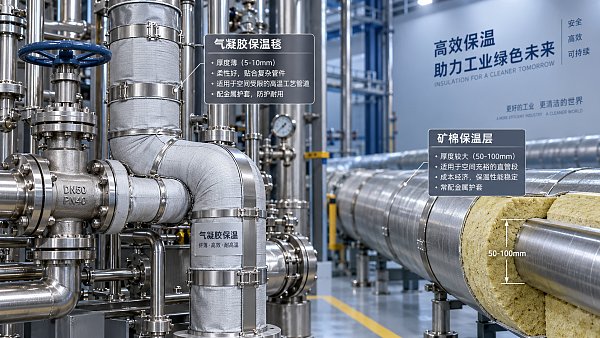
 Oct 07, 2026When does an aerogel insulation blanket outperform mineral wool?Aerogel insulation blanket vs. mineral wool: discover when thinner, high-efficiency insulation delivers better thermal control, retrofit flexibility, and lifecycle value.
![]() Oct 20, 2026Can Engineering Materials Be Substituted Without Redesign?Can engineering materials be substituted without redesign? Explore the critical checks for performance, compliance, testing, and reliable material change approval.
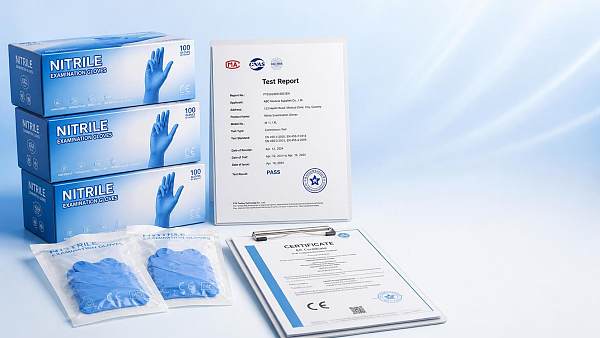
Oct 20, 2026Can Engineering Materials Be Substituted Without Redesign?Can engineering materials be substituted without redesign? Explore the critical checks for performance, compliance, testing, and reliable material change approval. Aug 26, 2026How to check whether medical gloves meet the right safety standardMedical gloves safety starts with the right standard. Learn how to verify claims, test reports, labeling, and batch records to choose compliant gloves with confidence.
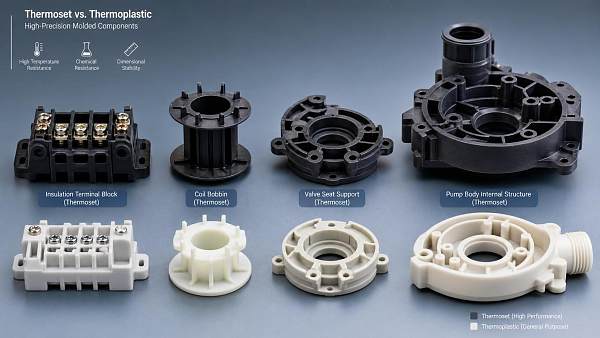
 Aug 19, 2026When does thermoset molding resin outperform thermoplastics in parts design?Thermoset molding resin outperforms thermoplastics in high-heat, chemical, and electrical applications. Learn when its crosslinked stability delivers longer-lasting part performance.
 Aug 14, 2026How to choose bio-based engineering plastics for European supply chainsBio-based engineering plastics Europe guide: learn how to choose the right grade for performance, compliance, and supply chain reliability.
 Jul 12, 2026Conductive Polymers for Antistatic Packaging: What Impacts ESD Stability MostConductive polymers for antistatic packaging: learn what really drives ESD stability most—formulation, dispersion, environment, and process control—to reduce risk and choose reliable packaging.
 Jul 05, 2026Engineering Material Selection for Semiconductors: Failure Risks to AvoidEngineering material selection for semiconductors: learn the failure risks that hurt yield, uptime, and compliance, and discover smarter choices for reliable fab performance.
 Jul 04, 2026PTFE Sheet RoHS Factory Checklist: Material Proof, Testing, and Compliance Riskptfe sheet RoHS factory checklist: verify material proof, test records, traceability, and change control to reduce compliance risk and approve suppliers with confidence.
 Jun 29, 2026How to Compare Home Accessories by Material, Style, and Room FitHome accessories comparison made simple: learn how to evaluate material, style, and room fit to choose durable, cohesive pieces that elevate every space with confidence.
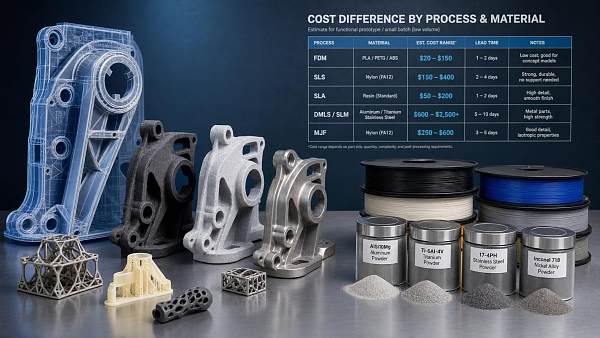
 Jun 28, 20263D Printing Quotation: What Changes Price the Most?3D printing quotation costs can change fast based on material, geometry, tolerance, finishing, and lead time. Learn what drives pricing most and compare quotes with confidence.
 Jun 26, 2026Commercial Refrigerators: Capacity vs. Operating CostCommercialrefrigerators buyers can compare capacity vs. operating cost to find the best fit for efficiency, workflow, and long-term value.
 Jun 26, 2026Commercial Refrigerators: Energy-Saving Buying GuideCommercial refrigerators energy-saving buying guide for procurement teams: compare efficiency, reliability, and total cost to choose smarter, lower-operating-cost models.
 Jun 24, 2026Silicone Products Failure Causes in Sealing and Insulation UseSilicone products often fail when real sealing and insulation conditions are overlooked. Learn key causes, warning signs, and smarter selection tips to prevent leaks, aging, and early downtime.
 Jun 24, 2026How to Compare Silicone Products by Heat, Wear, and ComplianceSilicone products compared the right way: learn how to assess heat resistance, wear performance, and compliance data to choose safer, longer-lasting options with confidence.
 Jun 21, 2026Foldable Screen Technology for Tablets: Durability vs. WeightFoldable screen technology for tablets explained: compare durability, weight, hinge reliability, materials, and repair risk to choose a foldable tablet that truly lasts.
 Jun 20, 2026Jewelry Display Stands: Common Material Mistakes to AvoidJewelrydisplaystands buying guide: avoid common material mistakes that cause scratches, fading, peeling, and fast wear. Learn how to choose durable, attractive stands for every retail setting.
 Jun 19, 2026Polyurethane Foam Insulation Bulk: When Lower Price Leads to Higher Jobsite WastePolyurethane foam insulation bulk may look cheaper upfront, but inconsistent yield, rework, and jobsite waste can raise total cost. Learn how to choose for real installed value.
 Jun 18, 2026How to Choose Car Seat Covers for Pets That Actually Stay CleanCar seat covers for pets that truly stay clean start with the right materials, fit, and design. Learn how to choose durable, easy-clean options that handle fur, mud, and daily travel.
 Jun 17, 2026Acrylic Keychains: Cost, MOQ, and Print Quality FactorsAcrylickeychains sourcing guide: compare cost, MOQ, and print quality factors to avoid hidden risks, improve supplier decisions, and secure consistent branded results.
 Jun 15, 2026EPDM Rubber Extrusion: Common Defects and How to Prevent ThemEPDMrubberextrusion defects can lead to leaks, poor fit, and early aging. Discover common issues, root causes, and practical prevention tips to improve quality and reliability.
 Jun 14, 2026Resins and Hardeners: How to Match Pot Life, Strength, and FinishResins and hardeners guide pot life, strength, and finish in real production. Learn how to match systems for reliable performance, better quality control, and fewer costly failures.
 Jun 10, 20263D Printing Material Breakthroughs Shaping Production in 20263d printing material breakthroughs are reshaping 2026 production with stronger polymers, cleaner metal powders, and scalable qualification paths—see what drives lower risk and faster adoption.
![]() Jun 09, 2026Papercupswholesale: 7 Hidden Cost Factors Before You OrderPapercupswholesale buyers often miss the real cost behind low quotes. Discover 7 hidden factors—from freight and compliance to MOQ and print risk—before you order.
Jun 09, 2026Papercupswholesale: 7 Hidden Cost Factors Before You OrderPapercupswholesale buyers often miss the real cost behind low quotes. Discover 7 hidden factors—from freight and compliance to MOQ and print risk—before you order.