Search News
Industry Portal
Popular Tags
Teflon PTFE Sheet Factory: What Buyers Miss

Author
Time
Click Count
Choosing a teflon (ptfe) sheet factory is rarely just about price or basic specs. Buyers comparing a high performance polymer factory, technical ceramics supplier, or peek material wholesale source often overlook traceability, tolerance control, and compliance risk. This article reveals the hidden evaluation factors that procurement teams, operators, and decision-makers should verify before approving PTFE sheet suppliers.
Why do PTFE sheet buyers miss the real factory risks?
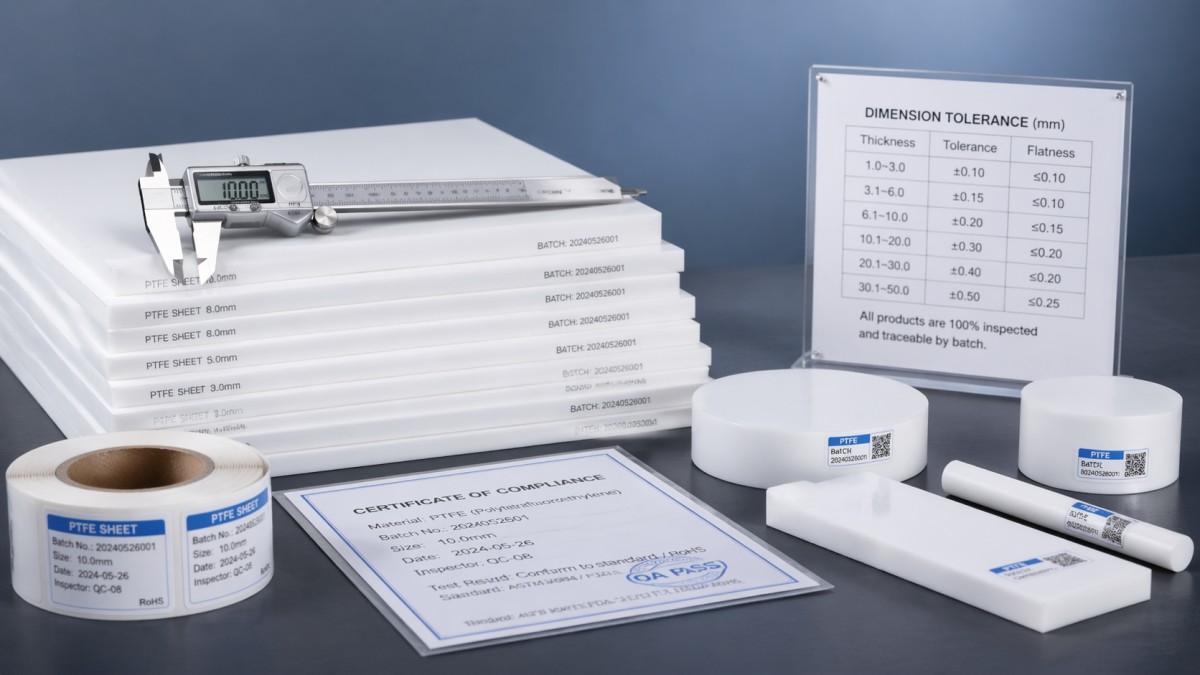
Many sourcing teams begin with thickness, sheet size, and unit price. That is necessary, but not sufficient. In real B2B procurement, a teflon PTFE sheet factory should be evaluated as a manufacturing system, not only as a material seller. The difference becomes critical when sheets are used in semiconductor support equipment, chemical sealing assemblies, insulation structures, or machining blanks where dimensional drift of even ±0.10 mm to ±0.30 mm can affect downstream performance.
Operators and maintenance teams often experience the hidden consequences first. A PTFE sheet that looks acceptable on arrival may warp after cutting, show filler inconsistency during machining, or perform differently under continuous exposure to corrosive media and elevated temperatures. For procurement personnel, these issues usually emerge 2–8 weeks after receipt, when replacement costs, production interruption, and supplier disputes become harder to manage.
Enterprise decision-makers face a broader problem: supply chain reliability. A factory may offer competitive pricing on standard skived or molded PTFE sheet, yet provide limited batch traceability, unclear raw resin origin, or incomplete documentation for export-regulated or compliance-sensitive projects. In global industrial purchasing, missing paperwork can delay approval longer than missing stock.
This is where a technical intelligence approach matters. G-CST supports procurement and engineering teams by connecting material selection with benchmark logic used across Advanced Engineering Materials, precision manufacturing, and industrial reliability frameworks. Instead of judging a PTFE sheet factory on catalog language alone, buyers can compare process capability, documentation depth, standards alignment, and supply continuity before commercial risk grows.
The 4 hidden dimensions behind a “good-looking” quote
- Material traceability: Can the supplier identify resin source, filler type, and batch linkage from incoming material to shipped sheet?
- Tolerance discipline: Can thickness flatness and cut-size repeatability stay within the requested range over multiple lots, not just one sample?
- Documentation readiness: Are COA, inspection records, and basic compliance declarations available within 1–3 business days when requested?
- Production suitability: Does the factory understand whether your application needs virgin PTFE, filled PTFE, skived sheet, molded sheet, or secondary machining support?
What should you verify in a PTFE sheet factory before approving a supplier?
A practical supplier review should move from simple product comparison to process verification. For information researchers, the key question is whether public claims are supported by manufacturing evidence. For users and operators, the question is whether the sheet will behave predictably during cutting, sealing, lining, or insulating service. For buyers, the question is whether quality consistency can be maintained across 3, 5, or 10 purchase cycles.
The most useful review framework usually includes five checkpoints: resin category, process route, dimensional control, inspection records, and supply responsiveness. In many industrial contexts, lead time for standard PTFE sheet may range from 7–15 days, while custom thickness, filler modification, or precision cutting can extend to 2–4 weeks. A factory that cannot explain this lead time structure often lacks real process transparency.
It is also wise to examine how the factory manages variation. PTFE is not selected only for chemical resistance; buyers often rely on it for low friction, electrical insulation, and thermal stability in demanding environments. Those benefits can be undermined if the manufacturer has weak control over sintering, skiving, stress release, or post-processing. A lower quote may hide a higher rejection rate in your plant.
The table below summarizes a workable pre-approval checklist for a teflon PTFE sheet factory. It is designed for cross-functional use by engineering, quality, and procurement teams rather than by sourcing alone.
This checklist highlights a common purchasing truth: the best PTFE sheet supplier is not always the one with the shortest quote sheet, but the one with the clearest manufacturing evidence. In regulated, export-sensitive, or high-uptime sectors, documentation speed and lot consistency can be as important as price per kilogram.
Three approval questions procurement teams should escalate
Can the factory support repeatability over 6–12 months?
A one-time conforming sample does not prove stable production. Ask whether the supplier tracks variation over multiple batches and whether the same process route will be used for repeat orders.
Can it support mixed requirements?
Many buyers need more than one format: full sheet, cut pieces, and sometimes semi-machined blanks. A capable factory should state what it can deliver in standard production and what requires secondary handling.
Can it support compliance reviews without delay?
When internal quality, legal, or project teams request supporting documents, delayed response often creates approval bottlenecks. Fast document retrieval is a sign of operational maturity, not just admin convenience.
How do skived, molded, virgin, and filled PTFE sheets differ in real applications?
Buyers often compare PTFE sheet offers without clarifying the process route or formulation. That leads to mismatched expectations. In broad industrial use, skived PTFE sheet is often selected for thinner gauges and flexible handling, while molded PTFE sheet is commonly considered for thicker sections and applications requiring more robust block-like stock for machining or cutting.
Virgin PTFE is frequently chosen when purity, chemical resistance, and electrical insulation are the priority. Filled PTFE may be considered when an application needs altered wear behavior, dimensional stability, or mechanical characteristics. The correct choice depends on medium exposure, operating load, machining plan, and whether the sheet becomes a final component or only an intermediate material.
In sectors connected to semiconductor tools, fluid handling, pump-valve systems, and precision industrial assemblies, these distinctions matter. G-CST’s cross-sector benchmarking perspective is useful here because PTFE selection rarely exists in isolation. It usually interacts with adjacent materials such as PEEK, technical ceramics, elastomers, or engineered metals in a larger reliability chain.
The comparison below can help research teams and buyers narrow down discussions with a teflon PTFE sheet factory before requesting sample cuts, pilot lots, or production supply terms.
The key insight is simple: sheet category should follow application logic, not warehouse habit. If your team buys PTFE only because it worked before, you may miss a better fit or overlook a hidden incompatibility. Early technical questioning often saves 1–2 procurement cycles and avoids internal requalification later.
Application scenarios where factory capability matters most
- Chemical handling and sealing support parts, where media resistance and cut accuracy influence leak risk.
- Electrical insulation barriers and support elements, where material purity and stable thickness affect system reliability.
- Machining blanks for custom components, where stress release and dimensional repeatability affect scrap rates.
- High-spec industrial assemblies, where PTFE is compared against PEEK, technical ceramics, or other advanced engineering materials.
Which standards, compliance points, and documents should buyers request?
For many organizations, the compliance layer is where supplier approval slows down. A PTFE sheet supplier may technically meet the application need, but if the factory cannot provide basic quality records, material declarations, or process explanations, the sourcing decision becomes difficult to defend internally. This is especially true when the end use touches export-controlled equipment, infrastructure projects, or audited industrial systems.
Buyers should avoid assuming that every “factory certificate” means the same thing. Instead, ask for document categories tied to your approval path. Common requirements may include certificate of analysis, lot identification, dimensional inspection data, and declarations aligned with the customer’s compliance workflow. Internal quality teams may also ask whether measurements are recorded per batch, per order, or per shipment.
G-CST adds value by framing material procurement within broader international benchmark thinking used in ISO, SEMI, ASME, and IEEE-referenced industrial environments. That does not mean every PTFE sheet purchase needs the same documentation level. It means the supplier should be assessed against the reliability expectations of the sector it serves, whether that is fluid handling, precision manufacturing, infrastructure support, or advanced materials integration.
A practical documentation matrix is shown below. It can be used during supplier onboarding, annual review, or pre-project qualification, especially when several departments need to approve the same teflon PTFE sheet factory.
Recommended News
 Oct 17, 2026Can engineering plastics for orthopaedics withstand steam sterilisation?Can engineering plastics for orthopaedics withstand steam sterilisation? Explore PEEK, PPSU and essential testing criteria to choose durable materials for reusable devices.
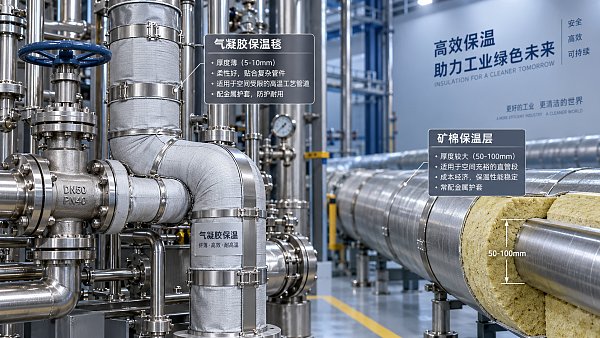
 Oct 07, 2026When does an aerogel insulation blanket outperform mineral wool?Aerogel insulation blanket vs. mineral wool: discover when thinner, high-efficiency insulation delivers better thermal control, retrofit flexibility, and lifecycle value.
![]() Oct 20, 2026Can Engineering Materials Be Substituted Without Redesign?Can engineering materials be substituted without redesign? Explore the critical checks for performance, compliance, testing, and reliable material change approval.
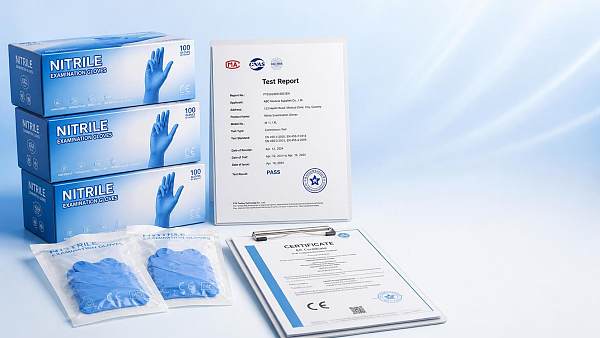
Oct 20, 2026Can Engineering Materials Be Substituted Without Redesign?Can engineering materials be substituted without redesign? Explore the critical checks for performance, compliance, testing, and reliable material change approval. Aug 26, 2026How to check whether medical gloves meet the right safety standardMedical gloves safety starts with the right standard. Learn how to verify claims, test reports, labeling, and batch records to choose compliant gloves with confidence.
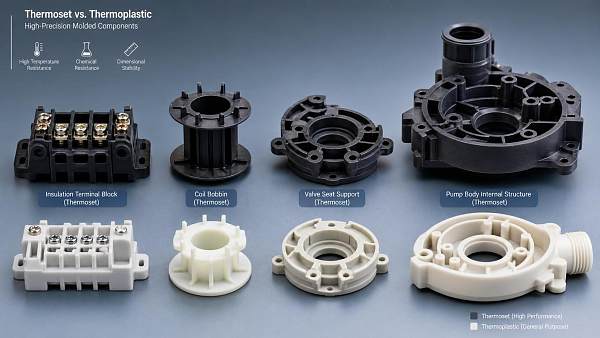
 Aug 19, 2026When does thermoset molding resin outperform thermoplastics in parts design?Thermoset molding resin outperforms thermoplastics in high-heat, chemical, and electrical applications. Learn when its crosslinked stability delivers longer-lasting part performance.
 Aug 14, 2026How to choose bio-based engineering plastics for European supply chainsBio-based engineering plastics Europe guide: learn how to choose the right grade for performance, compliance, and supply chain reliability.
 Jul 12, 2026Conductive Polymers for Antistatic Packaging: What Impacts ESD Stability MostConductive polymers for antistatic packaging: learn what really drives ESD stability most—formulation, dispersion, environment, and process control—to reduce risk and choose reliable packaging.
 Jul 05, 2026Engineering Material Selection for Semiconductors: Failure Risks to AvoidEngineering material selection for semiconductors: learn the failure risks that hurt yield, uptime, and compliance, and discover smarter choices for reliable fab performance.
 Jul 04, 2026PTFE Sheet RoHS Factory Checklist: Material Proof, Testing, and Compliance Riskptfe sheet RoHS factory checklist: verify material proof, test records, traceability, and change control to reduce compliance risk and approve suppliers with confidence.
 Jun 29, 2026How to Compare Home Accessories by Material, Style, and Room FitHome accessories comparison made simple: learn how to evaluate material, style, and room fit to choose durable, cohesive pieces that elevate every space with confidence.
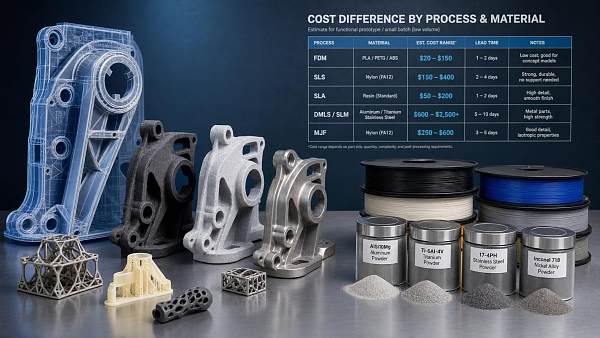
 Jun 28, 20263D Printing Quotation: What Changes Price the Most?3D printing quotation costs can change fast based on material, geometry, tolerance, finishing, and lead time. Learn what drives pricing most and compare quotes with confidence.
 Jun 26, 2026Commercial Refrigerators: Capacity vs. Operating CostCommercialrefrigerators buyers can compare capacity vs. operating cost to find the best fit for efficiency, workflow, and long-term value.
 Jun 26, 2026Commercial Refrigerators: Energy-Saving Buying GuideCommercial refrigerators energy-saving buying guide for procurement teams: compare efficiency, reliability, and total cost to choose smarter, lower-operating-cost models.
 Jun 24, 2026Silicone Products Failure Causes in Sealing and Insulation UseSilicone products often fail when real sealing and insulation conditions are overlooked. Learn key causes, warning signs, and smarter selection tips to prevent leaks, aging, and early downtime.
 Jun 24, 2026How to Compare Silicone Products by Heat, Wear, and ComplianceSilicone products compared the right way: learn how to assess heat resistance, wear performance, and compliance data to choose safer, longer-lasting options with confidence.
 Jun 21, 2026Foldable Screen Technology for Tablets: Durability vs. WeightFoldable screen technology for tablets explained: compare durability, weight, hinge reliability, materials, and repair risk to choose a foldable tablet that truly lasts.
 Jun 20, 2026Jewelry Display Stands: Common Material Mistakes to AvoidJewelrydisplaystands buying guide: avoid common material mistakes that cause scratches, fading, peeling, and fast wear. Learn how to choose durable, attractive stands for every retail setting.
 Jun 19, 2026Polyurethane Foam Insulation Bulk: When Lower Price Leads to Higher Jobsite WastePolyurethane foam insulation bulk may look cheaper upfront, but inconsistent yield, rework, and jobsite waste can raise total cost. Learn how to choose for real installed value.
 Jun 18, 2026How to Choose Car Seat Covers for Pets That Actually Stay CleanCar seat covers for pets that truly stay clean start with the right materials, fit, and design. Learn how to choose durable, easy-clean options that handle fur, mud, and daily travel.
 Jun 17, 2026Acrylic Keychains: Cost, MOQ, and Print Quality FactorsAcrylickeychains sourcing guide: compare cost, MOQ, and print quality factors to avoid hidden risks, improve supplier decisions, and secure consistent branded results.
 Jun 15, 2026EPDM Rubber Extrusion: Common Defects and How to Prevent ThemEPDMrubberextrusion defects can lead to leaks, poor fit, and early aging. Discover common issues, root causes, and practical prevention tips to improve quality and reliability.
 Jun 14, 2026Resins and Hardeners: How to Match Pot Life, Strength, and FinishResins and hardeners guide pot life, strength, and finish in real production. Learn how to match systems for reliable performance, better quality control, and fewer costly failures.
 Jun 10, 20263D Printing Material Breakthroughs Shaping Production in 20263d printing material breakthroughs are reshaping 2026 production with stronger polymers, cleaner metal powders, and scalable qualification paths—see what drives lower risk and faster adoption.
![]() Jun 09, 2026Papercupswholesale: 7 Hidden Cost Factors Before You OrderPapercupswholesale buyers often miss the real cost behind low quotes. Discover 7 hidden factors—from freight and compliance to MOQ and print risk—before you order.
Jun 09, 2026Papercupswholesale: 7 Hidden Cost Factors Before You OrderPapercupswholesale buyers often miss the real cost behind low quotes. Discover 7 hidden factors—from freight and compliance to MOQ and print risk—before you order.