Search News
Industry Portal
Popular Tags
Conductive Polymers Manufacturer Selection Guide
Author
Time
Click Count
Selecting a reliable conductive polymers manufacturer requires more than comparing datasheets. For procurement teams, engineers, and decision-makers, the right partner must align material performance, compliance, scalability, and supply-chain resilience with real industrial demands. In practice, the best supplier is rarely the one with the broadest catalog or the lowest quoted price. It is the one that can consistently deliver the right formulation, document quality and compliance, support qualification, and scale without introducing avoidable technical or commercial risk. This guide focuses on how to evaluate conductive polymers manufacturers in a way that supports sourcing decisions, engineering validation, and long-term supplier confidence.
What buyers should evaluate first when choosing a conductive polymers manufacturer
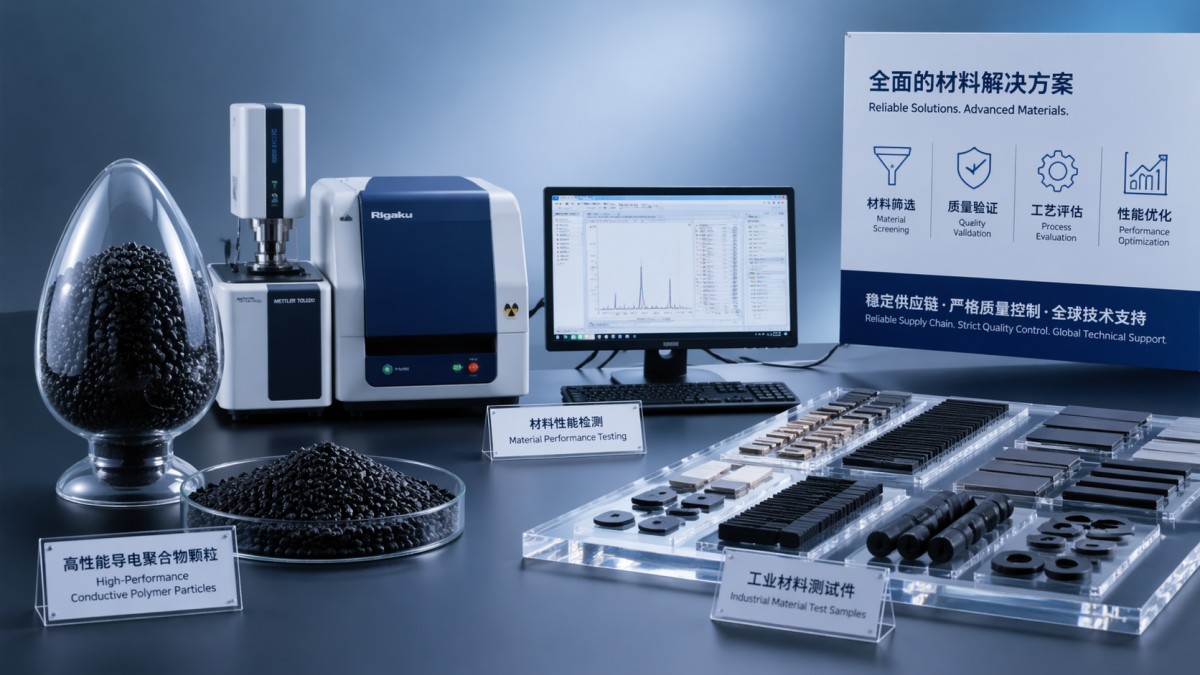
The core search intent behind a “conductive polymers manufacturer selection guide” is practical vendor evaluation. Most readers are not looking for a generic definition of conductive polymers. They want to know how to compare manufacturers, reduce procurement risk, and identify which supplier can meet technical, regulatory, and commercial requirements in a real project environment.
For most B2B buyers, the first screening should focus on five factors:
- Material fit for the application: conductivity range, thermal stability, mechanical performance, processing compatibility, and environmental resistance.
- Manufacturing capability: formulation control, batch consistency, customization capacity, compounding expertise, and scale-up readiness.
- Quality and compliance: ISO systems, traceability, test protocols, RoHS/REACH status, and sector-specific documentation.
- Supply-chain resilience: raw material sourcing, lead times, geographic manufacturing footprint, and contingency planning.
- Technical and commercial support: application engineering, sampling speed, change control, and responsiveness during qualification and production.
If a manufacturer is weak in any of these areas, the risk usually appears later as unstable product performance, delayed approvals, production interruptions, or hidden lifecycle cost. That is why early-stage screening should be rigorous and evidence-based.
How to match the manufacturer to your actual application, not just the datasheet
Conductive polymers are used across electronics, antistatic packaging, sensors, EMI shielding, automotive components, medical devices, energy storage systems, coatings, and industrial assemblies. Because application conditions vary widely, a supplier that performs well in one use case may not be the best choice in another.
Start by defining the application requirements in operational terms:
- Required conductivity or resistivity window
- Continuous and peak operating temperature
- Exposure to chemicals, humidity, UV, or abrasion
- Expected service life and reliability targets
- Processing method such as extrusion, injection molding, film coating, printing, or compounding
- Regulatory or end-market restrictions
Then assess whether the manufacturer can provide not only a standard grade, but a validated material solution for your exact processing and operating environment. A strong conductive polymers manufacturer should be able to discuss filler systems, polymer matrix tradeoffs, dispersion uniformity, conductivity stability over time, and how processing conditions affect final performance.
This is especially important for buyers sourcing for advanced industrial or electronic systems, where small variations in conductivity, dimensional stability, or contamination profile can create downstream reliability issues. A useful supplier conversation should go beyond “here is our grade list” and into “here is how this formulation behaves under your conditions.”
Which technical capabilities separate a qualified manufacturer from a trading source
One of the most important distinctions in supplier selection is whether you are dealing with a true manufacturer, a compounder with real process ownership, or a trading intermediary. For strategic sourcing, this matters greatly.
A qualified conductive polymers manufacturer should demonstrate:
- Formulation expertise: understanding of intrinsically conductive polymers, conductive fillers, polymer blends, and surface or bulk conductivity mechanisms.
- Process control: controlled mixing, dispersion, pelletizing, coating, or polymerization processes with repeatable output.
- In-house testing: electrical, thermal, mechanical, rheological, and environmental testing linked to batch release.
- Customization capability: ability to tune conductivity, flexibility, color, processing behavior, or durability to fit customer needs.
- Change management: documented control over raw material substitutions, process changes, and version tracking.
Ask direct questions about what is made in-house, what is outsourced, and who owns the process parameters. A manufacturer with deep process ownership can usually troubleshoot faster, maintain consistency better, and support product evolution over time. A supplier that relies heavily on external manufacturing may offer lower transparency and weaker control over critical variables.
How to assess quality systems, testing discipline, and regulatory readiness
For procurement teams and enterprise decision-makers, quality assurance is often the point where a promising supplier either becomes viable or gets eliminated. Conductive polymers can be sensitive to formulation shifts, contamination, and processing variation, so documentation quality is just as important as raw performance data.
Look for evidence in these areas:
- Quality certifications: ISO 9001 as a baseline, with industry-specific certifications where relevant.
- Batch traceability: lot-level records, retained samples, and clear certificate of analysis practices.
- Testing methods: clearly defined methods for surface resistivity, volume resistivity, tensile properties, thermal behavior, and aging performance.
- Compliance documentation: RoHS, REACH, SVHC, conflict minerals statements, and any sector-specific declarations.
- Validation support: sample documentation, PPAP-style support if needed, and responsiveness during qualification audits.
Do not rely only on a polished technical data sheet. Ask whether published values are typical, minimum guaranteed, or based on controlled test conditions that may differ from your use case. A trustworthy manufacturer will explain test standards, tolerances, and known application limitations without hesitation.
What procurement teams should check to reduce supply-chain and commercial risk
Even when the material performs well technically, supplier risk can still derail the project. For conductive polymers, commercial continuity depends on raw material availability, specialty additive access, production scheduling, and logistics reliability.
Key procurement questions include:
- Where are the production sites and are there backup manufacturing locations?
- Which raw materials are single-sourced or vulnerable to regional disruption?
- What are the standard and expedited lead times?
- How is demand forecasting handled for custom grades?
- What are the MOQ requirements, shelf-life limits, and packaging constraints?
- How are price changes communicated and what drives volatility?
For strategic buyers, it is also worth evaluating export controls, cross-border trade exposure, and the supplier’s ability to support regional compliance and localized service. In high-value manufacturing environments, a slightly higher unit price may be justified if it buys stronger delivery stability, lower qualification risk, and better technical support.
How to compare suppliers using a practical scorecard
A structured scorecard helps teams compare conductive polymers manufacturers more objectively. This is particularly useful when engineering, sourcing, operations, and management all influence the final decision.
A practical evaluation framework may include:
- Technical fit: 30%
- Quality and compliance: 20%
- Manufacturing capability and consistency: 20%
- Supply-chain reliability: 15%
- Commercial terms and total cost: 10%
- Service and application support: 5%
Within each category, define measurable criteria. For example, under technical fit, include conductivity range stability, process compatibility, and environmental resistance. Under supply-chain reliability, include lead time performance, site redundancy, and raw material security. This approach prevents decisions from being driven by headline pricing or a single attractive test result.
It also helps procurement and technical teams align around total value rather than isolated data points.
Warning signs that a conductive polymers supplier may not be the right long-term partner
Some risks become visible early if you know what to look for. Common warning signs include:
- Inconsistent or vague answers about formulation control and test methods
- Reluctance to share compliance or traceability documentation
- Large variation between sample performance and production batch expectations
- Overpromising on customization without clear development workflow
- No formal process for change notification
- Weak responsiveness from technical support teams
- Unclear ownership of manufacturing versus resale activity
These issues do not always mean a supplier is unsuitable, but they do indicate the need for deeper verification before qualification. In sectors where reliability, ESD performance, or electronic functionality matter, unresolved ambiguity can become a major operational cost later.
Final recommendation for selecting the right conductive polymers manufacturer
The right conductive polymers manufacturer is the one that can prove stable performance, process control, compliance readiness, and supply continuity in the context of your actual application. Buyers should treat supplier selection as a cross-functional decision involving engineering, quality, procurement, and business leadership rather than a simple material comparison exercise.
As a practical rule, shortlist manufacturers that can do three things well: explain the material science in application terms, document quality and compliance with confidence, and support scale-up without introducing uncertainty. When those strengths are backed by resilient operations and transparent commercial practices, the supplier is far more likely to become a reliable long-term partner.
In short, a strong conductive polymers manufacturer should not just sell a material. They should reduce risk, support qualification, and improve the probability of successful production over the full lifecycle of your project.
Recommended News
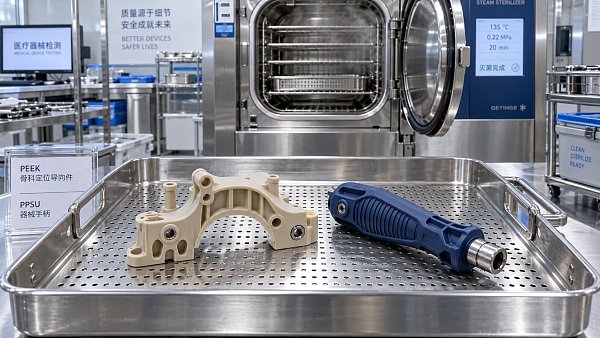
 Oct 17, 2026Can engineering plastics for orthopaedics withstand steam sterilisation?Can engineering plastics for orthopaedics withstand steam sterilisation? Explore PEEK, PPSU and essential testing criteria to choose durable materials for reusable devices.
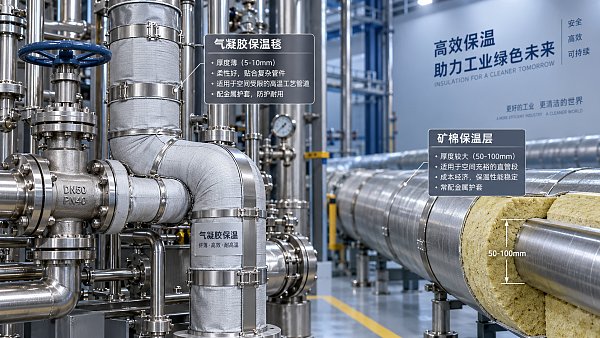
 Oct 07, 2026When does an aerogel insulation blanket outperform mineral wool?Aerogel insulation blanket vs. mineral wool: discover when thinner, high-efficiency insulation delivers better thermal control, retrofit flexibility, and lifecycle value.
![]() Oct 20, 2026Can Engineering Materials Be Substituted Without Redesign?Can engineering materials be substituted without redesign? Explore the critical checks for performance, compliance, testing, and reliable material change approval.
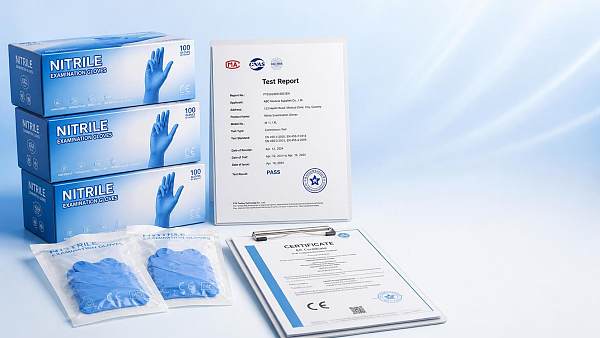
Oct 20, 2026Can Engineering Materials Be Substituted Without Redesign?Can engineering materials be substituted without redesign? Explore the critical checks for performance, compliance, testing, and reliable material change approval. Aug 26, 2026How to check whether medical gloves meet the right safety standardMedical gloves safety starts with the right standard. Learn how to verify claims, test reports, labeling, and batch records to choose compliant gloves with confidence.
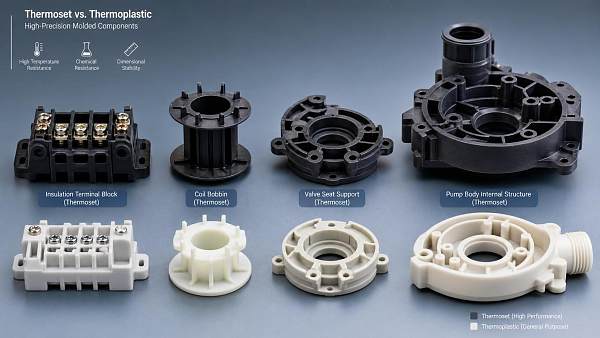
 Aug 19, 2026When does thermoset molding resin outperform thermoplastics in parts design?Thermoset molding resin outperforms thermoplastics in high-heat, chemical, and electrical applications. Learn when its crosslinked stability delivers longer-lasting part performance.
 Aug 14, 2026How to choose bio-based engineering plastics for European supply chainsBio-based engineering plastics Europe guide: learn how to choose the right grade for performance, compliance, and supply chain reliability.
 Jul 12, 2026Conductive Polymers for Antistatic Packaging: What Impacts ESD Stability MostConductive polymers for antistatic packaging: learn what really drives ESD stability most—formulation, dispersion, environment, and process control—to reduce risk and choose reliable packaging.
 Jul 05, 2026Engineering Material Selection for Semiconductors: Failure Risks to AvoidEngineering material selection for semiconductors: learn the failure risks that hurt yield, uptime, and compliance, and discover smarter choices for reliable fab performance.
 Jul 04, 2026PTFE Sheet RoHS Factory Checklist: Material Proof, Testing, and Compliance Riskptfe sheet RoHS factory checklist: verify material proof, test records, traceability, and change control to reduce compliance risk and approve suppliers with confidence.
 Jun 29, 2026How to Compare Home Accessories by Material, Style, and Room FitHome accessories comparison made simple: learn how to evaluate material, style, and room fit to choose durable, cohesive pieces that elevate every space with confidence.
 Jun 28, 20263D Printing Quotation: What Changes Price the Most?3D printing quotation costs can change fast based on material, geometry, tolerance, finishing, and lead time. Learn what drives pricing most and compare quotes with confidence.
 Jun 26, 2026Commercial Refrigerators: Capacity vs. Operating CostCommercialrefrigerators buyers can compare capacity vs. operating cost to find the best fit for efficiency, workflow, and long-term value.
 Jun 26, 2026Commercial Refrigerators: Energy-Saving Buying GuideCommercial refrigerators energy-saving buying guide for procurement teams: compare efficiency, reliability, and total cost to choose smarter, lower-operating-cost models.
 Jun 24, 2026Silicone Products Failure Causes in Sealing and Insulation UseSilicone products often fail when real sealing and insulation conditions are overlooked. Learn key causes, warning signs, and smarter selection tips to prevent leaks, aging, and early downtime.
 Jun 24, 2026How to Compare Silicone Products by Heat, Wear, and ComplianceSilicone products compared the right way: learn how to assess heat resistance, wear performance, and compliance data to choose safer, longer-lasting options with confidence.
 Jun 21, 2026Foldable Screen Technology for Tablets: Durability vs. WeightFoldable screen technology for tablets explained: compare durability, weight, hinge reliability, materials, and repair risk to choose a foldable tablet that truly lasts.
 Jun 20, 2026Jewelry Display Stands: Common Material Mistakes to AvoidJewelrydisplaystands buying guide: avoid common material mistakes that cause scratches, fading, peeling, and fast wear. Learn how to choose durable, attractive stands for every retail setting.
 Jun 19, 2026Polyurethane Foam Insulation Bulk: When Lower Price Leads to Higher Jobsite WastePolyurethane foam insulation bulk may look cheaper upfront, but inconsistent yield, rework, and jobsite waste can raise total cost. Learn how to choose for real installed value.
 Jun 18, 2026How to Choose Car Seat Covers for Pets That Actually Stay CleanCar seat covers for pets that truly stay clean start with the right materials, fit, and design. Learn how to choose durable, easy-clean options that handle fur, mud, and daily travel.
 Jun 17, 2026Acrylic Keychains: Cost, MOQ, and Print Quality FactorsAcrylickeychains sourcing guide: compare cost, MOQ, and print quality factors to avoid hidden risks, improve supplier decisions, and secure consistent branded results.
 Jun 15, 2026EPDM Rubber Extrusion: Common Defects and How to Prevent ThemEPDMrubberextrusion defects can lead to leaks, poor fit, and early aging. Discover common issues, root causes, and practical prevention tips to improve quality and reliability.
 Jun 14, 2026Resins and Hardeners: How to Match Pot Life, Strength, and FinishResins and hardeners guide pot life, strength, and finish in real production. Learn how to match systems for reliable performance, better quality control, and fewer costly failures.
 Jun 10, 20263D Printing Material Breakthroughs Shaping Production in 20263d printing material breakthroughs are reshaping 2026 production with stronger polymers, cleaner metal powders, and scalable qualification paths—see what drives lower risk and faster adoption.
![]() Jun 09, 2026Papercupswholesale: 7 Hidden Cost Factors Before You OrderPapercupswholesale buyers often miss the real cost behind low quotes. Discover 7 hidden factors—from freight and compliance to MOQ and print risk—before you order.
Jun 09, 2026Papercupswholesale: 7 Hidden Cost Factors Before You OrderPapercupswholesale buyers often miss the real cost behind low quotes. Discover 7 hidden factors—from freight and compliance to MOQ and print risk—before you order.