Search News
Industry Portal
Popular Tags
Thermoset Resin Manufacturer: Cost vs Performance

Author
Time
Click Count
Choosing a thermoset resin manufacturer is rarely about finding the lowest unit price. For most industrial buyers, the real decision is whether a lower-cost material system will create higher total cost later through scrap, curing instability, regulatory gaps, shorter service life, or field failures. In practice, the best supplier is usually the one that can prove stable quality, process consistency, application fit, and compliance—not simply the one offering the cheapest quote. For procurement teams, engineers, operators, and business decision-makers, the right comparison framework is cost versus performance over the full lifecycle.
Whether you are comparing a thermoset resin manufacturer against a carbon fiber composite OEM, a high performance polymer factory, or a conductive polymers manufacturer, the same principle applies: material selection must support process efficiency, product reliability, and long-term business risk control. This guide explains how to evaluate trade-offs in a way that is commercially sound and technically defensible.
What buyers really need to compare: price per kilogram or cost of reliable performance?

The core search intent behind “Thermoset Resin Manufacturer: Cost vs Performance” is practical evaluation. Readers are not usually looking for a basic definition of thermoset resin. They want to know how to choose among suppliers, how to compare lower-cost and higher-spec options, and how to avoid paying for either unnecessary overengineering or hidden failure risk.
That makes the most useful comparison one based on total value, including:
- Raw material price
- Processing efficiency and cycle time
- Batch-to-batch consistency
- Mechanical, thermal, electrical, and chemical performance
- Regulatory compliance and documentation quality
- Long-term durability in actual service conditions
- Supply continuity and technical support
A resin that is 8% cheaper at purchase may become far more expensive if it causes longer cure cycles, higher defect rates, weaker bonding, or warranty claims. On the other hand, a premium-grade resin may not be justified if the application does not need high thermal resistance, strict dielectric control, or aggressive chemical durability. The key is application-matched performance.
Why thermoset resin cost differences exist between manufacturers
When buyers receive quotations from multiple thermoset resin manufacturers, price gaps can seem confusing. In many cases, those differences are driven by real technical and operational factors rather than simple margin variation.
Common cost drivers include:
- Resin chemistry: Epoxy, phenolic, unsaturated polyester, vinyl ester, melamine, and polyurethane thermosets have different raw material structures and cost bases.
- Filler and additive systems: Flame retardants, conductive additives, tougheners, glass or mineral fillers, and low-outgassing packages affect both price and functionality.
- Purity and performance control: Tight molecular-weight control, low ionic contamination, and advanced formulation stability usually increase production cost.
- Processing design: Fast-cure, low-viscosity, transfer-molding, vacuum infusion, or electronic encapsulation grades may require more precise formulation work.
- Quality management: Higher testing frequency, traceability, and statistical process control often correlate with higher but more reliable pricing.
- Compliance burden: REACH, RoHS, UL, low-VOC, or sector-specific qualification adds cost but reduces downstream risk.
For procurement teams, this means a cheaper quote is only meaningful after understanding what has been simplified, removed, or left uncontrolled. A lower price may reflect lower inspection frequency, weaker documentation, fewer approvals, or narrower process windows.
Which performance factors matter most in real applications?
The most important performance criteria depend on end use, but industrial buyers typically focus on whether the resin system will remain stable throughout manufacturing and service. Instead of evaluating every data sheet value equally, concentrate on the properties that affect failure risk, production yield, and customer requirements.
Key performance categories include:
- Thermal resistance: Glass transition temperature, heat deflection behavior, thermal aging, and dimensional stability under elevated temperatures.
- Mechanical properties: Tensile strength, flexural strength, impact resistance, modulus, fatigue response, and crack propagation behavior.
- Chemical resistance: Stability against solvents, acids, alkalis, fuels, moisture, and process chemicals.
- Electrical performance: Dielectric strength, insulation resistance, dissipation factor, and arc resistance for electronic or high-voltage use.
- Processing behavior: Viscosity, pot life, exotherm, cure profile, shrinkage, and adhesion to substrates.
- Environmental durability: UV resistance, hydrolysis resistance, weathering, and long-term property retention.
For operators and engineers, processing behavior is often just as important as end-state mechanical performance. A technically strong resin can still be a poor choice if it is difficult to dispense, cures unpredictably, traps air, or creates frequent defects on the production line.
How procurement teams should evaluate a thermoset resin manufacturer
Procurement should not evaluate thermoset suppliers only by quotation sheets. A better approach is to assess the manufacturer across technical, commercial, and operational dimensions.
A strong supplier review process should include the following questions:
- Can the manufacturer provide consistent batch data, not just a nominal data sheet?
- Are test methods aligned with recognized standards such as ISO, ASTM, UL, SEMI, or customer-specific protocols?
- Do they offer application engineering support during qualification and scale-up?
- Can they provide certificates of analysis, traceability, and change-notification procedures?
- What is their lead time stability and backup supply capability?
- Do they have experience in your target industry, such as electronics, composites, industrial equipment, automotive, or infrastructure?
- How well do they manage regulatory documentation and restricted-substance declarations?
For enterprise decision-makers, one of the most valuable signals is whether a manufacturer can reduce uncertainty. The supplier that responds clearly to qualification, failure analysis, and compliance requests often creates more strategic value than one offering only aggressive initial pricing.
Cost vs performance by application: when to pay more and when not to
Not every application requires premium thermoset resin. Overbuying material performance can unnecessarily raise cost, but underbuying can damage quality and brand credibility. The right decision depends on operational and service conditions.
It often makes sense to pay more when:
- The part operates in high heat or thermal cycling conditions
- Electrical insulation reliability is critical
- Chemical exposure is severe or continuous
- Downtime or field failure would be costly
- The application requires certifications or regulated documentation
- Process repeatability is essential for high-volume manufacturing
A lower-cost option may be acceptable when:
- The component is non-critical or lightly loaded
- Service temperatures are moderate and stable
- The environment is chemically mild
- The product lifecycle is short
- Minor variation does not affect final system performance
This is where comparison with adjacent suppliers becomes useful. A carbon fiber composite OEM may package reinforcement and resin into a higher-value structural solution. A high performance polymer factory may offer alternatives if thermoplastic processing or recyclability is important. A conductive polymers manufacturer may be more relevant if electrical functionality is the main requirement. Buyers should decide based on application outcomes, not supplier labels alone.
Hidden costs that make a “cheap” resin expensive
Many sourcing mistakes happen because visible price is measured carefully while hidden cost is underestimated. In industrial material selection, the biggest financial losses usually come from process inefficiency and reliability issues, not invoice price alone.
Watch for these hidden costs:
- High scrap or rework rates from poor cure consistency
- Short shelf life and inventory write-offs
- Longer production cycles that reduce throughput
- Higher energy use during curing
- Unexpected tooling contamination or maintenance issues
- Adhesion failures in assembly or field service
- Returns, warranty claims, and reputation damage
- Delayed approvals due to incomplete compliance documentation
For researchers and technical evaluators, these risks should be quantified during trials. For procurement and management teams, supplier selection should include scenario-based costing, such as failure cost per thousand units, downtime exposure, and lifecycle replacement implications.
What technical data and proof should a reliable manufacturer provide?
A credible thermoset resin manufacturer should be able to provide more than marketing claims. Buyers should ask for evidence that supports both qualification and future production stability.
Useful supporting documentation includes:
- Technical data sheets with clearly defined test conditions
- Safety data sheets and regulatory declarations
- Certificates of analysis by batch
- Cure schedules and processing guidelines
- Thermal, mechanical, and chemical resistance test reports
- Accelerated aging or application-specific validation data
- Quality certifications and audit records where relevant
- Formal change control and product discontinuation policies
The more critical the application, the more important it is to verify whether reported values represent typical, minimum, or ideal-lab conditions. Experienced buyers look for data reproducibility and real-world relevance, not just headline numbers.
A practical decision framework for researchers, operators, buyers, and executives
To make a sound selection, different stakeholders should evaluate the same supplier from different angles:
- Researchers: Compare formulation fit, property balance, test standards, and long-term material behavior.
- Operators: Focus on viscosity control, handling safety, pot life, cure stability, and shop-floor usability.
- Procurement teams: Review total landed cost, dual-source potential, supply reliability, and documentation quality.
- Business decision-makers: Prioritize risk reduction, lifecycle value, compliance exposure, and strategic supply resilience.
A useful shortlist process is:
- Define application-critical properties and acceptable ranges
- Screen suppliers based on compliance and technical fit
- Run processing and performance trials under realistic conditions
- Compare total cost of ownership, not unit price only
- Check responsiveness, documentation quality, and scale-up support
- Select the supplier with the best balance of reliability and economic value
In most industrial settings, the winning choice is not the cheapest resin and not the highest-spec resin. It is the supplier whose material meets performance targets with the lowest practical lifecycle risk.
Conclusion: the best thermoset resin manufacturer is the one that lowers total risk
When evaluating a thermoset resin manufacturer, cost versus performance should be treated as a strategic business decision, not a simple price negotiation. Buyers who focus only on material cost can miss larger issues such as process instability, compliance gaps, service failure, and supply-chain weakness. Buyers who focus only on premium specifications may overpay for performance they do not need.
The best decision comes from matching resin performance to actual application requirements, validating process behavior, and selecting a manufacturer that can consistently deliver quality, traceability, and support. For information researchers, operators, procurement professionals, and enterprise leaders alike, that is the most reliable path to lower total cost and better long-term results.
Recommended News
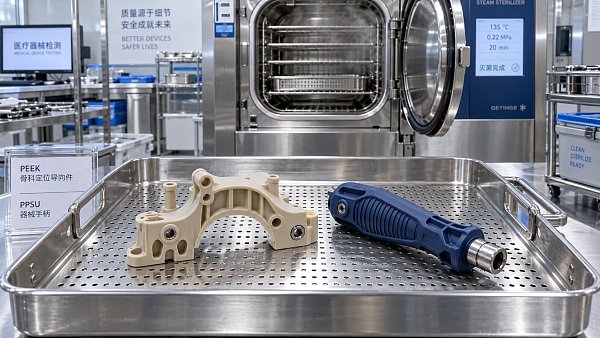
 Oct 17, 2026Can engineering plastics for orthopaedics withstand steam sterilisation?Can engineering plastics for orthopaedics withstand steam sterilisation? Explore PEEK, PPSU and essential testing criteria to choose durable materials for reusable devices.
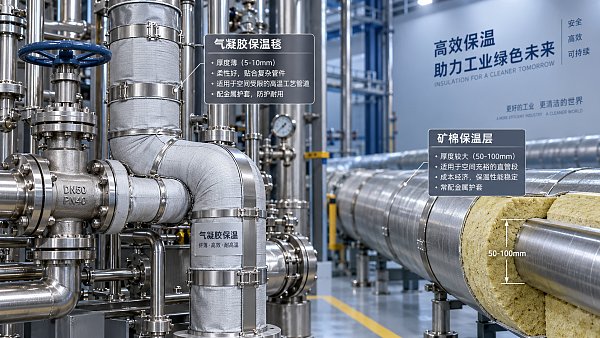
 Oct 07, 2026When does an aerogel insulation blanket outperform mineral wool?Aerogel insulation blanket vs. mineral wool: discover when thinner, high-efficiency insulation delivers better thermal control, retrofit flexibility, and lifecycle value.
![]() Oct 20, 2026Can Engineering Materials Be Substituted Without Redesign?Can engineering materials be substituted without redesign? Explore the critical checks for performance, compliance, testing, and reliable material change approval.
Oct 20, 2026Can Engineering Materials Be Substituted Without Redesign?Can engineering materials be substituted without redesign? Explore the critical checks for performance, compliance, testing, and reliable material change approval. Aug 26, 2026How to check whether medical gloves meet the right safety standardMedical gloves safety starts with the right standard. Learn how to verify claims, test reports, labeling, and batch records to choose compliant gloves with confidence.
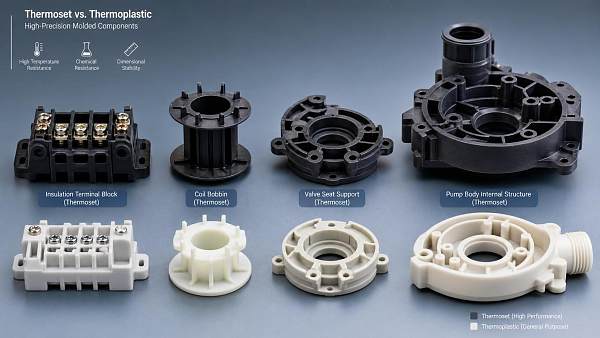
 Aug 19, 2026When does thermoset molding resin outperform thermoplastics in parts design?Thermoset molding resin outperforms thermoplastics in high-heat, chemical, and electrical applications. Learn when its crosslinked stability delivers longer-lasting part performance.
 Aug 14, 2026How to choose bio-based engineering plastics for European supply chainsBio-based engineering plastics Europe guide: learn how to choose the right grade for performance, compliance, and supply chain reliability.
 Jul 12, 2026Conductive Polymers for Antistatic Packaging: What Impacts ESD Stability MostConductive polymers for antistatic packaging: learn what really drives ESD stability most—formulation, dispersion, environment, and process control—to reduce risk and choose reliable packaging.
 Jul 05, 2026Engineering Material Selection for Semiconductors: Failure Risks to AvoidEngineering material selection for semiconductors: learn the failure risks that hurt yield, uptime, and compliance, and discover smarter choices for reliable fab performance.
 Jul 04, 2026PTFE Sheet RoHS Factory Checklist: Material Proof, Testing, and Compliance Riskptfe sheet RoHS factory checklist: verify material proof, test records, traceability, and change control to reduce compliance risk and approve suppliers with confidence.
 Jun 29, 2026How to Compare Home Accessories by Material, Style, and Room FitHome accessories comparison made simple: learn how to evaluate material, style, and room fit to choose durable, cohesive pieces that elevate every space with confidence.
 Jun 28, 20263D Printing Quotation: What Changes Price the Most?3D printing quotation costs can change fast based on material, geometry, tolerance, finishing, and lead time. Learn what drives pricing most and compare quotes with confidence.
 Jun 26, 2026Commercial Refrigerators: Capacity vs. Operating CostCommercialrefrigerators buyers can compare capacity vs. operating cost to find the best fit for efficiency, workflow, and long-term value.
 Jun 26, 2026Commercial Refrigerators: Energy-Saving Buying GuideCommercial refrigerators energy-saving buying guide for procurement teams: compare efficiency, reliability, and total cost to choose smarter, lower-operating-cost models.
 Jun 24, 2026Silicone Products Failure Causes in Sealing and Insulation UseSilicone products often fail when real sealing and insulation conditions are overlooked. Learn key causes, warning signs, and smarter selection tips to prevent leaks, aging, and early downtime.
 Jun 24, 2026How to Compare Silicone Products by Heat, Wear, and ComplianceSilicone products compared the right way: learn how to assess heat resistance, wear performance, and compliance data to choose safer, longer-lasting options with confidence.
 Jun 21, 2026Foldable Screen Technology for Tablets: Durability vs. WeightFoldable screen technology for tablets explained: compare durability, weight, hinge reliability, materials, and repair risk to choose a foldable tablet that truly lasts.
 Jun 20, 2026Jewelry Display Stands: Common Material Mistakes to AvoidJewelrydisplaystands buying guide: avoid common material mistakes that cause scratches, fading, peeling, and fast wear. Learn how to choose durable, attractive stands for every retail setting.
 Jun 19, 2026Polyurethane Foam Insulation Bulk: When Lower Price Leads to Higher Jobsite WastePolyurethane foam insulation bulk may look cheaper upfront, but inconsistent yield, rework, and jobsite waste can raise total cost. Learn how to choose for real installed value.
 Jun 18, 2026How to Choose Car Seat Covers for Pets That Actually Stay CleanCar seat covers for pets that truly stay clean start with the right materials, fit, and design. Learn how to choose durable, easy-clean options that handle fur, mud, and daily travel.
 Jun 17, 2026Acrylic Keychains: Cost, MOQ, and Print Quality FactorsAcrylickeychains sourcing guide: compare cost, MOQ, and print quality factors to avoid hidden risks, improve supplier decisions, and secure consistent branded results.
 Jun 15, 2026EPDM Rubber Extrusion: Common Defects and How to Prevent ThemEPDMrubberextrusion defects can lead to leaks, poor fit, and early aging. Discover common issues, root causes, and practical prevention tips to improve quality and reliability.
 Jun 14, 2026Resins and Hardeners: How to Match Pot Life, Strength, and FinishResins and hardeners guide pot life, strength, and finish in real production. Learn how to match systems for reliable performance, better quality control, and fewer costly failures.
 Jun 10, 20263D Printing Material Breakthroughs Shaping Production in 20263d printing material breakthroughs are reshaping 2026 production with stronger polymers, cleaner metal powders, and scalable qualification paths—see what drives lower risk and faster adoption.
![]() Jun 09, 2026Papercupswholesale: 7 Hidden Cost Factors Before You OrderPapercupswholesale buyers often miss the real cost behind low quotes. Discover 7 hidden factors—from freight and compliance to MOQ and print risk—before you order.
Jun 09, 2026Papercupswholesale: 7 Hidden Cost Factors Before You OrderPapercupswholesale buyers often miss the real cost behind low quotes. Discover 7 hidden factors—from freight and compliance to MOQ and print risk—before you order.