Search News
Industry Portal
Popular Tags
OEM Waterproof Design: Cost vs Reliability
Author
Time
Click Count
In OEM consumer electronics waterproof design, the cheapest sealing choice can become the most expensive field failure. For business evaluators, the real question is not whether an IP rating looks competitive, but whether materials, tolerances, adhesives, vents, and test protocols can sustain reliability across production scale, warranty cycles, and regional compliance demands. This article examines the cost–reliability trade-offs behind waterproof design decisions, helping procurement and engineering stakeholders identify where to reduce spend safely—and where cutting corners may expose the product, brand, and supply chain to unacceptable risk.
For procurement teams, waterproofing is rarely a single component decision. It connects enclosure architecture, supplier process capability, tooling stability, after-sales exposure, and compliance documentation. A design that passes 3 prototype samples may fail when 300,000 units move through different molding cavities, adhesive batches, and assembly shifts.
G-CST evaluates these “invisible” engineering choices through a B2B lens: where technical evidence supports commercial confidence. In consumer devices, waterproof design must be judged as a lifecycle investment, not a cosmetic specification on a sales sheet.
Why Waterproof Design Is a Commercial Risk Variable
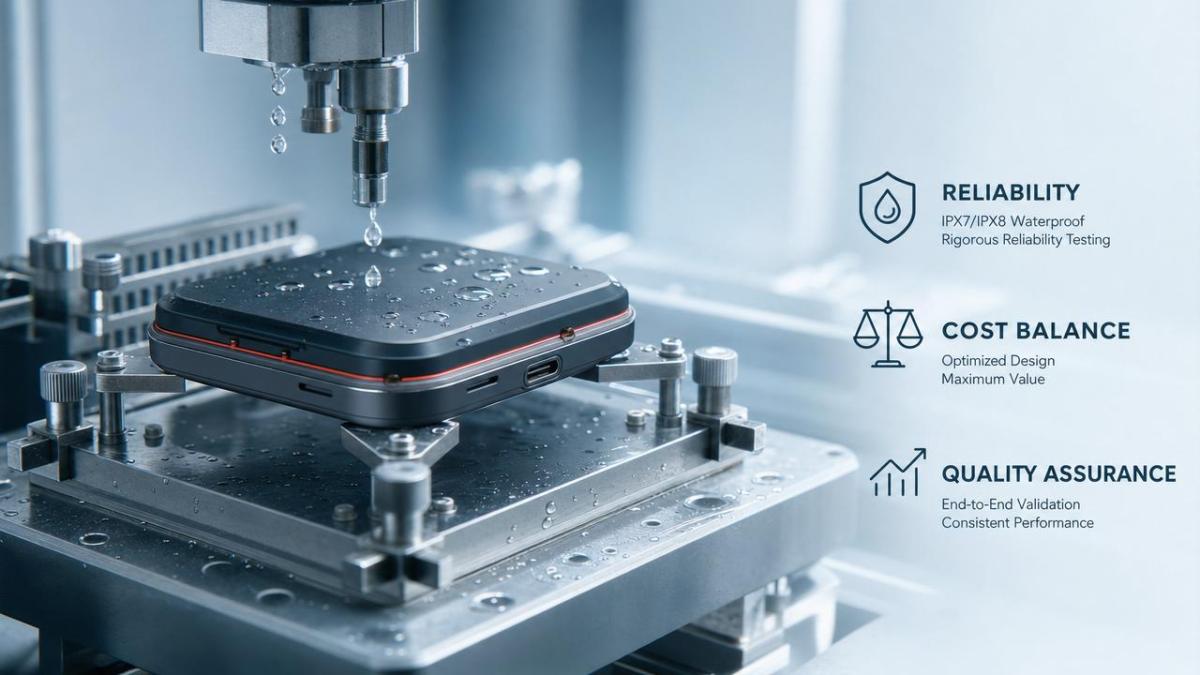
OEM consumer electronics waterproof design affects warranty cost, market access, user safety, service strategy, and brand perception. A failed seal can turn a low-cost housing decision into a recall discussion within 6–18 months of launch.
For business evaluators, the visible IP rating is only the outcome. The real value sits in the design margin behind it: compression force, gasket recovery, adhesive cure control, vent airflow, and tolerance stack-up across mass production.
The difference between passing a test and surviving a market
A device may pass IPX7 immersion at 1 meter for 30 minutes, yet still fail under thermal cycling, sweat, sunscreen, detergent residue, or repeated charging-port stress. Qualification must reflect actual use cases, not just a single laboratory condition.
Typical consumer electronics projects evaluate 4 conditions: water ingress, dust ingress, pressure equalization, and chemical exposure. Each condition changes cost differently, especially when devices include speakers, microphones, buttons, cameras, or replaceable modules.
Where the hidden costs appear
- Higher warranty returns when field leakage appears after 3–12 months of user handling.
- Production yield loss caused by unstable adhesive dispensing or gasket placement drift.
- Longer service time when sealed batteries, displays, or acoustic modules require special rework.
- Regional compliance delays when test evidence does not match declared protection claims.
The procurement implication is clear: a lower bill of materials may be rational only if the design preserves repeatability. If assembly variation consumes the waterproofing margin, cost reduction becomes deferred risk.
Cost Drivers in OEM Consumer Electronics Waterproof Design
Waterproofing cost is shaped by at least 6 variables: enclosure complexity, seal material, adhesive system, vent technology, test coverage, and supplier process controls. Each variable creates a different reliability profile.
Business evaluators should separate one-time engineering cost from recurring unit cost. Tooling modification may add 2–6 weeks, but a better seal land or rib structure can reduce inspection burden for several production cycles.
Main sealing options and procurement implications
The following comparison summarizes common waterproofing approaches used in wearables, handheld terminals, mobile accessories, smart home devices, and compact industrial-consumer hybrid products.
The lowest-cost method is not automatically the weakest. A simple gasket with stable compression can outperform a premium adhesive if the assembly line cannot control cleaning, dispensing, or cure conditions within defined limits.
The 3 cost layers evaluators should model
- Engineering cost: design validation, tooling revision, reliability trials, and supplier qualification.
- Manufacturing cost: component price, cycle time, equipment, labor steps, and in-line testing.
- Field cost: warranty handling, replacement logistics, reputation loss, and service labor.
A waterproof strategy that saves 0.08 USD per unit may be attractive at 1 million units. But if it increases leakage returns by even a small percentage, the field service burden can erase the savings quickly.
Reliability Factors That Should Not Be Negotiated Away
In OEM consumer electronics waterproof design, reliability depends on the weakest interface. A housing may be robust, but a microphone opening, SIM tray, charging port, screw boss, or display corner can become the failure path.
Business evaluators should ask for design evidence beyond a one-page IP certificate. Useful documentation includes cross-section drawings, tolerance analysis, material specifications, test plans, failure reports, and process control records.
Critical parameters to review before supplier approval
The table below converts engineering details into procurement checkpoints. It helps commercial teams compare suppliers on measurable controls rather than broad claims about durability.
A supplier with slightly higher unit pricing may be the lower-risk option if it provides tighter dimensional capability, documented inspection frequency, and transparent corrective action procedures.
Material selection under real-world exposure
Water is not the only threat. Consumer devices encounter sweat, salt mist, cosmetics, hand sanitizer, rainwater minerals, UV exposure, and cleaning agents. These factors may change swelling, hardness, adhesion, or surface finish.
For wearable electronics, 500–1,000 hours of accelerated aging may be considered during validation, depending on use conditions. For lower-exposure accessories, a shorter screening plan may be commercially sufficient.
Non-negotiable documentation
- Material data sheets with operating temperature and chemical compatibility notes.
- Process work instructions covering surface preparation, placement pressure, and cure conditions.
- Reliability test reports showing sample quantity, test duration, acceptance criteria, and failure mode.
- Change-control rules for adhesive, gasket, membrane, tooling, and assembly equipment substitutions.
These records are not administrative extras. They determine whether a buyer can manage risk when production transfers between factories, shifts, regions, or alternate suppliers.
Testing Strategy: From IP Rating to Production Assurance
An IP code is a useful reference, but it should not be treated as a complete reliability plan. OEM consumer electronics waterproof design requires staged testing from concept through mass production.
A practical program often includes 5 stages: design review, prototype ingress testing, environmental aging, pilot production validation, and ongoing lot sampling. Each stage catches a different category of defect.
Recommended validation sequence
- Define target protection level, such as splash resistance, IPX4, IPX7, or dust-plus-water protection.
- Map every ingress path, including parting lines, ports, buttons, acoustic openings, screws, and sensors.
- Test early samples before cosmetic tooling is locked, ideally within the first 2–4 engineering builds.
- Add aging, drop, vibration, and temperature cycling before repeating ingress checks.
- Set production sampling rules, such as every lot, every shift, or after tooling maintenance.
The sequence matters because waterproofing can degrade after mechanical stress. A product that passes immersion before a 1-meter drop test may not pass after enclosure deformation or micro-cracking.
Balancing test cost and detection value
Not every unit needs destructive testing. However, every program needs a rational mix of 100% screening, sampling inspection, and periodic reliability audits based on the product’s exposure and warranty risk.
Air-leak testing can support faster in-line control, while immersion testing may be reserved for validation or sampling. For high-volume devices, shaving 5 seconds from a test cycle can affect line capacity significantly.
Common testing mistakes
- Testing only golden samples instead of worst-case dimensional samples from multiple cavities.
- Ignoring pressure equalization, which can stress membranes and seals during temperature changes.
- Using a pass/fail label without recording leakage location, failure time, or post-test disassembly findings.
- Approving changes to suppliers or materials without repeating critical validation steps.
A business evaluator does not need to become a test engineer, but should insist that the supplier’s test logic matches the product’s actual market exposure and service model.
Procurement Framework for Cost vs Reliability Decisions
Procurement teams need a repeatable framework that compares bids beyond unit price. In waterproof consumer electronics, the best supplier is often the one that reduces uncertainty across design, production, and after-sales stages.
G-CST’s benchmarking perspective recommends evaluating at least 6 dimensions: design maturity, process capability, component traceability, test discipline, change control, and warranty response readiness.
A practical 4-tier decision model
- Tier 1: Basic splash resistance for low-exposure accessories with limited warranty exposure.
- Tier 2: Moderate waterproofing for daily-use handheld products exposed to rain and cleaning.
- Tier 3: Strong ingress protection for wearables, outdoor devices, and child-use electronics.
- Tier 4: Mission-critical sealing for devices tied to safety, infrastructure, or industrial monitoring.
This tiering helps prevent over-engineering low-risk products while protecting higher-value programs from false savings. A premium membrane may be unnecessary for a simple remote control, but essential for an outdoor acoustic device.
Questions to ask suppliers before award
- Which 3 most likely ingress paths have been identified, and how are they controlled?
- What tolerance data supports gasket compression or adhesive bond-line stability?
- How many samples were tested after aging, drop, or thermal cycling?
- What happens if an adhesive, membrane, or housing supplier changes during production?
- How quickly can failure analysis be completed if leakage appears in the field?
Strong answers should include measurable criteria, not general confidence. If a supplier cannot describe its waterproofing margin, the buyer may inherit the uncertainty after launch.
Lifecycle Management and After-Sales Impact
Waterproofing decisions continue after shipment. Service centers, spare parts teams, and warranty analysts all depend on design choices made months before launch. A sealed product may reduce user damage but complicate repair.
For devices with a 12–24 month warranty cycle, after-sales data should be linked to production lots, material batches, and assembly records. This traceability shortens root-cause analysis when leakage patterns emerge.
Design for repair versus design for sealing
A fully bonded enclosure may improve water resistance, but it can raise repair complexity and replacement cost. A gasketed design may support serviceability, yet requires compression control after each opening.
Business teams should define the intended service model early. If the device is not designed to be opened, pricing, warranty reserves, and spare-unit logistics must reflect that reality.
After-sales indicators worth tracking
- Return rate by production lot, assembly line, region, and exposure scenario.
- Failure location frequency, such as display edge, port cover, microphone vent, or button interface.
- Time-to-failure bands, including first 30 days, 3 months, 6 months, and warranty-end cases.
- Repair outcome, including reseal success, replacement need, and repeated complaint rate.
These indicators convert waterproof design from a one-time engineering decision into a continuous improvement loop. They also support more accurate supplier negotiations in the next sourcing cycle.
Making the Right Trade-Off with Evidence
OEM consumer electronics waterproof design is not about choosing the most expensive seal or the toughest advertised IP rating. It is about matching design margin to market exposure, production capability, and commercial risk.
Cost can be reduced safely when the product has low exposure, stable tolerances, proven materials, and controlled assembly. Cost cutting becomes dangerous when it removes test coverage, weakens traceability, or depends on perfect manual work.
For business evaluators, the most defensible purchasing decision is evidence-based: documented materials, measurable tolerances, validated test plans, supplier change control, and lifecycle feedback. These factors help protect margin without transferring hidden risk to the field.
G-CST supports procurement directors, engineering stakeholders, and Tier-1 supplier teams with multidisciplinary benchmarking across advanced materials, precision systems, industrial software, and reliability frameworks. To compare waterproof design options, assess supplier readiness, or build a risk-based sourcing checklist, contact us to obtain a tailored evaluation solution or discuss product details.
Recommended News
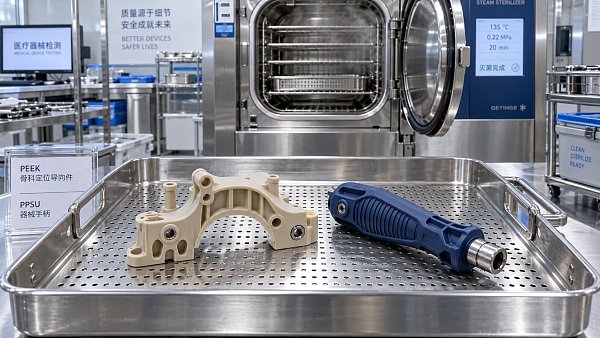
 Oct 17, 2026Can engineering plastics for orthopaedics withstand steam sterilisation?Can engineering plastics for orthopaedics withstand steam sterilisation? Explore PEEK, PPSU and essential testing criteria to choose durable materials for reusable devices.
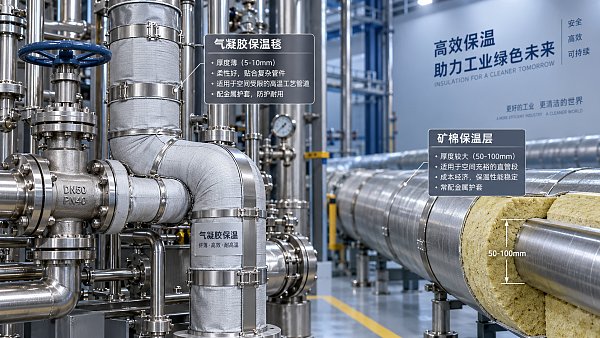
 Oct 07, 2026When does an aerogel insulation blanket outperform mineral wool?Aerogel insulation blanket vs. mineral wool: discover when thinner, high-efficiency insulation delivers better thermal control, retrofit flexibility, and lifecycle value.
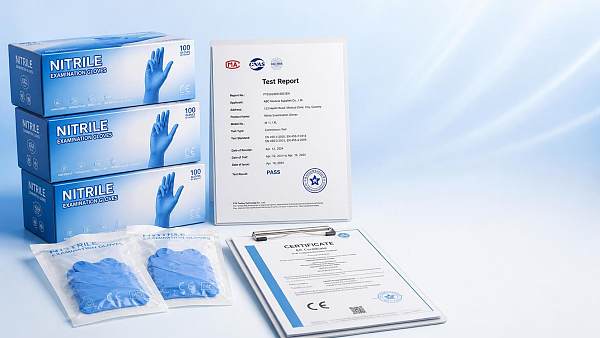
 Aug 26, 2026How to check whether medical gloves meet the right safety standardMedical gloves safety starts with the right standard. Learn how to verify claims, test reports, labeling, and batch records to choose compliant gloves with confidence.
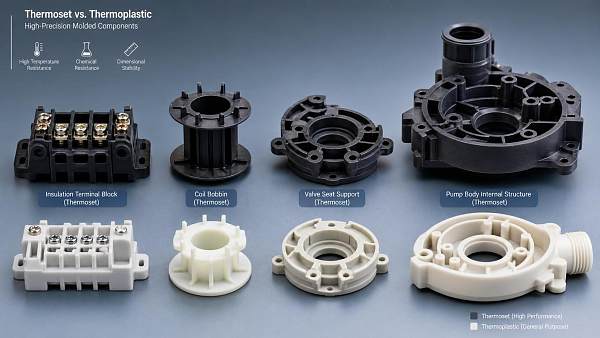
 Aug 19, 2026When does thermoset molding resin outperform thermoplastics in parts design?Thermoset molding resin outperforms thermoplastics in high-heat, chemical, and electrical applications. Learn when its crosslinked stability delivers longer-lasting part performance.
 Aug 14, 2026How to choose bio-based engineering plastics for European supply chainsBio-based engineering plastics Europe guide: learn how to choose the right grade for performance, compliance, and supply chain reliability.
 Jul 12, 2026Conductive Polymers for Antistatic Packaging: What Impacts ESD Stability MostConductive polymers for antistatic packaging: learn what really drives ESD stability most—formulation, dispersion, environment, and process control—to reduce risk and choose reliable packaging.
 Jul 05, 2026Engineering Material Selection for Semiconductors: Failure Risks to AvoidEngineering material selection for semiconductors: learn the failure risks that hurt yield, uptime, and compliance, and discover smarter choices for reliable fab performance.
 Jul 04, 2026PTFE Sheet RoHS Factory Checklist: Material Proof, Testing, and Compliance Riskptfe sheet RoHS factory checklist: verify material proof, test records, traceability, and change control to reduce compliance risk and approve suppliers with confidence.
 Jun 29, 2026How to Compare Home Accessories by Material, Style, and Room FitHome accessories comparison made simple: learn how to evaluate material, style, and room fit to choose durable, cohesive pieces that elevate every space with confidence.
 Jun 28, 20263D Printing Quotation: What Changes Price the Most?3D printing quotation costs can change fast based on material, geometry, tolerance, finishing, and lead time. Learn what drives pricing most and compare quotes with confidence.
 Jun 26, 2026Commercial Refrigerators: Capacity vs. Operating CostCommercialrefrigerators buyers can compare capacity vs. operating cost to find the best fit for efficiency, workflow, and long-term value.
 Jun 26, 2026Commercial Refrigerators: Energy-Saving Buying GuideCommercial refrigerators energy-saving buying guide for procurement teams: compare efficiency, reliability, and total cost to choose smarter, lower-operating-cost models.
 Jun 24, 2026Silicone Products Failure Causes in Sealing and Insulation UseSilicone products often fail when real sealing and insulation conditions are overlooked. Learn key causes, warning signs, and smarter selection tips to prevent leaks, aging, and early downtime.
 Jun 24, 2026How to Compare Silicone Products by Heat, Wear, and ComplianceSilicone products compared the right way: learn how to assess heat resistance, wear performance, and compliance data to choose safer, longer-lasting options with confidence.
 Jun 21, 2026Foldable Screen Technology for Tablets: Durability vs. WeightFoldable screen technology for tablets explained: compare durability, weight, hinge reliability, materials, and repair risk to choose a foldable tablet that truly lasts.
 Jun 20, 2026Jewelry Display Stands: Common Material Mistakes to AvoidJewelrydisplaystands buying guide: avoid common material mistakes that cause scratches, fading, peeling, and fast wear. Learn how to choose durable, attractive stands for every retail setting.
 Jun 19, 2026Polyurethane Foam Insulation Bulk: When Lower Price Leads to Higher Jobsite WastePolyurethane foam insulation bulk may look cheaper upfront, but inconsistent yield, rework, and jobsite waste can raise total cost. Learn how to choose for real installed value.
 Jun 18, 2026How to Choose Car Seat Covers for Pets That Actually Stay CleanCar seat covers for pets that truly stay clean start with the right materials, fit, and design. Learn how to choose durable, easy-clean options that handle fur, mud, and daily travel.
 Jun 17, 2026Acrylic Keychains: Cost, MOQ, and Print Quality FactorsAcrylickeychains sourcing guide: compare cost, MOQ, and print quality factors to avoid hidden risks, improve supplier decisions, and secure consistent branded results.
 Jun 15, 2026EPDM Rubber Extrusion: Common Defects and How to Prevent ThemEPDMrubberextrusion defects can lead to leaks, poor fit, and early aging. Discover common issues, root causes, and practical prevention tips to improve quality and reliability.
 Jun 14, 2026Resins and Hardeners: How to Match Pot Life, Strength, and FinishResins and hardeners guide pot life, strength, and finish in real production. Learn how to match systems for reliable performance, better quality control, and fewer costly failures.
 Jun 10, 20263D Printing Material Breakthroughs Shaping Production in 20263d printing material breakthroughs are reshaping 2026 production with stronger polymers, cleaner metal powders, and scalable qualification paths—see what drives lower risk and faster adoption.
![]() Jun 09, 2026Papercupswholesale: 7 Hidden Cost Factors Before You OrderPapercupswholesale buyers often miss the real cost behind low quotes. Discover 7 hidden factors—from freight and compliance to MOQ and print risk—before you order.
Jun 09, 2026Papercupswholesale: 7 Hidden Cost Factors Before You OrderPapercupswholesale buyers often miss the real cost behind low quotes. Discover 7 hidden factors—from freight and compliance to MOQ and print risk—before you order. Jun 07, 2026Extruded Polystyrene XPS Board vs EPS: Key Performance DifferencesExtruded polystyrene XPS board vs EPS: discover key differences in strength, moisture resistance, thermal stability, and lifecycle value for smarter insulation decisions.