Search News
Industry Portal
Popular Tags
3D Printing Quotation: What Changes Price the Most?
Author
Time
Click Count
3D Printing Quotation: What Changes Price the Most?
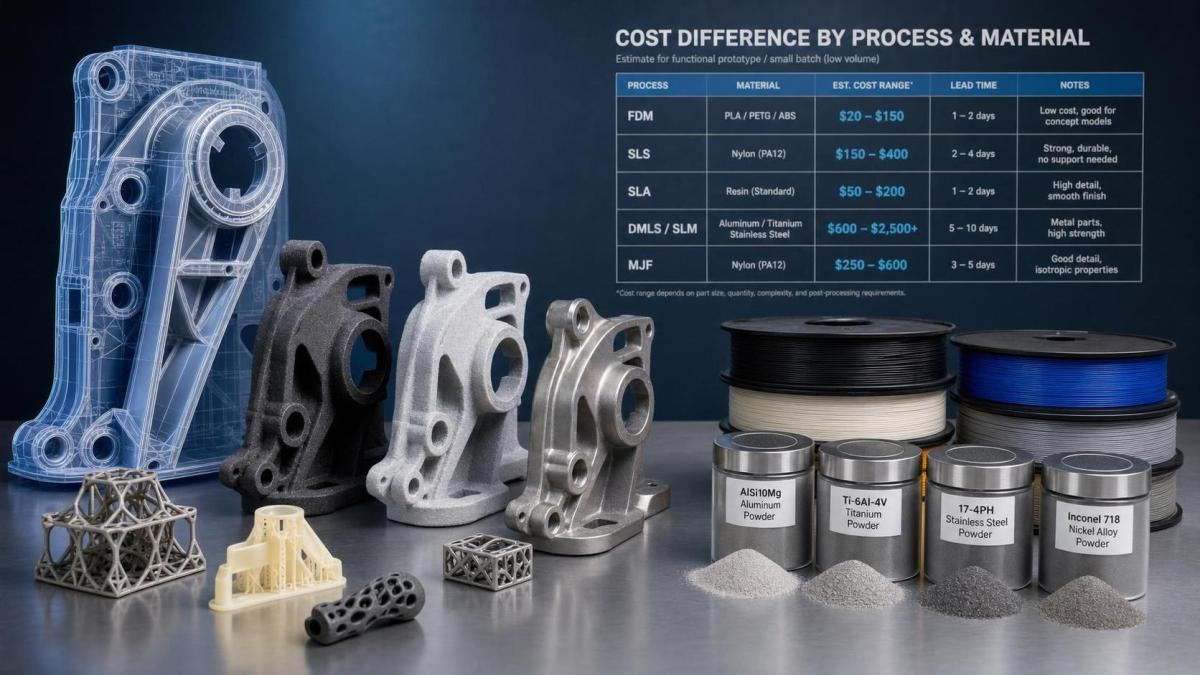
A 3D printing quotation can vary sharply, even when two drawings appear almost identical.
That gap usually comes from a few technical choices that reshape production time, waste, and inspection effort.
In practice, the biggest cost drivers are material, geometry, tolerance, finishing, and order volume.
A strong 3D printing quotation should make those drivers visible instead of hiding them inside one unit price.
That matters when comparing suppliers, validating budgets, and avoiding late-stage sourcing surprises.
The useful question is not only, “What is the cheapest quote?”
The better question is, “What exactly is moving this 3D printing quotation up or down?”
Why One 3D Printing Quotation Can Differ So Much
A quotation reflects much more than machine time.
It also includes setup, support strategy, inspection, scrap risk, post-processing, packaging, and lead-time pressure.
Two suppliers may price the same model differently because their process assumptions are different.
One may optimize for speed.
Another may build in stricter inspection, higher scrap allowance, or a more expensive material batch.
This is why a 3D printing quotation should always be reviewed line by line, not only by total amount.
Once the cost structure is visible, negotiation becomes faster and technically grounded.
Material Choice Usually Moves the Price First
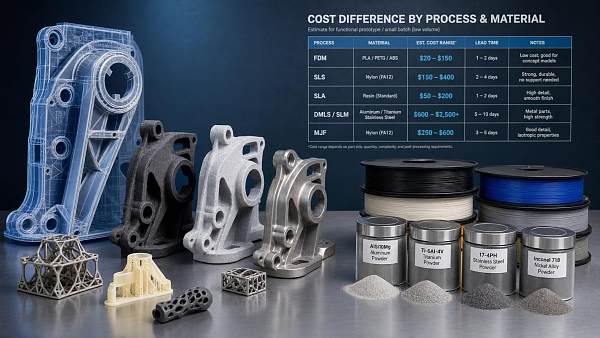
Material is often the clearest reason a 3D printing quotation changes.
Standard polymers keep costs lower because they print faster and are widely available.
Engineering resins, reinforced nylons, metals, and high-temperature materials raise prices quickly.
The increase does not come from raw material alone.
It also comes from storage controls, machine compatibility, print failure risk, and post-build handling.
For example, aluminum-filled polymer and stainless steel may both satisfy appearance goals, but not at the same cost level.
A practical review should confirm these points before accepting a 3D printing quotation:
- Required mechanical properties
- Heat, chemical, or UV exposure
- Regulatory or industry compliance needs
- Cosmetic versus structural function
- Availability of approved substitutes
If the application allows a lower-cost alternative, the quotation can drop significantly without harming performance.
Geometry Complexity Drives Machine Time and Risk
A part may look small, yet still produce a high 3D printing quotation.
Complex geometry is often the reason.
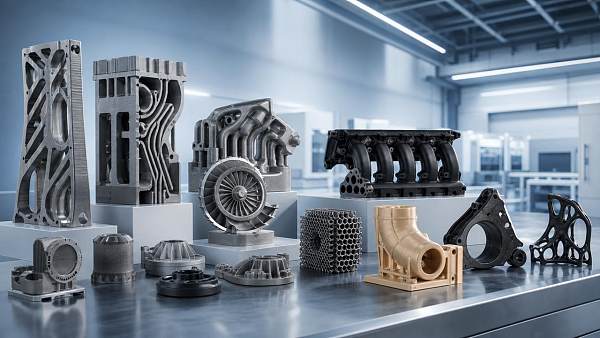
Thin walls, internal channels, overhangs, lattice structures, and tight corner details increase build difficulty.
That usually means more supports, slower printing, longer removal work, and a higher failure rate.
Orientation also matters.
Changing orientation can reduce support material but may increase layer lines on critical surfaces.
This tradeoff appears often in cost review.
When asking for a 3D printing quotation, clean CAD data and realistic design rules help reduce avoidable complexity.
Design details that commonly raise cost
- Walls below process limits
- Large unsupported spans
- Deep cavities that are hard to clean
- Features requiring manual support removal
- Mixed cosmetic and precision surfaces on one part
Tolerance and Inspection Requirements Add Hidden Cost
Tolerance is one of the most underestimated quotation factors.
A standard 3D printing quotation may be competitive until tight dimensional control is added.
Then the cost rises because printing alone may no longer be enough.
Secondary machining, selective finishing, or extra metrology may become necessary.
Inspection reports also affect price.
A simple visual check costs little.
A first article inspection, material certification, or full dimensional report costs more.
This is especially relevant in industrial, medical, electronics, and infrastructure supply chains.
Useful questions before approving tight tolerances
- Is the tolerance functionally necessary?
- Can only a few critical dimensions be controlled tightly?
- Will post-machining be more economical than full precision printing?
- What inspection evidence is actually required for release?
Finishing Steps Can Change the Quotation More Than Expected
Many buyers compare only the printed part price.
However, finishing often has a larger effect on the final 3D printing quotation than expected.
Sanding, polishing, dyeing, painting, vapor smoothing, heat treatment, infiltration, and machining all add labor and cycle time.
Cosmetic finishing is particularly variable because acceptance standards are often subjective.
That ambiguity can create quote gaps between suppliers.
A clearer finish specification usually produces a cleaner 3D printing quotation and fewer disputes after delivery.
The same applies to threaded inserts, sealing surfaces, and assembly-ready features.
When these details are defined early, the quotation becomes more reliable and easier to compare.
Order Volume and Lead Time Reshape Unit Cost
Volume has a direct effect on any 3D printing quotation.
Low quantities carry more setup cost per part.
Higher quantities may reduce unit price, especially when machine nesting improves material efficiency.
Still, volume does not always make additive manufacturing cheaper than other processes.
At some threshold, molding or machining may become the stronger commercial choice.
Lead time is another major lever.
Expedited production often requires queue jumping, overtime, or fragmented machine scheduling.
That premium can materially change the 3D printing quotation.
How to Compare a 3D Printing Quotation More Accurately
A lower number is not always a better quotation.
The real comparison is technical scope, commercial assumptions, and supply reliability.
In actual sourcing work, a disciplined quote review prevents costly misunderstandings later.
Use this checklist when evaluating any 3D printing quotation:
- Confirm process type and approved material grade
- Check whether supports, scrap, and finishing are included
- Verify tolerance scope and inspection method
- Review certification, traceability, and packaging requirements
- Ask for pricing by prototype, pilot, and production volume
- Separate standard lead time from expedited lead time
- Request alternatives that reduce cost without reducing function
This approach makes quote comparison more transparent.
It also helps align engineering, quality, and commercial expectations before release.
Final Takeaway for Faster Cost Decisions
The biggest swings in a 3D printing quotation rarely come from one issue alone.
They usually come from the combination of material, geometry, tolerance, finishing, and timing.
When those inputs are loosely defined, quotations become difficult to trust and harder to negotiate.
When they are clearly defined, cost drivers become visible and sourcing decisions improve.
The most effective next step is simple.
Review every 3D printing quotation against function, not just price.
Ask where the cost is coming from.
Then push for technically valid options that improve both cost control and delivery confidence.
Recommended News
 Oct 17, 2026Can engineering plastics for orthopaedics withstand steam sterilisation?Can engineering plastics for orthopaedics withstand steam sterilisation? Explore PEEK, PPSU and essential testing criteria to choose durable materials for reusable devices.
 Oct 07, 2026When does an aerogel insulation blanket outperform mineral wool?Aerogel insulation blanket vs. mineral wool: discover when thinner, high-efficiency insulation delivers better thermal control, retrofit flexibility, and lifecycle value.
 Aug 26, 2026How to check whether medical gloves meet the right safety standardMedical gloves safety starts with the right standard. Learn how to verify claims, test reports, labeling, and batch records to choose compliant gloves with confidence.
 Aug 19, 2026When does thermoset molding resin outperform thermoplastics in parts design?Thermoset molding resin outperforms thermoplastics in high-heat, chemical, and electrical applications. Learn when its crosslinked stability delivers longer-lasting part performance.
 Aug 14, 2026How to choose bio-based engineering plastics for European supply chainsBio-based engineering plastics Europe guide: learn how to choose the right grade for performance, compliance, and supply chain reliability.
 Jul 12, 2026Conductive Polymers for Antistatic Packaging: What Impacts ESD Stability MostConductive polymers for antistatic packaging: learn what really drives ESD stability most—formulation, dispersion, environment, and process control—to reduce risk and choose reliable packaging.
 Jul 05, 2026Engineering Material Selection for Semiconductors: Failure Risks to AvoidEngineering material selection for semiconductors: learn the failure risks that hurt yield, uptime, and compliance, and discover smarter choices for reliable fab performance.
 Jul 04, 2026PTFE Sheet RoHS Factory Checklist: Material Proof, Testing, and Compliance Riskptfe sheet RoHS factory checklist: verify material proof, test records, traceability, and change control to reduce compliance risk and approve suppliers with confidence.
 Jun 29, 2026How to Compare Home Accessories by Material, Style, and Room FitHome accessories comparison made simple: learn how to evaluate material, style, and room fit to choose durable, cohesive pieces that elevate every space with confidence.
 Jun 28, 20263D Printing Quotation: What Changes Price the Most?3D printing quotation costs can change fast based on material, geometry, tolerance, finishing, and lead time. Learn what drives pricing most and compare quotes with confidence.
 Jun 26, 2026Commercial Refrigerators: Capacity vs. Operating CostCommercialrefrigerators buyers can compare capacity vs. operating cost to find the best fit for efficiency, workflow, and long-term value.
 Jun 26, 2026Commercial Refrigerators: Energy-Saving Buying GuideCommercial refrigerators energy-saving buying guide for procurement teams: compare efficiency, reliability, and total cost to choose smarter, lower-operating-cost models.
 Jun 24, 2026Silicone Products Failure Causes in Sealing and Insulation UseSilicone products often fail when real sealing and insulation conditions are overlooked. Learn key causes, warning signs, and smarter selection tips to prevent leaks, aging, and early downtime.
 Jun 24, 2026How to Compare Silicone Products by Heat, Wear, and ComplianceSilicone products compared the right way: learn how to assess heat resistance, wear performance, and compliance data to choose safer, longer-lasting options with confidence.
 Jun 21, 2026Foldable Screen Technology for Tablets: Durability vs. WeightFoldable screen technology for tablets explained: compare durability, weight, hinge reliability, materials, and repair risk to choose a foldable tablet that truly lasts.
 Jun 20, 2026Jewelry Display Stands: Common Material Mistakes to AvoidJewelrydisplaystands buying guide: avoid common material mistakes that cause scratches, fading, peeling, and fast wear. Learn how to choose durable, attractive stands for every retail setting.
 Jun 19, 2026Polyurethane Foam Insulation Bulk: When Lower Price Leads to Higher Jobsite WastePolyurethane foam insulation bulk may look cheaper upfront, but inconsistent yield, rework, and jobsite waste can raise total cost. Learn how to choose for real installed value.
 Jun 18, 2026How to Choose Car Seat Covers for Pets That Actually Stay CleanCar seat covers for pets that truly stay clean start with the right materials, fit, and design. Learn how to choose durable, easy-clean options that handle fur, mud, and daily travel.
 Jun 17, 2026Acrylic Keychains: Cost, MOQ, and Print Quality FactorsAcrylickeychains sourcing guide: compare cost, MOQ, and print quality factors to avoid hidden risks, improve supplier decisions, and secure consistent branded results.
 Jun 15, 2026EPDM Rubber Extrusion: Common Defects and How to Prevent ThemEPDMrubberextrusion defects can lead to leaks, poor fit, and early aging. Discover common issues, root causes, and practical prevention tips to improve quality and reliability.
 Jun 14, 2026Resins and Hardeners: How to Match Pot Life, Strength, and FinishResins and hardeners guide pot life, strength, and finish in real production. Learn how to match systems for reliable performance, better quality control, and fewer costly failures.
 Jun 10, 20263D Printing Material Breakthroughs Shaping Production in 20263d printing material breakthroughs are reshaping 2026 production with stronger polymers, cleaner metal powders, and scalable qualification paths—see what drives lower risk and faster adoption.
![]() Jun 09, 2026Papercupswholesale: 7 Hidden Cost Factors Before You OrderPapercupswholesale buyers often miss the real cost behind low quotes. Discover 7 hidden factors—from freight and compliance to MOQ and print risk—before you order.
Jun 09, 2026Papercupswholesale: 7 Hidden Cost Factors Before You OrderPapercupswholesale buyers often miss the real cost behind low quotes. Discover 7 hidden factors—from freight and compliance to MOQ and print risk—before you order. Jun 07, 2026Extruded Polystyrene XPS Board vs EPS: Key Performance DifferencesExtruded polystyrene XPS board vs EPS: discover key differences in strength, moisture resistance, thermal stability, and lifecycle value for smarter insulation decisions.