Search News
Industry Portal
Popular Tags
Photovoltaic Panels: 2026 Cost and Payback Guide
Author
Time
Click Count
For 2026 capital planning, photovoltaic panels are measurable energy assets, not symbolic sustainability purchases. Their value depends on installed cost, incentives, risk allocation, and payback timing.
Photovoltaic Panels in 2026: Cost and Payback by Scenario
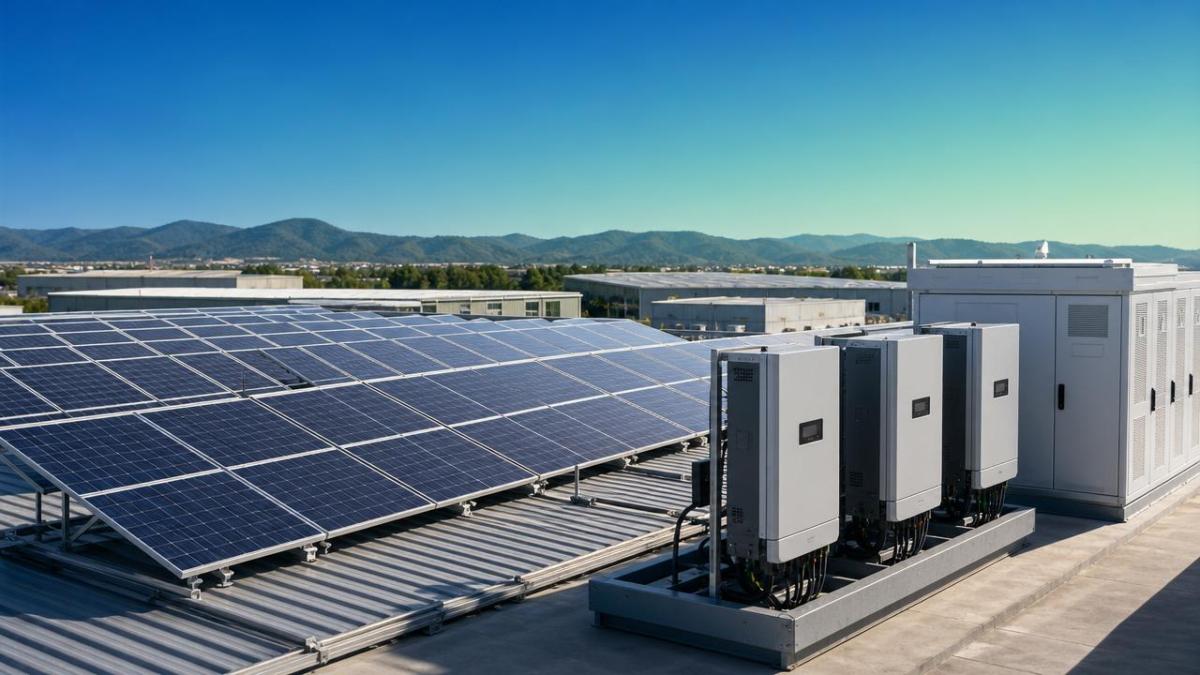
The business case for photovoltaic panels changes across factories, warehouses, offices, data facilities, campuses, and infrastructure sites.
A roof with daytime loads, high tariffs, and strong incentives may pay back quickly. A shaded site with cheap power may not.
In 2026, the strongest projects usually combine predictable consumption, stable interconnection rules, and disciplined total cost of ownership modeling.
G-CST evaluates such assets through technical benchmarks, regulatory visibility, and lifecycle risk, especially where energy resilience affects industrial operations.
When Photovoltaic Panels Become a Financial Asset
Photovoltaic panels create value when avoided electricity cost exceeds annualized system cost, after maintenance, financing, degradation, taxes, and insurance.
Installed prices vary by market, roof condition, permitting burden, electrical upgrades, labor availability, and project size.
For 2026 planning, commercial projects often evaluate solar modules, inverters, racking, engineering, interconnection, and contingency as one integrated cost base.
Simple payback remains useful, but it is incomplete. Net present value, internal rate of return, and cash-flow sensitivity give better investment discipline.
Photovoltaic panels also hedge exposure to utility rate escalation. This hedge is strongest where daytime consumption is high and tariffs are volatile.
Core Cost Components to Validate
- Modules, inverters, optimizers, racking, cables, monitoring, and protection equipment.
- Engineering, permitting, grid studies, construction labor, logistics, and commissioning.
- Roof reinforcement, switchgear upgrades, fire access, and metering changes.
- Operations, cleaning, inspections, inverter replacement, insurance, and asset reporting.
Manufacturing Sites: Best Fit When Load Matches Solar Output
Manufacturing facilities often have strong alignment with photovoltaic panels because production loads occur during daylight hours.
The main judgment point is load stability. A plant running one shift may export surplus energy, reducing payback quality.
A plant running continuous daytime processes can consume more solar power onsite, improving avoided-cost economics.
Payback improves when electricity tariffs include high demand charges, time-of-use peaks, or carbon-related costs.
Photovoltaic panels should be assessed against process reliability. Roof access, dust, vibration, and maintenance shutdowns can affect performance.
Key Checks for Industrial Roofs
- Confirm roof remaining life exceeds solar contract life.
- Model production schedules against seasonal solar curves.
- Review electrical rooms, transformer capacity, and protection coordination.
- Include downtime cost if installation disrupts operations.
Warehouses and Logistics Hubs: Large Roofs Need Load Discipline
Warehouses provide large roof areas, making photovoltaic panels physically attractive. The financial result depends on actual site consumption.
Facilities with refrigeration, automation, electric vehicle charging, or extended shifts usually absorb more onsite generation.
Basic storage buildings may have low electricity demand, forcing exports at less favorable rates.
For logistics networks, photovoltaic panels can support fleet electrification. The highest value appears when charging is scheduled during solar production.
The payback model should include future load growth, not only current consumption.
Office, Retail, and Campus Sites: Incentives Can Decide Payback
Office and retail buildings often use photovoltaic panels for cost reduction, public reporting, and tenant-related sustainability requirements.
However, demand profiles vary sharply. Weekend loads, HVAC intensity, and occupancy patterns affect self-consumption.
Campuses benefit from portfolio thinking. Multiple buildings can balance generation, demand, and maintenance access.
Incentives may define the final economics. Tax credits, accelerated depreciation, grants, and renewable certificates can shorten payback materially.
Where ownership structures are complex, photovoltaic panels require lease, metering, and benefit-allocation clarity before approval.
Data Centers and Critical Facilities: Resilience Matters More Than Simple Payback
For critical facilities, photovoltaic panels rarely replace backup generation. They support energy diversification and reduce grid dependence.
The evaluation should include uptime requirements, power quality, cybersecurity of monitoring systems, and integration with microgrid controls.
Battery storage may improve resilience, but it also increases capital cost. The payback case becomes more scenario-sensitive.
For high-load sites, land constraints can limit capacity. Rooftop photovoltaic panels may cover only a modest share of total demand.
Still, avoided peak charges and long-term power price hedging can justify deployment when modeled with realistic operating assumptions.
Scenario Differences That Change the 2026 Payback Case
This comparison shows why photovoltaic panels should not be approved using one universal payback rule.
A five-year hurdle may be realistic in one tariff environment and unrealistic in another.
How to Build a Procurement-Grade Cost Model
A reliable model starts with measured load data, not estimates. Twelve months of interval data is preferred.
The model should separate direct capital cost, soft cost, operating cost, financing cost, and residual value.
Photovoltaic panels degrade over time. Many models use annual degradation assumptions near 0.3% to 0.7%, depending on module quality.
Inverter replacement timing must be included. Ignoring it can overstate long-term savings.
Insurance, cleaning, monitoring subscriptions, and inspection costs are small individually, but significant over a 20-year asset life.
Minimum Assumptions to Document
- Installed cost per kilowatt and included scope.
- Annual production estimate and shading losses.
- Utility tariff, escalation rate, and export compensation.
- Tax credit, grant, certificate, or depreciation treatment.
- Financing rate, contract term, and ownership structure.
- Maintenance plan, performance guarantee, and warranty exclusions.
Ownership Models: Purchase, Lease, or Power Purchase Agreement
Direct ownership gives the strongest control over photovoltaic panels, incentives, maintenance choices, and long-term asset value.
It also requires higher upfront capital and stronger internal technical oversight.
Leasing can reduce initial cash pressure, but contract terms may limit operational flexibility or roof redevelopment.
A power purchase agreement shifts ownership and operating responsibility to a third party.
This can simplify deployment, though savings depend on the contracted electricity price and escalation clause.
For photovoltaic panels under any structure, contract review should cover curtailment, downtime, meter accuracy, termination, and assignment rights.
Common Misjudgments That Distort Payback
The most frequent mistake is using nameplate capacity as a financial proxy. Actual annual generation matters more.
Another error is assuming all generated electricity offsets retail utility prices.
Exports may receive lower compensation, and some tariffs include charges that solar generation does not avoid.
Roof condition is often underestimated. If replacement is needed soon, photovoltaic panels can create removal and reinstallation costs.
Permitting timelines also affect project value. Delays can move commissioning beyond incentive deadlines.
Grid interconnection is another hidden constraint. Upgrades can materially change the economics of photovoltaic panels.
- Do not ignore seasonal mismatch between generation and demand.
- Do not treat module warranty as a full system guarantee.
- Do not omit cybersecurity requirements for monitoring platforms.
- Do not assume future utility rules will remain unchanged.
Scenario Adaptation Recommendations for 2026 Projects
Start with the site where photovoltaic panels can offset the highest-cost electricity with the least operational disruption.
Then compare that site against alternative energy investments, including efficiency upgrades, storage, demand response, and power contracts.
If the roof is constrained, consider carports, ground-mounted arrays, or aggregated portfolio procurement.
If exports weaken economics, resize the system for self-consumption rather than maximum capacity.
If resilience is strategic, evaluate photovoltaic panels with storage, controls, and backup coordination as one system.
Practical Next Steps Before Approval
A strong 2026 decision process should begin with energy data, roof assessment, tariff review, and interconnection screening.
Next, request comparable proposals with identical scope boundaries. This prevents misleading cost-per-kilowatt comparisons.
Require production modeling, degradation assumptions, warranty documentation, maintenance scope, and financing terms in a transparent format.
Finally, test payback under conservative, base, and upside cases. Include tariff escalation, incentive risk, downtime, and inverter replacement.
Photovoltaic panels can strengthen energy resilience and reduce long-term exposure when the scenario, demand profile, and contract structure align.
For disciplined planning, compare photovoltaic panels through total cost of ownership, not headline module price alone.
The best projects in 2026 will be those where engineering reality, financial modeling, and regulatory timing support the same investment conclusion.
Recommended News
 Oct 18, 2026How to reduce nuisance alarms in water treatment SCADA systemsOptimize SCADA systems for water treatment. Discover proven ways to reduce nuisance alarms, tune alarm logic, and improve operator focus without compromising treatment safeguards.
 Oct 15, 2026Can digital manufacturing solutions work with legacy factory PLCs?Explore digital manufacturing solutions for factories that work with legacy PLCs. Learn how to assess connectivity, data quality, and security before investing in integration.
 Oct 14, 2026Why Does SCADA Data Differ from Field Device Readings?Why does SCADA data fail to match field device readings? Discover common scaling, timing, and communication errors, plus practical checks to pinpoint mismatches and avoid unnecessary calibration.
 Oct 03, 2026How IoT integration for smart agriculture reduces irrigation wasteIoT integration for smart agriculture cuts irrigation waste with soil, weather, flow, and pressure data—helping farms automate smarter watering and detect leaks early.
 Sep 24, 2026How Zigbee mesh latency affects smart hotel guest room controlsSmart hotel Zigbee mesh latency can shape guest comfort and system reliability. Learn how to design, test, and optimize responsive hotel room controls.
![]() Oct 15, 2026How Much Does Industrial Automation Software Implementation Cost?How much does industrial automation software implementation cost? Explore project pricing, key cost drivers, hidden expenses, and smart budgeting strategies.
Oct 15, 2026How Much Does Industrial Automation Software Implementation Cost?How much does industrial automation software implementation cost? Explore project pricing, key cost drivers, hidden expenses, and smart budgeting strategies. Sep 11, 2026How edge processing latency affects real-time SCADA alarmsEdge processing latency can make or break real-time SCADA alarms. Learn how to benchmark delay, improve alarm integrity, and build resilient response paths.
 Sep 09, 2026How energy management analytics uncovers avoidable peak-demand costsEnergy management analytics reveals avoidable peak-demand costs, identifies controllable load spikes, and helps finance teams cut utility charges with confidence.
 Aug 31, 2026How SCADA data polling frequency affects alarm response timeSCADA data polling frequency directly shapes alarm response time. Learn how scan rates, latency, delays, and network behavior affect reliable detection.
 Aug 29, 2026When open source industrial OPC UA is the right fit for SCADA integrationOpen source industrial OPC UA for SCADA integration: explore interoperability, security, lifecycle ownership, and evaluation steps for scalable multi-vendor operations.
 Aug 12, 2026How to Scope an Industrial Cybersecurity Risk Assessment for SCADA and IIoT SystemsIndustrial cybersecurity risk assessment for SCADA and IIoT starts with the right scope. Learn how to define boundaries, map consequences, and uncover hidden attack paths.
 Aug 06, 2026How to Evaluate Data Historian Software for Automation Integration and ScalingData historian software for automation: learn how to evaluate integration, scalability, data integrity, and security to choose a platform that supports growth and smarter decisions.
 Jul 31, 2026How Smart Hotel AI Helps Reduce Energy Costs Without Hurting Guest ExperienceSmart hotel AI helps hotels cut energy costs by controlling HVAC, lighting, and occupancy-based settings—without hurting guest comfort. Learn what to check before you buy.
 Jul 30, 2026How Industrial Digitization for Electronics Cuts Downtime in High-Mix ProductionIndustrial Digitization for electronics helps high-mix manufacturers cut downtime by improving changeovers, traceability, maintenance response, and line decisions. Learn where digital tools deliver the fastest ROI.
 Jul 22, 2026Supply Chain Resilience Risk Management: Key Metrics and Response PlansSupply Chain Resilience risk management explained with key metrics, scenario-based thresholds, and response plans to reduce disruption, qualification delays, and hidden supply risk.
 Jul 15, 2026Energy Software for Manufacturing Plants: Cost Savings vs Integration RiskEnergy software for manufacturing plants can cut utility waste, but only if savings outweigh integration risk. Learn how to evaluate ROI, data quality, cybersecurity, and rollout fit.
 Jul 14, 2026Fintech in 2026: Which Operating Trends Matter Most for Growth PlanningFintech in 2026 is shifting from rapid expansion to governed scale. Explore the key trends shaping growth planning, from embedded finance and AI risk controls to resilience and compliance.
 Jul 13, 2026When Data Historian Software for Manufacturing Delivers ROIData historian software for manufacturing delivers ROI by reducing downtime, improving quality, and speeding compliance. See how to evaluate value before you buy.
 Jul 13, 20265G IIoT Gateway Wholesale: Key Specs That Affect Deployment Cost5g iiot gateway wholesale decisions should go beyond unit price. Learn which specs cut deployment cost, reduce integration risk, and improve long-term industrial ROI.
 Jul 11, 2026SCADA Systems in the Middle East: Key Compliance and Integration ChecksSCADA Systems Middle East projects need more than features. Discover key compliance, cybersecurity, and integration checks to reduce risk, protect uptime, and choose the right platform.
 Jul 09, 2026Industrial Technology Platform Pricing: What Drives Total Cost Beyond the LicenseIndustrial technology platform pricing goes far beyond the license. Learn the hidden cost drivers—integration, compliance, scalability, and support—to make smarter buying decisions.
 Jul 09, 2026Industrial Standards Compliance for Electronics: Key Gaps That Delay Market AccessIndustrial standards compliance for electronics often stalls market access due to hidden gaps in testing, traceability, supplier records, and regional rules. Learn how to spot risks early and accelerate certification.
 Jul 08, 2026IT Infrastructure Gaps That Slow Industrial GrowthIT infrastructure gaps can quietly slow industrial growth, raise risk, and weaken supply chains. Learn which issues matter most and how to fix them for faster, smarter scaling.
 Jul 06, 2026Open Source Industrial SCADA: Key Risks, Benefits, and FitOpen source industrial SCADA: explore key benefits, cybersecurity risks, costs, and best-fit use cases to see if it can support reliable, scalable industrial operations.