Search News
Industry Portal
Popular Tags
Smart Valve Monitoring Trends Shaping 2026 Upgrades
Author
Time
Click Count
As 2026 upgrade cycles accelerate, smart valve monitoring trends are becoming a critical signal for enterprise decision-makers balancing uptime, compliance, and capital efficiency. From predictive diagnostics and edge-enabled sensing to tighter integration with industrial software platforms, these developments are reshaping how organizations evaluate valve reliability, risk exposure, and long-term asset performance across complex operations.
Why are smart valve monitoring trends moving from optional upgrade to board-level concern?
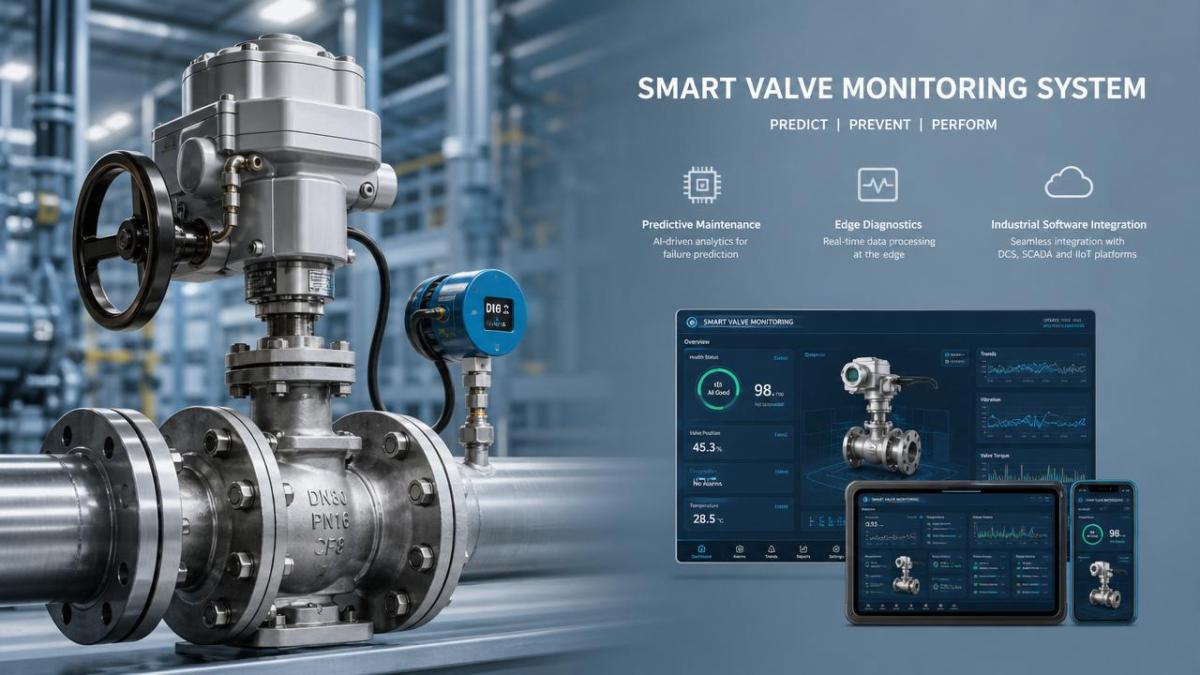
For many industrial groups, valves were once treated as maintenance items rather than strategic data assets. That view is changing. In high-value processing environments, a single undetected drift in valve position, cycle speed, leakage rate, or actuator health can disrupt production quality, trigger environmental exposure, or force unplanned shutdowns.
This is why smart valve monitoring trends matter in 2026 planning. They sit at the intersection of operational continuity, digital transformation, and compliance accountability. Decision-makers are no longer asking only whether a valve works. They are asking whether its condition can be verified, compared, predicted, and integrated into a plant-wide reliability model.
Across semiconductor-adjacent utilities, chemical handling, energy systems, water treatment, advanced manufacturing, and infrastructure assets, the same pressures appear repeatedly:
- Tighter tolerance for process interruption, especially where contamination, pressure stability, or flow precision affect output quality.
- Greater scrutiny of emissions, fugitive leakage, safety interlocks, and audit traceability under expanding regulatory expectations.
- A stronger need to align field devices with SCADA, MES, digital twin, and asset performance management environments.
- Procurement pressure to justify upgrades with measurable lifecycle value rather than isolated instrumentation cost.
In this setting, G-CST’s cross-sector benchmarking approach is useful because smart valve monitoring cannot be judged in isolation. Buyers need to compare sensor architecture, valve duty cycle, material compatibility, software integration, and standards exposure at the same time. That is especially true when the valve network supports larger programs in precision manufacturing, infrastructure modernization, or export-sensitive supply chains.
Which smart valve monitoring trends will shape 2026 upgrade decisions most?
The most relevant smart valve monitoring trends are not merely about adding sensors. They reflect a broader shift toward verifiable condition intelligence, distributed decision-making, and tighter software interoperability. For enterprise buyers, the best upgrade path is usually the one that improves observability without creating unmanageable integration overhead.
1. Edge-enabled diagnostics are reducing response time
More facilities are moving basic analytics closer to the valve or actuator. Instead of sending every raw signal to a central system, edge-capable devices can identify anomalies in travel time, torque signature, vibration behavior, or seat wear locally. This helps maintenance teams act faster and limits unnecessary data traffic.
2. Predictive maintenance is replacing calendar-based inspection
A growing number of upgrade projects now prioritize remaining useful life estimation over fixed maintenance intervals. This is especially valuable for critical valves in corrosive, high-cycle, remote, or shutdown-sensitive service. The goal is not to eliminate preventive maintenance, but to make it condition-informed.
3. Integration with industrial software is becoming non-negotiable
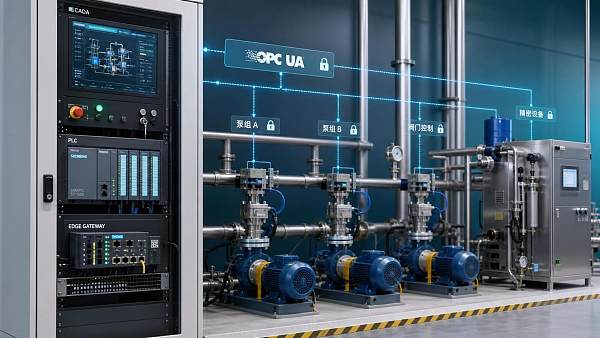
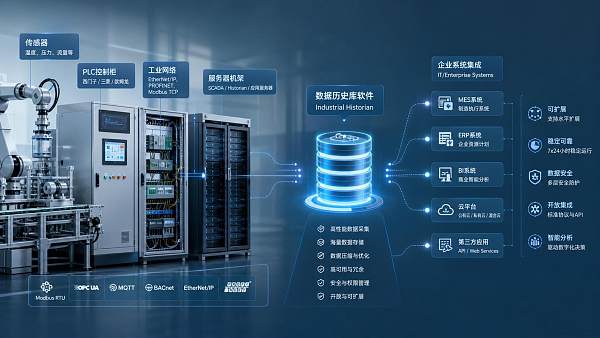
One of the most important smart valve monitoring trends is the push toward standardized data flows. Buyers increasingly expect valve diagnostics to feed into SCADA, historian platforms, CMMS systems, and digital twin environments. A smart valve that cannot share meaningful, structured data may still perform well mechanically, but it underdelivers strategically.
4. Cybersecurity and segmentation are entering device selection criteria
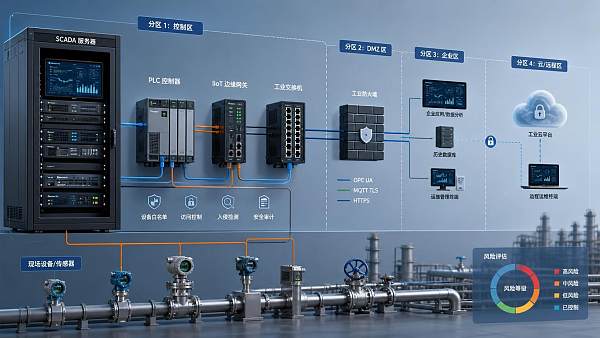
As more monitoring points become connected, IT and OT teams are asking harder questions about protocol exposure, firmware management, access control, and network segmentation. This does not mean every valve needs identical connectivity, but it does mean buyers should avoid unmanaged intelligence at scale.
5. Compliance-ready traceability is gaining procurement value
Enterprises are placing greater value on timestamped diagnostic records, calibration history, alert logs, and event traceability. In regulated or audit-sensitive environments, monitoring data is increasingly treated as part of the compliance evidence chain rather than just a maintenance convenience.
How do leading enterprises compare upgrade priorities across valve assets?
The table below summarizes how smart valve monitoring trends map to common enterprise priorities. It helps procurement teams compare technical direction with business impact instead of evaluating features one by one.
What this comparison shows is simple: smart valve monitoring trends have value when they support an operational decision. Feature-rich devices are not enough if the outputs do not influence maintenance timing, risk scoring, regulatory reporting, or investment planning.
What should buyers check first when selecting smart valve monitoring solutions?
Selection mistakes usually happen when teams overfocus on sensor availability and under-evaluate application fit. A practical procurement review should start with service conditions, criticality, and data use case. The right architecture for a corrosive process isolation valve may be very different from the right architecture for a high-cycle utility control valve.
A practical evaluation checklist
- Define failure consequence. Determine whether the valve affects safety, contamination risk, process yield, environmental release, or only localized maintenance workload.
- Match monitoring depth to duty profile. On-off isolation valves, throttling control valves, and severe-service chemical valves require different data granularity.
- Verify material and environment compatibility. Sensors and enclosures must tolerate vibration, washdown, temperature range, corrosive media, and electromagnetic interference.
- Check software pathway early. Confirm how data will reach SCADA, DCS, MES, CMMS, or analytics tools before hardware rollout begins.
- Review support model and spare strategy. A smart monitoring layer without calibration support, firmware governance, or replacement planning can create hidden lifecycle risk.
For many multinational procurement teams, G-CST adds value here by comparing valve monitoring architecture against adjacent systems rather than reviewing the valve alone. In real facilities, valve reliability intersects with pumping behavior, bearing wear, motion precision, industrial software, and materials performance. Cross-disciplinary benchmarking improves selection quality.
Which technical parameters deserve the most attention in 2026 projects?
Not every specification carries the same decision weight. The most useful technical review focuses on whether a monitoring package produces reliable signals under actual operating stress and whether those signals can support action. The table below highlights common evaluation dimensions for smart valve monitoring trends in enterprise environments.
These parameters are especially important in high-value industrial assets because monitoring gaps often remain invisible until failure occurs. A device may appear modern on paper but still provide poor decision support if its sampling logic, durability, or interoperability are weak.
How do standards, compliance, and risk management affect smart valve monitoring trends?
In enterprise procurement, technical capability alone is rarely enough. Teams must also consider how monitoring supports documented reliability frameworks, safety reviews, and cross-border project governance. Depending on the application, standards alignment may involve ISO management systems, ASME-related design expectations, IEEE-relevant instrumentation practices, or sector-specific process requirements.
The important point is not to force every project into the same compliance template. Instead, decision-makers should ask where monitoring data contributes to control verification, maintenance evidence, failure investigation, and supplier accountability. That is where smart valve monitoring trends become commercially meaningful.
- For regulated process environments, traceable event records can strengthen maintenance discipline and incident review.
- For infrastructure operators, remote visibility can reduce site visits while improving alarm prioritization.
- For export-sensitive projects, documentation quality can support procurement transparency and technical due diligence.
G-CST’s role is especially relevant when buyers need to connect engineering benchmarks with regulatory foresight. A valve monitoring upgrade that ignores documentation structure, software compatibility, or future compliance requirements may create downstream cost even if the initial hardware price looks attractive.
What cost and implementation mistakes should enterprises avoid?
Budget pressure often leads teams to compare only hardware unit price. That is one of the most common errors in smart valve monitoring projects. Real cost depends on installation complexity, software mapping, commissioning time, training, maintenance workflow changes, and spare strategy.
Common mistakes
- Instrumenting too many low-criticality valves before defining a risk-based asset hierarchy.
- Selecting incompatible communication layers that increase integration engineering effort later.
- Assuming predictive alerts will be useful without maintenance team workflow redesign.
- Ignoring environmental durability, then facing sensor failure in washdown, corrosive, or vibration-heavy zones.
A practical strategy is to start with critical valves tied to uptime, safety, contamination control, or emissions exposure. Once the organization validates data quality and response workflow, it can expand selectively. This staged approach usually delivers better capital efficiency than a blanket rollout.
FAQ: what do enterprise buyers ask most about smart valve monitoring trends?
How do we know which valves should be upgraded first?
Start with consequence of failure, not valve count. Prioritize assets whose malfunction could stop production, affect product quality, trigger environmental release, or require costly shutdown access. High-cycle, severe-service, and hard-to-inspect valves usually offer the fastest return from monitoring.
Are smart valve monitoring trends relevant for facilities that already have SCADA?
Yes, because SCADA visibility alone does not always provide valve-condition intelligence. Many existing systems show commanded state or basic process data but not internal wear, cycle abnormality, response degradation, or actuator stress. Smart monitoring adds asset health context, which improves maintenance quality.
What is the main selection risk for enterprise procurement teams?
The biggest risk is buying a technically capable device that does not fit the plant’s software, maintenance process, or environment. Smart valve monitoring trends create value only when data can be trusted, interpreted, and acted upon by operations and maintenance teams.
Can smart valve monitoring help with compliance reviews?
In many cases, yes. Timestamped records, alarm history, calibration evidence, and position verification can support internal audits and incident review. The exact benefit depends on the application and local regulatory expectations, but traceable diagnostics generally improve accountability.
Why choose us for 2026 valve upgrade evaluation and procurement support?
G-CST supports enterprise decision-makers who need more than product brochures. Our advantage lies in multidisciplinary benchmarking across Specialized Pump & Valve Systems, Industrial Software & Digital Twins, Precision Motion Control & Bearings, Semiconductor Fabrication Equipment, and Advanced Engineering Materials. That means your valve upgrade decisions can be assessed in the context of the wider reliability architecture they must serve.
If your team is evaluating smart valve monitoring trends for 2026, we can help clarify the questions that determine project success:
- Parameter confirmation for duty cycle, response monitoring, environmental tolerance, and data retention requirements.
- Solution selection support based on asset criticality, software integration path, and lifecycle maintenance strategy.
- Delivery-cycle discussion for multi-site programs, phased retrofits, and shutdown-bound implementation windows.
- Certification and standards review aligned with ISO, ASME, SEMI, IEEE, and project-specific documentation needs where applicable.
- Quotation communication and technical comparison support to reduce risk before supplier commitment.
For procurement directors, operations leaders, and infrastructure planners, the key issue is not whether smart monitoring is fashionable. It is whether the selected monitoring architecture will withstand audit pressure, integration demands, and real operating stress. Contact G-CST to review your valve monitoring roadmap, compare upgrade options, and build a 2026 plan grounded in verifiable engineering and practical commercial risk control.
Recommended News
 Oct 18, 2026How to reduce nuisance alarms in water treatment SCADA systemsOptimize SCADA systems for water treatment. Discover proven ways to reduce nuisance alarms, tune alarm logic, and improve operator focus without compromising treatment safeguards.
 Oct 15, 2026Can digital manufacturing solutions work with legacy factory PLCs?Explore digital manufacturing solutions for factories that work with legacy PLCs. Learn how to assess connectivity, data quality, and security before investing in integration.
 Oct 14, 2026Why Does SCADA Data Differ from Field Device Readings?Why does SCADA data fail to match field device readings? Discover common scaling, timing, and communication errors, plus practical checks to pinpoint mismatches and avoid unnecessary calibration.
 Oct 03, 2026How IoT integration for smart agriculture reduces irrigation wasteIoT integration for smart agriculture cuts irrigation waste with soil, weather, flow, and pressure data—helping farms automate smarter watering and detect leaks early.
 Sep 24, 2026How Zigbee mesh latency affects smart hotel guest room controlsSmart hotel Zigbee mesh latency can shape guest comfort and system reliability. Learn how to design, test, and optimize responsive hotel room controls.
![]() Oct 15, 2026How Much Does Industrial Automation Software Implementation Cost?How much does industrial automation software implementation cost? Explore project pricing, key cost drivers, hidden expenses, and smart budgeting strategies.
Oct 15, 2026How Much Does Industrial Automation Software Implementation Cost?How much does industrial automation software implementation cost? Explore project pricing, key cost drivers, hidden expenses, and smart budgeting strategies. Sep 11, 2026How edge processing latency affects real-time SCADA alarmsEdge processing latency can make or break real-time SCADA alarms. Learn how to benchmark delay, improve alarm integrity, and build resilient response paths.
 Sep 09, 2026How energy management analytics uncovers avoidable peak-demand costsEnergy management analytics reveals avoidable peak-demand costs, identifies controllable load spikes, and helps finance teams cut utility charges with confidence.
 Aug 31, 2026How SCADA data polling frequency affects alarm response timeSCADA data polling frequency directly shapes alarm response time. Learn how scan rates, latency, delays, and network behavior affect reliable detection.
 Aug 29, 2026When open source industrial OPC UA is the right fit for SCADA integrationOpen source industrial OPC UA for SCADA integration: explore interoperability, security, lifecycle ownership, and evaluation steps for scalable multi-vendor operations.
 Aug 12, 2026How to Scope an Industrial Cybersecurity Risk Assessment for SCADA and IIoT SystemsIndustrial cybersecurity risk assessment for SCADA and IIoT starts with the right scope. Learn how to define boundaries, map consequences, and uncover hidden attack paths.
 Aug 06, 2026How to Evaluate Data Historian Software for Automation Integration and ScalingData historian software for automation: learn how to evaluate integration, scalability, data integrity, and security to choose a platform that supports growth and smarter decisions.
 Jul 31, 2026How Smart Hotel AI Helps Reduce Energy Costs Without Hurting Guest ExperienceSmart hotel AI helps hotels cut energy costs by controlling HVAC, lighting, and occupancy-based settings—without hurting guest comfort. Learn what to check before you buy.
 Jul 30, 2026How Industrial Digitization for Electronics Cuts Downtime in High-Mix ProductionIndustrial Digitization for electronics helps high-mix manufacturers cut downtime by improving changeovers, traceability, maintenance response, and line decisions. Learn where digital tools deliver the fastest ROI.
 Jul 22, 2026Supply Chain Resilience Risk Management: Key Metrics and Response PlansSupply Chain Resilience risk management explained with key metrics, scenario-based thresholds, and response plans to reduce disruption, qualification delays, and hidden supply risk.
 Jul 15, 2026Energy Software for Manufacturing Plants: Cost Savings vs Integration RiskEnergy software for manufacturing plants can cut utility waste, but only if savings outweigh integration risk. Learn how to evaluate ROI, data quality, cybersecurity, and rollout fit.
 Jul 14, 2026Fintech in 2026: Which Operating Trends Matter Most for Growth PlanningFintech in 2026 is shifting from rapid expansion to governed scale. Explore the key trends shaping growth planning, from embedded finance and AI risk controls to resilience and compliance.
 Jul 13, 2026When Data Historian Software for Manufacturing Delivers ROIData historian software for manufacturing delivers ROI by reducing downtime, improving quality, and speeding compliance. See how to evaluate value before you buy.
 Jul 13, 20265G IIoT Gateway Wholesale: Key Specs That Affect Deployment Cost5g iiot gateway wholesale decisions should go beyond unit price. Learn which specs cut deployment cost, reduce integration risk, and improve long-term industrial ROI.
 Jul 11, 2026SCADA Systems in the Middle East: Key Compliance and Integration ChecksSCADA Systems Middle East projects need more than features. Discover key compliance, cybersecurity, and integration checks to reduce risk, protect uptime, and choose the right platform.
 Jul 09, 2026Industrial Technology Platform Pricing: What Drives Total Cost Beyond the LicenseIndustrial technology platform pricing goes far beyond the license. Learn the hidden cost drivers—integration, compliance, scalability, and support—to make smarter buying decisions.
 Jul 09, 2026Industrial Standards Compliance for Electronics: Key Gaps That Delay Market AccessIndustrial standards compliance for electronics often stalls market access due to hidden gaps in testing, traceability, supplier records, and regional rules. Learn how to spot risks early and accelerate certification.
 Jul 08, 2026IT Infrastructure Gaps That Slow Industrial GrowthIT infrastructure gaps can quietly slow industrial growth, raise risk, and weaken supply chains. Learn which issues matter most and how to fix them for faster, smarter scaling.
 Jul 06, 2026Open Source Industrial SCADA: Key Risks, Benefits, and FitOpen source industrial SCADA: explore key benefits, cybersecurity risks, costs, and best-fit use cases to see if it can support reliable, scalable industrial operations.