Search News
Industry Portal
Popular Tags
Ball Screw Lead Precision Data: Tolerance vs Positioning
Author
Time
Click Count
For technical evaluators comparing linear motion systems, ball screw lead precision data is essential but often misunderstood. Many specification sheets present tolerance grades clearly, yet actual positioning behavior depends on more than one number.
In advanced manufacturing, automation, semiconductor handling, inspection platforms, and industrial machinery, confusion between lead tolerance and positioning accuracy can create costly design errors. A system may meet catalog precision while still missing application targets.
This article explains how to read ball screw lead precision data, how tolerance differs from positioning performance, and how to align specifications with operating reality across multidisciplinary industrial environments.
Understanding Ball Screw Lead Precision Data
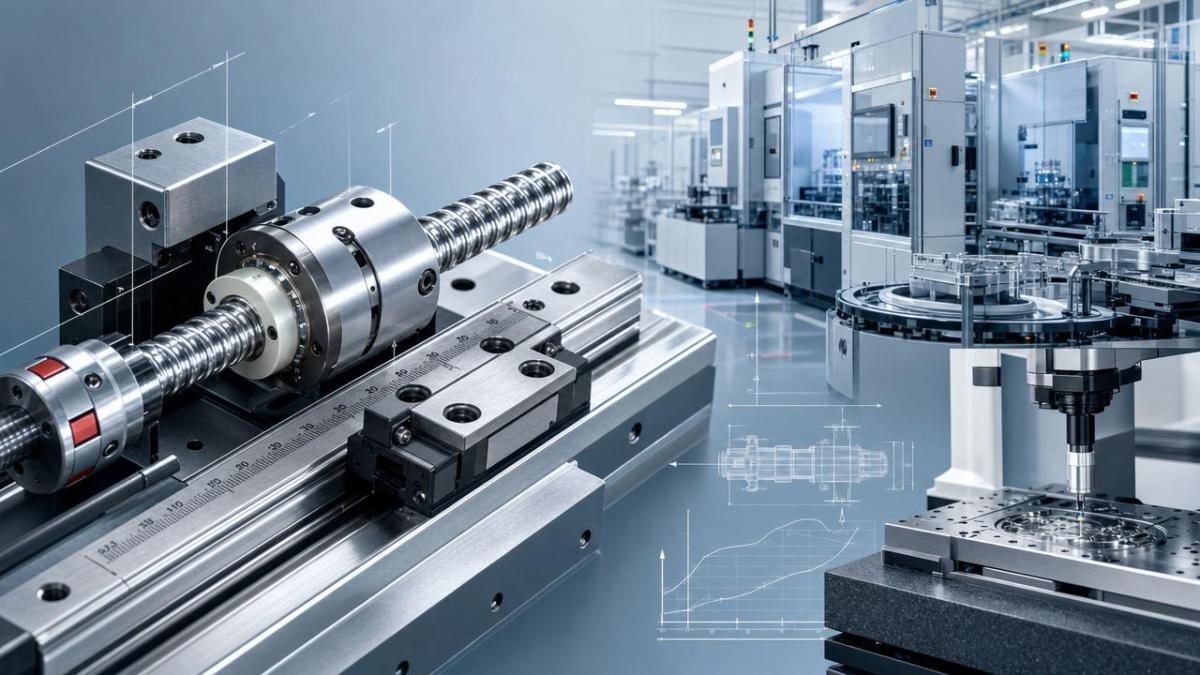
Ball screw lead precision data describes how closely the screw converts rotary motion into linear travel over a defined distance. It is a geometric performance metric, not a complete motion-system verdict.
The lead is the linear distance traveled in one screw revolution. If the nominal lead is 10 mm, one full turn should move the nut 10 mm under reference conditions.
Lead precision is usually expressed through accumulated lead error, variation over specific travel lengths, and standard tolerance grades. These values often follow ISO or manufacturer-defined inspection methods.
When reviewing ball screw lead precision data, three ideas should stay separate:
- Nominal lead: the intended travel per revolution.
- Lead error: deviation from nominal travel.
- Positioning performance: actual achieved axis location in operation.
This distinction matters because strong ball screw lead precision data can still coexist with poor servo tuning, thermal drift, structural compliance, or bearing preload problems.
Why tolerance is not equal to positioning accuracy
Tolerance is a controlled manufacturing limit. Positioning accuracy is a system-level outcome. One belongs to the component; the other belongs to the machine axis during use.
A ball screw with excellent lead tolerance may still produce position error if the installation introduces misalignment. The reverse can also happen when compensation software improves practical results.
Industry Context and Current Evaluation Priorities
Across high-value industrial systems, ball screw lead precision data is receiving closer scrutiny. This trend reflects tighter process windows, rising automation density, and stronger traceability requirements in capital equipment procurement.
Several market signals explain the growing attention:
In integrated machinery, the screw is only one contributor to axis performance. Guides, couplings, motor encoders, thermal management, controls, payload variation, and frame stiffness all influence final positioning.
That is why high-level technical benchmarking increasingly compares measured motion behavior alongside published ball screw lead precision data, rather than treating catalog grades as complete proof.
Business and Engineering Value of Correct Interpretation
Correct interpretation of ball screw lead precision data reduces specification risk. It helps engineering teams avoid overbuying precision that adds cost without measurable benefit.
It also prevents under-specification. If an application needs consistent bidirectional accuracy under changing temperatures, a basic lead tolerance statement may be insufficient.
The practical benefits are broad:
- Better comparison of supplier datasheets and tolerance grades.
- Improved matching between axis requirements and component capability.
- Stronger justification for compensation, calibration, or thermal controls.
- Lower risk in high-value equipment acceptance and validation.
- More reliable total-cost forecasting across machine life.
For multidisciplinary projects, ball screw lead precision data is especially valuable when systems cross mechanical, electrical, and software boundaries. Misreading one mechanical tolerance can distort the entire performance model.
Typical Application Scenarios and Precision Priorities
Different applications interpret ball screw lead precision data through different risk lenses. Travel length, duty cycle, thermal load, and repeatability targets all change the acceptable precision strategy.
These examples show why identical ball screw lead precision data can lead to different decisions. Precision is always meaningful only within a defined motion architecture and process objective.
Common specification reading mistakes
- Assuming lead tolerance guarantees bidirectional repeatability.
- Ignoring stroke length when comparing error values.
- Treating inspection conditions as identical to operating conditions.
- Overlooking thermal expansion at sustained duty cycles.
- Comparing grades without checking preload, mounting, and support configuration.
Practical Guidance for Evaluating Tolerance Versus Positioning
A disciplined review process makes ball screw lead precision data more useful. The goal is not simply to find the highest grade, but to verify whether the grade supports the real axis requirement.
- Define the required motion result first. State absolute accuracy, repeatability, travel, speed, and duty cycle.
- Read ball screw lead precision data in context. Check reference length, accumulated error, and inspection method.
- Map non-screw error sources. Include encoder resolution, frame compliance, guide straightness, and coupling behavior.
- Assess compensation options. Software correction may improve effective positioning if the error is stable and measurable.
- Review thermal conditions. Continuous operation can shift actual travel beyond static catalog expectations.
- Request measurement evidence when necessary. Test curves often reveal more than tolerance labels alone.
It is also useful to distinguish between acceptance criteria for components and acceptance criteria for finished axes. Ball screw lead precision data belongs mainly to the first category, not automatically the second.
In many advanced systems, the best decision is a balanced package: adequate screw precision, robust supports, thermal control, encoder feedback, and calibrated compensation. That approach often outperforms isolated component upgrades.
Next-Step Evaluation Framework
When comparing candidate solutions, build a short evaluation matrix around ball screw lead precision data and actual machine behavior. This creates a clearer bridge between datasheets and operational reliability.
- Record nominal lead, grade, accumulated lead error, and test length.
- Add expected thermal rise, stroke utilization, and payload variation.
- Document whether encoder-based correction is available.
- Separate static catalog tolerance from measured axis positioning results.
- Prioritize application-critical errors instead of generic precision claims.
Used correctly, ball screw lead precision data becomes a strategic filter rather than a confusing catalog detail. It supports better engineering judgment, stronger benchmark comparisons, and lower performance risk in complex industrial systems.
The most effective next step is to review current specification sheets against actual axis requirements, then identify where ball screw lead precision data truly predicts performance and where additional validation is required.
Recommended News
 Oct 19, 2026How Do I Validate Replacement Linear Guides for an Existing Machine?How do I validate replacement parts for an existing machine? Discover essential linear guide checks for fit, load capacity, accuracy, and safe commissioning before approving a replacement.
 Sep 19, 2026When does a longer travel range raise linear motion stage wholesale costs?Linear motion stage travel range wholesale costs rise when longer strokes demand stronger structures, upgraded drives, precision feedback, and shipping support. Compare smarter before you buy.
 Jul 12, 2026How to Compare Miniature Motion Systems Suppliers for Precision and Lead TimeMiniature motion systems suppliers should be compared on precision, lead time, compliance, and lifecycle support. Learn how to shortlist reliable partners and reduce sourcing risk.
 Jul 04, 2026Linear Guide Rail for CNC: How to Choose Load, Accuracy, and Service LifeLinear guide rail for CNC selection made simple: learn how to balance load, accuracy, preload, sealing, and service life to cut downtime and choose the right rail with confidence.
 Jun 30, 2026Cross Roller Bearing Supplier Checklist for Stable PrecisionCross roller bearing supplier checklist for buyers who need stable precision. Learn how to verify quality, traceability, engineering support, and delivery reliability before you commit.
 Jun 19, 2026Linear Guide Rail Supplier Checklist for Load Accuracy and Service LifeLinear guide rail supplier checklist for better load accuracy and longer service life. Compare quality control, preload, lubrication, and support before you buy.
 Jun 16, 2026Telescopic Rail OEM Checklist: Load, Tolerance, and Lead TimeTelescopic rail OEM checklist covering load, tolerance, finish, and lead time. Learn how to compare suppliers, reduce sourcing risk, and choose rails that perform reliably at scale.
 Jun 06, 2026How to Choose a Measuring Tape for Accurate Site WorkMeasuringtape selection affects accuracy, speed, and rework on site. Learn the key features, common mistakes, and how to choose the right tape for reliable results.
![]() Jun 04, 2026Linear Guide Frictional Resistance: When Maintenance Solves DriftLinear guide frictional resistance causes drift, positioning errors, and unstable motion. Learn how targeted maintenance restores accuracy, cuts downtime, and prevents repeat service issues.
Jun 04, 2026Linear Guide Frictional Resistance: When Maintenance Solves DriftLinear guide frictional resistance causes drift, positioning errors, and unstable motion. Learn how targeted maintenance restores accuracy, cuts downtime, and prevents repeat service issues.![]() Jun 04, 2026How Linear Guide Frictional Resistance Affects Positioning StabilityLinear guide frictional resistance directly impacts positioning stability, repeatability, and servo response. Learn how preload, lubrication, and mounting affect precision performance.
Jun 04, 2026How Linear Guide Frictional Resistance Affects Positioning StabilityLinear guide frictional resistance directly impacts positioning stability, repeatability, and servo response. Learn how preload, lubrication, and mounting affect precision performance. May 23, 2026Next-Gen Linear Motor Technology for Faster PositioningNext-gen linear motor technology drives faster positioning, smoother motion, and higher repeatability. Discover where it delivers the biggest gains in automation performance.
 May 22, 2026Linear Motion Market Growth Report: Where Demand Is ShiftingLinear motion market growth report: discover where demand is shifting across automation, semiconductors, precision manufacturing, and infrastructure to identify high-fit growth opportunities.
 May 22, 2026Linear Rail Parallelism Standards That Prevent BindingLinear rail parallelism standards explained with a practical checklist to prevent binding, cut wear, improve accuracy, and keep motion systems running smoothly.
 May 21, 2026Stiffness and Damping in Guides: Selection MistakesStiffness and damping in guides directly affect accuracy, vibration control, and lifecycle cost. Learn the most common selection mistakes and make smarter, lower-risk purchasing decisions.
 May 20, 2026Linear Guide Frictional Resistance and Its Impact on MotionLinear guide frictional resistance directly affects motion accuracy, wear, and uptime. Learn key causes, maintenance checks, and practical ways to reduce friction issues fast.
 May 20, 2026Ball Screw Lead Precision Data: Tolerance vs PositioningBall screw lead precision data explained: learn how tolerance differs from real positioning accuracy, avoid costly spec mistakes, and choose motion systems with more confidence.
 May 20, 2026Linear Module Factory Selection for Fast Project DeliveryLinear module factory selection affects project speed, quality, and risk. Discover how to compare lead time, engineering support, and precision capability for faster delivery.
 May 19, 2026Telescopic Rail OEM Options for Cleanroom Tool AccessTelescopic rail OEM solutions for cleanroom tool access: compare materials, load stability, customization, and compliance factors to reduce downtime and choose the right supplier.
 May 19, 2026Linear Motion Stage Wholesale: Accuracy Costs ExplainedLinear motion stage wholesale costs explained: see how accuracy grades, materials, load stability, and supplier validation shape pricing, risk, and long-term ROI.
 May 18, 2026How to Evaluate a Linear Guide Rail Supplier for Cleanroom Motion SystemsLinear guide rail supplier selection for cleanroom motion systems starts with contamination control, lubrication, traceability, and quality data. Learn how to compare suppliers and avoid costly risks.
 May 03, 2026How to Evaluate a Precision Manufacturing Supplier for Stable QualityPrecision Manufacturing supplier evaluation starts with scenario fit. Learn how to assess quality stability, traceability, compliance, and supply resilience for smarter sourcing.
 Apr 21, 2026Precision Motion Control Problems That Look Like VibrationPrecision Motion Control issues often mimic vibration in Semiconductor Fabrication Equipment. Learn how Industrial Software Solutions, High-performance Bearings, and Technical Benchmarking reduce downtime and risk.
 Apr 21, 2026Why Precision Manufacturing Still Misses Tight TolerancesPrecision Manufacturing still misses tight tolerances—learn how Digital Twin Technology, Reliability Engineering, Strategic Procurement, and Material Innovation improve repeatability and supplier confidence.