Search News
Industry Portal
Popular Tags
How to Evaluate a Precision Manufacturing Supplier for Stable Quality
Author
Time
Click Count
Selecting a Precision Manufacturing supplier is not just about price or lead time—it is a strategic decision that directly affects product reliability, compliance, and long-term supply stability. For procurement teams in high-tech and industrial sectors, a structured evaluation framework helps reduce sourcing risks and identify partners capable of delivering consistent quality under demanding standards.
Why Scenario Differences Matter When Evaluating a Precision Manufacturing Supplier
Procurement teams rarely buy precision parts in a vacuum. A Precision Manufacturing supplier that performs well for low-volume engineering prototypes may fail in a regulated production environment, while a supplier optimized for stable mass production may be too rigid for fast design iterations. That is why evaluation should start with application context, not with a generic vendor checklist.
In semiconductor equipment, motion systems, pump and valve assemblies, industrial automation, and advanced material integration, stable quality depends on process discipline, metrology capability, traceability, and change control. However, the weight of each factor shifts by scenario. Buyers responsible for spare parts continuity, new product introduction, export-sensitive programs, or global dual sourcing must assess the same Precision Manufacturing supplier through different risk lenses.
A practical sourcing decision therefore asks three questions: where will the part be used, what failure is least acceptable, and what supplier behavior proves repeatability over time. Once those answers are clear, procurement can compare candidates more objectively and avoid selecting a vendor that looks competitive on paper but cannot sustain quality in real operating conditions.
Common Business Scenarios and What Buyers Should Prioritize
The same component tolerance can carry very different business consequences depending on the end use. The table below helps procurement teams align evaluation criteria with the most common sourcing scenarios.
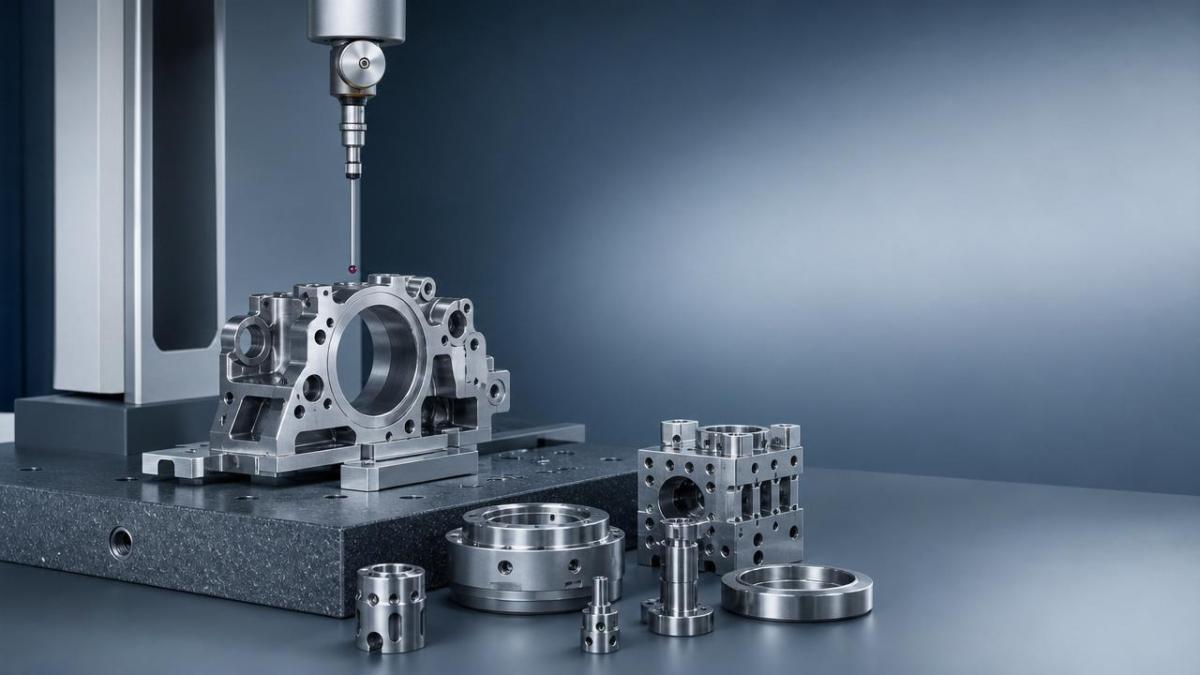
This scenario-based view prevents a common mistake: assuming that one strong capability means total suitability. A Precision Manufacturing supplier may have excellent CNC assets, for example, yet still lack contamination control, calibration discipline, or documented inspection routines required for higher-risk applications.
Scenario 1: Evaluating Suppliers for Prototype, NPI, and Fast Iteration Projects
In new product introduction and pilot programs, speed matters, but speed without engineering discipline creates expensive rework. In this scenario, buyers should prioritize whether the Precision Manufacturing supplier can challenge drawings intelligently, suggest tolerance optimization, and flag manufacturability issues before production begins.
Useful questions include: Can the supplier review GD&T assumptions? Can it recommend alternate surface treatments or material grades without compromising function? How quickly can it update inspection plans when a revision changes? A supplier that simply says yes to every print may look cooperative, but experienced procurement teams know that technical pushback is often a sign of maturity.
For NPI scenarios, sample approval workflow is critical. Ask for first article inspection capability, process setup records, and examples of engineering change response time. The right supplier for this stage is usually not the cheapest one; it is the one that helps shorten the path from design intent to manufacturable reality while maintaining clear quality evidence.
Scenario 2: Choosing a Precision Manufacturing Supplier for Stable Mass Production
When the project shifts from pilot to serial production, the procurement focus changes from flexibility to repeatability. In this environment, stable quality depends less on individual operator skill and more on controlled process systems. Buyers should verify whether the Precision Manufacturing supplier uses statistical process control, documented work instructions, fixture validation, tool life management, and preventive machine maintenance.
A capable supplier should be able to show trend charts, defect history, corrective action closure rates, and process capability data on critical dimensions. Even if parts pass final inspection, wide internal variation is a warning sign. It often predicts future failures once volume increases, shifts change, or material lots vary.
Procurement should also test production resilience. Ask what happens if a critical machine goes down, a gauge fails calibration, or a sub-tier raw material source changes. Stable quality is not only about current output; it is about how well the supplier protects output under disruption. For long-running programs, this distinction separates tactical vendors from strategic manufacturing partners.
Scenario 3: Compliance-Critical and High-Reliability Applications
Some sourcing situations leave no room for undocumented variation. Components used in regulated industrial systems, sensitive process equipment, fluid control assemblies, or high-precision motion platforms often require full traceability and disciplined quality records. Here, the best Precision Manufacturing supplier is the one whose documentation quality matches its machining quality.
Buyers should check certification scope, calibration traceability, nonconformance handling, and material verification practices. If coatings, heat treatment, cleaning, or special processes are subcontracted, the supplier should have approval criteria and incoming verification for those sub-tier services. In compliance-driven environments, uncontrolled outsourcing is a major hidden risk.
Another key point is change control. A Precision Manufacturing supplier serving critical applications should never substitute material source, alter process sequence, or modify inspection frequency without formal notice. For procurement teams, supplier transparency around change management is often more valuable than broad capability claims.
Scenario 4: Global Sourcing, Dual Sourcing, and Supply Continuity Planning
For multinational buyers, the challenge is not only part quality but also cross-site consistency. A supplier may operate multiple facilities or rely on regional subcontractors, which introduces variation in machines, operators, inspection practices, and local raw material channels. If your strategy includes dual sourcing or regional risk diversification, evaluate whether the Precision Manufacturing supplier can replicate results across sites without quality drift.
Look for standardized control plans, shared quality systems, common metrology methods, and synchronized document revisions. Ask whether tooling and programs are mirrored, whether benchmark parts are compared between sites, and how deviations are escalated globally. A dual-source arrangement only reduces risk if both sources are genuinely aligned in process capability.
This is also where commercial intelligence matters. Export controls, logistics volatility, and country-specific compliance obligations can affect even a technically excellent supplier. Procurement should therefore combine quality audits with geographic and regulatory risk reviews rather than treating them as separate decisions.
How Requirements Differ by Buyer Type and Internal Stakeholder
Not every evaluator looks for the same evidence. Understanding internal stakeholder priorities helps procurement build a better scorecard for each Precision Manufacturing supplier.
A strong sourcing process aligns these perspectives early. Otherwise, teams may approve a supplier based on short-term price gains while overlooking process gaps that later create downtime, warranty exposure, or qualification delays.
Common Misjudgments When Selecting a Precision Manufacturing Supplier
One frequent mistake is overvaluing equipment lists. Advanced machines matter, but they do not guarantee stable quality. Without trained operators, fixture control, measurement discipline, and documented process windows, even premium equipment can produce unstable results.
Another misjudgment is relying on a good sample lot as proof of long-term capability. Early samples are often produced under unusually close supervision. Buyers should request evidence from normal production conditions, including repeat orders, multiple material batches, and performance over time.
A third risk is ignoring sub-tier process exposure. Many precision parts depend on external finishing, grinding, coating, cleaning, or material conversion steps. If the Precision Manufacturing supplier cannot control those linked processes, final quality may fluctuate even when in-house machining looks strong.
Finally, some buyers focus only on defect rates and miss communication quality. Delayed reporting, vague root-cause analysis, or weak revision control are early indicators of future instability. Stable suppliers do not just make good parts; they communicate risk clearly and early.
A Practical Evaluation Framework for Better Supplier Fit
For most procurement organizations, the best approach is a weighted evaluation model tied to the intended application. Start by defining the operating scenario: prototype, scale-up, regulated use, multi-site supply, or lifecycle support. Then score each Precision Manufacturing supplier across six dimensions: technical capability, quality system maturity, traceability, scalability, responsiveness, and supply-chain resilience.
Next, validate with evidence rather than claims. Conduct document review, sample inspection, process audit, and commercial risk review. If the part is critical, include a trial order under realistic timing and packaging conditions. This reveals whether the supplier can maintain quality when facing everyday operational pressure, not just audit preparation.
It is also wise to define red-line criteria before supplier comparison begins. Examples include missing calibration records, weak change notification process, lack of lot traceability, or dependence on a single uncontrolled sub-tier source. Red lines make decision-making faster and more defensible, especially in cross-functional sourcing reviews.
FAQ: What Procurement Teams Often Ask
How many audits are enough before approving a Precision Manufacturing supplier?
For low-risk parts, a document review plus sample validation may be enough. For critical applications, combine a system audit, process audit, and monitored trial production. The higher the cost of field failure, the deeper the verification should be.
Should buyers prioritize certifications or actual process data?
Both matter, but process data is usually the stronger predictor of stable quality. Certifications show baseline system intent; actual capability data shows whether the system works in practice.
When is dual sourcing a better choice?
Dual sourcing is valuable when continuity risk is high, qualification cost is manageable, and process replication can be verified. It is less effective if the second source is approved only commercially but not technically aligned.
Turning Evaluation into a More Reliable Sourcing Decision
The right Precision Manufacturing supplier is the one that matches your operating scenario, risk tolerance, and growth path—not simply the one with the lowest quote or the broadest machine list. Procurement teams achieve better outcomes when they evaluate supplier fit through the lens of application context, stakeholder priorities, and evidence of repeatable control.
If your organization is sourcing for high-reliability equipment, industrial automation, fluid systems, precision motion assemblies, or technically demanding infrastructure, build your assessment around scenario-specific proof: repeatability in volume, traceability in regulated use, flexibility in NPI, and resilience in global supply. That approach reduces qualification surprises and improves long-term quality stability.
Before final nomination, compare each Precision Manufacturing supplier against your real application conditions, not just a generic vendor checklist. The closer the evaluation framework is to your actual use case, the stronger your sourcing decision will be.
Recommended News
 Jun 16, 2026Telescopic Rail OEM Checklist: Load, Tolerance, and Lead TimeTelescopic rail OEM checklist covering load, tolerance, finish, and lead time. Learn how to compare suppliers, reduce sourcing risk, and choose rails that perform reliably at scale.
 Jun 06, 2026How to Choose a Measuring Tape for Accurate Site WorkMeasuringtape selection affects accuracy, speed, and rework on site. Learn the key features, common mistakes, and how to choose the right tape for reliable results.
![]() Jun 04, 2026Linear Guide Frictional Resistance: When Maintenance Solves DriftLinear guide frictional resistance causes drift, positioning errors, and unstable motion. Learn how targeted maintenance restores accuracy, cuts downtime, and prevents repeat service issues.
Jun 04, 2026Linear Guide Frictional Resistance: When Maintenance Solves DriftLinear guide frictional resistance causes drift, positioning errors, and unstable motion. Learn how targeted maintenance restores accuracy, cuts downtime, and prevents repeat service issues.![]() Jun 04, 2026How Linear Guide Frictional Resistance Affects Positioning StabilityLinear guide frictional resistance directly impacts positioning stability, repeatability, and servo response. Learn how preload, lubrication, and mounting affect precision performance.
Jun 04, 2026How Linear Guide Frictional Resistance Affects Positioning StabilityLinear guide frictional resistance directly impacts positioning stability, repeatability, and servo response. Learn how preload, lubrication, and mounting affect precision performance. May 23, 2026Next-Gen Linear Motor Technology for Faster PositioningNext-gen linear motor technology drives faster positioning, smoother motion, and higher repeatability. Discover where it delivers the biggest gains in automation performance.
 May 22, 2026Linear Motion Market Growth Report: Where Demand Is ShiftingLinear motion market growth report: discover where demand is shifting across automation, semiconductors, precision manufacturing, and infrastructure to identify high-fit growth opportunities.
 May 22, 2026Linear Rail Parallelism Standards That Prevent BindingLinear rail parallelism standards explained with a practical checklist to prevent binding, cut wear, improve accuracy, and keep motion systems running smoothly.
 May 21, 2026Stiffness and Damping in Guides: Selection MistakesStiffness and damping in guides directly affect accuracy, vibration control, and lifecycle cost. Learn the most common selection mistakes and make smarter, lower-risk purchasing decisions.
 May 20, 2026Linear Guide Frictional Resistance and Its Impact on MotionLinear guide frictional resistance directly affects motion accuracy, wear, and uptime. Learn key causes, maintenance checks, and practical ways to reduce friction issues fast.
 May 20, 2026Ball Screw Lead Precision Data: Tolerance vs PositioningBall screw lead precision data explained: learn how tolerance differs from real positioning accuracy, avoid costly spec mistakes, and choose motion systems with more confidence.
 May 20, 2026Linear Module Factory Selection for Fast Project DeliveryLinear module factory selection affects project speed, quality, and risk. Discover how to compare lead time, engineering support, and precision capability for faster delivery.
 May 19, 2026Telescopic Rail OEM Options for Cleanroom Tool AccessTelescopic rail OEM solutions for cleanroom tool access: compare materials, load stability, customization, and compliance factors to reduce downtime and choose the right supplier.
 May 19, 2026Linear Motion Stage Wholesale: Accuracy Costs ExplainedLinear motion stage wholesale costs explained: see how accuracy grades, materials, load stability, and supplier validation shape pricing, risk, and long-term ROI.
 May 18, 2026How to Evaluate a Linear Guide Rail Supplier for Cleanroom Motion SystemsLinear guide rail supplier selection for cleanroom motion systems starts with contamination control, lubrication, traceability, and quality data. Learn how to compare suppliers and avoid costly risks.
 May 03, 2026How to Evaluate a Precision Manufacturing Supplier for Stable QualityPrecision Manufacturing supplier evaluation starts with scenario fit. Learn how to assess quality stability, traceability, compliance, and supply resilience for smarter sourcing.
 Apr 21, 2026Precision Motion Control Problems That Look Like VibrationPrecision Motion Control issues often mimic vibration in Semiconductor Fabrication Equipment. Learn how Industrial Software Solutions, High-performance Bearings, and Technical Benchmarking reduce downtime and risk.
 Apr 21, 2026Why Precision Manufacturing Still Misses Tight TolerancesPrecision Manufacturing still misses tight tolerances—learn how Digital Twin Technology, Reliability Engineering, Strategic Procurement, and Material Innovation improve repeatability and supplier confidence.