Search News
Industry Portal
Popular Tags
Linear Guide Frictional Resistance: When Maintenance Solves Drift

Author
Time
Click Count
Linear guide frictional resistance often signals more than routine wear—it can be the hidden cause behind axis drift, positioning errors, and unstable machine performance. For after-sales maintenance teams, understanding when lubrication, contamination control, and preload inspection can restore motion accuracy is essential. This article explains how targeted maintenance resolves drift before it develops into costly downtime or repeat service issues.
In high-precision production lines, automated handling cells, semiconductor support equipment, digitalized machine tools, and advanced material processing systems, even a small increase in rolling resistance can upset repeatability by tens of microns. For service teams responsible for recovery, root-cause isolation must go beyond replacing parts. The right maintenance response can often restore linear motion performance within 1 service cycle, while the wrong response may leave drift unresolved and generate repeat calls.
For organizations that manage critical motion assets across multiple industrial sectors, the issue also matters commercially. Drift affects throughput, scrap rate, preventive maintenance intervals, and confidence in spare-parts decisions. That is why linear guide frictional resistance should be treated as a measurable maintenance variable, not a vague symptom.
Why Linear Guide Frictional Resistance Causes Drift in Real Equipment
Axis drift rarely begins as a dramatic failure. In many machines, it starts with a gradual rise in breakaway force, uneven rolling feel, or localized drag over a travel segment of 50 mm to 200 mm. These changes can shift servo correction behavior, increase settling time, and distort the relationship between commanded position and actual mechanical response.
What maintenance teams usually see first
After-sales technicians often encounter 4 early warning signs: inconsistent homing, rising motor current, unstable stop position, and noise that appears only at specific stroke zones. If the guide rail supports a vertical or cantilevered axis, drift may be mistaken for encoder, brake, or servo tuning issues. In practice, friction changes inside the guide block can be the upstream trigger.
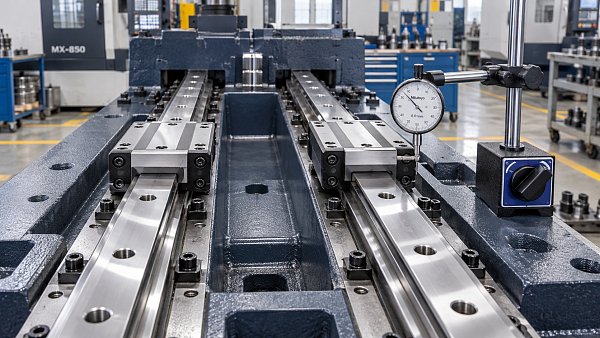
A useful field benchmark is to compare unloaded and loaded movement. If resistance increases sharply under normal payload, or if one carriage feels noticeably tighter than the others, the maintenance team should inspect lubrication condition, contamination ingress, rail alignment, and preload compatibility before replacing drives or feedback components.
The physical mechanisms behind drift
Linear guide frictional resistance changes when the rolling elements no longer move through a stable contact path. That can happen because of dried lubricant film, particles embedded in raceways, preload variation, seal drag, micro-corrosion, or mounting distortion. Even a small installation error across 2 mating surfaces can create uneven contact pressure over the full stroke.
In precision motion systems, the difference between smooth and problematic guide behavior may be very small. A few additional newtons of drag can alter low-speed motion response, especially in feed rates below 100 mm/s. On lightly loaded axes, friction spikes are often more disruptive than total average resistance because they produce intermittent stick-slip.
Common friction sources in cross-industry equipment
- Lubricant starvation after 3 to 6 months of insufficient relubrication
- Dust, abrasive fines, coolant mist, or chemical residue entering end seals
- Preload mismatch after carriage replacement or rail interchange
- Base flatness error or bolt tightening sequence distortion
- Corrosion marks from shutdown periods longer than 30 days in humid sites
The table below helps maintenance personnel distinguish likely causes from field symptoms. It is especially useful when the machine serves sectors such as precision assembly, pump-valve test stations, industrial software-linked automation cells, or semiconductor peripheral handling units where motion stability is tightly monitored.
The main takeaway is that drift is often a system-level expression of localized friction instability. If maintenance teams measure only servo parameters and skip the mechanical guide path, service time increases and root cause remains hidden. A disciplined friction check can reduce unnecessary component replacement and shorten fault isolation from several visits to a single structured intervention.
When Maintenance Solves the Problem and When It Does Not
Not every case of linear guide frictional resistance requires rail replacement. In many applications, targeted maintenance resolves drift if the raceways are intact and preload has not been permanently compromised. A practical service decision depends on 3 questions: is the resistance uniform, is the damage superficial, and does motion accuracy recover after controlled maintenance steps?
Cases where maintenance is usually effective
Maintenance often works when friction rise is caused by aged grease, contaminated seals, dry recirculation paths, or minor alignment stress. On many industrial axes, a relubrication and cleaning procedure completed within 2 to 4 hours can restore smooth travel, especially if the guide has not operated under overload or impact conditions.
Preload verification is also critical. If a carriage was replaced with a different preload class, the resulting mismatch can produce drag that feels like wear. Correcting that mismatch may eliminate drift without changing the servo, screw, or encoder. This is common in mixed fleets where spare parts are sourced across several maintenance cycles.
Cases where maintenance will only provide short relief
If the guide rail shows brinelling, flaking, corrosion pitting, or measurable running roughness after cleaning, maintenance alone is unlikely to provide a stable result. The same is true when mounting surfaces have lost flatness or when load distribution across multiple carriages is no longer balanced. In these cases, friction returns quickly, sometimes within 1 to 3 weeks of resumed production.
A practical service decision sequence
- Confirm drift behavior under unloaded and rated operating conditions.
- Measure manual travel feel across the full stroke in at least 3 zones.
- Inspect lubrication, seals, debris, and visible raceway condition.
- Check preload class, carriage pairing, and rail mounting torque sequence.
- Run a controlled test after maintenance and compare repeatability.
The table below is designed for after-sales maintenance teams that need a fast go/no-go judgment in the field. It translates friction symptoms into service action and replacement criteria that can support both operational recovery and spare-parts planning.
This decision logic helps reduce a common field error: replacing an entire axis assembly before verifying whether friction instability is maintenance-driven. For B2B operations, that distinction affects cost, lead time, and service credibility. A rail replacement can take days or weeks depending on sourcing, while a successful corrective maintenance action may return the machine in the same shift.
Maintenance Methods That Restore Motion Accuracy
To control linear guide frictional resistance effectively, maintenance teams need repeatable methods rather than generic cleaning routines. The most reliable field approach combines 4 elements: contamination control, correct lubricant selection, preload confirmation, and motion verification after intervention.
Lubrication: the first correction, not the last guess
Lubrication should match speed, load, environment, and relubrication interval. Too little grease raises metal-to-metal contact risk, but too much can increase seal drag and attract particles. In typical industrial service, relubrication intervals may range from 500 operating hours to 2,000 hours, depending on contamination level and duty cycle.
For low-speed precision axes, service teams should pay attention to startup feel after relubrication. If the breakaway force normalizes but then rises again within 24 to 72 hours, contamination or internal surface damage is likely still present. That pattern is a valuable diagnostic clue and should be recorded in the maintenance log.
Contamination control in mixed industrial environments
The source of friction often sits outside the guide itself. Abrasive dust from material handling, metallic fines from machining, dried chemical mist from pump-valve systems, and humidity-linked residue in electronics support equipment can all enter the recirculation path. A clean rail surface is not enough if the seal lips, wipers, and adjacent covers are compromised.
A practical preventive routine includes wiping exposed rail sections, checking cover integrity every 30 days, and inspecting seal contact whenever repeated drag is reported. If one machine operates in a higher-risk zone than another, identical lubrication intervals should not be assumed. Environmental severity should drive maintenance frequency.
Preload and alignment checks
Preload that is too high can increase friction and heat, while preload that is too low can permit micro-motion, vibration, and unstable positioning. After service work, teams should confirm that the carriage arrangement matches the machine builder’s intended stiffness level. They should also review bolt tightening sequence, surface cleanliness, and mounting distortion, especially after transport or crash recovery.
Even if exact metrology tools are not available on site, technicians can still compare stroke smoothness, current trend, and repeatability before and after intervention. A recovery target such as a 20% to 40% reduction in drag-related current increase is a practical maintenance indicator, provided the test conditions remain constant.
Field checklist for restoring guide performance
- Clean exposed rail and surrounding protective surfaces
- Verify lubricant type, quantity, and previous service interval
- Inspect seals, end caps, and visible debris paths
- Check carriage matching, preload designation, and installation orientation
- Retest repeatability, current, noise, and stroke consistency
These actions are particularly relevant in G-CST-aligned sectors where motion precision, reliability standards, and service traceability matter to procurement and operations teams alike. Maintenance personnel who document friction behavior in a structured way provide more than repair value. They create decision-grade evidence for spare inventory planning, risk reduction, and future equipment benchmarking.
How After-Sales Teams Can Prevent Repeat Drift and Service Escalation
Resolving one incident is not enough if the machine returns with the same complaint 2 months later. Preventing repeat drift requires a maintenance model that links symptom history, environmental conditions, and replacement decisions. This is where after-sales teams move from reactive repair to operational assurance.
Build a repeatable diagnostic record
Each service visit should capture at least 6 data points: axis location of drag, lubrication status, contamination type, preload or parts history, current trend, and post-maintenance result. Over 3 to 5 service events, these records often reveal whether the root issue is environmental, mechanical, or parts-related. That improves both technician efficiency and customer trust.
Coordinate maintenance with procurement and spares strategy
In B2B environments, maintenance decisions affect sourcing strategy. If friction problems are recurring across a fleet, the question is no longer only how to fix one axis. It becomes whether to standardize lubricant type, upgrade sealing, hold matched carriage sets in stock, or revise preventive service intervals from 6 months to 3 months for high-risk machines.
This cross-functional view matters in sectors with long lead-time components or export-sensitive supply chains. A maintenance report that clearly distinguishes recoverable linear guide frictional resistance from replacement-level damage helps procurement teams avoid emergency buying and reduces the risk of installing incompatible substitutes during downtime pressure.
Common mistakes that prolong drift issues
- Tuning the servo before checking mechanical drag
- Adding lubricant repeatedly without removing contamination
- Mixing carriage preload classes during repair
- Ignoring local stroke-zone roughness because full travel still works
- Replacing guides without checking mounting surface condition
For after-sales maintenance personnel, the best result is not just a machine that runs again. It is a machine that runs predictably, with documented evidence of why the drift occurred and what intervention restored stability. That level of discipline reduces callbacks, supports warranty discussions, and improves long-term asset reliability.
Linear guide frictional resistance is one of the most practical indicators of hidden motion instability across advanced industrial equipment. When teams respond with proper lubrication control, contamination management, preload verification, and structured retesting, many drift issues can be corrected before they escalate into prolonged downtime or costly repeat service. If you need a more rigorous maintenance framework, spare-parts evaluation support, or a tailored motion reliability review for your equipment portfolio, contact us to get a customized solution and learn more about actionable service strategies.
Recommended News
 Oct 19, 2026How Do I Validate Replacement Linear Guides for an Existing Machine?How do I validate replacement parts for an existing machine? Discover essential linear guide checks for fit, load capacity, accuracy, and safe commissioning before approving a replacement.
 Sep 19, 2026When does a longer travel range raise linear motion stage wholesale costs?Linear motion stage travel range wholesale costs rise when longer strokes demand stronger structures, upgraded drives, precision feedback, and shipping support. Compare smarter before you buy.
 Jul 12, 2026How to Compare Miniature Motion Systems Suppliers for Precision and Lead TimeMiniature motion systems suppliers should be compared on precision, lead time, compliance, and lifecycle support. Learn how to shortlist reliable partners and reduce sourcing risk.
 Jul 04, 2026Linear Guide Rail for CNC: How to Choose Load, Accuracy, and Service LifeLinear guide rail for CNC selection made simple: learn how to balance load, accuracy, preload, sealing, and service life to cut downtime and choose the right rail with confidence.
 Jun 30, 2026Cross Roller Bearing Supplier Checklist for Stable PrecisionCross roller bearing supplier checklist for buyers who need stable precision. Learn how to verify quality, traceability, engineering support, and delivery reliability before you commit.
 Jun 19, 2026Linear Guide Rail Supplier Checklist for Load Accuracy and Service LifeLinear guide rail supplier checklist for better load accuracy and longer service life. Compare quality control, preload, lubrication, and support before you buy.
 Jun 16, 2026Telescopic Rail OEM Checklist: Load, Tolerance, and Lead TimeTelescopic rail OEM checklist covering load, tolerance, finish, and lead time. Learn how to compare suppliers, reduce sourcing risk, and choose rails that perform reliably at scale.
 Jun 06, 2026How to Choose a Measuring Tape for Accurate Site WorkMeasuringtape selection affects accuracy, speed, and rework on site. Learn the key features, common mistakes, and how to choose the right tape for reliable results.
![]() Jun 04, 2026Linear Guide Frictional Resistance: When Maintenance Solves DriftLinear guide frictional resistance causes drift, positioning errors, and unstable motion. Learn how targeted maintenance restores accuracy, cuts downtime, and prevents repeat service issues.
Jun 04, 2026Linear Guide Frictional Resistance: When Maintenance Solves DriftLinear guide frictional resistance causes drift, positioning errors, and unstable motion. Learn how targeted maintenance restores accuracy, cuts downtime, and prevents repeat service issues.![]() Jun 04, 2026How Linear Guide Frictional Resistance Affects Positioning StabilityLinear guide frictional resistance directly impacts positioning stability, repeatability, and servo response. Learn how preload, lubrication, and mounting affect precision performance.
Jun 04, 2026How Linear Guide Frictional Resistance Affects Positioning StabilityLinear guide frictional resistance directly impacts positioning stability, repeatability, and servo response. Learn how preload, lubrication, and mounting affect precision performance. May 23, 2026Next-Gen Linear Motor Technology for Faster PositioningNext-gen linear motor technology drives faster positioning, smoother motion, and higher repeatability. Discover where it delivers the biggest gains in automation performance.
 May 22, 2026Linear Motion Market Growth Report: Where Demand Is ShiftingLinear motion market growth report: discover where demand is shifting across automation, semiconductors, precision manufacturing, and infrastructure to identify high-fit growth opportunities.
 May 22, 2026Linear Rail Parallelism Standards That Prevent BindingLinear rail parallelism standards explained with a practical checklist to prevent binding, cut wear, improve accuracy, and keep motion systems running smoothly.
 May 21, 2026Stiffness and Damping in Guides: Selection MistakesStiffness and damping in guides directly affect accuracy, vibration control, and lifecycle cost. Learn the most common selection mistakes and make smarter, lower-risk purchasing decisions.
 May 20, 2026Linear Guide Frictional Resistance and Its Impact on MotionLinear guide frictional resistance directly affects motion accuracy, wear, and uptime. Learn key causes, maintenance checks, and practical ways to reduce friction issues fast.
 May 20, 2026Ball Screw Lead Precision Data: Tolerance vs PositioningBall screw lead precision data explained: learn how tolerance differs from real positioning accuracy, avoid costly spec mistakes, and choose motion systems with more confidence.
 May 20, 2026Linear Module Factory Selection for Fast Project DeliveryLinear module factory selection affects project speed, quality, and risk. Discover how to compare lead time, engineering support, and precision capability for faster delivery.
 May 19, 2026Telescopic Rail OEM Options for Cleanroom Tool AccessTelescopic rail OEM solutions for cleanroom tool access: compare materials, load stability, customization, and compliance factors to reduce downtime and choose the right supplier.
 May 19, 2026Linear Motion Stage Wholesale: Accuracy Costs ExplainedLinear motion stage wholesale costs explained: see how accuracy grades, materials, load stability, and supplier validation shape pricing, risk, and long-term ROI.
 May 18, 2026How to Evaluate a Linear Guide Rail Supplier for Cleanroom Motion SystemsLinear guide rail supplier selection for cleanroom motion systems starts with contamination control, lubrication, traceability, and quality data. Learn how to compare suppliers and avoid costly risks.
 May 03, 2026How to Evaluate a Precision Manufacturing Supplier for Stable QualityPrecision Manufacturing supplier evaluation starts with scenario fit. Learn how to assess quality stability, traceability, compliance, and supply resilience for smarter sourcing.
 Apr 21, 2026Precision Motion Control Problems That Look Like VibrationPrecision Motion Control issues often mimic vibration in Semiconductor Fabrication Equipment. Learn how Industrial Software Solutions, High-performance Bearings, and Technical Benchmarking reduce downtime and risk.
 Apr 21, 2026Why Precision Manufacturing Still Misses Tight TolerancesPrecision Manufacturing still misses tight tolerances—learn how Digital Twin Technology, Reliability Engineering, Strategic Procurement, and Material Innovation improve repeatability and supplier confidence.