Search News
Industry Portal
Popular Tags
Robotic Programming Software Wholesale: Key Integration Checks
Author
Time
Click Count
For project managers evaluating robotic programming software wholesale, the real challenge is not price alone but seamless integration across PLCs, SCADA, digital twins, and compliance workflows.
In complex industrial programs, robotic programming software wholesale decisions affect uptime, validation speed, cybersecurity posture, and long-term upgrade flexibility across mixed automation estates.
A structured review of interfaces, data models, safety logic, and vendor support reduces deployment risk and preserves operational value beyond initial licensing.
When robotic programming software wholesale fits multi-system projects
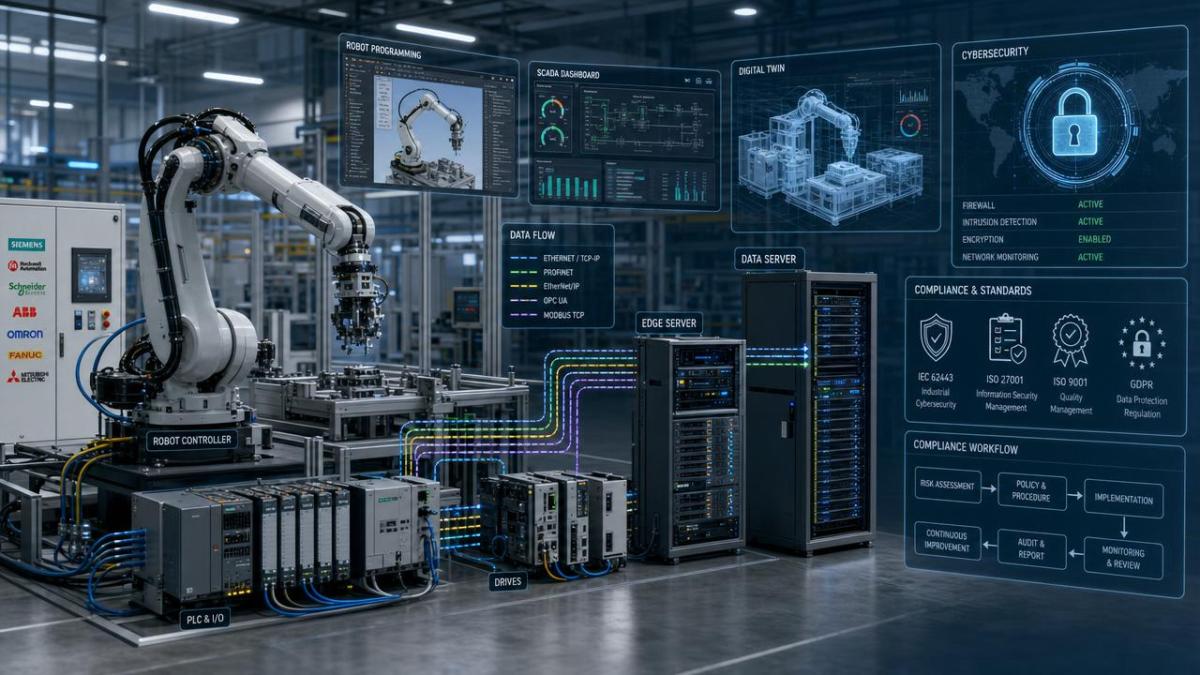
Not every automation program needs robotic programming software wholesale in the same way. Integration depth changes with plant architecture, validation demands, and regional compliance exposure.
A standalone cell may prioritize fast teach functions. A connected facility may need version control, simulation links, and secure exchange with MES, ERP, and historian platforms.
In cross-industry environments, the best robotic programming software wholesale choice supports heterogeneous controllers, mixed robot brands, and evolving digital engineering workflows.
Core background checks before comparing suppliers
- Supported robot brands, controller generations, and firmware versions
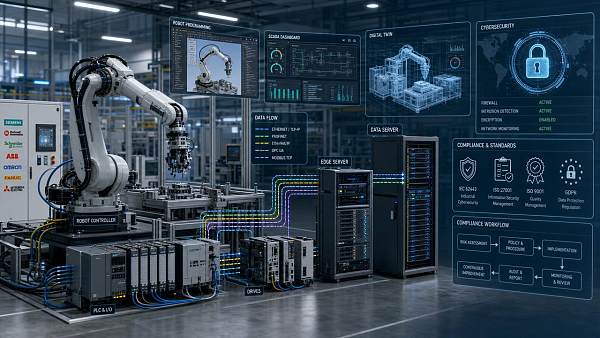
- PLC connectivity using OPC UA, EtherNet/IP, PROFINET, or Modbus TCP
- SCADA, MES, and digital twin interoperability
- User access control, audit trails, and cybersecurity hardening
- Offline programming fidelity versus live cell behavior
- Lifecycle support, patch cadence, and migration paths
Scenario 1: High-mix production lines need fast changeovers
High-mix operations often choose robotic programming software wholesale to standardize programming across frequent product changes and short production windows.
The key check is whether the platform reuses libraries, templates, and motion packages without creating version conflicts between engineering teams and plant sites.
Offline simulation matters here, but simulation accuracy matters more. Collision envelopes, end-effector payloads, and cycle-time predictions must closely match real execution.
Judgment points for high-mix environments
- Can recipes trigger program variants automatically?
- Are tooling changes reflected in digital models quickly?
- Does rollback work after failed program deployment?
- Can one package manage multiple robot brands consistently?
Scenario 2: Regulated sectors require traceability and validated workflows
In regulated operations, robotic programming software wholesale must support controlled change management rather than only engineering convenience.
Every logic update may need timestamped approval, documented test evidence, and separation of duties between programming, review, and release functions.
This scenario also raises data integrity questions. Audit logs should be tamper-evident and exportable for internal review or third-party compliance checks.
What to confirm in regulated settings
- Electronic records and approval workflows
- Revision comparison at code and parameter level
- User authentication through directory integration
- Disaster recovery and validated backup procedures
Scenario 3: Brownfield plants need compatibility more than new features
Brownfield modernization is a common reason to evaluate robotic programming software wholesale, especially where older PLCs and legacy SCADA remain critical.
The biggest risk is assuming modern software will integrate cleanly with aging controllers, proprietary fieldbus layers, or undocumented custom logic.
In these environments, proven protocol coverage and staged migration support often deliver more value than advanced visualization functions.
Brownfield integration checks
- Legacy controller support and gateway requirements
- Import of old robot programs and tag databases
- Network segmentation for secure coexistence
- Downtime windows needed for cutover
Scenario 4: Global rollouts depend on governance and support continuity
Large rollouts use robotic programming software wholesale to create standardized engineering methods across regions, contractors, and production clusters.
The software must support localized standards while maintaining one master governance model for libraries, naming conventions, backups, and cybersecurity baselines.
Support capacity matters greatly. Time-zone coverage, escalation paths, and documented patch advisories prevent fragmented deployment quality across sites.
How scenario requirements differ in robotic programming software wholesale
Practical adaptation advice for supplier comparison
Robotic programming software wholesale evaluation should move from brochure claims to evidence-based testing with representative plant architectures.
A strong approach is to score each option against functional fit, integration fit, security fit, and lifecycle fit before commercial negotiation.
Recommended evaluation sequence
- Map current robots, PLCs, SCADA nodes, and data flows.
- Define the target scenario and operational constraints.
- Run a pilot using real controller versions and network rules.
- Verify audit, backup, and cybersecurity functions.
- Test export, import, and digital twin synchronization.
- Review support SLAs, patch policy, and upgrade roadmap.
Questions that improve decision quality
- Which functions require extra modules or third-party connectors?
- How are security patches delivered and validated?
- What breaks when controller firmware changes?
- Can engineering data remain portable after contract changes?
Common misjudgments in robotic programming software wholesale reviews
One frequent error is treating robotic programming software wholesale as a generic software purchase rather than an integration-dependent operational platform.
Another mistake is overvaluing visual simulation while underchecking controller fidelity, network security, and change governance under live production conditions.
Many teams also underestimate licensing complexity. Per-seat, per-robot, and feature-based licensing can distort the real cost of scaling.
Support assumptions create additional risk. A platform may appear mature, yet regional service depth or migration guidance may be weak.
The safest path is to validate robotic programming software wholesale against a realistic use case, not a polished demonstration.
Next-step checklist for lower-risk deployment
Build a shortlisting matrix that reflects your actual scenario, then request proof for every integration claim tied to robotic programming software wholesale.
- Document mandatory protocols and controller versions.
- Define must-have traceability and security controls.
- Run a pilot with representative line logic.
- Compare lifecycle cost, not license price alone.
- Confirm roadmap alignment with future digital twin plans.
When robotic programming software wholesale is evaluated through scenario-based integration checks, software selection becomes more predictable, scalable, and defensible across industrial environments.
Recommended News
 Oct 11, 2026How to size a linear actuator for automation without overspecifying itLinear actuator for automation sizing guide: calculate force, speed, moments, duty cycle, and safety margins to avoid overspecification and improve reliability.
 Oct 01, 2026What to verify before choosing a hydraulic press supplierHydraulic press supplier checklist: verify process fit, engineering capacity, safety compliance, quote scope, testing, and after-sales support before you buy.
![]() Oct 19, 2026Which Motion Control Specifications Matter for High-Speed Positioning?What motion control specifications matter for high-speed positioning? Explore acceleration, settling time, accuracy, feedback, and load factors to improve cycle time.
Oct 19, 2026Which Motion Control Specifications Matter for High-Speed Positioning?What motion control specifications matter for high-speed positioning? Explore acceleration, settling time, accuracy, feedback, and load factors to improve cycle time. Sep 23, 2026Which solenoid valve reliability metrics best predict unplanned downtime?Solenoid valve reliability metrics that predict unplanned downtime: learn how MTBF, failure modes, demand success, leakage, and response-time drift affect availability.
 Aug 18, 2026When does an enclosed slewing drive make sense outdoors?Enclosed slewing drive selection for outdoor systems: learn when sealing, contamination control, and lower maintenance risk justify the cost for better uptime and lifecycle value.
 Jul 25, 2026How to Evaluate a Linear Motor Peak Force SupplierLinear motor peak force supplier evaluation starts with force definition, thermal limits, drive matching, and reliability. Learn how to compare suppliers with confidence.
 Jul 24, 2026How to Evaluate Precision Motion Control Solutions for High-Accuracy AutomationPrecision motion control solutions for high-accuracy automation: learn how to compare accuracy, integration, lifecycle risk, and real-world performance to choose with confidence.
 Jul 19, 2026How to Evaluate a Linear Servo Motor Supplier for Precision Motion SystemsLinear servo motor supplier evaluation starts with engineering fit, quality control, and supply stability. Learn how to compare vendors for precision motion systems with confidence.
 Jul 14, 2026How to Choose a Shaft Collar for Automation Equipment Without OverdesignShaft collar for automation equipment selection made practical: learn how to avoid overdesign, match load and environment, reduce downtime, and improve reliability.
 Jul 08, 2026Actuated Ball Valve Price Breakdown for 2026 ProjectsActuated ball valve price guide for 2026 projects: compare cost drivers, hidden fees, compliance factors, and supplier quotes to control budgets and buy with confidence.
 Jul 05, 2026Stainless Steel Actuated Ball Valve Selection for Corrosive MediaStainless steel actuated ball valve selection for corrosive media: learn how to match alloys, seals, and actuators for safer shutoff, lower maintenance, and smarter sourcing.
 Jul 04, 2026Sheet Metal Custom Cost Drivers: What Changes Price, Lead Time, and Rework RiskSheet metal custom cost explained: learn what really changes price, lead time, and rework risk, and compare supplier quotes with more confidence before you buy.
 Jun 29, 2026Motion Control Solutions Manufacturer Selection: 7 Performance Checks That MatterMotion control solutions manufacturer selection starts with proof, not promises. Discover 7 performance checks that reduce risk, improve uptime, and support precision-driven industrial systems.
 Jun 14, 2026LED Commercial Lighting: How to Compare ROI, Lifespan, and MaintenanceLED commercial lighting comparison starts with ROI, lifespan, and maintenance. Learn how to assess lifecycle cost, failure risk, and supplier claims for smarter facility decisions.
 Jun 12, 2026Best Pet Grooming Clippers for Coat Type and Daily Usepetgroomingclippers guide: discover how to choose the best clipper by coat type, power, blade control, and daily grooming needs for smoother, safer, more reliable results.
 Jun 07, 2026Audio Equipment Setup Mistakes That Hurt Sound QualityAudio equipment not delivering the sound you expected? Discover the most common setup mistakes in placement, signal flow, power, and room acoustics—and how to fix them fast.
 May 27, 2026Robotic Programming Software Wholesale: Key Integration ChecksRobotic programming software wholesale: compare PLC, SCADA, digital twin, and compliance integration checks to reduce risk, improve uptime, and choose scalable software with confidence.
 May 23, 2026Impact of EV on Motor Precision in 2026 ApplicationsImpact of EV on motor precision in 2026: discover a practical checklist for evaluating thermal drift, torque ripple, encoder accuracy, and control stability across key industries.
 May 23, 2026Miniaturization of Motion Systems: Key Design Trade-OffsMiniaturization of motion systems explained: explore the key design trade-offs in stiffness, thermal stability, load capacity, and control accuracy to evaluate compact platforms with confidence.
 May 23, 2026Industrial Automation Motion News: 2026 Trends to WatchIndustrial automation motion news for 2026 reveals key trends in precision, resilience, and smart integration. Discover scenario-based insights to guide compliant, scalable investment decisions.
 May 22, 2026Motion Control System Latency and Its Impact on Cycle TimeMotion control system latency directly affects cycle time, accuracy, and throughput. Learn where delays hide, how to diagnose them, and practical ways to boost performance.
 May 21, 2026Servo Drive Frequency Response: What Limits ControlServo drive frequency response explained: learn what limits control bandwidth, from motor physics and encoders to stiffness and backlash, and how to choose the right tradeoff for real-world performance.
 May 21, 2026Linear Motor Peak Force Data for Safe SizingLinear motor peak force data explained for safe sizing: learn how to verify duration, duty cycle, cooling, and drive limits to reduce risk and choose the right motion system.
 May 21, 2026How to Verify Linear Actuator Positioning AccuracyLinear actuator positioning accuracy explained with practical test steps, tools, and troubleshooting tips to reduce drift, improve repeatability, and keep motion systems reliable.