Search News
Industry Portal
Popular Tags
Servo Drive Frequency Response: What Limits Control
Author
Time
Click Count
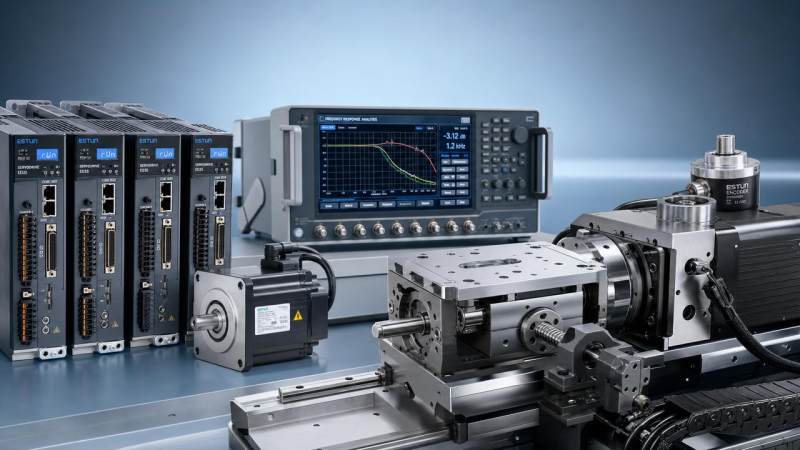
Servo drive frequency response defines how faithfully a motion axis tracks command changes under actual load, vibration, and process disturbance.
In integrated industries, this metric shapes cycle time, contour accuracy, thermal stability, and long-term reliability.
A strong servo drive frequency response is not created by software alone.
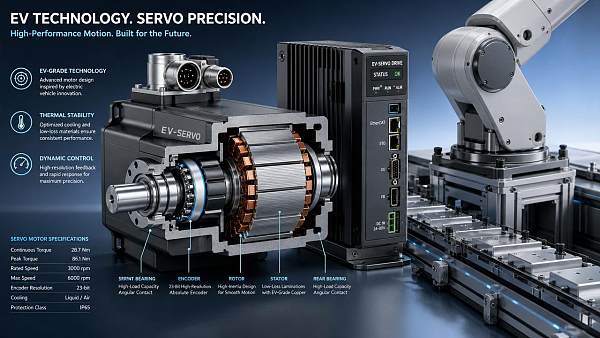
It is limited by motor physics, encoder quality, current loop speed, mechanical stiffness, transmission backlash, and control architecture.
For technical benchmarking, the key question is practical rather than theoretical.
Which limiting factor matters most in a given application, and what tradeoff follows from pushing bandwidth higher?
When servo drive frequency response becomes a critical buying and design variable
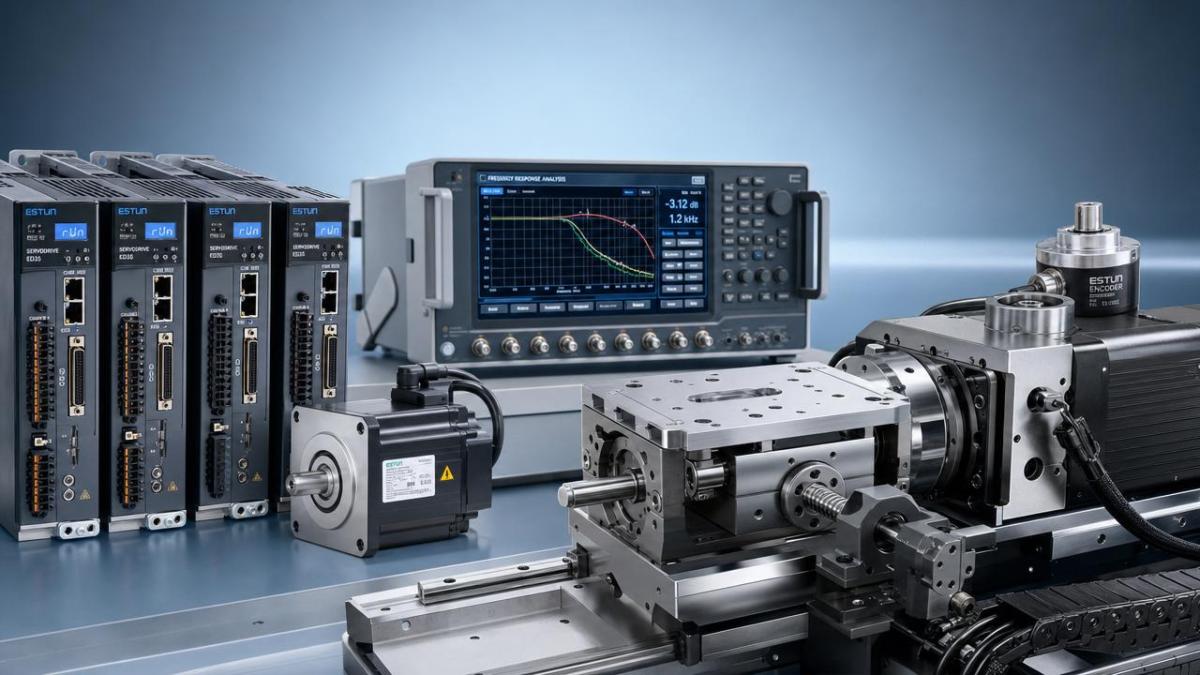
Not every axis needs aggressive bandwidth.
A packaging conveyor and a wafer-stage positioning axis face very different servo drive frequency response demands.
The value of correct evaluation appears when command profiles contain rapid acceleration, short settling windows, or repeating disturbances.
In those cases, poor servo drive frequency response causes overshoot, lag, unstable tuning, and accelerated component fatigue.
Across automation, energy, semiconductor, and material processing systems, bandwidth must match process risk and structural reality.
Scenario judgment starts with the dominant dynamic constraint
A useful assessment begins by identifying which layer limits servo drive frequency response first.
The bottleneck may be electrical, computational, sensor-related, or mechanical.
In many industrial systems, mechanics dominate long before the drive reaches its theoretical control-loop capacity.
A lightweight direct-drive axis behaves differently from a belt-driven gantry with compliant supports.
The same servo drive frequency response specification can therefore produce very different motion quality in different installations.
- Motor and load inertia ratio influence acceleration authority and tuning margin.
- Encoder resolution and latency affect velocity estimation and position feedback quality.
- Current loop update rate limits torque response during fast transients.
- Transmission elasticity and backlash reduce usable servo drive frequency response.
- Structural resonance often caps gain long before desired bandwidth is reached.
Scenario 1: Precision positioning systems need stable high bandwidth, not headline numbers
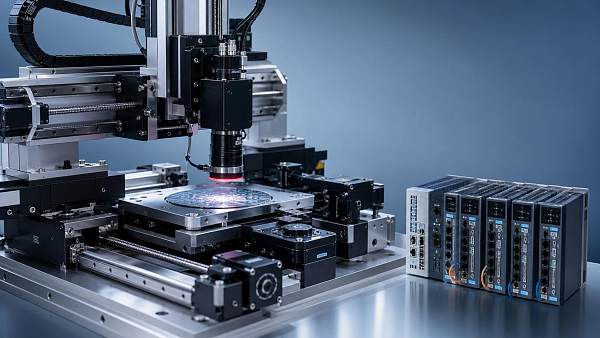
Precision stages, inspection platforms, and metrology axes often appear to demand maximum servo drive frequency response.
Yet the better target is stable bandwidth with low noise injection and predictable settling.
In these systems, encoder interpolation quality, structural damping, and fine current control strongly affect usable performance.
If gain is raised beyond resonance margin, micro-vibration and hunting can degrade measurement integrity.
Core judgment points for precision axes
- Check settling time under realistic payload changes, not unloaded response only.
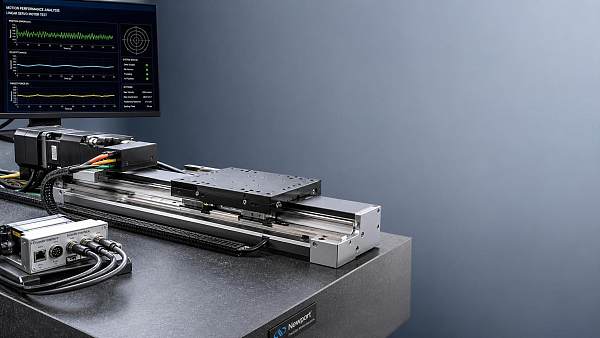
- Review Bode plots or frequency sweep data around structural resonance peaks.
- Confirm whether notch filters reduce vibration without delaying command tracking excessively.
- Verify thermal drift effects on feedback devices and mechanical interfaces.
Scenario 2: Heavy-load transport and handling systems are inertia-limited
Large gantries, transfer units, and lifting mechanisms usually face a different servo drive frequency response ceiling.
The main issue is often high reflected inertia combined with flexible couplings, rails, or support frames.
In such systems, chasing higher bandwidth may create oscillation without meaningful throughput gain.
A better strategy is balanced tuning, feedforward optimization, and mechanical stiffening where feasible.
This approach improves servo drive frequency response within a safe structural envelope.
What usually limits performance here
Torque reserve may look adequate on paper.
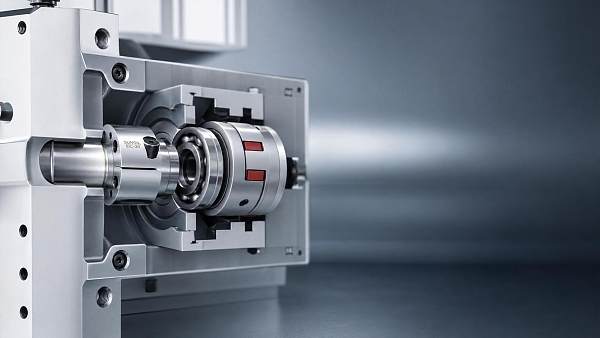
However, low torsional stiffness, backlash, and rail compliance can lower achievable loop gains sharply.
The result is a servo drive frequency response that is technically available in the drive, but unusable in the machine.
Scenario 3: High-speed converting and packaging lines are disturbance-limited
Rotary knives, web handling, and synchronized rollers depend on rapid rejection of repeating disturbances.
For these lines, servo drive frequency response influences registration accuracy and speed stability more than static positioning error.
The dominant limitations often include encoder jitter, torque ripple, network delay, and insufficient velocity-loop tuning.
If multiple axes are electronically geared, communication determinism also becomes part of the servo drive frequency response problem.
Scenario 4: Process equipment must balance control bandwidth with reliability margin
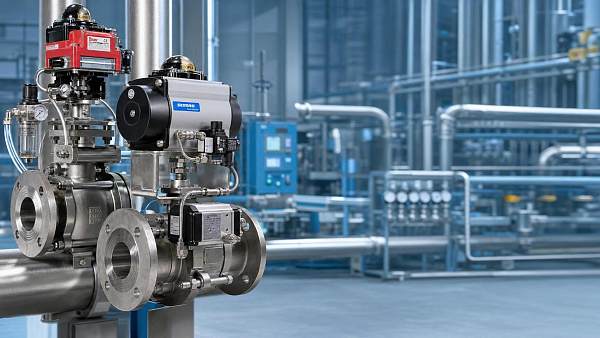
Pump skids, valve actuators, dosing equipment, and thermal process modules often operate continuously.
Their best servo drive frequency response is not always the fastest possible response.
Here, smoothness, low current stress, and predictable maintenance intervals can outweigh aggressive dynamic tuning.
A slightly lower bandwidth may protect bearings, couplings, seals, and power electronics over long service cycles.
How different scenarios change servo drive frequency response requirements
Practical ways to improve servo drive frequency response by scenario
- Reduce reflected inertia through gearing review or motor resizing.
- Increase stiffness in mounts, couplings, frames, and bearing supports.
- Upgrade encoder quality where quantization or latency is visible.
- Use notch filters carefully after identifying true resonance frequencies.
- Validate current, velocity, and position loop hierarchy instead of tuning one loop in isolation.
- Test under full payload, peak acceleration, and real thermal conditions.
- Check network cycle determinism for synchronized multi-axis systems.
Common misjudgments that hide the real bandwidth limit
One common error is treating catalog bandwidth as machine bandwidth.
A drive may support fast loops, while the mechanism cannot.
Another error is assuming more encoder counts automatically improve servo drive frequency response.
If mechanical resonance dominates, finer feedback alone offers limited benefit.
A third mistake is tuning for impressive step response while ignoring repetitive disturbance rejection.
In synchronized production systems, that oversight can reduce line stability.
Finally, many evaluations overlook lifecycle effects.
As couplings wear, lubrication changes, or structures loosen, servo drive frequency response can drift from acceptance-test values.
A decision path for technical benchmarking and next-step validation
A credible review of servo drive frequency response should combine drive data, mechanical evidence, and application-specific tests.
Start by mapping the motion scenario, disturbance profile, duty cycle, and allowable settling window.
Then compare motor inertia match, feedback architecture, loop update rates, and structural resonance data.
Request measured performance under loaded conditions, not only nominal specifications.
For critical projects, require frequency sweep results, tuning records, and evidence of repeatability after thermal stabilization.
This process reveals whether servo drive frequency response supports real operating demands or only marketing claims.
In complex industrial environments, the best outcome is not maximum bandwidth.
It is verified, scenario-matched servo drive frequency response that delivers controllability, uptime, and predictable system performance.
Recommended News
 Oct 11, 2026How to size a linear actuator for automation without overspecifying itLinear actuator for automation sizing guide: calculate force, speed, moments, duty cycle, and safety margins to avoid overspecification and improve reliability.
 Oct 01, 2026What to verify before choosing a hydraulic press supplierHydraulic press supplier checklist: verify process fit, engineering capacity, safety compliance, quote scope, testing, and after-sales support before you buy.
![]() Oct 19, 2026Which Motion Control Specifications Matter for High-Speed Positioning?What motion control specifications matter for high-speed positioning? Explore acceleration, settling time, accuracy, feedback, and load factors to improve cycle time.
Oct 19, 2026Which Motion Control Specifications Matter for High-Speed Positioning?What motion control specifications matter for high-speed positioning? Explore acceleration, settling time, accuracy, feedback, and load factors to improve cycle time. Sep 23, 2026Which solenoid valve reliability metrics best predict unplanned downtime?Solenoid valve reliability metrics that predict unplanned downtime: learn how MTBF, failure modes, demand success, leakage, and response-time drift affect availability.
 Aug 18, 2026When does an enclosed slewing drive make sense outdoors?Enclosed slewing drive selection for outdoor systems: learn when sealing, contamination control, and lower maintenance risk justify the cost for better uptime and lifecycle value.
 Jul 25, 2026How to Evaluate a Linear Motor Peak Force SupplierLinear motor peak force supplier evaluation starts with force definition, thermal limits, drive matching, and reliability. Learn how to compare suppliers with confidence.
 Jul 24, 2026How to Evaluate Precision Motion Control Solutions for High-Accuracy AutomationPrecision motion control solutions for high-accuracy automation: learn how to compare accuracy, integration, lifecycle risk, and real-world performance to choose with confidence.
 Jul 19, 2026How to Evaluate a Linear Servo Motor Supplier for Precision Motion SystemsLinear servo motor supplier evaluation starts with engineering fit, quality control, and supply stability. Learn how to compare vendors for precision motion systems with confidence.
 Jul 14, 2026How to Choose a Shaft Collar for Automation Equipment Without OverdesignShaft collar for automation equipment selection made practical: learn how to avoid overdesign, match load and environment, reduce downtime, and improve reliability.
 Jul 08, 2026Actuated Ball Valve Price Breakdown for 2026 ProjectsActuated ball valve price guide for 2026 projects: compare cost drivers, hidden fees, compliance factors, and supplier quotes to control budgets and buy with confidence.
 Jul 05, 2026Stainless Steel Actuated Ball Valve Selection for Corrosive MediaStainless steel actuated ball valve selection for corrosive media: learn how to match alloys, seals, and actuators for safer shutoff, lower maintenance, and smarter sourcing.
 Jul 04, 2026Sheet Metal Custom Cost Drivers: What Changes Price, Lead Time, and Rework RiskSheet metal custom cost explained: learn what really changes price, lead time, and rework risk, and compare supplier quotes with more confidence before you buy.
 Jun 29, 2026Motion Control Solutions Manufacturer Selection: 7 Performance Checks That MatterMotion control solutions manufacturer selection starts with proof, not promises. Discover 7 performance checks that reduce risk, improve uptime, and support precision-driven industrial systems.
 Jun 14, 2026LED Commercial Lighting: How to Compare ROI, Lifespan, and MaintenanceLED commercial lighting comparison starts with ROI, lifespan, and maintenance. Learn how to assess lifecycle cost, failure risk, and supplier claims for smarter facility decisions.
 Jun 12, 2026Best Pet Grooming Clippers for Coat Type and Daily Usepetgroomingclippers guide: discover how to choose the best clipper by coat type, power, blade control, and daily grooming needs for smoother, safer, more reliable results.
 Jun 07, 2026Audio Equipment Setup Mistakes That Hurt Sound QualityAudio equipment not delivering the sound you expected? Discover the most common setup mistakes in placement, signal flow, power, and room acoustics—and how to fix them fast.
 May 27, 2026Robotic Programming Software Wholesale: Key Integration ChecksRobotic programming software wholesale: compare PLC, SCADA, digital twin, and compliance integration checks to reduce risk, improve uptime, and choose scalable software with confidence.
 May 23, 2026Impact of EV on Motor Precision in 2026 ApplicationsImpact of EV on motor precision in 2026: discover a practical checklist for evaluating thermal drift, torque ripple, encoder accuracy, and control stability across key industries.
 May 23, 2026Miniaturization of Motion Systems: Key Design Trade-OffsMiniaturization of motion systems explained: explore the key design trade-offs in stiffness, thermal stability, load capacity, and control accuracy to evaluate compact platforms with confidence.
 May 23, 2026Industrial Automation Motion News: 2026 Trends to WatchIndustrial automation motion news for 2026 reveals key trends in precision, resilience, and smart integration. Discover scenario-based insights to guide compliant, scalable investment decisions.
 May 22, 2026Motion Control System Latency and Its Impact on Cycle TimeMotion control system latency directly affects cycle time, accuracy, and throughput. Learn where delays hide, how to diagnose them, and practical ways to boost performance.
 May 21, 2026Servo Drive Frequency Response: What Limits ControlServo drive frequency response explained: learn what limits control bandwidth, from motor physics and encoders to stiffness and backlash, and how to choose the right tradeoff for real-world performance.
 May 21, 2026Linear Motor Peak Force Data for Safe SizingLinear motor peak force data explained for safe sizing: learn how to verify duration, duty cycle, cooling, and drive limits to reduce risk and choose the right motion system.
 May 21, 2026How to Verify Linear Actuator Positioning AccuracyLinear actuator positioning accuracy explained with practical test steps, tools, and troubleshooting tips to reduce drift, improve repeatability, and keep motion systems reliable.